By Mario GonzalezGuides
How to Organize a Padel Tournament: A First-Timer's Playbook
Learn how to organize a padel tournament from scratch: picking the right format, setting a budget, handling registration, and running a smooth event day.
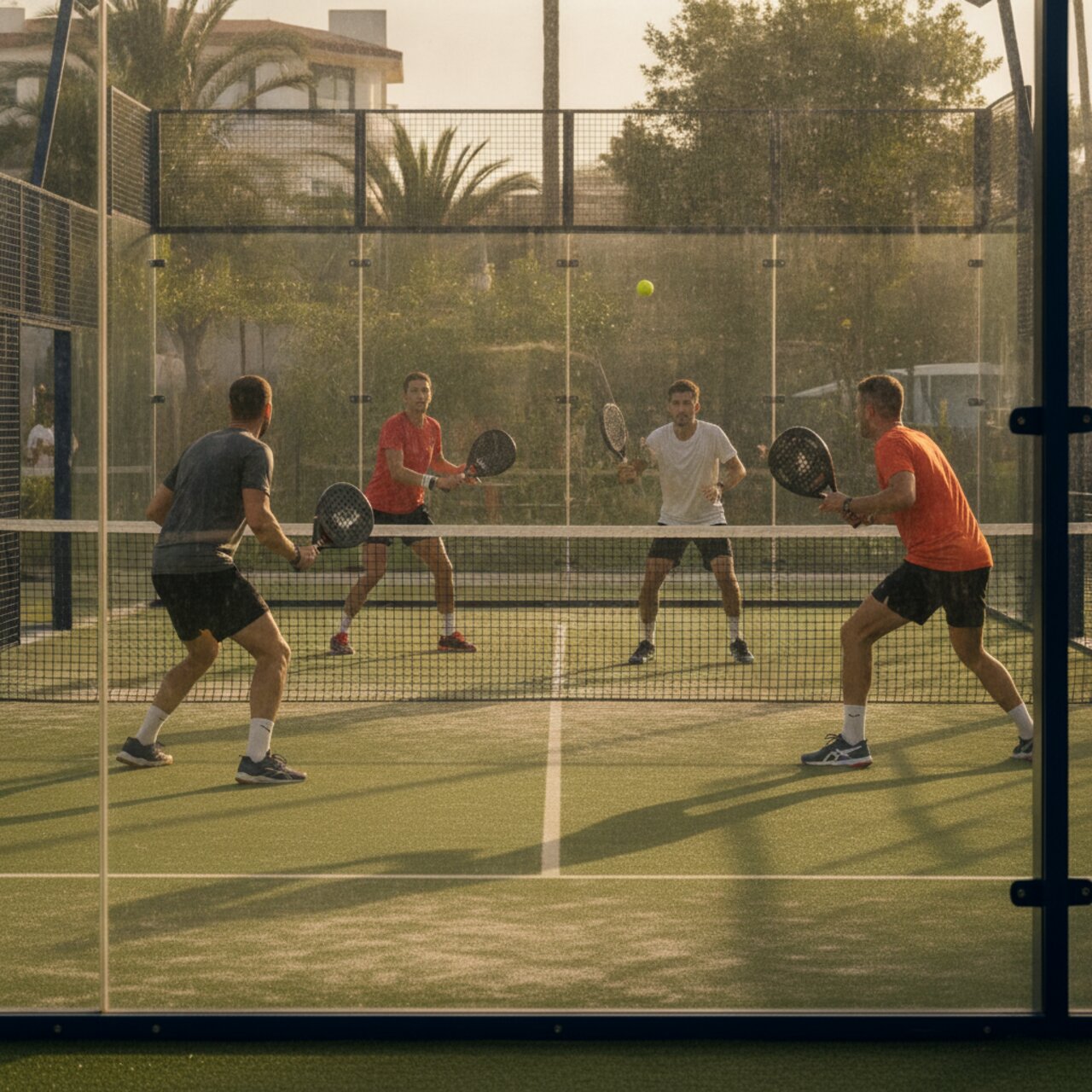
The first time you organize a padel tournament, the hardest part is not the padel. It is the twenty small decisions nobody warns you about: how many courts you need, what happens when a pair drops out an hour before, and how to keep sixteen people entertained while eight of them wait for a court. Get the structure right and the day runs itself. Get it wrong and you spend the afternoon apologizing.
This is a planning guide for the person holding the clipboard, not the player holding the racket. If you can fill four courts with friends or clubmates, you can run a good event. The trick is deciding the format early, then working backwards from there.
Choose the Format Before Anything Else
Every other decision (how many players, how long it runs, how many courts) flows from the format you pick. There are three that cover almost every amateur tournament.
Americano is the social default and the easiest to run. Players enter as individuals, partners rotate every round, and everyone accumulates points personally. Nobody is stuck with a weak partner all day, and even the last-place player gets a full afternoon of padel. This is the format for mixed-ability groups and for anyone whose main goal is a fun day rather than crowning a serious champion.
Round-robin keeps fixed pairs and has every team play every other team. It rewards partner chemistry and produces a clear, fair ranking because everyone faces the same opponents. It takes longer than an Americano for the same number of people, so it suits smaller fields (six to eight pairs) or a full day.
Knockout brackets are the most competitive and the most brutal: lose once and you are done. Half your field is eliminated in the first round, which is a problem if people drove an hour to play. Use it only for the sharp end of a competitive event, ideally after a group stage so everyone gets guaranteed matches first.
For a first event with people of varied levels, run an Americano. It is forgiving, it is social, and it hides most organizer mistakes behind a good atmosphere.
Do the Court and Time Math
Once you have a format, the numbers get concrete. A padel court fits four players, so your capacity is always a multiple of four per round.
For an Americano, a good rule is one court per four players. Sixteen players on four courts run comfortably; eight players on two courts is a tight, punchy event. Each round is either a timed block (12 to 15 minutes) or a fixed target (first pair to 16 or 24 points). Timed rounds are far easier to manage because every court finishes together and you rotate the whole room at once. Budget around 15 minutes per round including the shuffle, and plan for six to eight rounds. That puts a sixteen-player Americano at roughly two and a half hours.
For a round-robin with eight pairs on two courts, short matches are your friend: first to four games, or a single set to four. Sixteen pairings played two at a time still runs long, so either add courts or cap the field.
Write the full schedule out before the day. Knowing that round three starts at 11:20 and the final block ends at 13:00 lets you spot the crunch points in advance instead of discovering them live.
Set a Budget and a Price
Even a casual tournament has costs. Court rental is the big one, and clubs usually give a better rate for a block booking than for individual reservations, so ask. Add balls (a fresh can per court, sometimes two for a long day), a modest prize, and anything you want for atmosphere like water, fruit, or post-match drinks.
Total those costs, divide by your expected number of players, and add a small buffer for the pair that cancels. That is your entry fee. Most amateurs happily pay a fair price for a well-run afternoon; they resent paying for something that felt disorganized. Collect the money up front. Chasing payments after the fact is the fastest way to lose your appetite for organizing a second one.
If you are still building the group you will draw players from, sort that out first. Our guide on how to find padel partners covers building the network of players a tournament depends on.
Handle Registration Without the Chaos
You need three things from every entrant: their name, their level, and their payment. A simple shared spreadsheet or a group chat with a pinned list does the job for twenty people. You do not need software.
Ask for a self-rated level even in an Americano. It helps you seed the first round so the early matches are not lopsided, and it flags whether your field is even enough for the format you chose. If half your players are clear beginners and half are competitive, an Americano absorbs that gap far better than a knockout will.
Set a registration deadline a few days out and keep a short waitlist. People drop out; a waitlist turns a last-minute cancellation into a non-event instead of a scramble. Confirm the final list, the start time, and the location the evening before so nobody shows up at the wrong club.
Run a Smooth Event Day
Arrive early. Being at the club thirty minutes before the first serve gives you time to check the courts are booked correctly, lay out balls, and greet people as they arrive rather than running the check-in while round one is already waiting.
Brief everyone once, together, before play starts. Cover the format, the scoring, how rotations work, and where the results get recorded. Two minutes of clear instructions prevents an hour of individual questions. If your group has newer players, a quick reminder about padel court etiquette keeps the day friendly and the calls clean.
Track scores in one central place, not on scraps of paper at each court. A single running sheet, a whiteboard, or a shared phone note that every court reports to after each round keeps the standings honest and lets you post live results, which people love. If you want match records and head-to-head history to live somewhere permanent afterward, logging results in an app like Padellog turns a one-day event into part of everyone’s ongoing record.
Your real job during play is pace. Call rounds firmly and on time. The single most common failure of a first tournament is drift: rounds run over, the schedule slips, and a 2:30 event becomes a 4-hour slog while people lose interest. A whistle or a loud call at the end of each timed round is not rude; it is what keeps the day fun.
Keep the waiting players comfortable. If your format leaves some people sitting out a round, make sure there is shade, water, and somewhere to sit. Bored players standing in the sun are the ones who leave early.
Prizes and the Small Touches
The prize matters less than you think. A trophy from a local shop, a free entry to the next event, or a bottle of something for the winning pair is plenty. People play these tournaments for the padel and the company, not the loot.
The atmosphere touches matter more. Cold water on a hot day, a bowl of fruit between rounds, music between matches, a group photo at the end. These are cheap and they are what people remember. If a club sponsor is involved, a small welcome gift for every player goes a long way.
Decide ties in advance and announce the rule up front. Total points scored is the cleanest tiebreaker for an Americano; head-to-head result works for a round-robin. Deciding a tie on the spot, with the affected players watching, is a fight you do not need.
Learn From the First One
The day after, before you forget, note what dragged and what worked. Did rounds run long? Was the field too mixed for the format? Did check-in bottleneck? First tournaments are rough drafts, and the second one is dramatically smoother because you fixed three specific things rather than trying to fix everything.
If some players want to move from your casual event toward real competition, point them at our guide on preparing for your first padel tournament as a player. And if the scoring format tripped anyone up on the day, the padel scoring system explained is a good link to share beforehand so everyone arrives knowing how points work.
Running an event is the fastest way to become the person a padel community forms around. Keep the format simple, respect the schedule, collect the money early, and the rest is just people enjoying a sport they already love. For anything that came up during play, the padel glossary of essential terms is a handy reference to keep on hand.