By Mario Gonzalez
Padel for Beginners: Complete Guide 2026
Learn how to play padel with this complete beginner's guide. Discover rules, equipment, techniques, and everything you need to start playing padel today.
Padel for Beginners: Complete Guide 2026
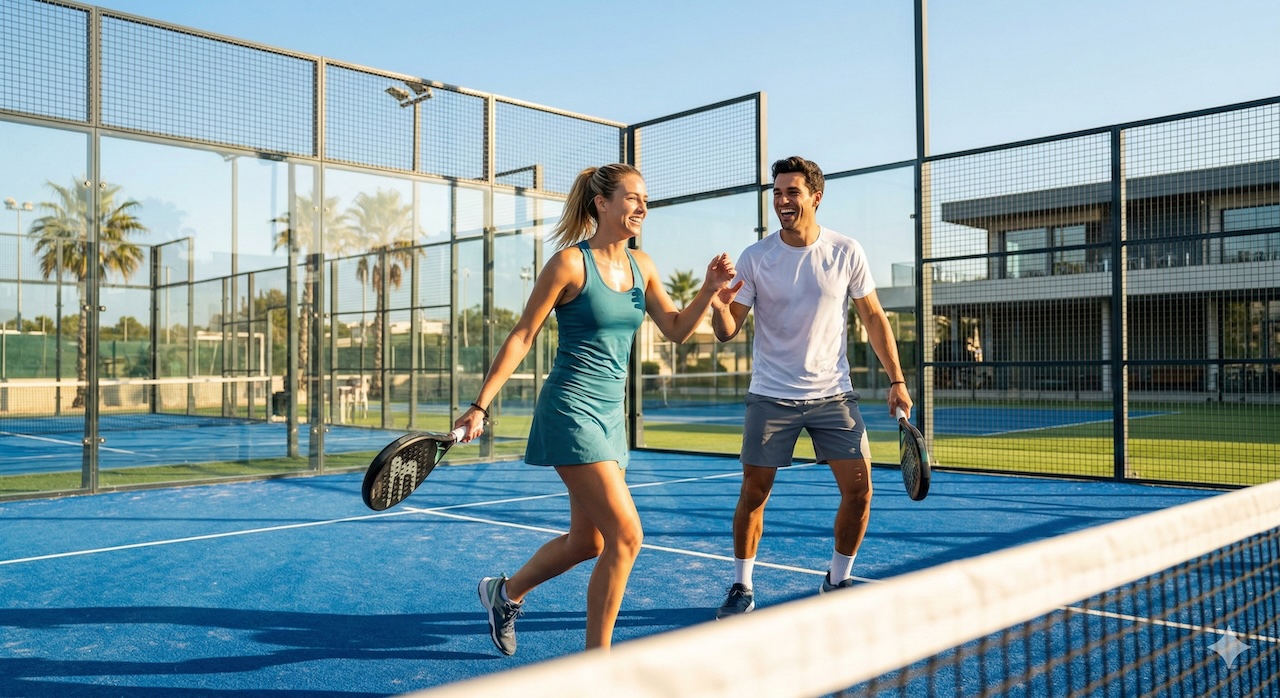
So you’ve heard about padel - maybe from friends, social media, or you saw courts popping up near you - and you’re curious to try it. Great choice! Padel is the fastest-growing racket sport in the world, and for good reason: it’s fun, social, and surprisingly easy to pick up.
This complete guide will teach you everything you need to know to start playing padel, from the basic rules to equipment recommendations and your first steps on the court. By the end, you’ll be ready to book your first game with confidence.
In this guide, you’ll learn:
- What padel is and why it’s so popular
- The basic rules in simple terms
- What equipment you need (and what you don’t)
- Essential techniques for beginners
- How to find courts and start playing
- Common mistakes to avoid
Let’s get started.
What is Padel?
Padel (also called padel tennis) is a racket sport that combines elements of tennis and squash. It’s played on an enclosed court about one-third the size of a tennis court, with glass walls and mesh fencing that are part of the playing area.
Key characteristics:
- Played in doubles (4 players)
- Enclosed court with walls you can use
- Solid rackets (not strings like tennis)
- Underarm serve only
- Same scoring as tennis (15, 30, 40, game)
The sport originated in Mexico in 1969 and exploded in popularity across Spain, Argentina, and now worldwide. Today, over 25 million people play padel globally, with courts opening in the USA, UK, and across Europe at record pace.
Why is padel so popular?
| Reason | Explanation |
|---|---|
| Easy to learn | You can rally within your first game |
| Social and fun | Always played in doubles, very interactive |
| Less physically demanding | Smaller court than tennis, easier on joints |
| Exciting gameplay | Wall play adds strategy and longer rallies |
| Great exercise | Burns 400-600 calories per hour |
Padel vs Tennis: Key Differences
If you’ve played tennis, some things will feel familiar, but padel has crucial differences:
| Aspect | Tennis | Padel |
|---|---|---|
| Court size | 78’ x 36’ (doubles) | 66’ x 33’ |
| Walls | No walls | Glass/mesh walls in play |
| Racket | Strung racket | Solid padded racket |
| Serve | Overarm | Underarm only |
| Bounce | Ball must bounce in court | Can use walls after bounce |
| Format | Singles or doubles | Doubles only |
| Difficulty | Harder to learn | Easier for beginners |
The biggest difference? The walls. In padel, the ball can bounce off the walls, making rallies longer and adding a whole new strategic dimension. Think of it like squash, but outdoors and with a partner.
Basic Padel Rules
Let’s break down the essential rules you need to know before stepping on court:
The Serve
How to serve in padel:
- Stand behind the service line
- Bounce the ball on the ground
- Hit it underarm (below waist height)
- Ball must bounce in the opponent’s diagonal service box
- Serve alternates between partners each point
Serve rules:
- You get two attempts per point (like tennis)
- Ball must bounce in your court first, then opponent’s box
- Can’t hit the fence directly (must bounce first)
- Serve from the right side when score is even, left when odd
Scoring
Padel uses exactly the same scoring as tennis:
- 15, 30, 40, game
- Deuce at 40-40
- Sets won at 6 games (with 2-game margin or tiebreak at 6-6)
- Matches usually best of 3 sets
Learn more: Padel Scoring System Explained
The Ball is In Play
After the serve, you can:
- Hit the ball before it bounces (volley)
- Let it bounce once on the ground
- Use the walls - the ball can bounce off YOUR side walls before you hit it
- Hit it into opponent’s court directly OR off their walls (after bouncing in their court first)
The ball is OUT if:
- It bounces twice on your side
- It hits the fence/mesh on your side before you hit it
- It hits your body or your partner
- You hit it before it crosses the net
Using the Walls
This is where padel gets interesting:
On your side:
- Ball can bounce off walls before you hit it (glass or mesh)
- This gives you more time to reach difficult shots
On opponent’s side:
- Your shot must bounce on the ground FIRST
- After bouncing, it can hit their walls - this is legal!
- Advanced players use the walls to create angles
The Padel Court Explained
Understanding the court helps you play better from day one.
Court dimensions:
- Length: 20 meters (66 feet)
- Width: 10 meters (33 feet)
- Height: Walls are 3-4 meters high
Key areas:
- Service boxes: Where serves must land
- Net: Similar height to tennis (0.88m at center)
- Glass walls: Solid walls at back and sides (usually 3m high)
- Mesh: Upper sections and some side areas
Surface: Most courts use artificial turf with sand, similar to some tennis courts. Provides good grip and consistent bounce.
Essential Equipment
Good news: you don’t need much to start playing padel.
What You NEED
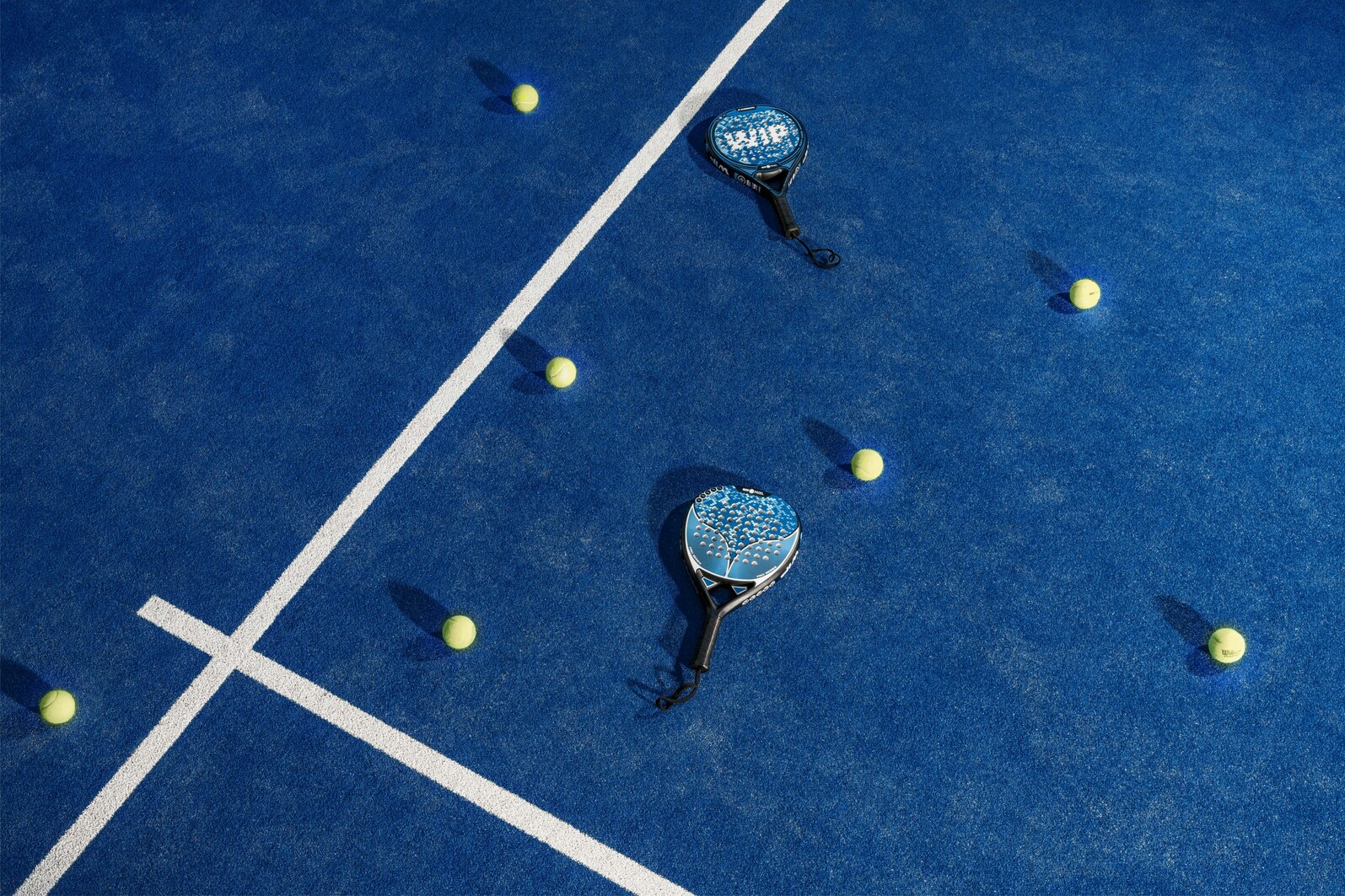
1. Padel Racket
Padel rackets are solid (no strings) with a perforated surface. For beginners:
| Feature | Recommendation |
|---|---|
| Shape | Round (more control, easier) |
| Weight | 340-365g (lighter is easier to maneuver) |
| Material | Fiberglass or EVA foam core |
| Price | $60-120 for beginners |
Best beginner rackets:
- Head Alpha Pro
- Bullpadel Vertex 03
- Adidas Metalbone 3.2
- Wilson Bela 2024
2. Padel Balls
Look like tennis balls but slightly less pressurized. Most clubs provide them, but a can of 3 costs $5-8.
Brands: HEAD, Dunlop, Wilson
3. Proper Footwear
Critical: Wear court shoes with good lateral support. Never wear running shoes.
Best options:
- Tennis shoes (work great)
- Specific padel shoes
- Clay court shoes
Features to look for:
- Herringbone or omni sole pattern
- Lateral support
- Good cushioning
Price: $60-150
What’s OPTIONAL (but helpful)
- Sports clothing: Any comfortable athletic wear
- Padel bag: Protects your racket (most come with racket purchase)
- Wristbands/headband: For sweat management
- Sunglasses: Many courts are outdoor
- Water bottle: Stay hydrated!
What You DON’T Need
- ❌ Tennis racket (completely different)
- ❌ Gloves (not used in padel)
- ❌ Expensive gear starting out (borrow/rent first!)
Cost to start: $60-200 total (racket + shoes). Many clubs offer equipment rental for $5-10.
Basic Techniques
These fundamental techniques will get you playing competently on day one.
1. The Grip
Use the continental grip (like holding a hammer):
- Shake hands with the racket
- Base knuckle on top bevel
- Comfortable, not too tight
This grip works for most shots and is easiest for beginners.
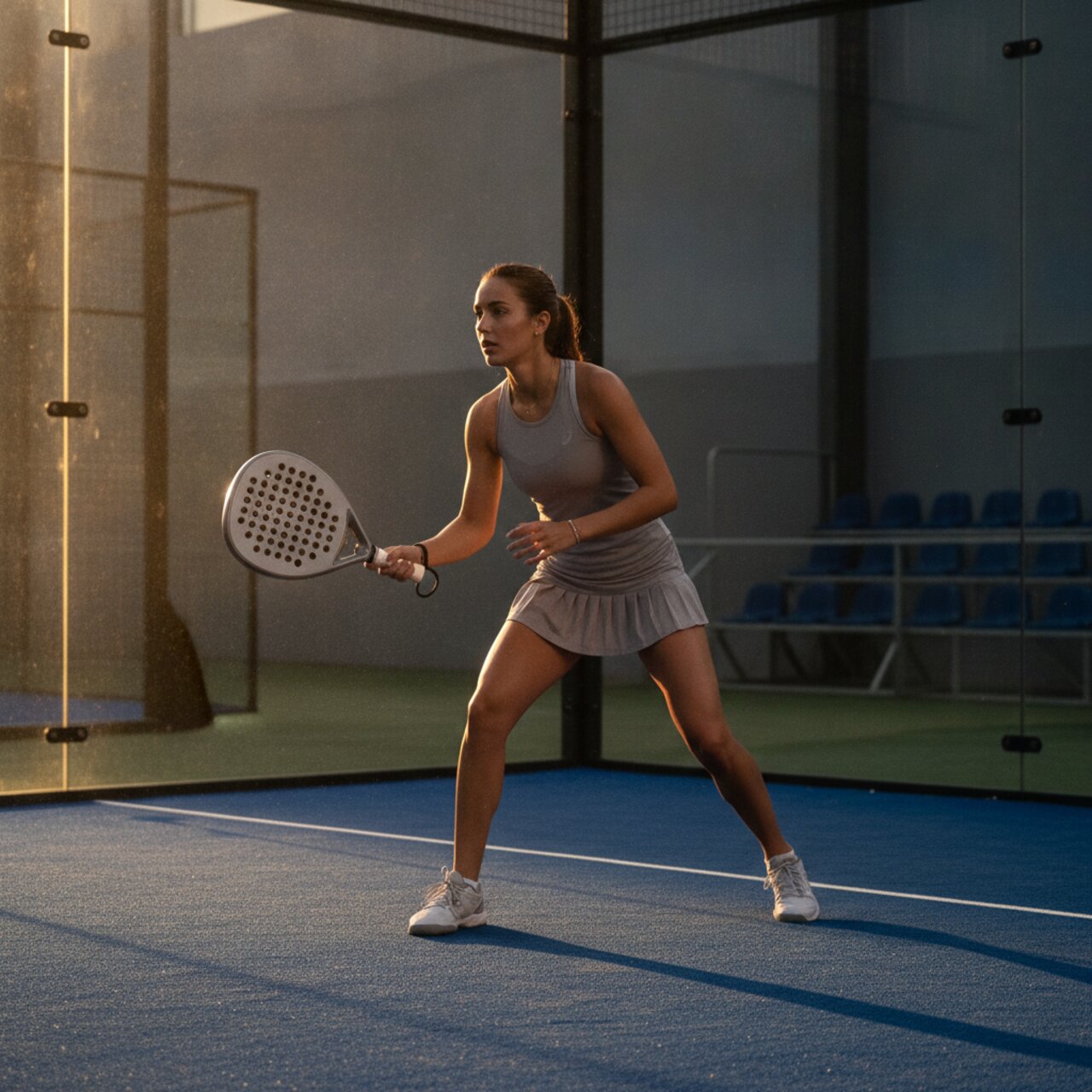
2. Ready Position
Between shots, always return to ready position:
- Feet shoulder-width apart
- Knees slightly bent
- Racket in front of chest
- Weight on balls of feet
- Face the net
3. The Serve
Step-by-step:
- Stand sideways to net
- Bounce ball at comfortable height
- Swing racket back low
- Hit ball below waist height
- Follow through toward target
Tip: Start simple. Just get it in the box consistently. Power comes later.
4. Forehand
The most common shot:
- Turn shoulders to the side
- Take racket back early
- Step forward with front foot
- Swing low to high (slight topspin)
- Follow through over shoulder
For beginners: Focus on consistency over power. Keep the ball in play.
5. Backhand
Similar to forehand but on your non-dominant side:
- Two-handed is easier for beginners
- Keep racket face square to target
- Smooth, controlled swing
6. Volley
Hitting the ball before it bounces:
- Short, punching motion (not full swing)
- Step forward into the shot
- Keep racket head up
- Aim for placement, not power
Beginner tip: Position yourself closer to the net. Most points in padel are won at the net.
7. Overhead Shots
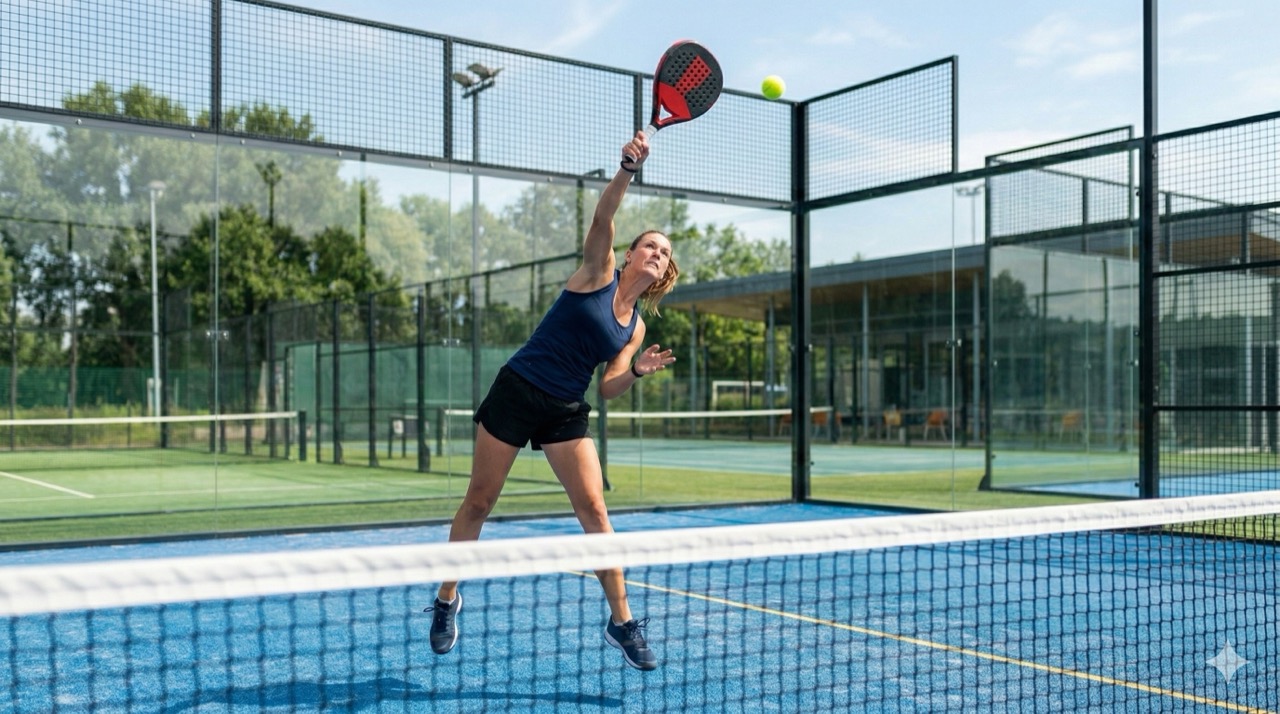
When opponents lob the ball over your head, you’ll need overhead shots:
For beginners:
- Defensive lob: Hit the ball high and deep to buy time
- Basic overhead: Swing down on the ball to keep it in play
As you progress, you’ll learn the two most important padel overheads:
- Bandeja: Controlled overhead with slice to maintain net position
- Vibora: Aggressive overhead with sidespin to win points
These shots separate recreational players from competitive ones. Learn the difference between bandeja and vibora once you’re comfortable with basic technique.
8. Playing the Walls
The key skill in padel:
When ball comes off the wall:
- Let it bounce on ground first
- Read the angle coming off the wall
- Position yourself between ball and net
- Hit it after it comes off the wall
Practice tip: Spend time hitting balls against the wall alone to understand the angles.
Your First Game: What to Expect
Here’s how your first padel experience will likely go:
Before the Game
- Book a court: Most facilities charge $20-40/hour (split 4 ways = $5-10 per person)
- Find 3 other players: Padel is always doubles
- Arrive 10 minutes early: Warm up and get comfortable
- Stretch: Light warm-up prevents injuries
During the Game
First 15 minutes: You’ll miss a lot. That’s normal. Focus on:
- Getting your serves in
- Keeping the ball in play
- Understanding wall bounces
- Communication with your partner
After 30 minutes: You’ll start rallying and having fun. The game clicks.
By end of first hour: You’ll understand why padel is addictive!
Partner Communication
Critical in doubles:
- Call “mine” or “yours” on every shot
- Generally: player nearest the ball takes it
- Encourage your partner (it’s a social sport!)
- Move together (stay roughly parallel)
Basic Positioning
Simple rule for beginners:
- When serving/receiving: one player back, one at net
- When attacking: both move to net together
- When defending: both move back together
- Avoid being split (one up, one back)
Common Beginner Mistakes
Avoid these common pitfalls:
1. Using Tennis Technique
❌ Don’t: Serve overarm, use tennis racket grip, play too far back
✅ Do: Underarm serve, continental grip, move to the net
2. Hitting Too Hard
❌ Don’t: Smash every ball with maximum power
✅ Do: Focus on placement and consistency (power comes later)
3. Forgetting the Walls
❌ Don’t: Give up on balls going toward the wall
✅ Do: Use the walls - they’re your friend!
4. Standing Still
❌ Don’t: Plant your feet and wait
✅ Do: Stay on your toes, move constantly, return to center
5. Poor Partner Communication
❌ Don’t: Both go for the same ball, or both leave it
✅ Do: Call every shot clearly, trust your partner
6. Wrong Footwear
❌ Don’t: Wear running shoes (slip risk!)
✅ Do: Wear court shoes with proper grip
7. Not Warming Up
❌ Don’t: Go straight into competitive play cold
✅ Do: 5-10 minute warm-up hitting before starting
How to Improve Quickly
Want to level up fast? Focus on these:
1. Play Regularly
Ideal: 2-3 times per week Minimum: Once per week
Consistency beats occasional marathon sessions.
2. Take a Lesson
Even 1-2 lessons with a coach will accelerate your learning:
- Correct bad habits early
- Learn proper technique
- Understand strategy
- Usually $30-60 per hour
3. Track Your Matches
Use the padellog app to:
- Track your match statistics
- Identify patterns in your play
- See your improvement over time
- Share progress with friends
Download padellog for iOS | Download for Android
4. Practice Specific Skills
Dedicate time to:
- Wall play (15 min alone)
- Serves (until consistent)
- Volleys (with partner)
- Movement drills
5. Play With Better Players
You’ll improve faster playing with experienced players who can:
- Give you tips
- Show proper positioning
- Challenge you to play better
- Demonstrate advanced techniques
6. Study the Game
Watch professional padel:
- Premier Padel Tour (YouTube)
- World Padel Tour replays
- Instructional videos
Notice positioning, wall usage, and shot selection.
Finding Courts and Players
Where to Play
Finding courts:
- Google “padel courts near me”
- Use the padellog app’s court finder
- Check local tennis/sports clubs
- Community sports centers
Finding Players
Options:
- Bring 3 friends (easiest!)
- Club social sessions (beginner-friendly)
- Padel meetup groups
- Facebook groups (“Padel [Your City]”)
- padellog app community features
- Ask at court front desk
Beginner tip: Most clubs have open sessions or social leagues specifically for beginners. Don’t be shy!
Cost Breakdown
How much does it cost to play padel? Here’s a quick breakdown of the typical expenses.
| Expense | Cost | Notes |
|---|---|---|
| Racket | $60-120 | One-time (can rent for $5-10/session) |
| Shoes | $60-100 | One-time (tennis shoes work) |
| Court rental | $20-40/hour | Split 4 ways = $5-10 per person |
| Balls | $6-8 per can | Usually provided by club |
| Lessons | $30-60/hour | Optional but recommended |
First session total: $10-20 if renting equipment
Once you own gear: $5-10 per session for court
Compared to:
- Tennis: Similar cost
- Golf: Much cheaper!
- Gym membership: About the same
Next Steps
You now know everything you need to start playing padel. Here’s your action plan:
This Week
- Find a court near you (Google or padellog app)
- Gather 3 friends (or join a beginner session)
- Rent equipment for first session
- Book your first game (1 hour is perfect)
After Your First Game
- Download padellog to track your progress
- Book your next session (within a week)
- Decide on equipment (buy if you’re hooked!)
- Consider a beginner lesson (accelerates learning)
First Month
- Play 4-8 times (build consistency)
- Practice wall play (15 min before games)
- Watch pro matches (learn strategy)
- Find regular partners (build a crew)
Frequently Asked Questions
How hard is padel to learn?
Padel is easier to learn than tennis. Most beginners can rally within their first game. The smaller court and wall play make it more forgiving. You’ll have fun from day one, even as a complete beginner.
Can I play padel if I’ve never played tennis?
Absolutely! Many padel players have zero tennis background. In fact, not having tennis habits can sometimes help, as you won’t try to use overarm serves or tennis grips. Padel is designed to be beginner-friendly.
Do I need to buy a racket to start?
No. Most clubs rent rackets for $5-10 per session. Rent for your first 2-3 games to make sure you enjoy the sport before investing $60-120 in your own racket.
Is padel good exercise?
Yes! Padel burns 400-600 calories per hour, improves cardiovascular fitness, builds leg and core strength, and enhances coordination. It’s easier on joints than tennis due to the smaller court and slower ball speed.
How long does it take to get good at padel?
With regular play (2-3 times per week), you’ll be competent in 4-6 weeks and comfortable in 2-3 months. After 6 months of consistent play, you’ll be a solid intermediate player. Like any sport, improvement is continuous.
What’s the difference between padel and pickleball?
While both are growing racket sports, they’re quite different. Padel uses solid rackets but a tennis-like ball and has walls. Pickleball uses perforated balls, has no walls, and has different scoring. Padel courts are larger and the gameplay faster.
Can you play padel singles?
While technically possible, padel is designed for doubles and almost always played 2v2. The court layout, scoring, and strategy all assume doubles play. Singles padel exists but is rare.
What age can you start playing padel?
Padel is suitable for ages 5-85+. Kids as young as 5-6 can start with modified equipment. There’s no upper age limit - the sport is low-impact and social, making it perfect for older players.
How much space do you need for a padel court?
A regulation padel court is 20m x 10m (66ft x 33ft), but you need surrounding space for safety. Total footprint is typically 25m x 15m. Courts can be indoor or outdoor.
Is padel played professionally?
Yes! The Premier Padel tour (backed by the International Padel Federation) features top players competing for significant prize money. Major tournaments are held worldwide, with professional players earning substantial incomes.
Ready to Play?
Padel is fun, social, and easier to learn than most racket sports. Thousands of new players discover it every week and get hooked.
Download padellog to find courts, track your matches, and connect with the padel community:
📱 Download for iOS | 📱 Download for Android
Related articles: