By Mario Gonzalez
How to Get Started Playing Padel: Beginner Guide 2026
Want to start playing padel but don't know how? This beginner friendly guide covers everything you need: rules, equipment, basic techniques, and where to play your first game.
How to Get Started Playing Padel: Beginner Guide 2026
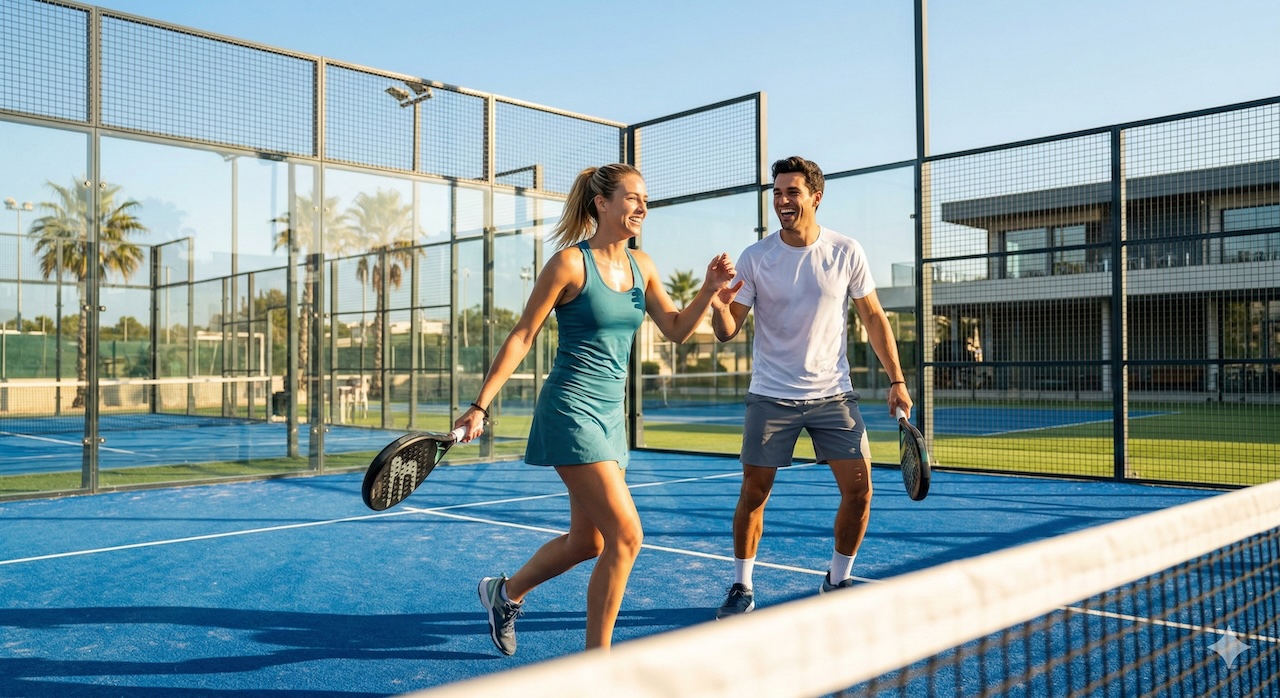
Want to start playing padel? You’re in good company - it’s the fastest-growing racquet sport in the world, and for good reason. It’s easier to learn than tennis, more social than squash, and seriously addictive once you start.
This guide will teach you everything you need to play your first game today. No prior racquet sport experience required.
What makes padel different? Think of it as “tennis made social.” Smaller court = less running. Always played in doubles = never isolated. The walls keep the ball in play longer = more fun rallies and faster learning for beginners.
Quick Start: Padel in 60 Seconds
The essentials:
- Padel is played 2 vs 2 (always doubles) on an enclosed court
- Use a solid paddle racket (no strings) and a soft ball
- Serve underhand into the diagonal service box
- The walls are part of the game - use them!
- Scoring is exactly like tennis (15, 30, 40, game)
- First to 6 games wins the set
Goal: Keep the ball in play by hitting it after one bounce, using the walls strategically to outplay your opponents.
That’s it! Now let’s break it down in detail.
What You Need to Play
Equipment
- Padel racket ($60-300, or rent for $5-10) - How to choose your first racket
- Court shoes (tennis shoes work, $60-150) - Best padel shoes reviewed
- Padel ball (usually provided by the court)
- 3 friends (padel is always 2v2)
The Court
- Size: 20m x 10m (66’ x 33’) - smaller than tennis
- Walls: 3-4m high glass walls at back and sides
- Net: 88cm high at center (like tennis)
- Surface: Artificial turf or concrete
- Cost: $20-40/hour ($5-10 per person when split)
Understanding the Court
Before you play, you need to understand the court layout:
Court Zones
|--------------------|
|  Service |Service  |
|  Box     | Box     |
|----------|---------|  ← Net (88cm)
|  Service |Service  |
|  Box     | Box     |
|--------------------|

Walls: Glass (3m) + Mesh (1m) on all sides
Key areas:
- Service boxes: Where serves must land (like tennis)
- Glass walls: Solid walls at back and corners (ball bounces predictably)
- Mesh walls: Upper sections and some sides (ball slows down)
- Net: 10m x 88cm high (slightly lower than tennis at edges)
Using the Walls
This is what makes padel unique:
Your side:
- Ball CAN bounce off your walls before you hit it (legal!)
- Gives you more time to reach difficult shots
- Strategic positioning is key
Opponent’s side:
- Your shot must bounce on ground FIRST
- Then it can hit their walls (legal and strategic!)
- Advanced players use walls to create angles
The Basics: How to Play
Step 1: The Serve
The serve starts every point. Here’s how:
Serving rules:
- Stand behind the service line (not on it)
- Bounce the ball on your side
- Hit it underhand (below waist height)
- Ball must cross the net
- Land in the diagonal service box
- Can’t hit the fence directly (must bounce first)
You get ONE serve (not two like tennis)
Serve order:
- Right side when score is even (0, 2, 4…)
- Left side when score is odd (1, 3, 5…)
- Partners alternate serving each game
- Serve rotates like tennis
Common serve mistakes:
- ❌ Serving overarm (illegal!)
- ❌ Hitting above waist height (fault)
- ❌ Not bouncing ball first (fault)
- ❌ Hitting the fence directly (fault)
- ❌ Landing outside service box (fault)
Pro tip: Focus on consistency, not power. A slow, well-placed serve is better than a hard one that faults.
Step 2: The Return
After the serve, the receiving team must return it:
Rules for returning:
- Let the ball bounce once (don’t volley the serve)
- Can let it hit your walls (after ground bounce)
- Return it before it bounces twice
- Hit it over the net
Good return strategy:
- Deep to baseline (pushes opponents back)
- Down the middle (causes confusion)
- To the weaker player (if obvious)
Step 3: The Rally
After the return, the point is in play. This is where padel gets fun!
Legal shots:
- Volley: Hit ball before it bounces (except on serve return)
- Groundstroke: Let it bounce once, then hit
- Wall play: Let ball hit your walls after bouncing on ground
- Smash: Overhead shot (like tennis but with walls!)
You win the point when:
- Opponent hits the net
- Ball bounces twice on opponent’s side
- Ball hits fence on opponent’s side before they hit it
- Opponent hits ball out of bounds
You lose the point when:
- Ball bounces twice on your side
- Ball hits your fence before you hit it
- You hit the net
- Ball goes out without bouncing on opponent’s court first
Step 4: Positioning
Where you stand matters more in padel than tennis:
Basic doubles positioning:
When serving/receiving:
- One player at net
- One player at baseline
- Then both move forward together
During rally:
- Attacking: Both at net (ideal position)
- Defending: Both at baseline
- Transitioning: Moving forward/backward together
- Avoid: One up, one back (gets split easily)
General rules:
- Stay side-by-side with your partner
- Cover your half of the court
- Communicate constantly (“mine!”, “yours!”)
- Move as a unit (both forward, both back)
Scoring: Same as Tennis
If you know tennis scoring, you know padel scoring. If not, here’s how it works:
Points in a Game
- 0 points = Love (or zero)
- 1 point = 15
- 2 points = 30
- 3 points = 40
- 4 points = Game (if you’re ahead by 2)
Deuce (40-40)
- Tied at 40-40 = Deuce
- Win next point = Advantage
- Win advantage point = Game
- Lose advantage point = Back to deuce
Golden Point (some tournaments):
- At deuce, one sudden-death point
- Receiving team chooses which side
- Faster than traditional deuce
Games, Sets, Matches
- 6 games = 1 set (must win by 2)
- At 5-5, play to 7
- At 6-6, tiebreaker to 7 points
- Best of 3 sets = typical match
Example match: 6-4, 3-6, 6-2 (you won!)
Essential Techniques
1. The Grip
Use the continental grip (like holding a hammer):
- Shake hands with the racket
- Base knuckle on top bevel
- Works for most shots
- Easy to switch between forehand/backhand
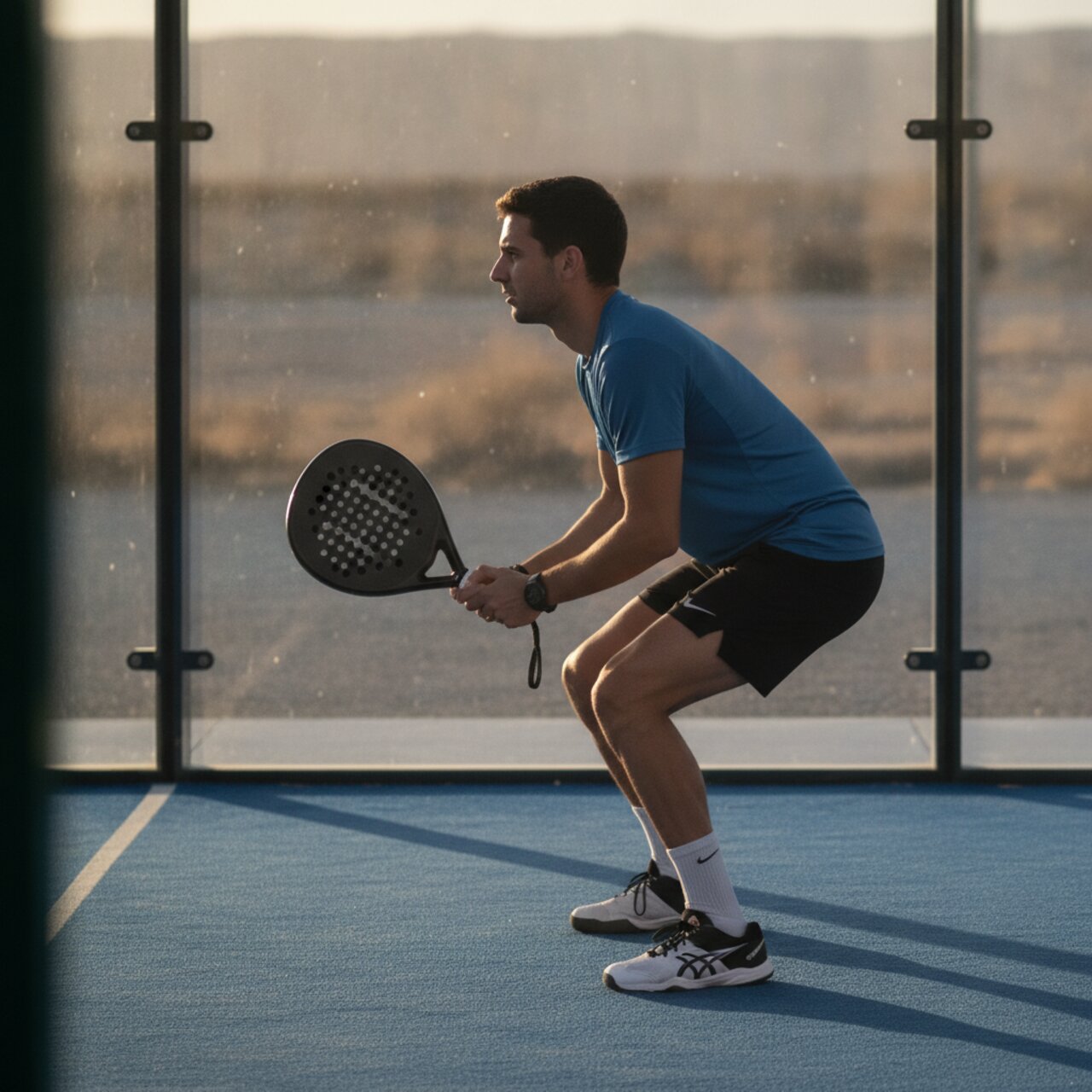
2. Ready Position
Between shots, always return to ready position:
- Feet shoulder-width apart
- Knees slightly bent
- Weight on balls of feet
- Racket in front of chest
- Face the net
3. The Serve (Detailed)
Step-by-step:
- Stand sideways to net
- Hold ball in non-racket hand
- Bounce ball at comfortable height
- Swing racket back low
- Hit ball below waist as it rises
- Follow through toward target
- Move to ready position
Practice tip: Start with soft, controlled serves. Power comes later.
4. Forehand
Most common shot in padel:
- Turn shoulders to side
- Take racket back early
- Step forward with front foot
- Swing low to high (slight topspin)
- Contact ball in front of body
- Follow through over shoulder
5. Backhand
Can be one-handed or two-handed (two-handed is easier):
- Turn shoulders
- Two hands on racket (if two-handed)
- Step forward
- Swing smoothly
- Follow through
6. Volley
Hitting before the ball bounces:
- Short punch, not full swing
- Step forward into shot
- Racket head stays up
- Aim for placement, not power
- Keep the ball in play
Net positioning:
- Stand 2-3 feet from net
- React quickly
- Use walls behind you if needed
7. Using the Walls
This is unique to padel:
When ball goes to back wall:
- Turn and face the wall
- Let ball bounce on ground first
- Wait for it to come off wall
- Hit it back over the net
- Use the extra time to get into position
Practice: Hit balls against the wall alone to learn the angles.
8. The Lob
Essential defensive shot:
- High, arching ball over opponents
- Forces them away from net
- Buys you time to recover
- Aim deep to baseline
- Don’t hit too hard (will go out)
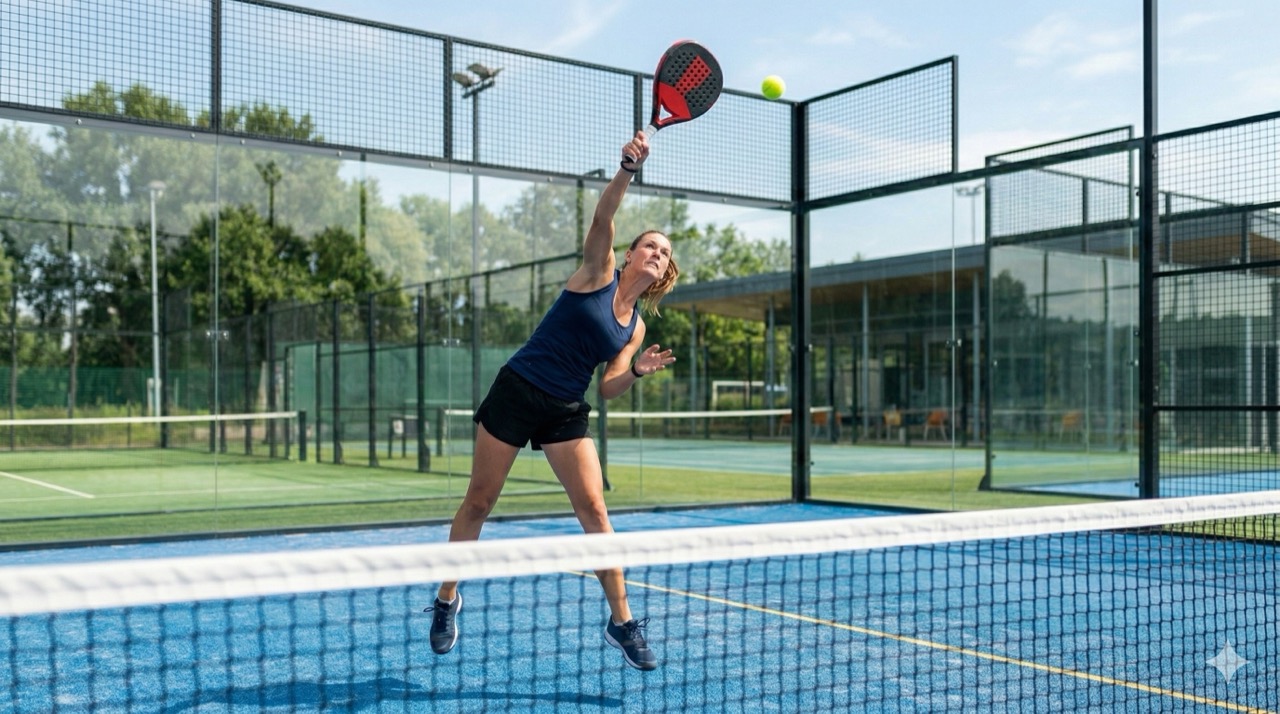
9. The Smash
Offensive overhead shot:
- Jump and hit ball above head
- Aim for opponent’s feet or corners
- Can use back wall (smash “por tres”)
- Finish the point
- Requires good timing
Strategy: How to Win Points
Basic Strategy
When at the net (attacking):
- Volley aggressively
- Aim for opponents’ feet
- Cut off angles
- Communicate with partner
- Move forward on weak returns
When at baseline (defending):
- Use lobs to push opponents back
- Play deep, consistent shots
- Wait for short ball opportunity
- Move forward together when possible
- Don’t rush - patience wins
Key Tactics
- Control the net: Team at the net has advantage
- Play to feet: Hardest ball to return
- Use lobs: Best weapon from baseline
- Wall awareness: Know when to use walls
- Move together: Stay side-by-side with partner
- Communicate: Call every ball clearly
- Consistency > Power: Keep the ball in play
Partner Communication
Critical in doubles:
Call every shot:
- “Mine!” = I’ve got it
- “Yours!” = You take it
- “Leave!” = Let it go out
- “Switch!” = Cross to other side
General rules:
- Player closer to ball takes it
- Down the middle = forehand player takes it
- Communicate early and clearly
- Encourage your partner!
Common Beginner Mistakes
1. Hitting Too Hard
❌ Problem: Trying to smash every ball
✅ Solution: Focus on consistency, keep ball in play
2. Standing Too Far Back
❌ Problem: Always at baseline
✅ Solution: Move to net when opportunity arises
3. Not Using Walls
❌ Problem: Giving up on balls going to back wall
✅ Solution: Practice wall play, use the extra time
4. Poor Partner Communication
❌ Problem: Both going for same ball or both leaving it
✅ Solution: Call every shot clearly and early
5. Wrong Footwear
❌ Problem: Wearing running shoes (slip risk!)
✅ Solution: Court shoes with good lateral support
6. Overarm Serving
❌ Problem: Tennis habits carry over
✅ Solution: Remember: underarm serve only in padel!
7. Not Moving as a Unit
❌ Problem: One player forward, one back
✅ Solution: Move together - both forward or both back
8. Forgetting to Have Fun
❌ Problem: Getting frustrated with mistakes
✅ Solution: It’s a social sport! Laugh, learn, enjoy
Your First Game: What to Expect
Reality check: You will miss a lot. That’s normal!
First 15 minutes:
- Lots of missed serves
- Balls flying everywhere
- Confusion about walls
- Uncertain positioning
- That’s totally fine!
After 30 minutes:
- Serves getting more consistent
- Understanding wall angles
- Longer rallies forming
- Starting to enjoy it!
By end of first hour:
- Basic mechanics clicking
- Having actual rallies
- Understanding the game flow
- Wanting to play again!
Pro tip: Book 1.5 hours for your first game. The first 30 minutes are learning time.
How to Improve Quickly
1. Play Regularly
- Ideal: 2-3 times per week
- Minimum: Once per week
- Consistency beats intensity
2. Take a Lesson
Even 1-2 lessons accelerate learning:
- Learn proper technique early
- Avoid bad habits
- Understand strategy
- Usually $30-60/hour
3. Watch and Learn
- Watch pro padel on YouTube
- Notice positioning and shot selection
- See how they use walls
- Study doubles coordination
4. Practice Specific Skills
Spend 10-15 minutes before games on:
- Serves (until consistent)
- Wall play (solo practice)
- Volleys (with partner)
- Footwork drills
5. Track Your Progress
Use padellog to:
- Log every match
- Track your win rate
- Identify patterns
- See improvement over time
Download padellog - iOS | Android
Step-by-Step: Your First Match
Ready to play? Here’s exactly what to do:
1 week before:
- Find 3 friends (beginners are perfect!)
- Book a court (1.5 hours)
- Watch a 5-minute YouTube tutorial
Day before:
- Confirm with your friends
- Check court location
- Prepare court shoes and water
On game day:
- Arrive 10 minutes early
- Stretch and warm up
- Rent or borrow equipment
- Review basic rules together
During the game:
- Start with gentle serves
- Focus on consistency
- Communicate with partner
- Don’t worry about mistakes
- Have fun!
After the game:
- Log match in padellog app
- Discuss what you learned
- Book your next session!
- Share on social media
Frequently Asked Questions
How long does it take to learn padel?
You can have fun on day one! To be competent: 4-6 weeks of regular play. To be good: 3-6 months. To be advanced: 1-2 years.
Is padel hard to learn?
No! Padel is easier to learn than tennis. Most beginners can rally within their first session. The smaller court and slower ball make it very forgiving.
Can I play padel alone?
Not really - padel is designed for doubles (2v2). However, you can practice solo drills against the wall to improve your skills.
Do I need a tennis background?
No. Tennis skills help, but many top padel players never played tennis. Some tennis habits (like overarm serving) actually need to be unlearned.
What if I’m not athletic?
Padel is perfect for non-athletes! The smaller court requires less running, and strategy matters more than athleticism.
How many calories does padel burn?
400-600 calories per hour on average, similar to tennis but with less impact on joints.
Can kids play padel?
Yes! Kids as young as 5-6 can start. Many clubs have junior programs. The small court makes it ideal for children.
What age is too old for padel?
There’s no upper limit! Players in their 70s and 80s enjoy padel. It’s easier on joints than tennis, making it perfect for older players.
Ready to Play?
You now know everything you need to play your first game of padel! Remember:
The essentials:
- Always doubles (2v2)
- Serve underhand
- Walls are your friend
- Same scoring as tennis
- Move as a unit with your partner
- Have fun!
Your action plan:
- Find 3 friends
- Book a court
- Show up and play
- Track progress with padellog
- Book your next game!
The best way to learn padel is to play. Don’t overthink it - just get on the court and enjoy!
See you on the court! 🎾
Related guides:
- What is Padel? - Complete introduction
- Padel for Beginners - Detailed beginner guide
- 10 Essential Padel Rules - Rules deep dive
- Padel Scoring System - Scoring explained
Ready to track your padel journey? Download padellog to log matches, analyze your game, and find courts near you.