By Mario GonzalezGuides
How to Book a Padel Court at Peak Times Without Relying on Luck
Book a padel court at peak times on purpose: how release windows work, the cancellation wave 24 hours out, and what off-peak courts quietly give you in return.
Every club has the same conversation on repeat. Four people agree to play Tuesday at eight, someone opens the app on Monday morning, and there is nothing. Not a bad court, not a late slot, nothing. The group blames the app, blames the club, and books a Thursday nobody can make.
The problem is almost never bad luck. Peak-hour supply at a padel club is a fixed, small number, the release rules are public, and most players never learn them. Once you can book a padel court on the same terms as the people who always seem to have one, evening slots stop feeling random.
Do the Arithmetic Before You Blame the App
Take a normal six-court club with a peak window from 18:30 to 22:30. That window holds two 90-minute slots per court with a bit of slack, so twelve bookings a night, forty-eight player places. A club that size usually has somewhere between 600 and 900 members.
Forty-eight places out of 700 people is under seven percent of the membership playing on any given weekday evening. Now subtract the courts locked into academy classes from 18:00 to 20:00 and the slots sold as fixed season bookings, which at many clubs is a third of peak inventory. You are competing for maybe eight open courts.
That number explains everything. Nobody is hiding courts from you. The evening simply cannot hold your group unless you claim a place in it deliberately, and the first step is knowing exactly when those eight courts appear.
How Padel Court Booking Systems Actually Work
Whatever platform your club uses, the inventory moves through four mechanisms. Learn which ones your club runs and you already know more than most of its members.
The release window. Courts open for booking a fixed number of days ahead, at a fixed moment. Seven days at midnight is the most common setup, followed by seven days at the same hour as the slot itself, and eight or fourteen days at 08:00. The whole week’s competition for a Tuesday 20:00 court happens in the first thirty to sixty seconds after that window opens. If you do not know your club’s exact rule, that is the single most valuable thing to find out this week. Ask at the desk rather than guessing from the app.
Fixed season bookings. Plenty of clubs sell the same slot every week for a season, and those courts are never released to the general pool at all. This is why the Tuesday 20:00 court appears to be booked before booking opens. It was never available. Ask what share of peak slots is sold this way, because if it is over half, the release window is a scramble for scraps and no amount of clicking speed fixes it.
Membership tiers. Members frequently book earlier than guests, sometimes by four or five days, which means the guest window opens onto an already-empty evening. If you play at a club twice a week without being a member, the membership usually pays for itself in access alone.
Concurrent booking limits. Many systems cap how many open reservations one account can hold, typically two or three. This shapes strategy more than people expect: if your cap is two, spending both on next Tuesday and next Thursday means you cannot grab a cancellation on Friday.
Winning the Release Window
The release sprint is short and mostly won before it starts. Have the account logged in on the device you will actually use, the payment method saved, and the target date already open on screen. Fumbling a password costs you the court.
Decide your fallback before the clock runs. First choice 20:00 on court 3, second choice 21:30 on any court, third choice Wednesday at the same time. Groups lose slots every week because someone spends twenty seconds deciding whether 21:30 is too late, and twenty seconds is the whole contest.
Two details are worth testing once. Club servers and phone clocks drift by a few seconds, so load the page at fifty seconds past and refresh on the minute rather than trusting your handset. And check whether the website releases at the same instant as the app, because at some clubs one of the two lags by a few seconds.
If your group is large enough, have a second person attempt the same slot as insurance, then cancel immediately when one of you succeeds. Do this within seconds, not minutes. Holding two peak courts while your group decides is the behaviour that makes clubs impose booking limits in the first place.
The Cancellation Wave Nobody Sets an Alarm For
Peak courts are released twice: once when the window opens, and once when other people’s plans fall apart. The second release is far less contested, and it is predictable because it is driven by the club’s cancellation policy.
| Time before the slot | What happens | What to do |
|---|---|---|
| 7 days | Release window opens | The main sprint, decided in under a minute |
| 48 hours | First dropouts as the week takes shape | Check once, morning and evening |
| 24 or 12 hours | Free-cancellation deadline expires | The biggest single release. Set an alarm |
| 3 hours | An injured player or a work emergency | Worth a look if you can play on short notice |
| 30 minutes | No-shows and walk-in gaps | Call the desk rather than checking the app |
Most clubs allow free cancellation up to 24 or 12 hours before, after which the booker pays regardless. Anyone unsure about their Tuesday match cancels right at that boundary, so an alarm at exactly 24 hours before your target slot puts you in front of the largest wave of returned courts in the week. This tactic costs nothing and almost nobody uses it.
Turn on waitlist notifications too, if the platform has them. And when it matters, phone the club instead of refreshing. The desk holds courts the app never shows: a cancelled class, a maintenance block that finished early, a slot released to a member who did not confirm. Being a face the staff recognise is worth real court time.
Book as a Group, Not as an Individual
Four people trying to agree on a time and then find a court is backwards. Agree the slot first, name one person who books it and pays, and settle up afterwards. The booker rotates weekly so the same person is not always awake at midnight.
A group of exactly four is fragile, because one injury or work trip kills the session and the court is already paid for. Six to eight names with a clear rule about who gets first refusal is the shape that survives a season. That is the same structure behind building a padel group that lasts, and it solves the booking problem as a side effect.
Lock the four players before you spend money on the court. Padellog’s group chat and match proposals exist for exactly that moment: propose the day, get three confirmations, then book with confidence and log the result afterwards so the group’s record keeps building. The app’s group features will not book the court for you, but they remove the part where you buy a slot and then discover only two people can make it.
What Off-Peak Actually Buys You
Off-peak is usually pitched as the cheap compromise. The price is the least interesting part of it.
| Peak evening | Off-peak | |
|---|---|---|
| Price per court, 90 min | €24 to €32 | €12 to €18 |
| Booking effort | Sprint at the release window | Book that morning |
| Court choice | Whatever is left | Pick the good one |
| Effective playing time | 75 minutes after the changeover shuffle | The full slot |
| Conditions | Whatever the evening gives you | Choose sun, shade or indoors |
Two midday sessions cost about what one Tuesday evening costs. You also get the court you want rather than the one nobody else took, which matters more than it sounds when one court has a dead back wall or sun straight into the receiver’s eyes at 19:00.
The time itself is different. Nobody is standing at the gate waiting to come on, so a warm-up is a warm-up rather than four people rushing through two minutes of volleys. Off-peak is when you can run drills, work on a shot, or play a proper Americano that needs two courts for three hours, which no club will give you at eight in the evening.
Watch the conditions, though. A midday outdoor court in July is a health decision rather than a padel decision, and the heat management rules are not optional. In summer the good off-peak slots move to early morning and indoors.
The Three Slots That Stay Open
07:00 to 08:30. The most underrated hour in the sport. The court is always free, the price is low, and you have played before your first meeting. The barrier is entirely psychological and disappears after three weeks.
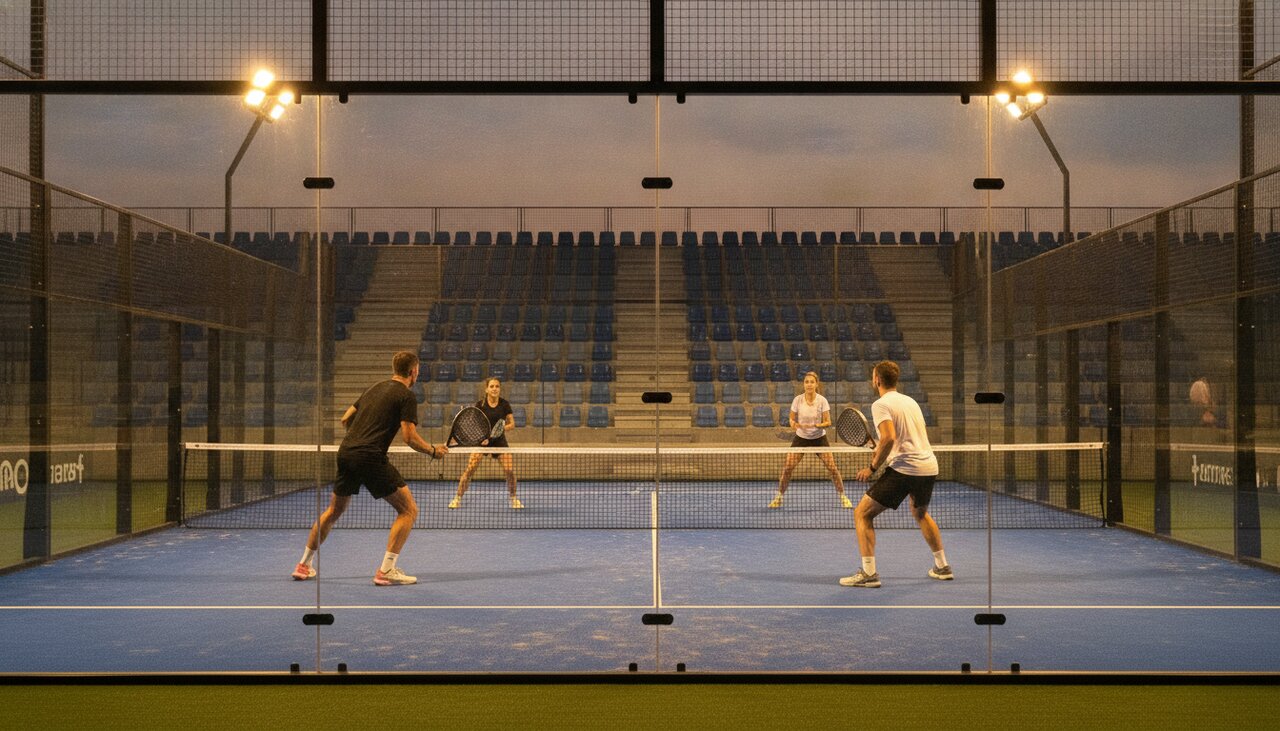
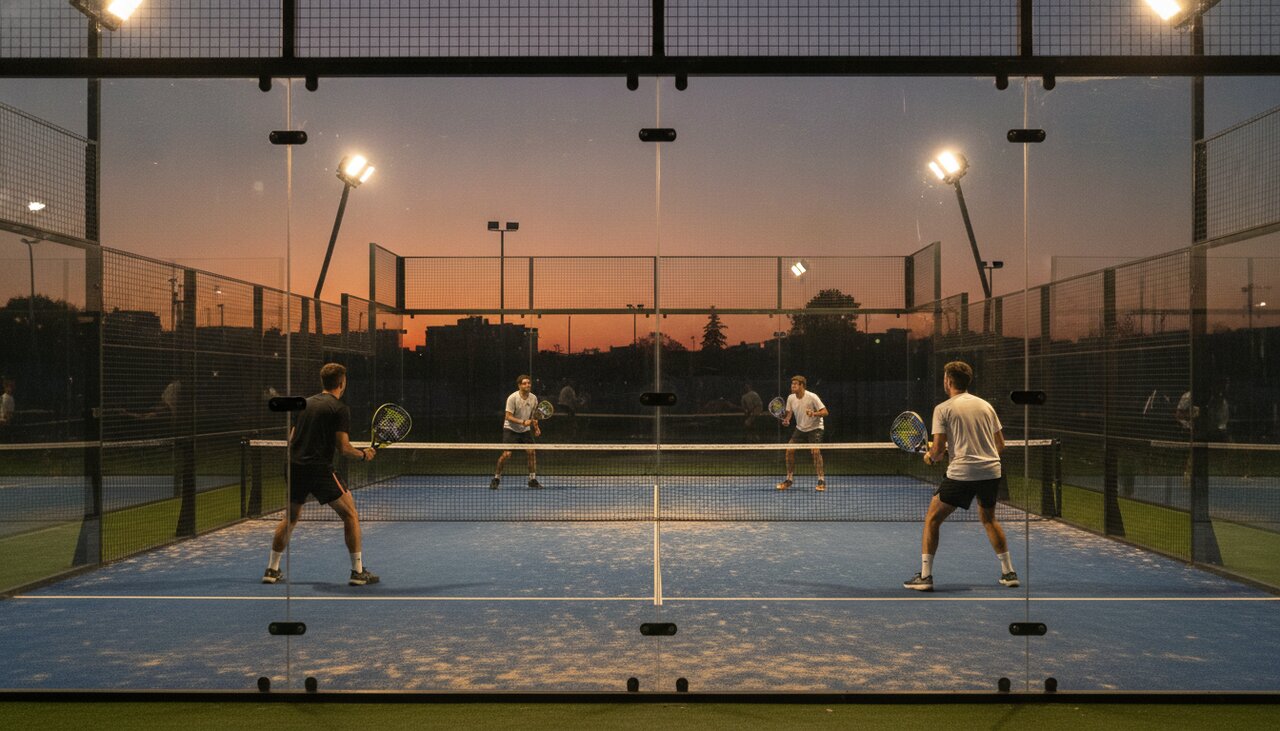
22:00 onwards. Peak-adjacent and consistently available, especially Fridays, when a lot of players choose dinner over padel. Lit courts play slightly differently, which is worth reading about before you commit a season to them: see playing padel under lights.
Weekday 14:00 to 16:00. Dead almost everywhere. If you work flexibly or from home, this is a court you can book the same morning, every week, for months.
When to Stop Fighting for Peak
If your group wants a specific evening hour every week and keeps failing, buy it. A fixed season slot at €26 a week over 40 weeks is €1,040, or €260 per player per year, roughly €6.50 a session. That is competitive with paying casually, and you stop thinking about booking entirely.
The trap is attendance. A fixed slot bills whether or not four people turn up, so it only works if your group fields four in at least eight weeks out of ten. Run it with a squad of six and a substitute list, or it turns into an expensive standing appointment with an empty court. The same maths applies if you are thinking about starting a league at your club, where court load has to be sized before sign-ups open.
The other structural fixes are simpler. Join a second club fifteen minutes further out and check both apps, since two clubs rarely have their peak windows open at the same instant. Take 60-minute slots at the edges of peak, which go last and are enough for a warm-up and a set. And if you keep losing the sprint at your club, look honestly at whether it is the right club for you, which the guide on what to look for in a padel club covers in more detail.
What to Realistically Expect
At a busy club you will not get a 20:00 weekday court on demand, and no technique changes that. What changes is the hit rate. Knowing the release rule, setting the 24-hour alarm and rotating the booker takes a group from one evening slot a month to two a week, which is roughly the ceiling for a non-member at a full club.
Expect to plan seven days out for peak and the same morning for off-peak. Expect one attempt in three to fail. And when it does fail, cancel properly rather than not showing up: no-shows are why clubs add fees, shorten cancellation windows and get stricter with everyone, which is as much a part of court etiquette as the rules inside the glass.
The players who always seem to have a court are not luckier. They know the exact minute the window opens, they have a group that confirms fast, and half their padel happens at hours nobody is competing for.