By Mario GonzalezGuides
Night Padel: How to Play Your Best Under the Lights
Night padel changes how you see the ball and time your shots. Learn to adjust your vision, technique, eyewear, and timing for matches under the lights.
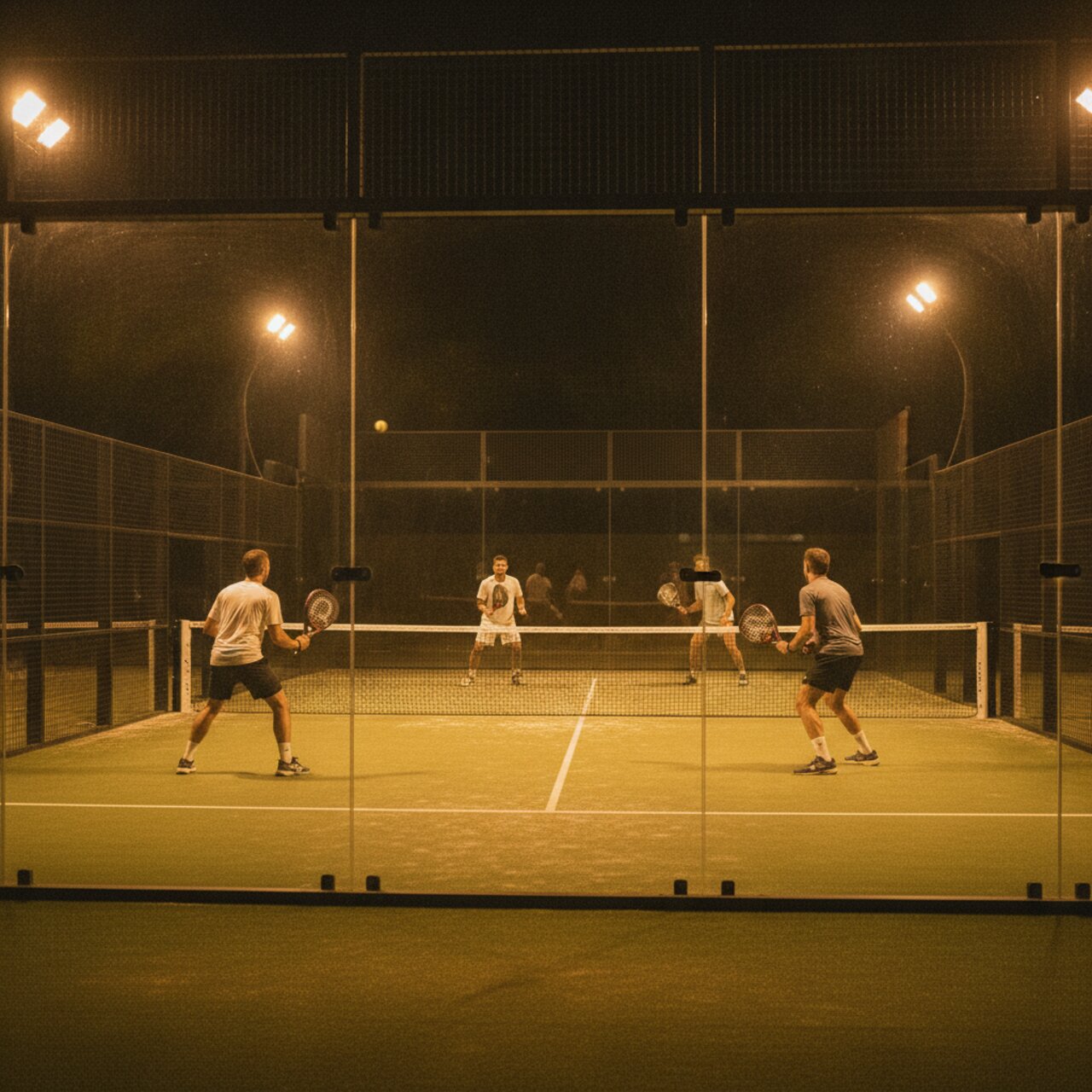
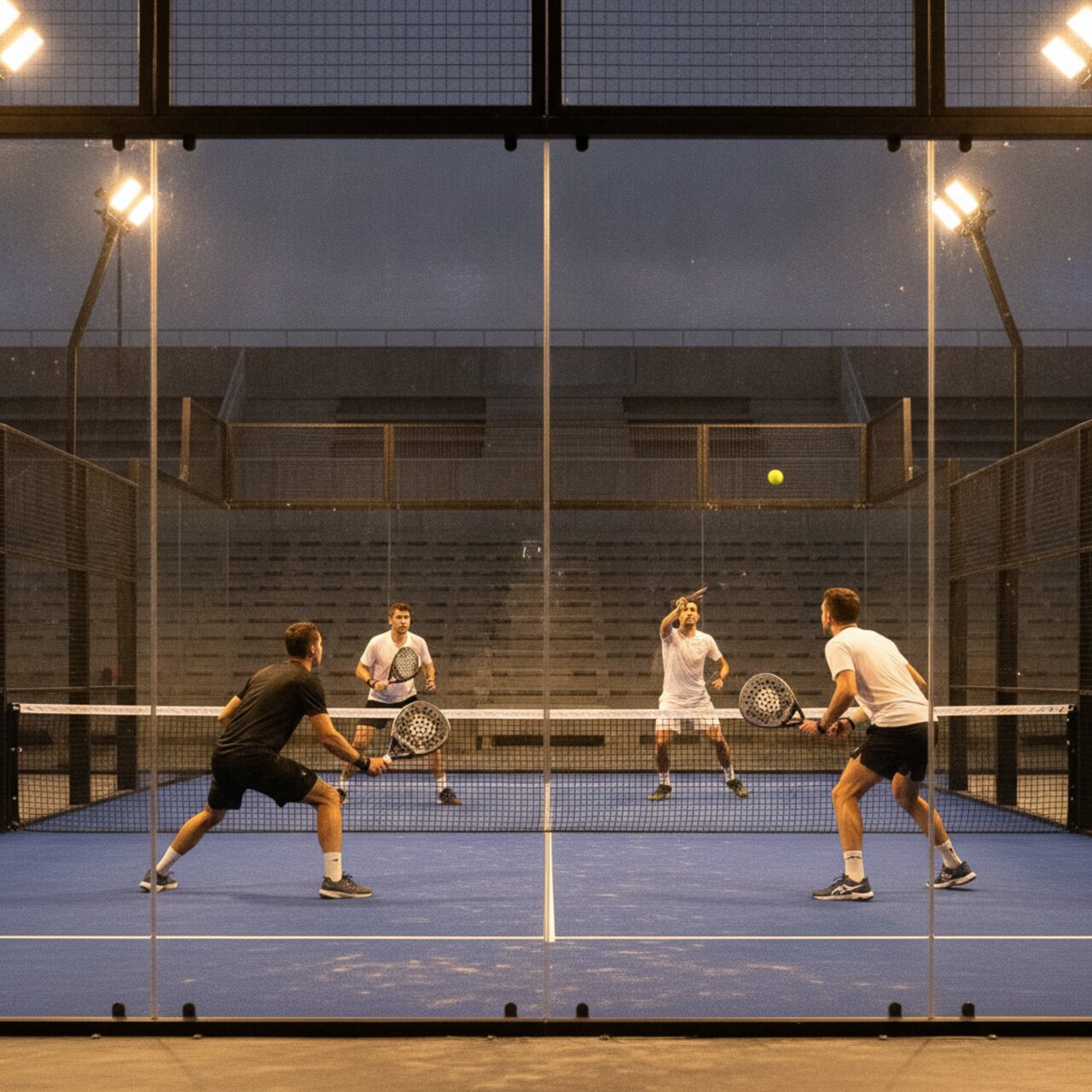
Most amateur padel happens after dark. Courts fill up between 7 and 11 p.m. because that’s when people finish work, and outdoor clubs run their floodlights to keep the bookings coming. Night padel isn’t a different sport, but it does ask different things from your eyes and your timing. The ball comes off the paint at a slightly different speed to your perception, the back glass throws odd reflections, and a badly lit court can turn a routine lob into a guessing game.
The good news: none of this requires new shots. It requires small adjustments to how you read the court and where you position yourself. Get those right and you’ll stop losing points you’d win in daylight.
Why Night Padel Plays Differently
The single biggest change under lights is depth perception. In daylight, your eyes use shadows, background contrast, and the full color spectrum to judge how far away the ball is and how fast it’s traveling. Floodlights flatten all of that. The court becomes a pool of bright light surrounded by darkness, and the yellow ball loses some of the contrast cues you rely on without thinking.
That flattening has three practical effects. High balls are harder to track against a dark sky, so lobs and smashes become the shots people misjudge most. The pace of a flat drive can feel like it “arrives late,” because your brain has less information to predict the bounce. And the glass walls reflect the lamps, which means a ball travelling near the back can briefly disappear into a bright patch before it reappears.
None of this makes you a worse player. It just means the margin for lazy footwork shrinks. If you’re used to reacting a fraction late in daylight and getting away with it, night play punishes that habit.
Know Your Court Lighting
Not all lit courts are equal, and reading the lighting before the first serve saves you a set of surprises.
LED panels are now standard at newer clubs. They give even, white, flicker-free light with good coverage into the corners. If your court has modern LEDs mounted above and slightly outside the side walls, you’re getting close to daytime conditions and barely need to adjust.
Older metal-halide or halogen floods are the ones to watch. They cast a warmer, yellower light, often with dark patches between fixtures and a noticeable glare when you look up toward the lamp to track a lob. Corners tend to be dimmer than the center, so balls dying near the back glass are harder to pick up.
Before you warm up, hit a few lobs and look for the dead zones. Notice where the glare sits when you look up to smash, and check whether one side of the court is dimmer than the other. If it is, that’s useful information for choosing your side: the player more comfortable tracking high balls should take the darker half.
Train Your Eyes to Read the Ball
Your eyes need a few minutes to settle into artificial light, especially if you walked in from a bright clubhouse or a dark parking lot. Give yourself a longer warm-up than usual. Ten minutes of easy rallying lets your pupils adjust and teaches your brain how the ball moves under these specific lamps.
Spend part of that warm-up hitting high balls on purpose. Feed each other lobs and practice tracking them all the way to the strings. This is the exact skill night play degrades, so rehearsing it before points count pays off immediately. The same goes for balls off the back wall: play a few deliberate back-wall defenses so you learn how the rebound looks when the glass is reflecting the floods.
A simple habit helps during the match: watch the ball a beat longer than feels necessary. In poor light your instinct is to look up early to see where your opponents are. Resist it. Keep your eyes on the contact point and trust that the extra fraction of a second gives your brain the depth information the lights stripped away.
Eyewear and Glare
Glare is the most common complaint under warmer floodlights, and the fix is often eyewear. Clear or lightly tinted sports glasses cut the harsh reflection off the glass and reduce the halo you see when looking up at a lamp during a smash. They also protect your eyes, which matters more at net than most players admit.
Skip dark sunglasses lenses at night. They dim the whole court and make the dark corners worse, not better. What you want is a clear or very lightly yellow lens that boosts contrast without cutting brightness. If you already wear protective eyewear, night matches are the time it earns its place. A full breakdown of options lives in the guide to padel glasses and eye protection.
One more small thing: keep a microfiber cloth in your bag. Warm evenings mean sweat and the occasional smudge, and a fingerprint across your lens turns a bright lamp into a starburst right when you’re tracking a lob.
Technique Tweaks for Night Matches
You don’t change your strokes at night, but you do change your shot selection to account for what’s harder to see.
Favor the lob more than you would in daylight. Under floodlights, your opponents struggle to track the high ball just as much as you do, and a well-placed lob into a dark back corner is one of the highest-percentage attacking plays available after dark. Aim for depth over height so the ball stays in the awkward zone where glare and dimness overlap.
Be more conservative with the smash when the glare is bad. Looking straight up into a warm floodlight to time an overhead is genuinely difficult, and a mistimed smash gives away easy points. If you can’t see the ball cleanly at the top of its arc, take the bandeja instead and keep the point alive rather than swinging for a winner you can’t track.
At the net, tighten your volley positioning. Fast exchanges are where late reactions hurt most, so stand a touch more compact and let your split-step carry you into the ball rather than reaching. The reduced depth cues mean your hands need to be ready earlier than in daylight.
Timing, Scheduling, and Your Body
Night padel comes with logistics that affect performance as much as the lighting does. Playing at 10 p.m. means competing when your body is winding down, and a heavy pre-match meal three hours earlier will sit differently than a midday match would.
Eat lighter and earlier for late sessions. A big dinner right before a 9 p.m. match leaves you sluggish, while playing on an empty stomach after a long workday leaves you flat by the third game. A small snack an hour before works better than a full meal. The principles carry over from what to eat before a padel match, just shifted for the hour.
Warm up longer, too. Evening bodies are often stiffer than midday ones, especially in cooler months when outdoor courts drop in temperature after sunset. Give your shoulders and legs a few extra minutes so the first smash of the night doesn’t strain a cold muscle.
Finally, think about recovery. High-intensity padel under lights raises your heart rate and alertness right before bed, and many players struggle to sleep after a hard 11 p.m. match. Cool down properly, hydrate, and give yourself time to come down rather than crashing straight into bed.
A Quick Pre-Match Checklist for Night Play
Run through this before your next evening booking:
- Arrive a few minutes early and let your eyes adjust to the lit court before warming up.
- Hit deliberate lobs and back-wall balls in the warm-up to calibrate your tracking.
- Note the dark corners and glare spots, and pick your side accordingly.
- Pack clear or lightly tinted eyewear and a clean lens cloth, never dark sunglasses.
- Eat light and early, and add a few extra minutes to your warm-up.
Night padel rewards the players who prepare for the conditions instead of fighting them. Sharpen your ball tracking, lean on the lob, respect the glare on your smash, and the darkness stops being a disadvantage. If you’re still building your fundamentals, the complete beginner’s guide covers the base you’ll want solid before the lights even come on.