By Mario GonzalezFitness
Summer Padel: How to Play Safely in Hot Weather
A summer padel heat management guide: how to play in hot weather safely with the right timing, hydration, clothing, and smart tactics that beat the heat.
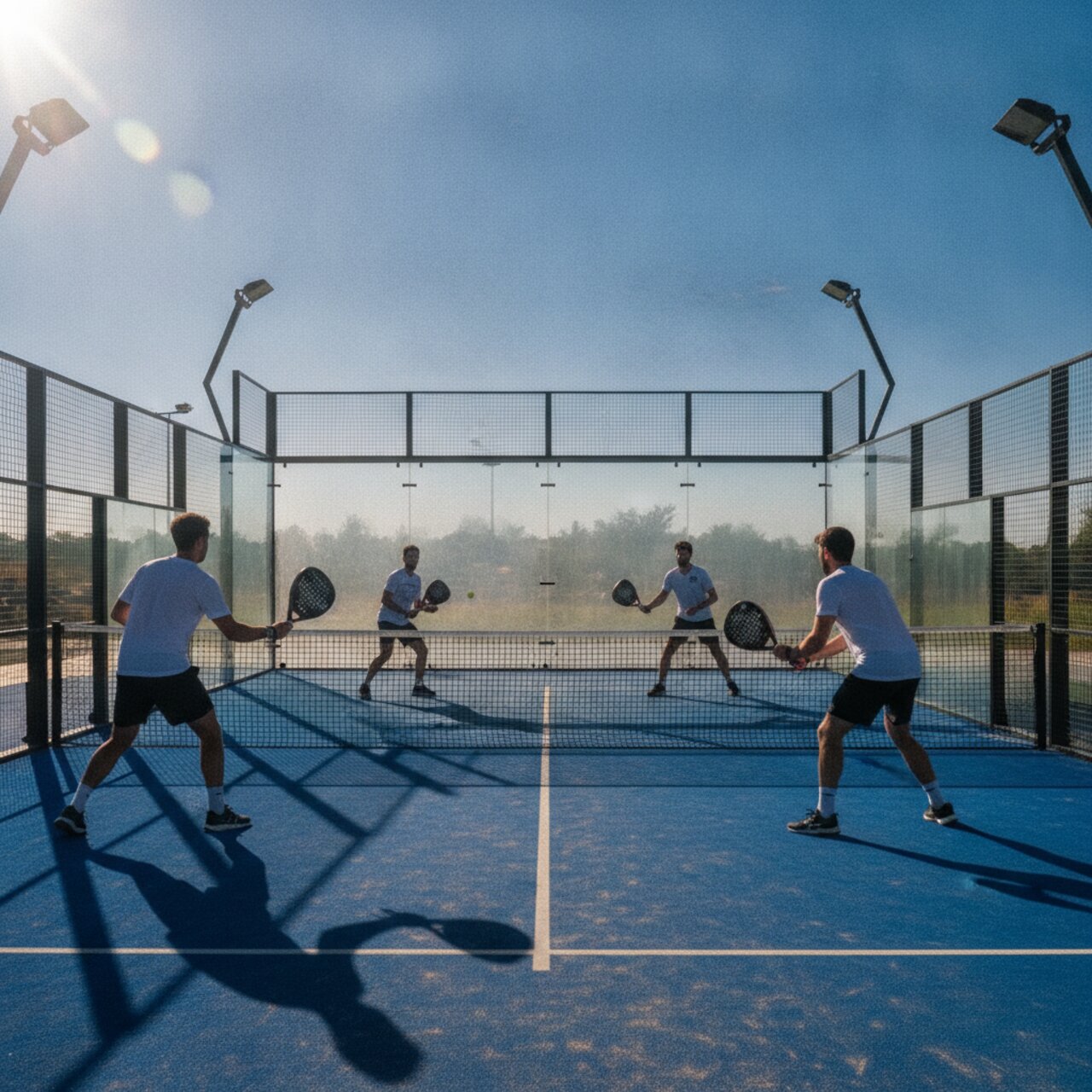
Summer padel punishes players who treat a 35°C match like any other. Playing in hot weather changes how fast you tire, how your body cools itself, and how the ball behaves off the glass. The heat isn’t just uncomfortable; on an enclosed court with three walls and often a windless afternoon, it turns a normal two-hour session into a genuine physical risk if you don’t plan for it.
This guide covers the practical decisions that keep you competitive and safe through the hottest months: when to book your court, what to drink and when, what to wear, how to read the warning signs of heat illness in yourself and your partner, and how to adjust your tactics so the sun works against your opponents instead of you.
Why Summer Padel Is Harder Than It Looks
An outdoor padel court is a heat trap. The glass walls block airflow, the artificial turf radiates warmth back up at you, and unlike tennis you rarely get long gaps between points to recover. A competitive padel point can last 20 to 40 seconds with constant direction changes, and the short changeovers give your heart rate almost no time to drop.
Your body cools itself mainly through sweat evaporation. In dry inland heat that works reasonably well, but on a humid coastal afternoon the sweat just drips off you without cooling anything. That’s when core temperature climbs. Combine that with the adrenaline of a close match, where you stop noticing how bad you feel, and you have the classic setup for a player collapsing at 6-6 in the third.
None of this means avoiding padel in summer. It means respecting what the heat does and building a few habits that most recreational players skip entirely.
Playing Padel in Hot Weather: Get the Timing Right
The single most effective heat decision happens before you step on court: when you book it.
The danger window on a hot day runs roughly from 12:00 to 17:00, when both air temperature and sun radiation peak. If you can play at 08:00 or after 20:00, you sidestep most of the problem. Early morning is usually the coolest, calmest air of the day and the court surface hasn’t absorbed hours of sun yet.
If you’re stuck with a midday slot, look for an indoor or covered court. Many clubs now have covered outdoor courts that block direct sun while keeping airflow, which drops the felt temperature dramatically even when the thermometer reads the same. When you’re choosing a venue in summer, court cover matters more than surface quality or price. The padel club discovery map can help you find covered options nearby before you commit to a booking.
Shorten your sessions too. A 90-minute social session in April is fine; in a July heatwave, cap outdoor play at 60 minutes and build in real breaks, not just the 90 seconds between games.
Hydration That Actually Works
Drinking a big bottle of water right before you play does almost nothing. Hydration is a multi-day habit, and by the time you feel thirsty on court you’re already behind.
Start topped up the day before a hot match by drinking steadily rather than chugging. On match day, aim for around 500ml of water in the two hours before you play. During the match, drink small amounts at every changeover rather than a huge gulp every third game, roughly 150 to 250ml each time depending on how hard you’re sweating.
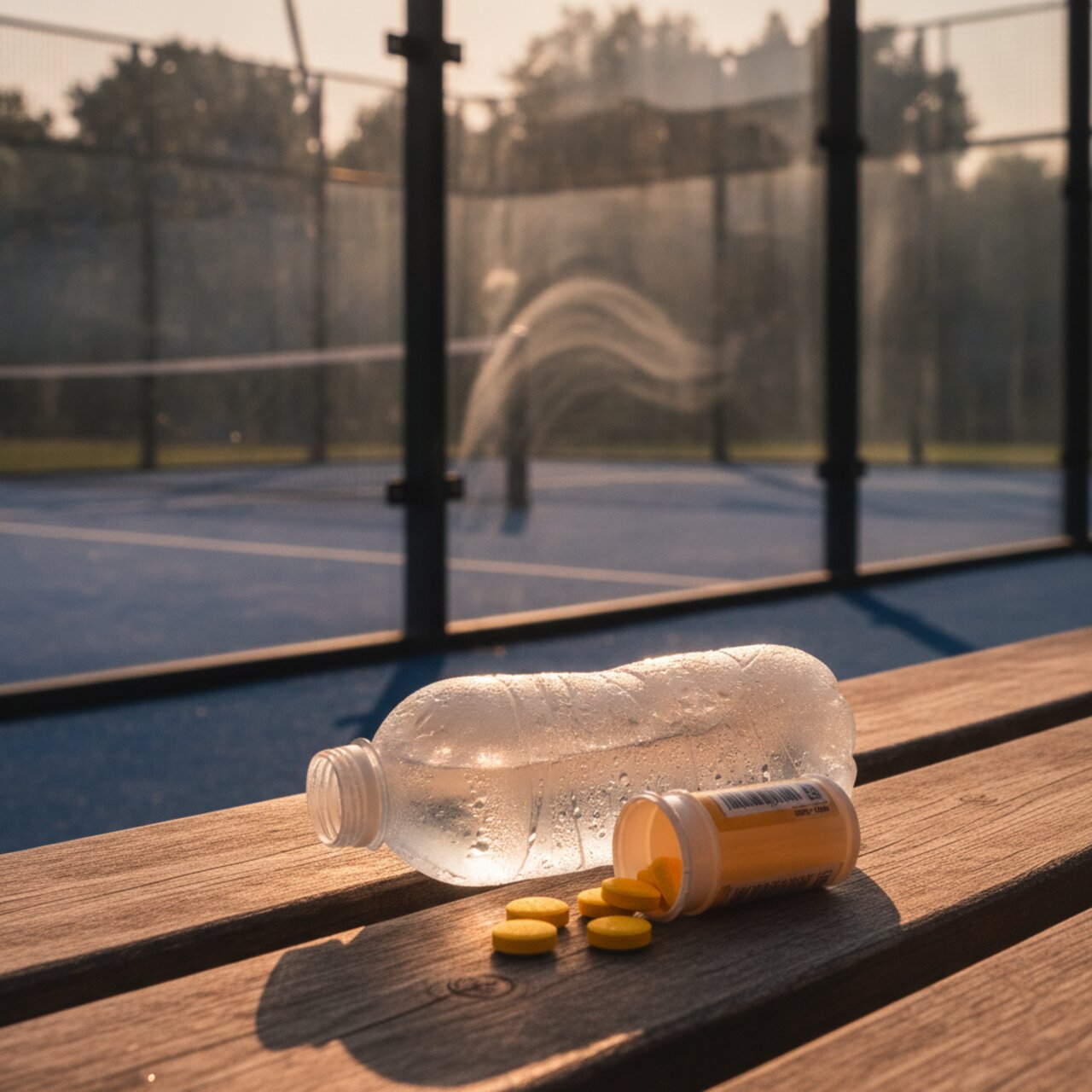
Water alone isn’t enough past about an hour of heavy sweating. You lose sodium and other electrolytes, and replacing water without salt can actually dilute your blood sodium and make you feel worse. Add an electrolyte tablet or a proper sports drink for any session over 60 minutes in the heat. Our hydration guide for padel players breaks down exactly how much and what to drink, and the playing padel in the heat nutrition guide covers what to eat around a hot match.
A simple self-check: your urine should be pale straw-coloured before and after playing. Dark yellow means you started dehydrated and need to fix that on non-match days, not with a panicked bottle at courtside.
What to Wear in the Heat
Clothing choices make a real difference to how hot you feel and how well you move late in a match.
Pick light-coloured, loose technical fabrics that wick sweat and let air move across your skin. Cotton soaks up sweat and stays heavy and clammy, so keep it for after the match. A cap or visor protects your face and, more importantly, keeps direct sun off your head and out of your eyes when you look up for a smash. Sunglasses designed for sport reduce squinting on high lobs against a bright sky.
Don’t skip sunscreen just because you’ll sweat it off. Use a sweat-resistant SPF 50, apply it 20 minutes before you play, and reapply at the halfway point. The back of the neck and the tops of the ears get burned constantly by players who only cover their face.
Footwear matters more in summer than most people realise. Hot artificial turf gets slippery as it heats, and tired legs in the heat lead to sloppy footwork and rolled ankles. A shoe with proper grip for the surface reduces that risk; if yours are worn smooth, the best padel shoes guide for 2026 is worth a read before the season peaks.
Recognising Heat Illness Before It’s Serious
This is the part recreational players ignore until it’s a problem. Heat illness sits on a spectrum, and catching it early is the whole game.
Heat cramps are the first warning: sudden, painful muscle spasms in the calves, thighs, or abdomen, usually from losing too much salt and fluid. Stop, stretch gently, drink electrolytes, and don’t push through them.
Heat exhaustion is more serious. The signs are heavy sweating, cool and clammy skin, dizziness, nausea, headache, a rapid weak pulse, and a heavy, drained feeling in the legs. If you notice these, stop playing immediately, get into shade or air conditioning, loosen your clothing, drink cool fluids, and put cold water or ice on your neck, armpits, and groin. Recovery usually takes the rest of the day.
Heatstroke is a medical emergency. The critical warning sign is a change in mental state: confusion, slurred speech, aggression, or someone who stops sweating despite the heat and has hot, dry, flushed skin. This is life-threatening. Call emergency services, move the person to shade, and cool them aggressively with water and ice while you wait.
The most important habit is watching your partner and opponents, not just yourself. Adrenaline and competitiveness blind you to your own symptoms, so a good padel four looks out for each other. If a partner goes quiet, gets clumsy, or stops making sense between points, end the match. No social game is worth a hospital visit.
Adjusting Your Tactics for the Heat
Heat rewards the smarter team, not always the fitter one, and you can turn the conditions into a weapon.
Long rallies drain everyone, so in extreme heat the value of ending points quickly goes up. A patient grinder who normally wears opponents down with 15-shot rallies is now cooking themselves as much as anyone. Look to finish points in fewer shots with a decisive bandeja or a well-placed smash rather than rallying for the sake of it.
Use the sun deliberately. When you’re serving or setting up a lob, aim to make opponents look directly into the sun to track a high ball. A lob into the sun in mid-afternoon is far harder to read than the same lob at 8am, and it forces weak defensive returns you can attack. Notice which end of the court has the sun behind it and factor that into where you send your lobs.
Manage the changeovers like a professional. Sit down when there’s a bench, get into shade, drink, and lower your heart rate rather than standing and chatting. Those 90 seconds are recovery time, and using them well is often the difference in a long three-setter played in the heat.
The ball itself changes too. Heat raises internal pressure, so balls fly faster and bounce higher, and they go dead quicker after heavy use. Expect a livelier ball early and be ready to swap to a fresh set sooner than you would in cooler weather.
Building Summer Into Your Routine
Treat hot-weather padel as a slightly different sport that needs its own preparation. Book early or covered courts, arrive already hydrated, dress for the conditions, keep electrolytes and sunscreen in your bag as standard kit, and agree with your regular partners that anyone can call a match if someone shows heat-illness signs.
If you’re returning to the court after time off, or you’re over 40, the heat asks more of your body than it did a decade ago. Build back gradually and read our guide to padel for players over 40 for pacing that accounts for age and recovery. Log how you feel across the summer in the app, and you’ll quickly spot which times of day and hydration habits actually keep your level up when the temperature climbs.
Play smart through the hottest weeks and you keep improving while everyone else either quits for the season or burns out. The players who manage the heat well are the ones still winning close matches in August.