By Mario GonzalezGuides
The 2026 Premier Padel Season by the Numbers
The 2026 Premier Padel season by the numbers: 804 matches across 13 events, with every title, win rate, streak and upset taken from our match database.
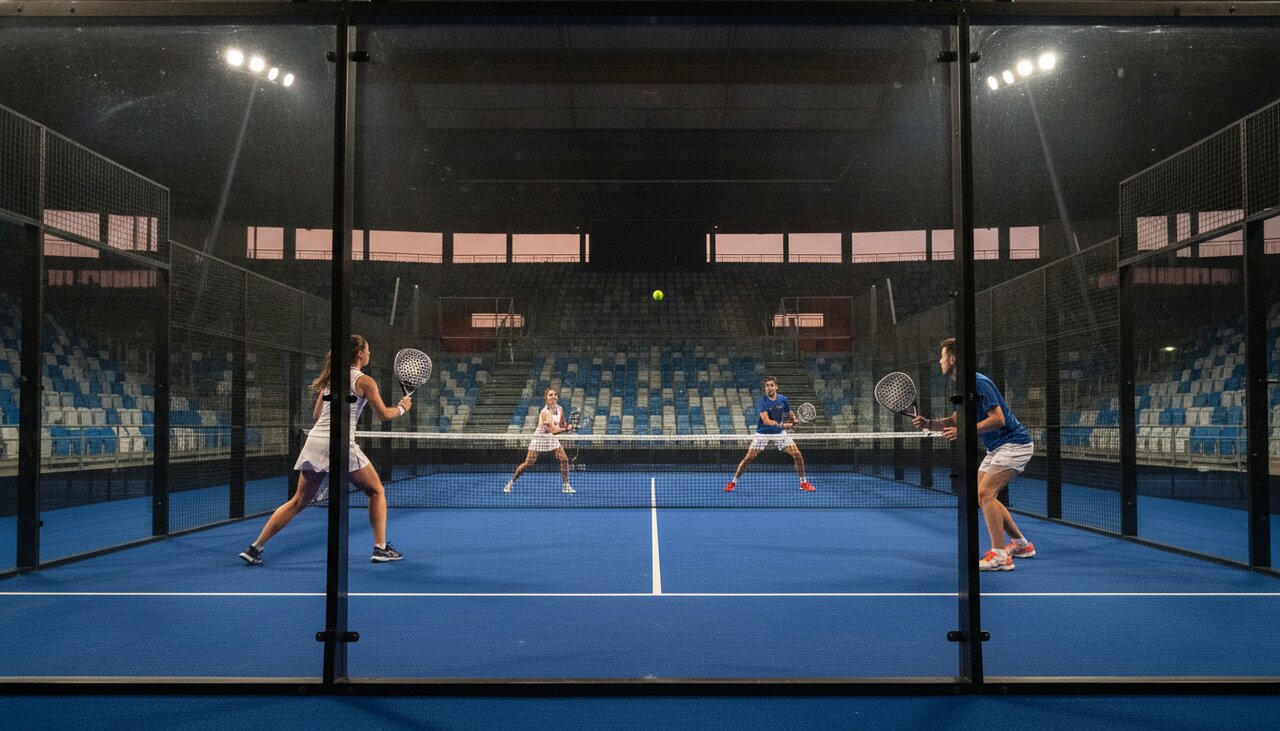
We import every professional result into Padellog, which means the 2026 Premier Padel season is sitting in our database as raw match records rather than headlines. Thirteen tournaments, 804 matches, 302 players and 251 different pairings, from the Riyadh Season P1 in February through the Andalucía Málaga P1 final on 19 July. Here is what those records actually say about who dominated, who nearly did, and how often the favourite went home early.
All figures below come from our own match table and cover main-draw matches in both the men’s and women’s draws.
Who won what: the 2026 Premier Padel season title count
Thirteen events, thirteen men’s titles, thirteen women’s titles. Three pairs shared the men’s silverware and four shared the women’s.
| Event | Dates | Men’s champion | Women’s champion |
|---|---|---|---|
| Riyadh Season P1 | 9–14 Feb | Coello / Tapia | Sánchez / Ustero |
| Gijón P2 | 3–8 Mar | Galán / Chingotto | Triay / Brea |
| Cancún P2 | 17–22 Mar | Coello / Tapia | Triay / Brea |
| Miami P1 | 23–29 Mar | Galán / Chingotto | Josemaría / González |
| NewGiza P2 | 13–18 Apr | Galán / Chingotto | Josemaría / González |
| Brussels P2 | 21–26 Apr | Lebrón / Augsburger | Josemaría / González |
| Asunción P2 | 5–10 May | Galán / Chingotto | Josemaría / González |
| Buenos Aires P1 | 12–17 May | Galán / Chingotto | Josemaría / González |
| Italy Major | 2–7 Jun | Coello / Tapia | Triay / Brea |
| Valencia P1 | 8–14 Jun | Coello / Tapia | Sánchez / Ustero |
| Valladolid P2 | 23–28 Jun | Coello / Tapia | Josemaría / González |
| Bordeaux P2 | 30 Jun–5 Jul | Coello / Tapia | Icardo / Jensen |
| Andalucía Málaga P1 | 13–19 Jul | Coello / Tapia | Triay / Brea |
Arturo Coello and Agustín Tapia took seven, Alejandro Galán and Federico Chingotto five, and Juan Lebrón and Leandro Augsburger one. On the women’s side Paula Josemaría and Beatriz González won six, Gemma Triay and Delfina Brea four, Ariana Sánchez and Andrea Ustero two, and Tamara Icardo and Claudia Jensen one.
Season records for the pairs that mattered
| Pair | Draw | Record | Win rate | Titles | Finals |
|---|---|---|---|---|---|
| Coello / Tapia | Men | 49–5 | 90.7% | 7 | 12 |
| Galán / Chingotto | Men | 46–8 | 85.2% | 5 | 10 |
| Triay / Brea | Women | 40–9 | 81.6% | 4 | 11 |
| Josemaría / González | Women | 38–7 | 84.4% | 6 | 8 |
| Lebrón / Augsburger | Men | 32–12 | 72.7% | 1 | 3 |
| Sánchez / Ustero | Women | 28–10 | 73.7% | 2 | 5 |
| Stupaczuk / Yanguas | Men | 26–13 | 66.7% | 0 | 1 |
| Icardo / Jensen | Women | 24–12 | 66.7% | 1 | 1 |
The single most striking line in the whole database belongs to Coello and Tapia. They played twelve of the thirteen events, skipping only NewGiza, and reached the final at all twelve. Their five defeats all came in finals. Not once in 54 matches did anyone beat them before the last day of a tournament.
Galán and Chingotto were almost as consistent and had a far worse time of it in a specific way: of their eight losses, five came in finals to Coello and Tapia.
The rivalry that defined the men’s season
Nine of the thirteen men’s finals were Coello and Tapia against Galán and Chingotto. The head-to-head finished 5–4 to Coello and Tapia, and the shape of it matters more than the total.
Galán and Chingotto took four of those finals in a row — Gijón, Miami, Asunción and Buenos Aires — and won five of six events between 8 March and 17 May, missing only Brussels. Then it flipped completely. From the Italy Major onwards, Coello and Tapia won every event they entered: Rome, Valencia, Valladolid, Bordeaux and Málaga, five titles in a row.
That run is part of a 23-match winning streak that was still alive when the data closes. Their last defeat was the Buenos Aires final on 17 May.
The margins in that rivalry were thin even when the results looked one-sided. Valencia went 7–6 6–1 7–6. Rome went 7–5 7–6. Bordeaux went 5–7 7–6 6–2. Only Buenos Aires, a 6–2 6–1 win for Galán and Chingotto, was genuinely lopsided.
The women’s draw was closer than the title count suggests
Josemaría and González won six titles from eight finals. Triay and Brea reached eleven of thirteen finals and won four. That gap is almost entirely explained by what happened when they met each other and what happened in deciding sets.
Their head-to-head ran 5–2 to Josemaría and González across seven finals, including a five-final run from Miami to Buenos Aires. Triay and Brea took Cancún early in the season and Málaga at the end, that last one 7–5 3–6 7–6.
In three-set matches Josemaría and González went 12–4. Triay and Brea went 8–6. Reaching finals was never their problem.
The two titles for Sánchez and Ustero came at opposite ends of the calendar, Riyadh in February and Valencia in June. Icardo and Jensen made exactly one final all season, at Bordeaux, and won it against Triay and Brea after losing the first set 6–3.
How often the better pair actually wins
Across 803 completed matches, the pair that won the first set went on to win 693 of them. That is 86.3%, and it is the number worth remembering the next time you drop a set in a club match and start rewriting your tactics.
Only 26.7% of matches went to three sets. When they did, the comeback was close to a coin flip: 110 of 214 three-setters were won by the pair that lost the opening set.
The professional game is also less of a tie-break lottery than it looks on television. Of 1,819 sets played, 249 finished 7–6, about one set in seven. There were 93 bagels — 6–0 sets — which is more than most people would guess at this level.
The longest match of the season by games was the Italy Major women’s semi-final, where Sánchez and Ustero beat Josemaría and González 5–7 7–6 7–6, 38 games in total.
The upsets
Genuine upsets were rare, which is itself a finding. Three stand out because a pair with a losing or barely-even record beat a pair that spent the season near the top.
Carlos Daniel Gutiérrez and Gonzalo Alfonso, 4–4 on the season, beat Galán and Chingotto 7–5 6–4 in the Cancún quarter-finals in March. That was one of only three non-final defeats Galán and Chingotto suffered all year.
On the same day in Cancún, Marina Guinart and Verónica Virseda, 12–12 on the season, knocked out Sánchez and Ustero 7–5 6–3.
In April at NewGiza, Enzo Jensen and Luis Hernández, 5–5 on the season, beat Lebrón and Augsburger 7–6 3–6 6–0. The third set is the detail that makes it interesting — professional pairs at that level rarely lose a set to love.
What this looks like from a club player’s perspective
Two numbers from the season transfer directly to your own game. The first-set winner takes 86% of matches, and only a quarter of matches need a third set. Both point at the same thing: consistency early beats heroics late, in Rome and at your club on a Tuesday night.
If you want to see how the pros structure points before you try to copy them, our breakdown of padel tactics for intermediate players covers the patterns that actually appear on tour. The Premier Padel and World Padel Tour explainer covers how P1, P2 and Major events differ, which is why the calendar above is weighted the way it is. And if you are new to following the circuit, our profiles of the padel players worth watching in 2026 explain the styles behind these records.
Pro results are also available inside the app, so you can follow the tour and your own matches in the same place — see how pro padel results work in Padellog. Tracking your own numbers works the same way the tour data does: the same match stats we track for pros are the ones that tell you whether your last three months were progress or noise.
We refresh this data after every tournament import, so the records above move as the season does.