By Mario GonzalezGuides
Best Padel Players to Watch in 2026: Profiles, Styles and Where to Follow Them
The best padel players to watch in 2026, with each pro’s playing style, which side they play, and where to follow their matches online.
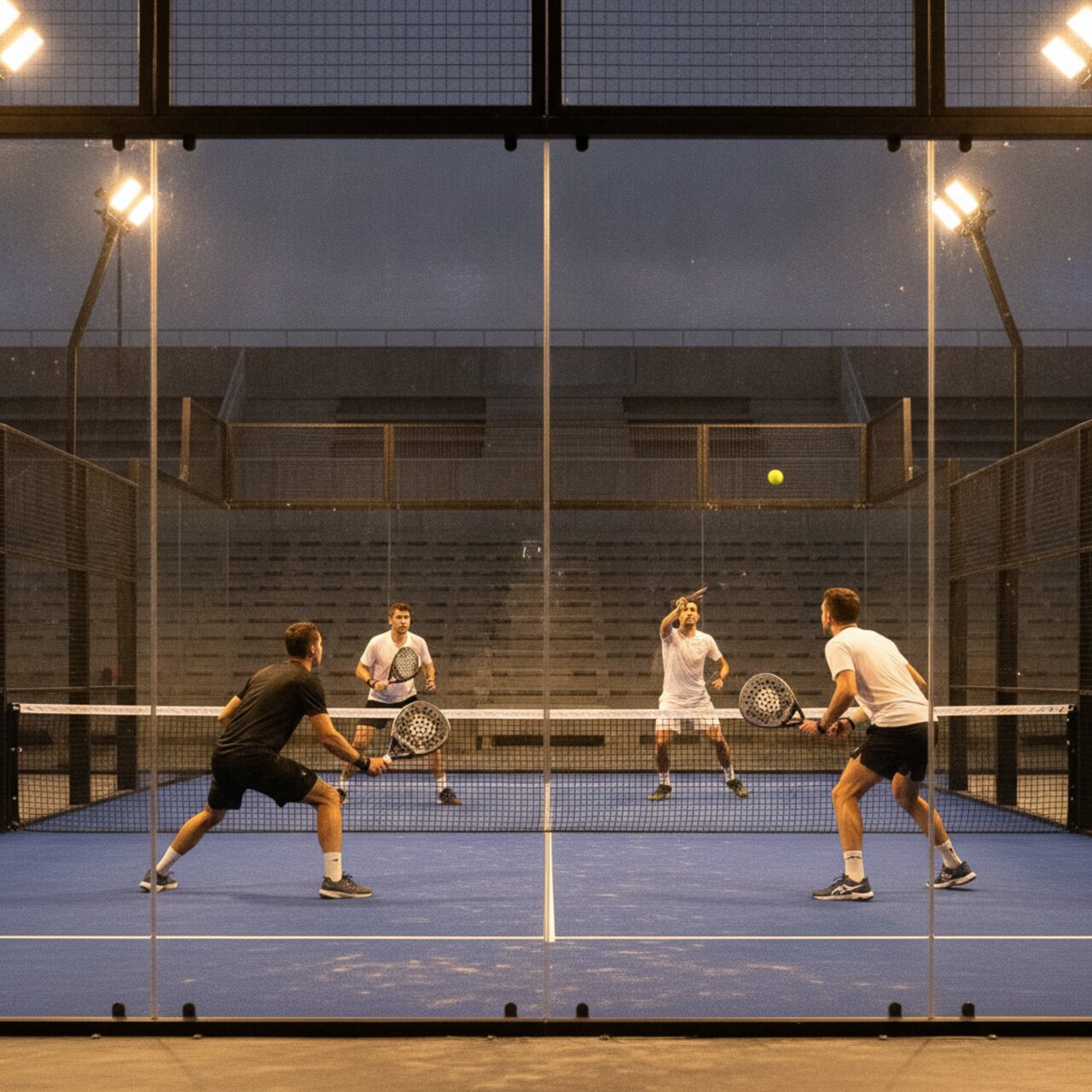
If you want to understand where padel is heading, watch the people playing it at the top. The best padel players to watch in 2026 aren’t just the ones lifting trophies; they’re the ones whose style you can actually learn something from, whether that’s Agustín Tapia’s soft hands or Arturo Coello’s raw power. This guide breaks down the players worth your attention, what makes each one distinctive, which side of the court they play, and how to follow their matches.
Before the profiles, a quick word on how the tour works. Most of the elite play happens on the Premier Padel circuit, which crowns the effective world number ones through its ranking. Partnerships change from season to season, so treat the pairings below as a snapshot rather than a guarantee. Playing style and preferred side, on the other hand, tend to follow a player for their whole career.
How to Read a Pro’s Position
Padel is a game of two halves of the court, and each player specialises. The right-side player (often called the drive side) usually hits more forehands and does the running along the sideline. The left-side player (the revés or backhand side) covers the middle, takes most of the overheads, and finishes points with the víbora and bandeja. If you’re unsure which side suits you, our guide to the left side versus the right side explains the trade-offs in detail. Knowing a pro’s side tells you what to watch for when their pair is under pressure.
The Men to Watch in 2026
Arturo Coello — power from the right
Born in 2002, Coello reached world number one earlier than almost anyone in the sport’s history. He plays the right side and hits arguably the heaviest smash in the men’s game; when he gets a ball above the net, the point is usually over. Watch how he uses his height to take balls early and cut off angles. His weakness, when he has one, is patience: against defensive pairs who lob relentlessly, he can force the attack too soon. That decision-making under pressure is the most instructive part of his game for club players.
Agustín Tapia — the magician on the left
If you only watch one player for technique, make it Tapia. The Argentine plays the left side and has the softest, most creative hands on tour: drop shots off defensive positions, víboras hit from impossible angles, and a bandeja he can place anywhere. He proves that touch beats brute force more often than highlight reels suggest. Tapia and Coello formed the dominant men’s pair through the 2023–2025 seasons, and their chemistry is a study in how a power player and a shot-maker complement each other.
Alejandro Galán — the complete left-sider
Galán spent years at the top with a reputation as the most physically imposing player in the game, combining a huge smash with genuine defensive stamina. He plays the left and reads the game a step ahead of most opponents. After his long partnership with Juan Lebrón ended, he rebuilt around a new pairing with Federico Chingotto, and the two quickly became a fixture in the late stages of tournaments. Galán is the model for players who want to attack without ever leaving a gap behind.
Federico Chingotto — proof that size doesn’t decide padel
Chingotto is one of the smaller men on tour, and he has turned that into an advantage. His defence is relentless, his lob is a weapon rather than a reset, and he counter-attacks the moment an opponent over-commits. Watching him is the clearest argument that positioning and anticipation outrank power at every level below the very top. Club players built more like Chingotto than Coello should study his footwork closely.
Franco Stupaczuk — the aggressive right-sider
“Stupa” plays the right side with a fast, flat, risk-tolerant game. He goes for winners other players would build toward over three shots, and when he’s on, the tempo he creates is genuinely hard to live with. The lesson in his game is timing: aggression works when the ball sits up, and backfires when it’s forced. He’s one of the most exciting players to watch precisely because the margins are so thin.
Juan Lebrón — the veteran showman
Lebrón brings intensity, a spectacular bajada off the back glass, and a level of on-court theatre few can match. He plays the right side and, even as newer names climb, remains a benchmark for how to compete when a match gets tight. His experience closing out pressure games is worth studying if you tend to tighten up on break points.
The Women to Watch in 2026
Gemma Triay — the tactical leader
Triay, from Menorca, plays the left side and organises points as well as anyone in the women’s game. She isn’t the flashiest hitter, but her shot selection and court management are close to flawless, and she pairs that with a reliable overhead game. With Delfina Brea she formed one of the strongest women’s partnerships of the 2024–2025 seasons. Triay is the player to watch if you want to learn when to hit each shot rather than just how.
Delfina Brea — the right-side engine
Brea is a fierce competitor who plays the right side with pace and a willingness to take the ball early. Her rise into the top pairings came from combining aggression with steadier defence than she’s often credited for. Watch how she and her partner switch between attack and reset without losing their positional discipline.
Ariana Sánchez — relentless consistency
Ari Sánchez built her reputation on defence that simply doesn’t crack, wearing opponents down from the back of the court until they miss. She’s spent years at the sharp end of the rankings and remains one of the most complete players to watch, particularly for anyone whose game relies on retrieving and constructing points rather than ending them quickly.
Paula Josemaría — the aggressive finisher
Josemaría is one of the biggest hitters in the women’s game, with a smash and víbora that end points outright. For a long stretch she partnered with Ari Sánchez to sit at number one. If your instinct is to attack, her overhead work and the way she moves forward to close the net are a masterclass.
Bea González and Claudia Fernández — the next generation
The most interesting story in the women’s game is the young Spanish pairing of Bea González and Claudia Fernández, who broke into the elite ahead of schedule. They play a fearless, modern game and represent the clearest sign that the top of the sport is about to turn over. If you want to watch players who will define the next decade of padel, start here.
Rising Names and Wildcards
Beyond the established stars, keep an eye on the qualifiers and young pairings who upset seeds in the early rounds of P1 and P2 events. Padel’s depth is growing fast, and the players ranked 15 to 30 today produce some of the most watchable matches because they’re still fighting to break through. Tournament brackets change quickly, so the “one to watch” list is never fixed for long.
Where to Follow Them
Match footage lives mainly on the Premier Padel YouTube channel and the tour’s social accounts, where full matches, highlights and daily schedules are posted throughout each event. Individual players are most active on Instagram, where they share training clips, gear changes and behind-the-scenes footage; searching a player’s full name is the fastest way to find their verified account. For results and rankings between tournaments, the Premier Padel website keeps the official standings updated.
Turn Watching Into Improvement
There’s a difference between watching padel and learning from it. Pick one player whose side and style match your own, focus on a single element of their game for a few matches, and try to reproduce it in your next session. Then log what happened. Tracking your matches and stats in the Padellog app turns those experiments into evidence: you can see whether copying Tapia’s patience or Stupaczuk’s aggression actually wins you more points. Pair that with our guide to doubles positioning and you’ll start recognising the same patterns the pros build their points around.