By Mario GonzalezStrategy
Padel Tactics for Intermediate Players: Win More Matches in 2026
Elevate your padel game with intermediate tactics. Learn court control, formations, shot selection, and strategic thinking to dominate opponents and win more matches.
You’ve mastered the basics—serve, volley, lob, smash. You can rally consistently and hold your own in friendly matches. But to win against better opponents, you need more than good technique. You need tactics.
This guide covers intermediate-level padel tactics that separate recreational players from competitive ones. If you’ve been playing 6+ months and want to win more, this is your next step.
When You’re Ready for Intermediate Tactics
You’re ready if you can:
- Rally 10+ shots consistently without unforced errors
- Serve with 80%+ accuracy
- Execute basic volleys and overheads reliably
- Understand court positioning fundamentals
- Communicate with your partner
Not ready yet? Start with our Padel for Beginners Guide and basic positioning guide.
The Core Principle: Control the Net
Everything in padel tactics builds on this truth:
The team at the net wins 70-80% of points.
Intermediate tactics are about:
- Getting to the net efficiently
- Staying at the net through pressure
- Forcing opponents away from the net
Master this cycle and you’ll win more.
Court Control Fundamentals
The Three Zones
Offensive Zone (Net Position)
- Location: 2-3 meters from the net
- Goal: Apply pressure, finish points
- Shot selection: Volleys, bandeja, smash
- Win rate: 70-80% when both players here
Transition Zone (Mid-Court)
- Location: Between service line and net
- Goal: Move forward safely
- Shot selection: Approach volleys, defensive lobs
- Win rate: 40-50% (vulnerable position)
Defensive Zone (Baseline)
- Location: Behind service line
- Goal: Return to offense
- Shot selection: Groundstrokes, lobs, wall play
- Win rate: 20-30% (defending only)
Tactical insight: Minimize time in transition zone—it’s where most errors happen.
Territory Control Principles
1. Advance Together
- Both players move forward as a unit
- Maintain parallel positioning (horizontal line)
- Never leave your partner isolated at baseline
2. Retreat Together
- When lobbed, both players retreat
- Reset at baseline, then advance again as unit
- Don’t strand your partner
3. Control the Middle
- The center of the court (between partners) is vulnerable
- Player with forehand in the middle covers it
- Communicate: “Mine!” or “Yours!”
4. Force Wide Shots
- Pull opponents side-to-side
- Create openings through court geometry
- Attack when they’re stretched
Offensive Formations & Tactics
Standard Attack Formation
Setup:
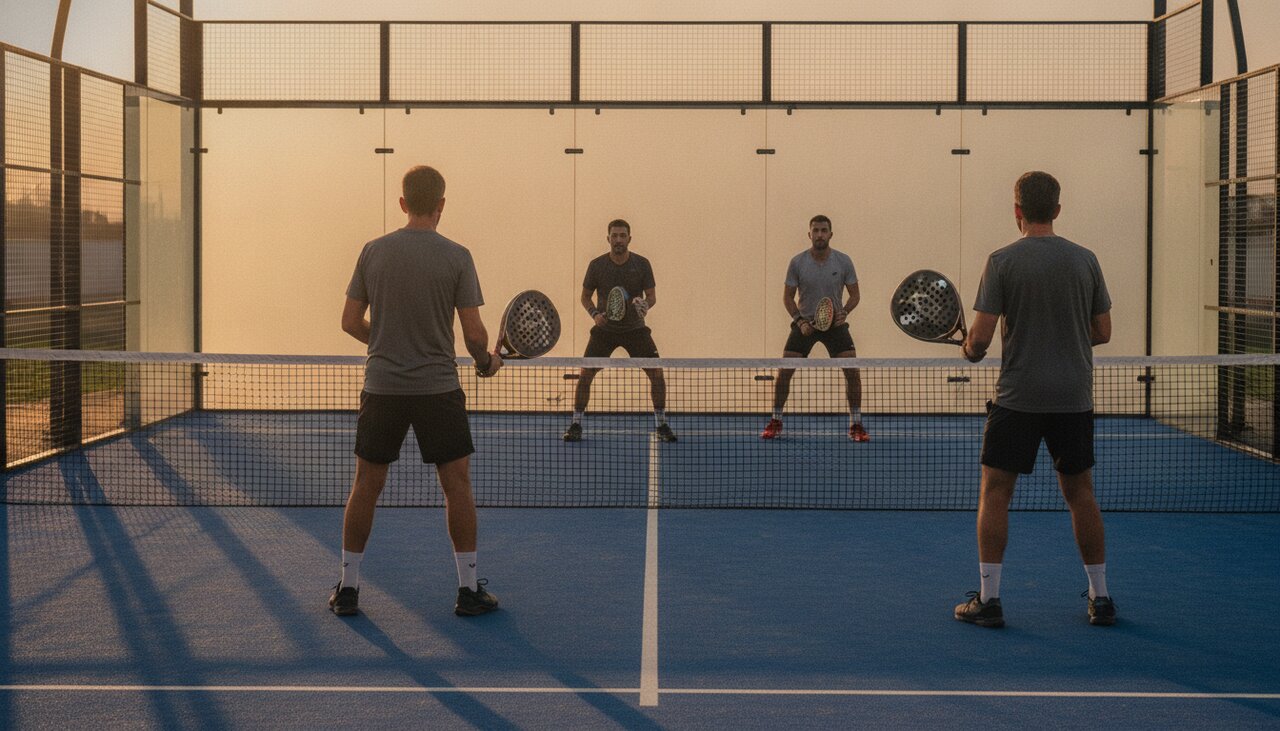
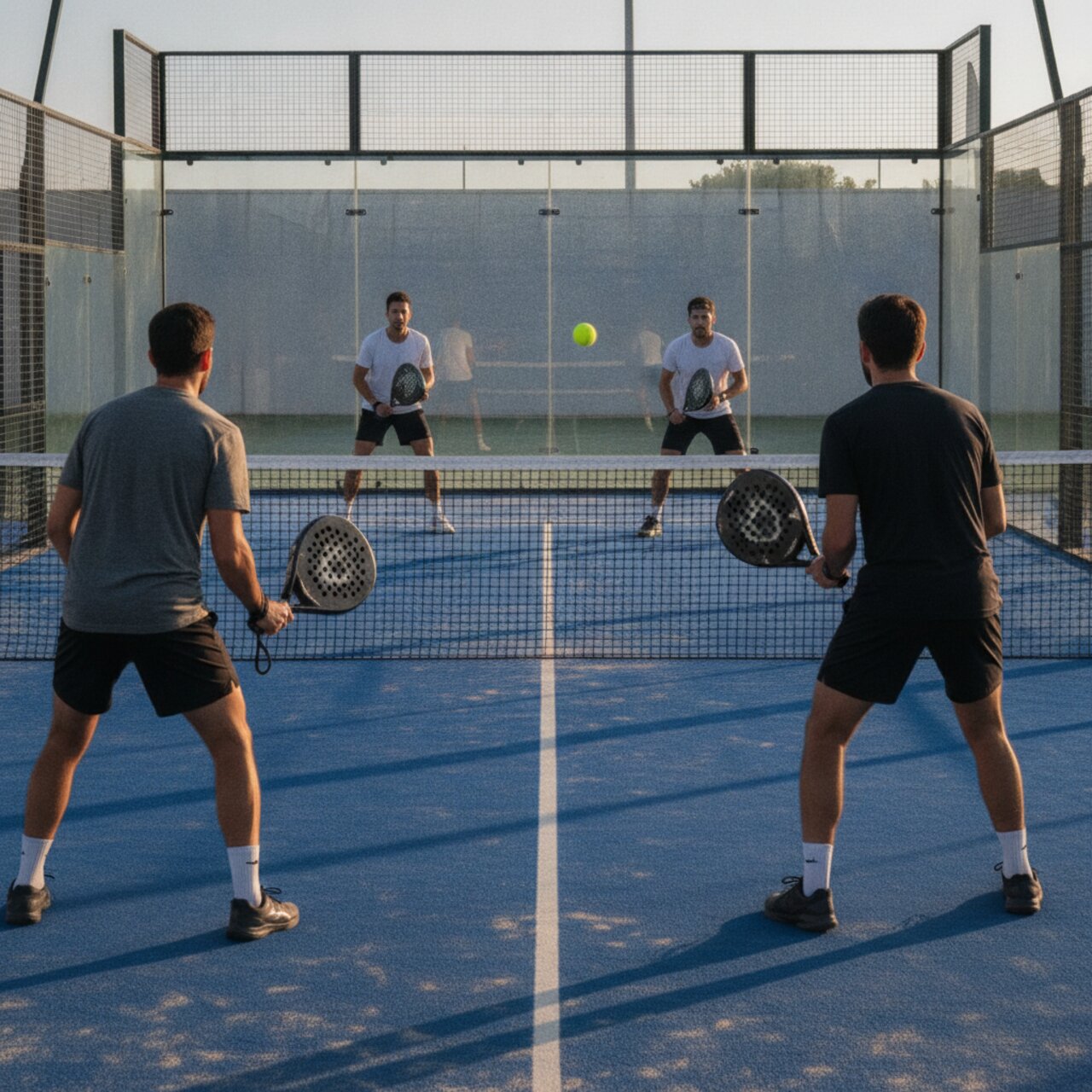
- Both players 2-3m from net
- Side-by-side, covering respective sides
- Ready position: knees bent, rackets up
When to use:
- After forcing opponents to baseline
- When you’ve won the net position
- Pressure situations (break point, game point)
Shot selection:
- Volleys to feet: Keep ball low, force errors
- Bandeja to corners: Maintain pressure without risk
- Smash when open: Finish the point decisively
Aggressive “I” Formation
Setup:
- One player at net (2m)
- Partner slightly behind (3-4m)
- Creates diagonal pressure
When to use:
- Opponent hits weak return
- Partner has great overhead
- Want to poach/intercept more
Advantage: Covers more court angles, enables poaching
Risk: Gap between players vulnerable to lob
Pincer Formation (Advanced)
Setup:
- Both players wide, forcing opponents into narrow center
- Creates psychological pressure
- Forces errors or weak shots to middle
When to use:
- Opponents struggle with center shots
- You have fast reflexes for middle coverage
- Final games of close matches
Key: Communication critical—who takes middle shots?
Defensive Formations & Tactics
Standard Defense (Parallel Baseline)
Setup:
- Both players at baseline
- Equal spacing
- Ready for lobs and groundstrokes
When to use:
- After being lobbed
- Facing aggressive net players
- Recovering from poor position
Goal: Return to offense via high-quality lob
One Up, One Back (Transition)
Setup:
- One player advances to net
- Partner covers baseline
When to use:
- Transitioning from defense to offense
- Partner hit great approach shot
- Testing opponent’s lob quality
Risk: Vulnerable formation—minimize time here
Transition quickly: Either both advance or both retreat
Defensive “V” Formation
Setup:
- Both players deep, wider spacing than standard
- Forms V-shape from above
- Covers more court width
When to use:
- Opponents hitting sharp angles
- You need more reaction time
- Against very aggressive smashers
Shot Selection by Situation
When at the Net (Offensive)
Opponent at baseline:
- Volley to feet (70% of shots)
- Bandeja to corners (20%)
- Smash when high and slow (10%)
Opponent approaching:
- Block volley (keep ball low)
- Drop volley (if they’re fast)
- Lob over them (rare, if too close)
Partner being attacked:
- Poach if opportunity (intercept middle balls)
- Cover your zone (don’t leave gaps)
- Communicate (“Switch!” if needed)
When at Baseline (Defensive)
Both opponents at net:
- Lob to weaker side (70% of shots)
- Low groundstroke to feet (20%)
- Through the middle (10%, only if gap exists)
One opponent at net, one back:
- Attack the player at baseline
- Low shot to net player’s backhand
- Lob over net player
After hitting good lob:
- Advance immediately (both players)
- Don’t wait to see result—move!
Special Situations
Break point defense:
- Play safe (high-percentage shots)
- Prioritize consistency over winners
- Force opponents to earn it
Game point offense:
- Increase pressure slightly
- Target weaker player
- Don’t rush—wait for right opportunity
Deuce/Golden Point:
- Serve to weaker side
- Net player be aggressive (poach)
- First team to net usually wins
Pattern Play (Tactical Sequences)
The “Build and Finish” Pattern
Step 1: Establish net position Step 2: Hit 2-3 volleys to feet (build pressure) Step 3: Wait for weak return Step 4: Finish with bandeja or smash
Why it works: Patience creates better opportunities than rushing
The “Lob and Charge” Pattern
Step 1: Hit high-quality lob from baseline Step 2: Both players advance immediately Step 3: First volley deep to maintain pressure Step 4: Close distance, apply pressure
Key: Don’t wait for lob to land—start advancing during flight
The “Side-to-Side” Pattern
Step 1: Volley to opponent’s forehand corner Step 2: Next volley to their backhand corner Step 3: Repeat 2-3 times Step 4: Attack when they’re stretched or late
Why it works: Running side-to-side exhausts opponents, creates errors
The “Patience Point” Pattern
When: Facing better players, defensive situations
Strategy:
- Hit 10+ consistent groundstrokes
- Force opponents to make first aggressive move
- Capitalize on their error or weak shot
Mental: You don’t have to win every point with a winner
Reading Opponents
Identify Weaknesses
Watch for:
- Weak backhand volley (common)
- Poor overhead technique
- Slow footwork
- Bad communication with partner
- Predictable patterns
Exploit:
- Hit 70% of shots to weakness
- Force them into uncomfortable positions
- Make them move (if slow)
- Attack gaps (if poor communication)
Recognize Patterns
Most players:
- Serve to same spot 80% of time
- Return cross-court automatically
- Lob when under pressure
- Default to forehand side
Counter:
- Anticipate their defaults
- Position for likely shot
- Occasionally poach/intercept
- Change your patterns to create confusion
Adjust Mid-Match
If losing:
- Change tactics (lob more, volley less, or vice versa)
- Target different opponent
- Vary rhythm (slow down or speed up)
- Take tactical timeout (tie shoes, wipe racket)
If winning:
- Don’t change what’s working
- Maintain intensity
- Close out efficiently
Advanced Tactical Concepts
The “Third Ball Attack”
Sequence:
- Serve
- Return (second ball)
- Your next shot (third ball) ← Critical tactical moment
Tactic: Make third ball aggressive
- Approach shot to net
- Deep volley to corner
- Force opponent defensive
Why: Third ball often determines point flow
Poaching Strategy
When to poach:
- Partner hits strong shot
- Opponent telegraphs cross-court return
- Momentum with you
- Deuce/important points
How to poach:
- Move early (during opponent’s backswing)
- Commit fully (don’t hesitate)
- Aim for winner or very difficult return
- Communicate intention before point
Risk: Leaves side exposed if you miss
Fake and Switch
Setup:
- Fake poach (move toward middle)
- Retreat to original position
- Or: Actually switch sides with partner
When to use:
- Create confusion
- Break opponent rhythm
- When standard tactics aren’t working
Requires: Excellent communication and trust
Tempo Control
Slow the game:
- Bounce ball more before serve
- Take time between points
- Use full 25 seconds
- Walk to back fence after points
When: You need to break opponent’s rhythm, you’re tired, they’re on a run
Speed up the game:
- Serve quickly
- Minimize time between points
- Maintain high energy
When: You have momentum, opponent looks tired, cold/wet conditions
Communication & Partner Play
Essential Calls
“Mine!” / “Yours!”
- Call every ball in transition/middle
- Call early (before ball arrives)
- Default: Player with forehand in middle takes it
“Switch!”
- After cross-court lobs
- After poaching
- After one player covers wide shot
“Stay!” / “Back!”
- Partner tells you to hold position
- Or retreat from poor position
Pre-Point Communication
Before serve:
- “I’m going to…” (serve location, plan)
- “Watch for…” (poach opportunity, fake)
- “Let’s…” (both advance, stay back)
During point: Minimal talking
- Only essential calls
- Positive reinforcement (“Nice!” “Good!”)
- Never criticize during point
After point:
- Quick strategy adjustment
- Encouragement
- Plan for next point
Common Intermediate Mistakes
1. Advancing Alone
Mistake: One player rushes net while partner stays back
Fix: Move as a unit—both advance or both stay
Exception: Intentional one-up, one-back formation (transition only)
2. Staying in Transition Zone
Mistake: Settling in mid-court (no-man’s land)
Fix: Either close to net OR retreat to baseline
Why: Transition zone = easy targets for opponents
3. Over-Smashing
Mistake: Trying to smash every overhead
Fix: Use bandeja 70%, smash 30%
When to smash: High, slow ball with court open
When to bandeja: Lower balls, opponents at net, unsure positioning
4. Predictable Shot Selection
Mistake: Always hitting same shot from same position
Fix: Vary your patterns
- Lob occasionally instead of always groundstroke
- Go down the line sometimes (not always cross-court)
- Change serve location
5. Poor Lob Quality
Mistake: Lobbing too low or short
Fix: Lob high enough to push opponents back
Target: Ball should land 1-2m from back wall
Arc: Higher is safer (harder to smash)
6. Not Reading the Game
Mistake: Playing same tactics regardless of score/situation
Fix: Adjust based on:
- Score (conservative when ahead, aggressive when behind)
- Opponent’s strengths/weaknesses
- What’s working/not working
Practice Drills for Tactical Development
1. Net Position Drill
Setup: Both teams start at net Goal: Maintain net position through 10 volleys Focus: Low volleys, bandeja, patience Time: 15 minutes
2. Baseline to Net Transition
Setup: Start at baseline, opponents feed high lob Goal: Advance to net and win point Focus: Timing of advance, first volley depth Time: 15 minutes
3. Pattern Play Practice
Setup: Execute “side-to-side” pattern Goal: Move opponents 5 times before finishing Focus: Placement accuracy, patience Time: 15 minutes
4. Poaching Drill
Setup: One team feeds, other practices poaching Goal: Successful interception and finish Focus: Timing, commitment, placement Time: 10 minutes
5. Match Simulation with Tactics
Setup: Play practice match Constraint: Must execute 3 tactical patterns per game Goal: Apply tactics under pressure Time: 30 minutes
Mental Tactical Game
Patience over power: Most intermediate players lose from impatience, not lack of skill
Think two shots ahead: “If I hit here, they’ll likely hit there, then I’ll…”
Accept long rallies: Not every point needs a winner—force opponent errors
Stay calm under pressure: Deep breath between points, focus on process
Trust your partner: You’re a team—support each other always
Next Steps
Master these intermediate tactics and you’ll:
- Win more matches against equal-skill opponents
- Compete better against advanced players
- Enjoy deeper strategic thinking
- Build better chemistry with partners
To continue improving:
- Practice tactical drills weekly
- Watch professional matches (see tactics in action)
- Analyze your own matches (what worked? what didn’t?)
- Find a regular partner to develop chemistry
- Consider coaching for personalized tactical feedback
Track your tactical progress with Padellog—record matches, identify patterns, measure improvement over time.