By Mario Gonzalez
How to Choose the Right Padel Racket: Complete Buying Guide 2026
Learn how to choose the perfect padel racket for your playing style. Complete guide covering shape, weight, balance, materials, and top recommendations for all levels.
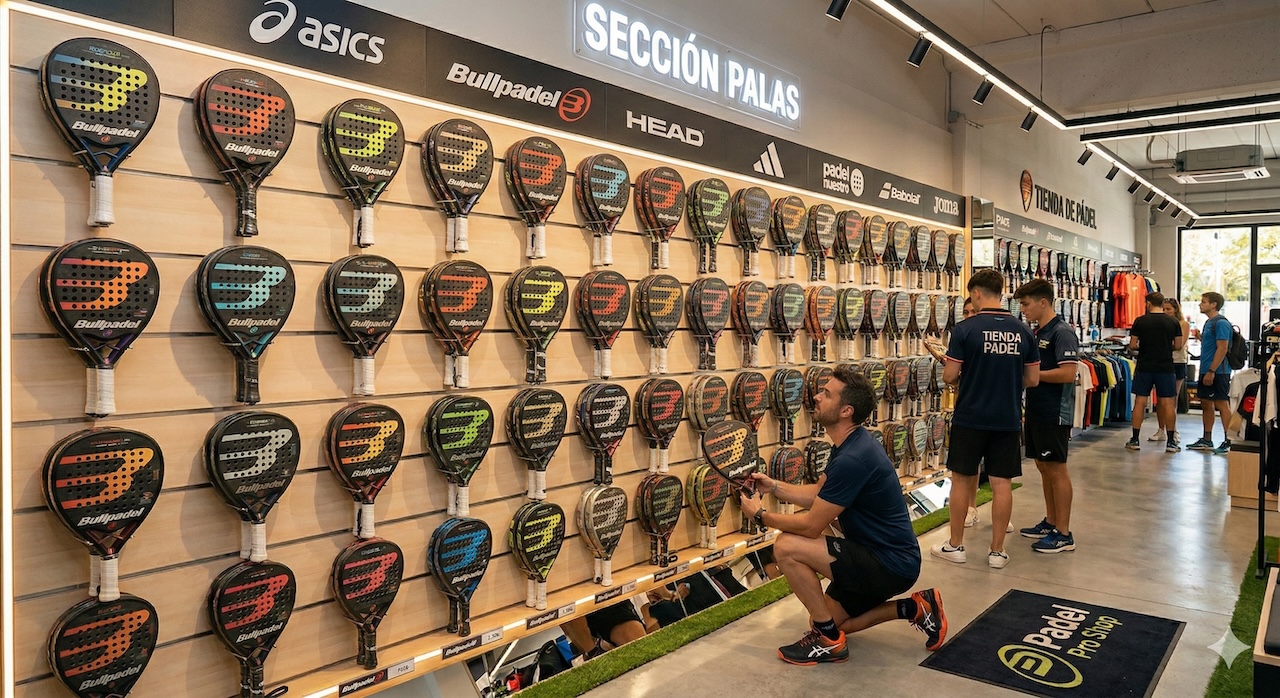
How to Choose the Right Padel Racket: Complete Buying Guide 2026
Choosing your first padel racket - or upgrading to a new one - can feel overwhelming. Walk into any padel shop and you’ll face dozens of options with technical specs you might not understand: diamond shape vs round, EVA vs foam, carbon fiber vs fiberglass.
Don’t worry. This guide will cut through the marketing noise and help you choose the right racket for YOUR game, whether you’re a complete beginner or an experienced player looking to level up.
In this guide:
- How to choose based on your skill level
- Racket shape explained (round, diamond, teardrop)
- Weight and balance considerations
- Materials that actually matter
- Top racket recommendations for 2026
- Common buying mistakes to avoid
Let’s find your perfect racket.
Quick Answer: What Racket Should I Buy?
If you’re a beginner:
- Shape: Round (control shape)
- Weight: 360-370g
- Balance: Even or low
- Material: Fiberglass face, soft foam core
- Price: $80-$150
If you’re intermediate:
- Shape: Teardrop (hybrid)
- Weight: 365-375g
- Balance: Medium
- Material: Carbon/fiberglass mix, medium foam
- Price: $150-$250
If you’re advanced:
- Shape: Diamond (power shape)
- Weight: 370-380g
- Balance: Head-heavy
- Material: Full carbon, hard EVA core
- Price: $250-$400+
Still confused? Keep reading - we’ll break down why these differences matter.
Understanding Racket Shapes
The shape of your racket is the single most important factor affecting how it plays. There are three main shapes, and each favors a different playing style:
Round Shape (Control)
Best for: Beginners, defensive players, control-focused game
| Pros | Cons |
|---|---|
| Largest sweet spot | Less power on smashes |
| Very forgiving on off-center hits | Limited attacking potential |
| Easy to maneuver | Can feel limiting for advanced players |
| Better control and placement | |
| Less arm strain |
The sweet spot (the area where you get maximum power and control) is centered and large on round rackets. This means mishits still feel decent - perfect when you’re learning.
When to choose round:
- You’re new to padel (first 6-12 months)
- You play defense and prefer control over power
- You want maximum forgiveness
- You have arm/shoulder issues
Diamond Shape (Power)
Best for: Advanced players, aggressive attackers, strong overhead game
| Pros | Cons |
|---|---|
| Maximum power on smashes | Small sweet spot |
| Excellent for finishing shots | Unforgiving on mishits |
| Great reach at net | Harder to maneuver |
| Pro-level performance | More arm strain |
The sweet spot is higher up toward the head, making overhead smashes explosive. But this comes at a cost - off-center hits feel bad, and the racket is less maneuverable in fast exchanges.
When to choose diamond:
- You’re an advanced player with solid technique
- Your game is aggressive and attack-focused
- You have strong overhead shots
- You want maximum power
Teardrop Shape (Hybrid)
Best for: Intermediate players, all-around game, versatile style
| Pros | Cons |
|---|---|
| Balanced power and control | Not specialized for any style |
| Medium sweet spot | Can feel “in between” |
| Versatile for all positions | |
| Good for progressing players |
Think of teardrop as the “Goldilocks” shape - not too controlly, not too powerful. It’s the natural progression from round when you’re ready for more offense.
When to choose teardrop:
- You’re past the beginner stage
- You play both offense and defense
- You’re still developing your playing style
- You want one racket that does everything decently
Weight and Balance
After shape, weight and balance are your next considerations.
Racket Weight
Most padel rackets range from 350g to 390g. Here’s what the weight means for your game:
| Weight Range | Best For | Characteristics |
|---|---|---|
| 350-365g | Beginners, juniors, smaller players | Easy to maneuver, less power, less arm strain |
| 365-375g | Most players | Sweet spot for balance of power and control |
| 375-390g | Advanced players, strong players | More power, more stability, more demanding |
Pro tip: Start lighter. You can always upgrade to a heavier racket, but if you buy too heavy initially, you’ll struggle with fatigue and technique.
Balance Point
Balance refers to where the weight is distributed:
Low balance (head-light):
- Weight toward the handle
- Easier to maneuver
- Better for defense and fast exchanges
- Less power on overhead shots
Medium balance (even):
- Weight centered
- Balanced feel
- Most versatile
- Good for all-around game
High balance (head-heavy):
- Weight toward the head
- More power on smashes
- Harder to maneuver
- Better for attack
Beginner recommendation: Low or medium balance. You’ll appreciate the easy handling while you’re learning positioning and technique.
Materials That Matter
Marketing loves to throw around fancy materials. Here’s what actually affects your game:
Racket Face
Fiberglass:
- Softer, more flexible
- Better control and feel
- Easier on the arm
- Best for beginners and control players
- Less expensive
Carbon fiber:
- Harder, more rigid
- More power and durability
- Faster ball response
- Best for advanced players
- More expensive
Hybrid (carbon + fiberglass):
- Balanced properties
- Good middle ground
- Common in intermediate rackets
Beginner choice: Fiberglass or hybrid. The softer feel helps you learn ball control.
Core Material
Soft foam (FOAM):
- Maximum comfort
- Best control and feel
- Larger sweet spot
- More forgiving
- Less durable
- Best for beginners
Hard foam (EVA):
- More power and response
- Better durability
- Smaller sweet spot
- Less comfort
- Best for advanced players
Medium foam:
- Balanced between soft and hard
- Good for intermediate players
Pro tip: Don’t obsess over “12k carbon” or “18k carbon” marketing. The difference is minimal for recreational players. Focus on shape, weight, and core softness first.
Price Ranges and What to Expect
Budget: $60-$100
- Entry-level materials (fiberglass, soft foam)
- Usually round shape
- Good for complete beginners
- Expect 6-12 months of regular use
- Examples: Dunlop Play, Head Flash
Mid-Range: $100-$200
- Better materials (hybrid carbon, medium foam)
- All shapes available
- Sweet spot for most recreational players
- 1-2 years of regular use
- Examples: Bullpadel Vertex, Nox ML10
Premium: $200-$400+
- Top materials (full carbon, optimized cores)
- Pro-level technology
- Usually diamond or advanced teardrop
- 2+ years of regular use
- Examples: Adidas Metalbone, Babolat Viper
Honest advice: Don’t buy a $400 racket as a beginner. You won’t feel the difference, and you might develop bad habits trying to compensate for a racket that doesn’t match your skill level.
Top Racket Recommendations 2026
Best for Complete Beginners
1. Head Flash (Round, 365g, ~$110)
- Huge sweet spot
- Soft foam core
- Very forgiving
- Perfect for learning
2. Bullpadel Vertex (Round, 360g, ~$130)
- Great control
- Comfortable grip
- Durable for the price
- Popular choice
3. Wilson Padel Pro (Round, 365g, ~$100)
- Budget-friendly
- Good quality for the price
- Nice balance of comfort and control
Best for Intermediate Players
1. Nox ML10 Pro Cup (Teardrop, 370g, ~$220)
- Balanced power and control
- Carbon/fiberglass mix
- Used by pros for a reason
- Versatile for all styles
2. Bullpadel Hack (Teardrop, 375g, ~$200)
- Slightly power-focused
- Great for progressing players
- Durable construction
- Good value
3. Adidas RX 300 (Teardrop, 365g, ~$180)
- Smooth feel
- Good power without being aggressive
- Reliable brand
Best for Advanced Players
1. Adidas Metalbone (Diamond, 375g, ~$350)
- Maximum power
- Tour-level performance
- Explosive overhead game
- Intimidating look
2. Babolat Viper (Diamond, 370g, ~$320)
- Great blend of power and control
- Carbon frame technology
- Used by Babolat-sponsored pros
- Premium feel
3. Head Delta (Diamond, 380g, ~$380)
- Top-tier power
- Very demanding
- For players with solid technique
- Professional-grade
Common Mistakes to Avoid
1. Buying based on pro endorsements
Just because a racket is endorsed by a pro doesn’t mean it’s right for you. Pros play with diamond shapes and hard cores - equipment designed for their elite skill level. As a beginner or intermediate, you’ll struggle with these rackets.
2. Going too heavy or too powerful
Many players, especially men, think “I’m strong, I can handle a heavy powerful racket.” Then they play for an hour and their arm is dead. Start conservative. You can always upgrade.
3. Ignoring grip size
Padel rackets don’t have adjustable grip sizes like tennis. Make sure the grip feels comfortable in your hand. Too thick or too thin will affect your game and can cause injury.
Standard grip circumference: ~105-110mm (most common)
4. Buying online without testing
If possible, try before you buy. Many clubs have demo rackets. The difference between a round and diamond racket is HUGE, and you won’t know what you prefer until you hit some balls.
5. Expecting instant improvement
A new racket won’t magically improve your game. Work on technique, footwork, and positioning first. The racket is important, but it’s just equipment.
How to Test a Racket
If you’re trying rackets at a shop or borrowing from a friend:
1. Check the weight feel
- Hold it. Does it feel manageable?
- Swing it. Can you maneuver it quickly?
- Hold it overhead. Can you maintain it comfortably?
2. Hit some balls
- Try forehand drives - does it feel controlled?
- Try overhead smashes - do you feel power?
- Try volleys - is it maneuverable?
- Mishit a few - how forgiving is it?
3. Play a full game if possible
- How does your arm feel after 20 minutes?
- Are you making the shots you want?
- Does it match your playing style?
Trust your feel. If a racket feels “right” and you’re playing well, that’s your racket - regardless of brand or price.
When to Upgrade Your Racket
Signs you’ve outgrown your racket:
- You feel limited by control (round) or power (diamond)
- Your technique has improved significantly
- You want to change your playing style
- Your current racket feels too light or too heavy
- You’ve been playing 6+ months regularly
Don’t upgrade if:
- You’re still learning basics
- Your technique is inconsistent
- You’re just curious about new gear
- You think a new racket will fix your game
Typical progression:
- Months 0-6: Round, light, soft (control focus)
- Months 6-18: Teardrop, medium weight (developing power)
- 18+ months: Teardrop or diamond, based on style
Care and Maintenance
Make your racket last:
Do:
- Store in a racket cover (protects face from scratches)
- Keep in moderate temperatures (avoid car trunk)
- Clean the face with a damp cloth after playing
- Replace grip tape when worn ($10-15, easy DIY)
Don’t:
- Leave in direct sunlight or extreme heat/cold
- Hit the court surface intentionally
- Throw or slam your racket (damages core)
- Store compressed under heavy objects
Average racket lifespan:
- Recreational play (2-3x per week): 1-2 years
- Intensive play (4+ per week): 6-12 months
- Pro-level play: 3-6 months
When to replace:
- Visible cracks in the face or frame
- Core feels soft or “dead” (loss of power)
- Handle is damaged beyond repair
- You’ve clearly outgrown it
Final Recommendations
Absolute beginner (first padel racket ever): → Head Flash or Bullpadel Vertex (round, 360-365g, $100-130)
Improving player (6+ months, ready for more power): → Nox ML10 Pro Cup or Bullpadel Hack (teardrop, 365-375g, $180-220)
Advanced player (strong technique, aggressive game): → Adidas Metalbone or Babolat Viper (diamond, 370-380g, $300-350)
Budget-conscious: → Wilson Padel Pro (round, 365g, ~$100) - great value
Not sure? Default choice: → Bullpadel Vertex (round, 360g, ~$130) - can’t go wrong
Track Your Progress with Padellog
Once you’ve got your racket, track your matches and see how your game improves over time. Download Padellog to log matches, analyze your stats, and find new opponents.
Ready to upgrade your game? Choose your racket, get on the court, and start playing. The perfect racket is the one that helps you enjoy padel more - everything else is details.
Related guides: Check out the best padel rackets of 2026, learn about racket head sizes, or see our complete equipment checklist for beginners.
Updated February 2026 with the latest racket recommendations and prices.