By Mario GonzalezGuides
How to play padel: rules and scoring for beginners (2026 guide)
New to padel? This comprehensive guide covers everything you need to know: court setup, basic rules, scoring system, and essential techniques. Start playing confidently in under 10 minutes.
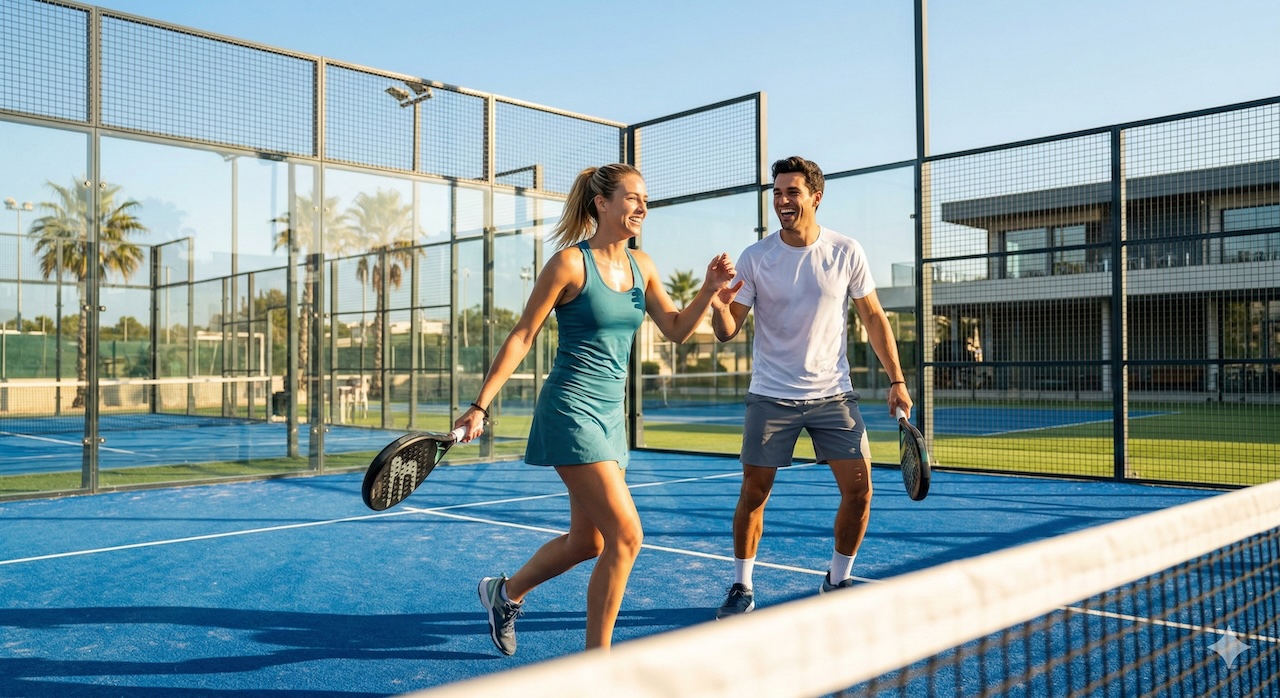
So you want to learn padel? You’re in good company - it’s the fastest-growing racquet sport in the world, and for good reason. It’s easier to pick up than tennis, more social than squash, and seriously addictive once you start.
This guide will teach you everything you need to start playing today. No previous racquet sport experience needed.
What is padel?
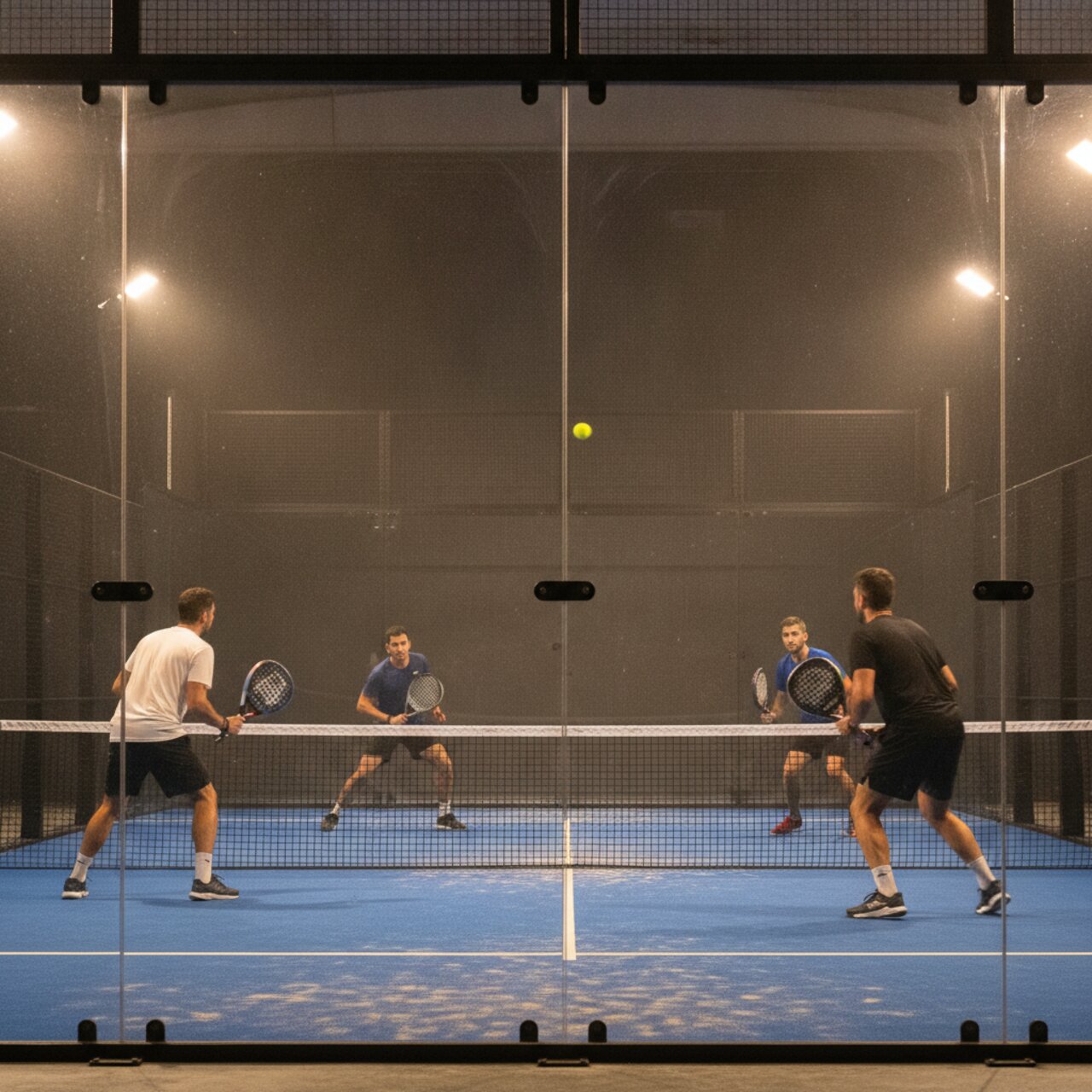
Padel is a racquet sport that combines elements of tennis and squash. You play doubles (always 2v2) on an enclosed court roughly 1/3 the size of a tennis court. The walls are part of the game - like squash - which makes rallies longer and more fun for beginners.
Think of it as “tennis made social.” The smaller court means less running, and playing doubles means you’re never isolated. Plus, the walls keep the ball in play longer, so you get more hits per rally than tennis.
Originally invented in Mexico in 1969, padel exploded in Spain and is now spreading across Europe, the Middle East, and beyond.
What equipment do you need?
The beauty of padel is how little gear you need to start:
Essential: • Padel racket (different from a tennis racket - it’s solid, not strung) • Padel balls (similar to tennis balls but slightly smaller and less pressurized) • Court shoes with good grip • Comfortable athletic clothes
Nice to have: • Sports bag • Sweat bands • Water bottle • Extra balls
Most clubs rent rackets and provide balls when you’re starting out, so you can literally show up in athletic shoes and try it before investing in gear.
Want to buy your own gear? Check our guide to the best padel rackets for beginners to find the right equipment for your level.
The padel court: layout and dimensions
Understanding the court helps you grasp the game faster. A padel court is:
Dimensions: • 20 meters long × 10 meters wide (66 × 33 feet) • About 1/3 the size of a tennis court • Net height: 88cm at center, 92cm at sides
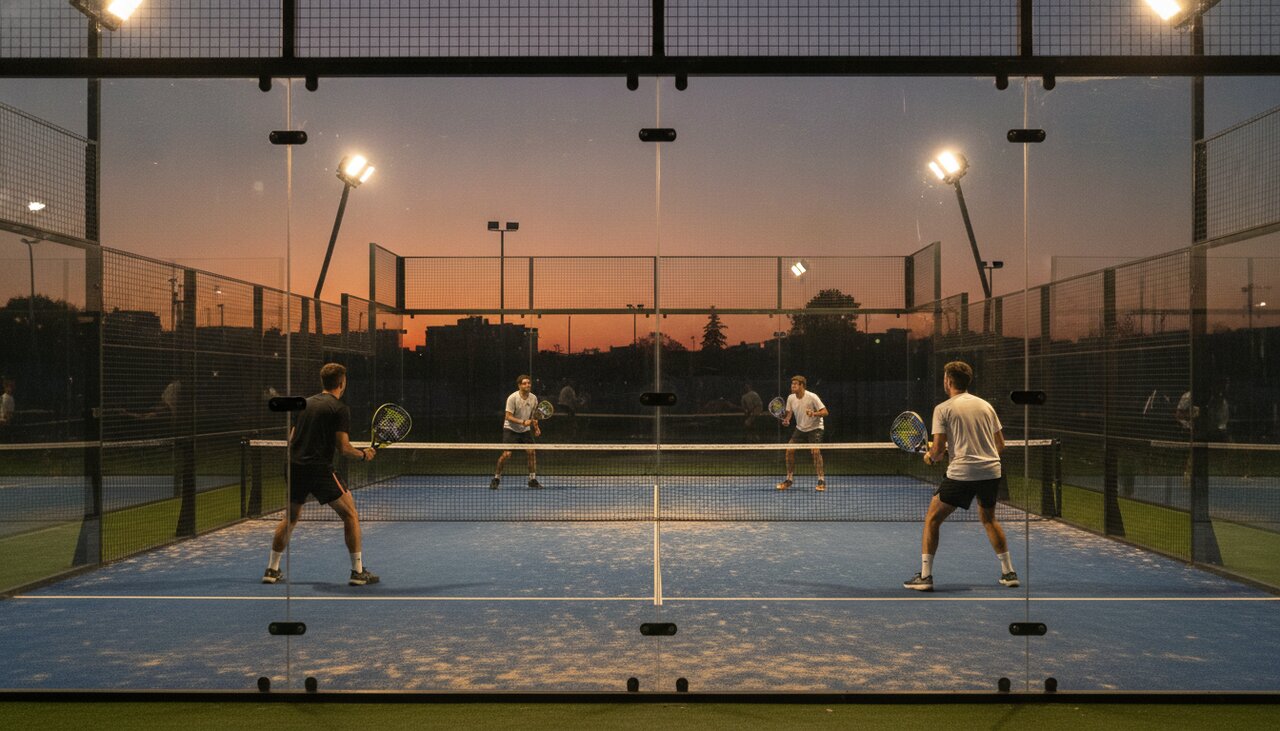
Key features: • Glass walls: Back walls are 3-4 meters high, solid glass or mesh • Side walls: Combination of glass (lower) and mesh (upper) • Playing area: The court is divided into service boxes like tennis • Doubles lines: No singles - padel is always played 2v2
The walls are NOT out of bounds - they’re part of the playing surface. The ball can bounce off walls on your side, and you can hit balls after they’ve bounced off walls. This is what makes padel unique and rally-friendly.
Basic rules of padel
1. Serving rules
The serve in padel is underhand (not overhead like tennis):
• Position: Server stands behind the service line, diagonally from the target service box • Technique: Ball must be dropped and hit below waist height • Bounce: Ball must bounce in the diagonal service box (like tennis) • Walls: Ball can’t hit the opponent’s wall before bouncing in the service box • Faults: Two serve faults = point lost (like tennis)
After the serve bounces in the correct service box, the ball CAN hit the back wall before the receiver hits it.
2. Return of serve
The receiver must: • Let the ball bounce once before returning • Hit the ball back over the net • The ball can hit walls on the server’s side after crossing the net
After the serve and return, the point follows normal rally rules.
3. During the rally
Once the ball is in play:
Legal shots: • Ball can bounce once on your side (like tennis) • Ball can hit walls on your side AFTER bouncing on the floor first • You can hit the ball directly (volley) without letting it bounce • You can hit the ball after it bounces off your side’s walls
Illegal shots (you lose the point): • Ball bounces twice on your side • Ball hits your own wall before bouncing on the floor • Ball goes out of bounds (over walls or through gaps) • Ball hits the net (unless on serve) • You touch the ball twice • You or your racket touches the net
The wall rule is key: The ball must ALWAYS bounce on the floor first before it can touch your walls. If it hits your wall before hitting your floor, you lose the point.
4. Scoring system
Padel uses the exact same scoring as tennis:
Points: • 0 = “Love” • 1 point = “15” • 2 points = “30” • 3 points = “40” • 4 points = “Game” (win)
Deuce: When both teams reach 40-40 (“deuce”), you must win by 2 points: • First point after deuce = “Advantage” (ad-in or ad-out) • Second consecutive point wins the game • If you lose the advantage point, return to deuce
Sets: • First to 6 games wins the set • Must win by 2 games (e.g., 6-4, 7-5) • At 6-6, play a tiebreak to 7 points (win by 2)
Match: • Best of 3 sets (first to win 2 sets wins) • Some recreational matches are best of 5 sets
The golden set option (first to 9 points at 6-6) is also used in some tournaments instead of a tiebreak.
How to play: step-by-step
Let’s walk through a point from start to finish:
Starting the point:
- Server stands behind baseline in the right service box
- Ball is dropped and hit underhand below waist height
- Ball must bounce in the diagonal service box
- If it hits the net and lands in, it’s a “let” (redo)
- If it hits the side or back wall before bouncing, it’s a fault
The rally:
- Receiver lets the serve bounce once, then returns
- After the return, any player can hit the ball
- Ball can bounce once on your side, then off walls
- Players can volley (hit before bounce) or play after bounce
- Rally continues until someone wins the point
Winning the point: You win when your opponent: • Lets the ball bounce twice • Hits the ball out (over walls or fence) • Hits the ball into the net • Hits their own wall before the ball bounces on floor • Touches the net with body or racket
Position and strategy basics
Even as a beginner, understanding basic positioning helps:
Doubles positioning: • Both players stay on the same horizontal line • If one player is at net, partner should be at net • If one player is at baseline, partner should be at baseline • Don’t leave gaps for opponents to exploit
Court zones: • Net position: Most points are won here - try to advance forward • Mid-court: Transition zone - get to net or retreat to baseline • Baseline: Defensive position - hit lobs to buy time
Basic strategy: • Start at baseline, work toward the net • Hit deep shots to push opponents back • Use lobs when opponents are at net • Aim for walls to create difficult angles
Want to dive deeper into positioning? Check out our guide on padel shot techniques to learn offensive and defensive strategies.
Common beginner mistakes
Avoid these rookie errors:
Hitting your own wall first The ball must bounce on the floor before hitting your walls. If you hit your back wall before floor bounce, you lose the point.
Overheads instead of underhand serves Padel serves are ALWAYS underhand, below waist height. Tennis-style overhead serves are illegal.
Playing too far back Beginners tend to camp at the baseline. The net is where points are won - work forward after your shots.
Not communicating with partner Call “Mine!” or “Yours!” on balls between you. Doubles requires teamwork.
Hitting the ball too hard Power doesn’t win in padel - placement and control do. The court is small, so accuracy beats speed.
Ignoring the walls The walls are your friend! Use them to create angles and extend rallies.
Wrong grip Most beginners start with a tennis forehand grip. Padel uses a continental grip (like shaking hands) for versatility.
10 tips to improve faster
- Practice your serve: It’s the only shot you have full control over
- Master the lob: Essential for defending when opponents are at net
- Watch the ball: Sounds obvious, but beginners look up too early
- Move your feet: Get into position early, stay light on your toes
- Play with better players: You’ll learn faster by playing up
- Use the walls: Practice hitting after wall bounces - it’s a core skill
- Communicate constantly: Call every ball with your partner
- Control before power: Master placement, then add pace later
- Stay at the net: Advance forward whenever possible
- Have fun: Padel is social - enjoy the rallies, laugh at mistakes
Padel etiquette
Like all sports, padel has unwritten rules:
• Call your own faults: Be honest about touches and out balls • Don’t celebrate excessively: Winning a point is fine, but respect opponents • Shake hands after: Always thank your opponents and partner • Keep the pace up: Don’t waste time between points • Fix the court: Pick up stray balls, close the door • Be quiet during points: No coaching or talking during rallies
Where to play and how to start
Ready to hit the court? Here’s how to get started:
- Find a local club: Use Padellog’s club directory to find courts near you
- Book a lesson: Most clubs offer beginner group lessons (€15-30/hour)
- Join a clinic: Group sessions are social and cost-effective
- Find partners: Many clubs have WhatsApp groups or social sessions
- Rent equipment: Try before you buy - most clubs rent rackets
Typical costs: • Court rental: €20-40/hour (split among 4 players = €5-10 each) • Racket: €60-150 for a decent beginner model • Balls: €5-10 for a pack of 3 • Lessons: €20-40/hour for group sessions
Padel is one of the most affordable racquet sports to start. For less than €100, you can have your own racket and play regularly.
Frequently asked questions
Is padel easier than tennis?
Yes, for most beginners. The smaller court means less running, doubles format is more forgiving, and the walls keep rallies going longer. You can have fun rallies from day one, whereas tennis takes weeks to sustain a rally.
Can I play padel if I’ve never played tennis?
Absolutely! Many top padel players have no tennis background. In fact, not having tennis muscle memory can sometimes help - you won’t try to hit overhead serves or apply too much topspin.
How fit do I need to be?
Padel is accessible to all fitness levels. The court is small and doubles format means less ground to cover. That said, competitive padel is a serious workout - you’ll be moving constantly.
What’s the difference between padel and paddle tennis?
They’re different sports. Padel (popular in Spain) uses solid rackets and an enclosed court with walls. Paddle tennis (popular in the US) uses perforated paddles and a smaller court without walls.
Do I need a partner to play?
Yes, padel is always doubles (2v2). Most clubs have social sessions where they pair up solo players. Use Padellog to find partners and track your matches.
How long does a match take?
Recreational matches typically last 60-90 minutes (best of 3 sets). Competitive matches can go 2+ hours if sets are close.
Can kids play padel?
Yes! Padel is great for kids 6+ years old. The smaller court and slower balls make it more accessible than tennis. Many clubs offer junior programs.
Is padel played professionally?
Yes, the Premier Padel tour features the world’s top players competing for millions in prize money. Spain, Argentina, and Sweden dominate the professional scene.
What’s next?
You now know enough to step on a court and play. But here’s the secret: the best way to learn padel is to just play.
Book a court, grab three friends, and start hitting. The rules will make sense once you’re playing, and you’ll pick up technique naturally.
Next steps:
- Find a club near you using Padellog’s directory
- Book your first court session
- Watch a few YouTube videos on basic technique
- Download Padellog to track your progress and find partners
- Show up and have fun!
Continue learning: • Complete guide to padel shots and techniques • Bandeja vs vibora: when to use each shot • Best padel rackets for beginners • Padel vs tennis: key differences explained
The padel community is incredibly welcoming. Everyone remembers being a beginner, so don’t be shy about asking questions on court.
See you on the court! 🎾
Track your matches, find partners, and improve your game with Padellog - the #1 app for padel players.