By Mario GonzalezFitness
Knee Protection for Padel Players: Joint Health and Injury Prevention
Protect your knees in padel with targeted strength work, smart movement, and recovery habits. Prevent the most common knee injuries before they start.
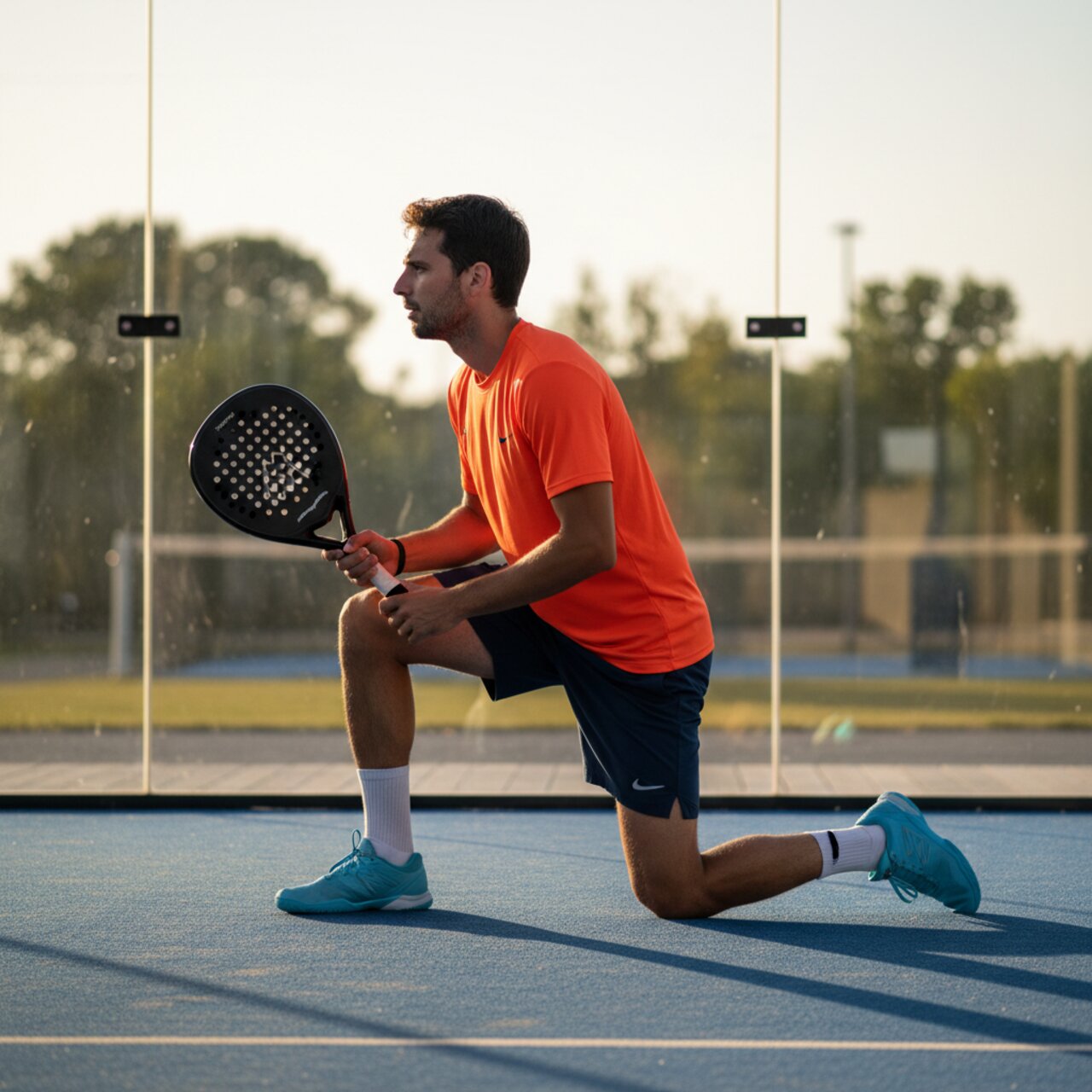
Knee protection for padel players starts long before you feel any pain. Padel asks your knees to absorb constant stopping, twisting, and lateral pushing across a small court, and those forces add up over a season. Most knee problems in padel are not dramatic single injuries. They build slowly from poor movement habits, weak supporting muscles, and skipped recovery, which is exactly why they are so preventable.
This guide breaks down why padel is demanding on the knees, which injuries show up most often, and the specific habits that keep your joints healthy for the long run.
Why Padel Is Hard on Your Knees
The padel court is 20 by 10 meters, so points are won and lost in short, sharp bursts rather than long sprints. You decelerate hard to reach a drop shot, plant and rotate to hit a bandeja, then push off sideways to cover the lob. Each of those movements sends a load through the knee that can reach several times your body weight.
Three patterns cause the most trouble:
- Deceleration. Stopping quickly to reach a ball forces the muscles around the knee to act as brakes. If your quads and glutes are weak, the joint absorbs more of that shock directly.
- Rotation under load. Twisting your upper body to hit an overhead while your foot is planted puts a shearing force on the knee. Do it on a worn court surface or in poor shoes and the risk climbs.
- Repetition. A single deep lunge is harmless. Five hundred of them across a week of matches, without recovery, is how tendons get irritated.
Recreational players who play two or three times a week are the most exposed, because they accumulate volume without the conditioning that competitive players build through structured training.
The Most Common Knee Injuries in Padel
Knowing what tends to go wrong helps you spot warning signs early.
Patellar tendinopathy (jumper’s knee) is the most frequent complaint. It shows up as pain just below the kneecap, usually worse when you push off or land from a smash. It comes from repetitive loading faster than the tendon can adapt.
Meniscus irritation happens during planting and twisting movements, often when the foot stays fixed while the body rotates. You might feel a deep ache, occasional clicking, or stiffness after sitting.
Patellofemoral pain is a dull ache around or behind the kneecap, common in players whose hips and quads do not track the kneecap properly during bending. It tends to flare during long matches and on stairs afterward.
Acute ligament strains are less common but more serious. They usually involve a sudden change of direction where the knee buckles inward. Strong glutes and good footwork dramatically lower this risk.
Sharp, sudden pain or a knee that gives way deserves a professional assessment. The dull, building aches are the ones you can manage with the habits below.
Build the Muscles That Protect the Joint
Your knee does not work alone. It is stabilized by the quads above, the hamstrings behind, and the glutes at the hip. When those muscles are strong, they absorb force that would otherwise stress the joint itself. This is the single most effective form of knee protection for padel players.
Three movements cover most of what you need, done twice a week:
- Squats. Start with bodyweight, focusing on pushing your hips back and keeping your knees tracking over your toes. Build to goblet squats holding a dumbbell. Two or three sets of 10 to 12.
- Reverse lunges. Stepping backward into a lunge loads the front leg while reducing forward shear on the knee, making it gentler than forward lunges. Three sets of 8 per leg.
- Glute bridges and hip thrusts. Strong glutes keep your knees from collapsing inward during lateral movement. Two sets of 15.
Add single-leg balance work, like standing on one foot while brushing your teeth, to train the small stabilizing muscles. A structured plan like the padel fitness training program ties these into a full routine that also builds the agility and endurance padel demands.
Warm Up the Right Way
Cold knees moving straight into explosive lunges is a recipe for irritation. Five to ten minutes of preparation changes how the joint handles the first few games, when most strains actually happen.
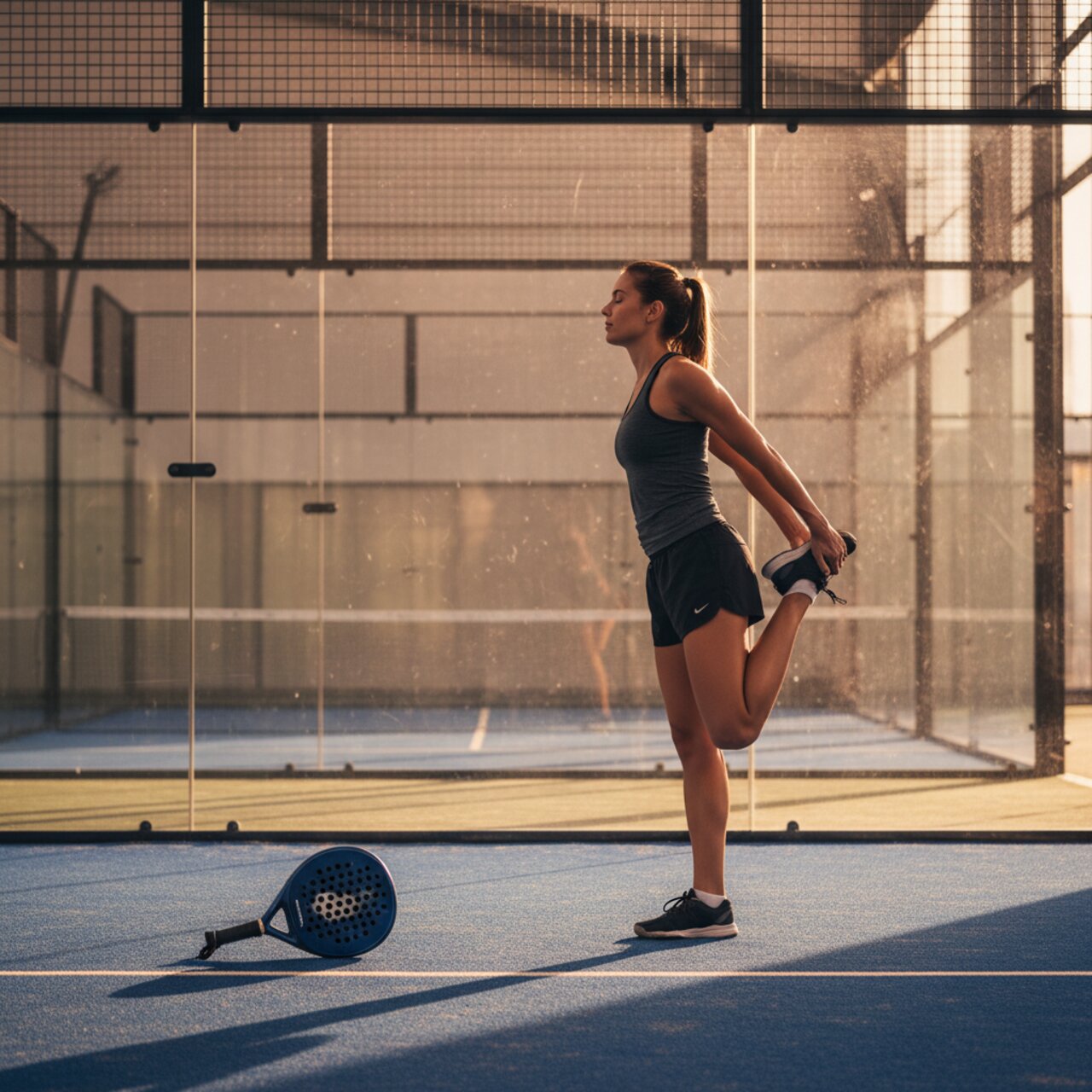
Skip the static stretching before play. Instead, move through dynamic preparation: leg swings front to back and side to side, walking lunges, gentle squats, and a few lateral shuffles to wake up the muscles that control sideways movement. Finish with two or three progressively harder sprints to a wall so the first sprint of the match is not the hardest thing your knees have done all day.
A short, focused routine matters more than a long one. The key is raising your tissue temperature and rehearsing the movements you are about to do at full speed.
Footwear and Court Surface
Shoes are part of your knee health, not just your foot comfort. Padel-specific shoes have outsoles designed to grip on the texture of the court while still allowing controlled slides. Running shoes, by contrast, grip too aggressively, which means your foot stops dead while your knee keeps rotating. That mismatch is a common cause of twisting injuries.
Replace your shoes when the tread wears smooth, usually every six to nine months for regular players. Worn soles change how your foot interacts with the surface and quietly increase your risk. Our guide to the best padel shoes for 2026 covers what to look for in grip and cushioning.
Court surface matters too. Sand-dressed artificial turf, the standard for padel, provides some give. Harder or poorly maintained courts transmit more shock, so manage your training volume more carefully if your club’s courts run firm.
Move Smarter to Protect Your Knees
Good footwork is knee protection in disguise. Players who reach with one big lunge load the joint far more than players who take an extra small step and arrive balanced. Split-step before your opponent hits, so you can push off in any direction without lurching.
Court awareness reduces emergency movements. When you hold solid positioning and read the rally early, you make controlled steps instead of desperate lunges. Our court positioning guide explains how reading the three zones keeps you from constant scrambling, which is easier on every joint in your body.
Bend from your hips and knees together when you go low for a ball, rather than dropping the knee inward. Keeping the knee aligned over the foot through every movement is the habit that protects the joint most over thousands of repetitions.
Recovery Is Not Optional
Tendons and cartilage adapt during rest, not during play. Players who load knees three or four times a week without recovery days are the ones who develop nagging pain.
Give yourself at least one full rest day between intense sessions. After a match, a few minutes of light cycling or walking helps clear the legs, and stretching the quads and calves keeps the muscles that cross the knee from pulling it out of balance. If a joint feels warm or swollen, treat that as a signal to back off rather than push through.
Listen to dull aches early. A tendon that grumbles for a week and gets rest usually settles. The same tendon ignored for a month becomes a season-long problem.
What to Expect
Building knee resilience is gradual. Strength work shows up in how your knees feel after about four to six weeks of consistent effort, not overnight. The payoff is real, though: stronger supporting muscles, better footwork, and proper recovery can keep the most common knee complaints away entirely.
If you already feel pain, do not train through it hoping it disappears. Reduce your volume, double down on strength and warm-up, and see a physiotherapist if it persists beyond two weeks. Most padel knee issues respond well to loading management and targeted strengthening when caught early.
Next Steps
Knee protection fits into a wider approach to staying healthy on court. Pair these habits with the broader common padel injuries prevention guide to protect your shoulders, elbows, and ankles as well. If you are still learning the movement patterns of the game, the complete beginner’s guide to padel will help you build clean habits from the start.
Track how your body responds across a season with the Padellog app, where logging matches and noticing patterns in fatigue and performance helps you train smarter and protect your joints for years of play.