By Mario Gonzalez
Common Padel Injuries: Complete Prevention and Treatment Guide 2026
Learn how to prevent and treat the most common padel injuries. Complete guide covering shoulder pain, tennis elbow, knee injuries, ankle sprains, and more with expert advice.
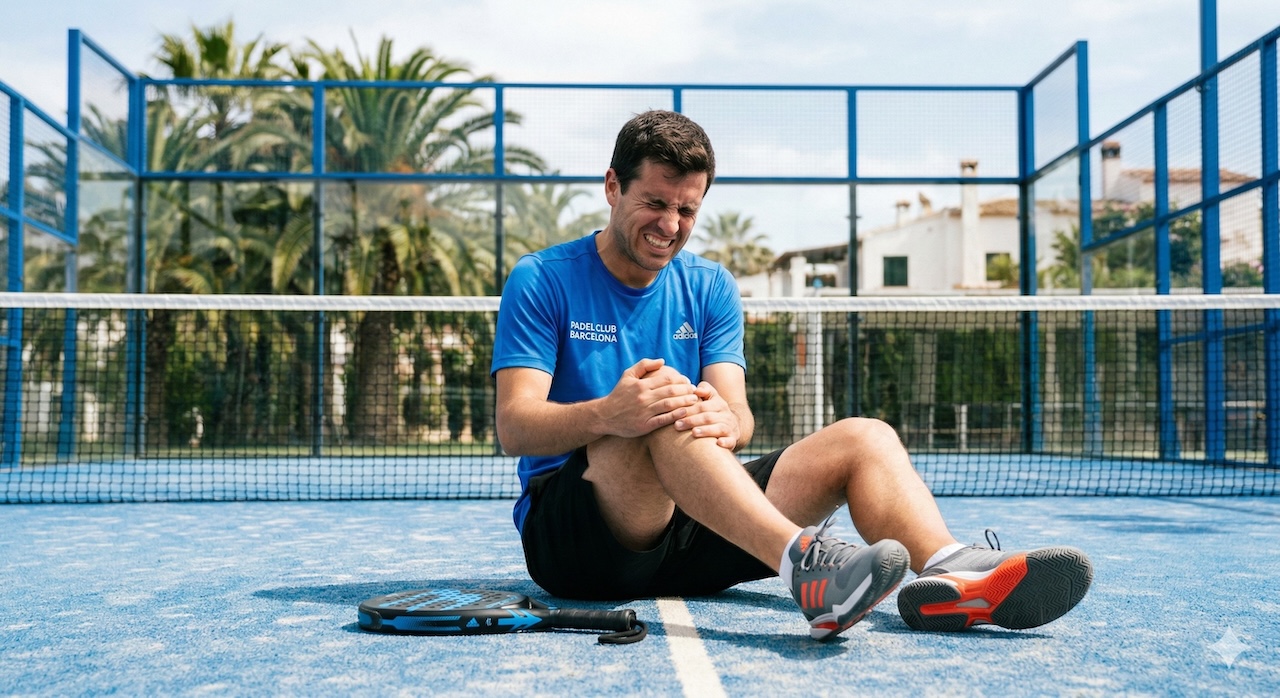
Common Padel Injuries: Complete Prevention and Treatment Guide 2026
Padel is a fantastic sport, but like any athletic activity, it comes with injury risks. The explosive movements, repetitive overhead shots, and quick direction changes can take a toll on your body - especially if you’re not prepared.
The good news? Most padel injuries are preventable with proper technique, conditioning, and awareness. This comprehensive guide covers the most common injuries, how to prevent them, and what to do if you’re hurt.
In this guide:
- The 7 most common padel injuries
- Prevention strategies for each injury
- Treatment and recovery protocols
- When to see a doctor vs self-care
- Return-to-play guidelines
- Long-term injury prevention tips
Let’s keep you healthy and on the court.
The most common padel injuries
Based on sports medicine research and player surveys, these are the injuries padelists face most:
| Injury | Frequency | Typical Cause | Severity |
|---|---|---|---|
| Shoulder impingement | Very common (30%+) | Overhead shots | Moderate |
| Tennis elbow | Common (20-25%) | Backhand technique | Mild-Moderate |
| Knee tendinitis | Common (15-20%) | Jumping, pivoting | Mild-Moderate |
| Ankle sprains | Common (15%) | Direction changes | Mild-Severe |
| Lower back pain | Common (10-15%) | Poor posture, weak core | Mild-Moderate |
| Wrist tendinitis | Occasional (5-10%) | Grip issues | Mild |
| Muscle strains | Occasional (5%) | Inadequate warm-up | Mild |
Good news: The top 5 injuries are all preventable with proper training and technique adjustments.
1. Shoulder impingement (rotator cuff issues)
What it is
Shoulder impingement occurs when the tendons of your rotator cuff get compressed between bones in your shoulder. In padel, this happens from repetitive overhead smashing motions.
Symptoms:
- Pain when raising arm overhead
- Weakness in shoulder
- Pain at night, lying on affected side
- Clicking or popping sounds
- Reduced range of motion
Why padel players get it:
- Hundreds of overhead smashes per week
- Poor technique (elbow too low, late contact point)
- Weak rotator cuff muscles
- Inadequate warm-up
- Playing through pain
Prevention strategies
1. Strengthen rotator cuff (3x per week)
External rotations with band:
- Stand with elbow at 90°, arm at side
- Rotate forearm outward against band
- 3 sets × 15 reps each arm
- Keep elbow tucked to side
Face pulls:
- Band at eye level
- Pull toward face, elbows high
- Squeeze shoulder blades
- 3 sets × 15-20 reps
YTWs:
- Lying face down or standing bent over
- Raise arms in Y, T, and W positions
- Hold 2 seconds at top
- 2 sets × 8 each position
2. Improve overhead technique
- Contact point: Hit ball at highest point possible
- Keep elbow high (at shoulder level or above)
- Use legs to generate power, not just arm
- Follow through across body, not down
3. Pre-play shoulder warm-up (5 minutes)
- Arm circles: 20 forward, 20 backward
- Band pull-aparts: 15 reps
- Wall slides: 12 reps
- Light overhead practice: 10 slow-motion smashes
4. Limit overhead volume
- If shoulder feels tired, stop smashing
- Take breaks during long sessions
- Ice shoulder after intense play
Treatment if injured
RICE protocol (first 48-72 hours):
- Rest: Avoid overhead activities
- Ice: 15-20 minutes, 3-4x per day
- Compression: Gentle, not tight
- Elevation: Keep arm elevated when resting
After 72 hours:
- Gentle range of motion exercises
- Start rotator cuff strengthening (light)
- Gradually return to overhead shots
- Consider physical therapy if pain persists
See a doctor if:
- Pain doesn’t improve after 2 weeks of rest
- Sudden sharp pain or “pop” sensation
- Can’t lift arm
- Weakness persists
Return to play: When you can perform full overhead motion pain-free and have regained strength (4-8 weeks typically).
2. Tennis elbow (lateral epicondylitis)
What it is
Despite the name, tennis elbow is extremely common in padel. It’s inflammation of the tendons on the outside of your elbow, caused by repetitive wrist extension (mainly from backhand shots).
Symptoms:
- Pain on outside of elbow
- Weak grip strength
- Pain when shaking hands
- Pain worsens with backhand shots
- Tenderness when touching outside of elbow
Why padel players get it:
- Poor backhand technique (too much wrist)
- Racket too heavy or wrong grip size
- Hitting late (ball behind body)
- Playing with stiff muscles (cold)
- Overuse without adequate rest
Prevention strategies
1. Fix backhand technique
- Use your body rotation, not just arm
- Keep wrist firm (don’t flick)
- Contact point in front of body
- Follow through with whole arm
- Let racket do the work
2. Strengthen forearm muscles (3x per week)
Wrist extensions:
- Forearm on table, hand hanging off
- Hold light weight (1-2 kg)
- Extend wrist up, lower slowly
- 3 sets × 15 reps
Reverse wrist curls:
- Same position, palm facing down
- Curl wrist up
- 3 sets × 15 reps
Grip strengthener:
- Squeeze grip trainer or tennis ball
- 3 sets × 20 squeezes
- Do throughout the day
3. Equipment check
- Ensure proper grip size (shouldn’t strain hand)
- Consider softer core racket
- Replace worn grip tape
- Don’t use racket that’s too heavy
4. Warm-up specifically
- Wrist circles: 10 each direction
- Forearm stretches: 30 seconds each
- Light practice backhands before playing hard
Treatment if injured
Immediate care:
- Ice after playing: 15 minutes
- Anti-inflammatory gel if doctor approved
- Rest from backhand-heavy play
- Use counterforce brace (tennis elbow strap)
Rehabilitation:
- Gentle stretching (wrist extension, flexion)
- Progressive strengthening exercises
- Massage forearm muscles
- Consider eccentric exercises (shown very effective)
Eccentric wrist extension:
- Use unaffected hand to lift weight up
- Use affected hand to lower weight very slowly (5 seconds)
- 3 sets × 12 reps, once daily
- Proven to heal tendinitis
See a doctor if:
- Pain persists beyond 6 weeks
- Severe pain at rest
- Elbow swelling or deformity
- Numbness in hand or fingers
Return to play: Gradual return when pain-free gripping racket firmly. Start with light hitting, progress slowly (6-12 weeks typically).
3. Knee tendinitis (patellar tendinopathy / jumper’s knee)
What it is
Inflammation of the patellar tendon (connects kneecap to shinbone). Extremely common in padel due to constant jumping, landing, and quick direction changes.
Symptoms:
- Pain below kneecap
- Worse with jumping or running
- Stiffness after sitting
- Swelling around kneecap
- Weakness in affected leg
Why padel players get it:
- Repetitive jumping (especially hard landings)
- Quick stops and pivots
- Playing on hard surfaces
- Weak quadriceps
- Poor landing technique
Prevention strategies
1. Strengthen legs properly (see Fitness Training guide)
Focus exercises:
- Eccentric single-leg squats
- Nordic hamstring curls
- Box step-downs (slow lowering phase)
- Bulgarian split squats
Why eccentric matters: Slow lowering phase strengthens tendons specifically. Critical for knee health.
2. Improve landing technique
- Land with bent knees (shock absorption)
- Land on forefoot, not heel
- Don’t let knees cave inward
- Distribute weight evenly on both legs
3. Proper footwork
- Small, quick steps rather than big lunges
- Stay on toes, ready position
- Don’t overextend on lunges
- Keep weight centered
4. Equipment
- Quality padel shoes with good cushioning
- Replace shoes every 60-80 hours of play
- Consider knee sleeves for support (not brace)
- Play on softer courts when possible
Treatment if injured
RICE + modify activity:
- Rest doesn’t mean complete stop (light activity okay)
- Ice after playing: 15-20 minutes
- Compression: Knee sleeve or tape
- Elevation when resting
Rehabilitation exercises:
Eccentric single-leg decline squats:
- Stand on declined surface (board or ramp)
- Lower very slowly on affected leg (5 seconds)
- Push back up with both legs
- 3 sets × 15 reps, twice daily
- This is proven therapy for patellar tendinitis
Isometric holds:
- Wall sit: Hold 45 seconds, 5 sets
- Spanish squat (with band): 45 seconds, 5 sets
- Builds strength without aggravating tendon
See a doctor if:
- Severe pain or swelling
- Knee locks or gives out
- Can’t bear weight
- No improvement after 4-6 weeks
Return to play: When single-leg decline squats are pain-free and you can jump/land without pain. Progress gradually (8-12 weeks typically).
4. Ankle sprains
What it is
Stretching or tearing of ankle ligaments, usually from rolling ankle outward. Padel’s quick direction changes and glass wall approaches make this common.
Symptoms:
- Immediate pain and swelling
- Bruising
- Difficulty walking or bearing weight
- Instability (ankle feels wobbly)
- Range of motion loss
Severity levels:
- Grade 1 (mild): Ligament stretched, minimal tearing
- Grade 2 (moderate): Partial ligament tear
- Grade 3 (severe): Complete ligament tear
Why padel players get it:
- Sudden direction changes
- Landing from jump on uneven surface
- Stepping on partner’s foot
- Running into glass wall
- Weak ankle muscles
- Previous ankle injuries (increased risk)
Prevention strategies
1. Ankle strengthening (3-4x per week)
Single-leg balance:
- Stand on one foot, eyes open: 60 seconds
- Progress to eyes closed: 30-60 seconds
- Progress to unstable surface: 30-60 seconds
- Do before every playing session
Ankle alphabet:
- “Write” alphabet with foot (A-Z)
- Moves ankle through full range
- Once daily, both ankles
Calf raises:
- Single-leg calf raises: 3 sets × 15
- Build ankle and calf strength
- Do on edge of step for extra range
Resistance band exercises:
- Ankle dorsiflexion (toes up): 3 × 15
- Plantarflexion (toes down): 3 × 15
- Inversion (sole inward): 3 × 15
- Eversion (sole outward): 3 × 15
2. Proper footwear
- Quality padel shoes (not running shoes!)
- Good ankle support
- Replace when worn (every 60-80 hours)
- Lace properly for support
3. Improved agility and awareness
- Practice direction changes slowly
- Work on balance exercises
- Be aware of surroundings (partner, walls)
- Don’t play fatigued (increases injury risk)
Treatment if injured
Immediate (first 48-72 hours):
PRICE protocol (updated RICE):
- Protection: Brace or wrap
- Rest: Avoid weight-bearing if severe
- Ice: 15-20 minutes, every 2-3 hours
- Compression: Elastic wrap, not too tight
- Elevation: Above heart level
After 72 hours:
- Begin gentle range of motion
- Ankle alphabet exercises
- Light stretching
- Progress to strengthening
Rehabilitation timeline:
- Grade 1: 2-4 weeks
- Grade 2: 4-6 weeks
- Grade 3: 8-12 weeks (may need surgery)
See a doctor if:
- Severe pain or deformity
- Can’t bear any weight after 48 hours
- Significant swelling or bruising
- Numbness or tingling
- Suspected fracture
Return to play: When you can hop on affected ankle 10 times pain-free, have full range of motion, and pass single-leg balance tests. Wear ankle brace initially.
5. Lower back pain
What it is
Pain in the lumbar spine (lower back) from muscle strain, poor posture, or disc issues. Padel’s rotation and bending movements can stress the back.
Symptoms:
- Dull ache or sharp pain in lower back
- Pain worsens with movement or specific positions
- Muscle spasms
- Stiffness, especially in morning
- Pain radiating to buttocks or legs (if nerve involved)
Why padel players get it:
- Weak core muscles
- Poor posture during play
- Excessive trunk rotation
- Tight hip flexors and hamstrings
- Inadequate warm-up
- Playing fatigued
Prevention strategies
1. Core strengthening (daily)
Essential exercises:
- Plank: 3 sets × 45-60 seconds
- Side plank: 3 sets × 30-45 seconds each side
- Bird dogs: 3 sets × 12 reps (6 each side)
- Dead bugs: 3 sets × 12 reps
- Glute bridges: 3 sets × 15 reps
Why these work: Stabilize spine and reduce stress on back muscles.
2. Flexibility work (daily)
Key stretches (hold 30 seconds each):
- Hip flexor stretch (lunge position)
- Hamstring stretch
- Piriformis stretch (figure-4)
- Cat-cow stretch (spinal mobility)
- Child’s pose
3. Proper technique
- Bend knees when picking up balls
- Rotate from hips, not just back
- Keep core engaged during shots
- Avoid excessive back arching on serves
4. Posture awareness
- Stand tall with shoulders back
- Engage core throughout match
- Take micro-breaks to reset posture
- Stretch between games
Treatment if injured
Acute back pain (first 48 hours):
- Continue gentle movement (bed rest is NOT recommended)
- Ice OR heat (whichever feels better): 15-20 minutes
- Anti-inflammatory medication if doctor approved
- Gentle stretching
After acute phase:
- Progressive core strengthening
- Gradually return to activity
- Consider physical therapy
- Address underlying causes (weak core, tight hips, etc.)
When to continue playing:
- If pain is mild (3/10 or less)
- Doesn’t worsen during play
- No leg symptoms (numbness, tingling, weakness)
When to stop:
- Moderate to severe pain (5/10+)
- Pain worsens during play
- Any neurological symptoms
- Pain affects movement quality
See a doctor if:
- Severe pain or pain lasting >2 weeks
- Leg numbness, tingling, or weakness
- Loss of bowel/bladder control (emergency!)
- Pain from injury (fall, collision)
- Fever with back pain
Return to play: When you can move freely without pain, have regained core strength, and completed rehabilitation exercises (2-6 weeks typically, varies by severity).
General injury prevention strategies
1. Proper warm-up (never skip this)
Follow our smart 10-minute warm-up routine before every session.
Minimum 10-minute routine:
- 3 minutes: Light cardio (jog, jump rope)
- 3 minutes: Dynamic stretches (leg swings, arm circles, trunk rotations)
- 2 minutes: Footwork drills (shuffles, direction changes)
- 2 minutes: Practice shots (start gentle, build intensity)
2. Progressive training load
- Don’t increase playing time suddenly
- Maximum 10% increase per week
- Take rest days seriously
- Listen to fatigue signals
3. Recovery protocols
After every session:
- 5-minute cool-down walk
- 5-10 minutes of stretching
- Hydrate and refuel
- Ice sore areas if needed
Weekly:
- 1-2 full rest days
- Foam rolling session
- Mobility work
- Adequate sleep (7-9 hours)
4. Strength and conditioning
See our Complete Padel Fitness Program for:
- Lower body strength
- Core stability
- Shoulder health
- Agility training
5. Equipment maintenance
- Quality shoes, replaced regularly
- Proper racket weight and grip size
- Replace worn grip tape
- Appropriate clothing (moisture-wicking)
6. Technique coaching
- Invest in lessons to learn proper form
- Video analysis of your game
- Fix bad habits early
- Focus on fundamentals
7. Body awareness
- Know your limits
- Don’t play through pain
- Address minor issues before they become major
- Track your body’s signals
When to see a doctor vs self-care
Self-care appropriate for:
- Mild muscle soreness (1-3 days after playing)
- Minor aches and pains
- Grade 1 injuries (mild strains/sprains)
- Issues that improve with rest and home treatment
See a doctor for:
- Severe or persistent pain (>2 weeks)
- Sudden sharp pain or “pop” sensation
- Significant swelling or deformity
- Can’t bear weight or use affected area
- Neurological symptoms (numbness, tingling, weakness)
- Pain that worsens despite rest
- Recurrent injuries in same area
Don’t delay: Early intervention prevents minor issues from becoming chronic problems.
Return-to-play guidelines
General progression (adjust based on injury):
Phase 1: Pain-free rest (varies by injury)
- No playing
- Maintain fitness with non-aggravating activities
- Begin rehabilitation exercises
- Work on flexibility and strength
Phase 2: Light activity
- Pain-free range of motion achieved
- 50% strength regained
- Light, controlled hitting (no competition)
- Short sessions (20-30 minutes)
Phase 3: Progressive return
- 75%+ strength regained
- Increased intensity gradually
- Practice matches (not competitive)
- Monitor symptoms closely
Phase 4: Full return
- 100% strength and function
- Pain-free during and after play
- Cleared by doctor if saw one
- Preventive exercises maintained
Red flags during return:
- Pain worsens during activity
- Swelling after playing
- Limping or compensating
- Fear of re-injury affecting play
If any red flags appear: Stop, rest, reassess. May need to step back a phase.
Long-term injury prevention
Build resilience:
- Maintain year-round conditioning
- Don’t rely solely on playing for fitness
- Address imbalances and weaknesses
- Periodize training (vary intensity throughout year)
Lifestyle factors:
- Adequate sleep (crucial for recovery)
- Proper nutrition and hydration
- Stress management
- Maintain healthy body weight
Regular maintenance:
- Monthly sports massage or PT check-in
- Quarterly technique review
- Annual comprehensive physical
- Address minor issues promptly
Track your health with Padellog: Log matches, note any discomfort, track recovery time, identify patterns in your injuries. Download Padellog to monitor your health and performance.
Final tips
Prevention is cheaper than treatment: A few hours per week on strength and conditioning prevents weeks or months of forced rest from injury.
Listen to your body: Pain is a signal, not something to ignore. Address it early.
Quality over quantity: One healthy match is better than three that leave you limping.
Invest in your body: Good shoes, proper warm-up, strength training, rest days - these aren’t optional for long-term padel success.
Stay educated: Understanding how injuries occur helps you avoid them. Knowledge is protection.
The goal is longevity: Play padel for decades, not just a few intense years before breaking down.
Summary: Your injury prevention checklist
Before every session:
- 10-minute dynamic warm-up
- Equipment check (shoes, racket)
- Hydrated and fueled
- No acute pain or injury
During play:
- Proper technique focus
- Listen to body signals
- Stay hydrated
- Take breaks if fatigued
After every session:
- 5-10 minute cool-down
- Stretching routine
- Ice if needed
- Refuel and rehydrate
Weekly:
- 2-3 strength training sessions
- 1-2 rest days
- Foam rolling
- Address any minor aches
Stay healthy, play longer, enjoy padel for life.
Related reading: Learn the proper technique for overhead shots to protect your shoulder, check out the mental game of padel for managing tournament stress, or review our weekly training plan for beginners.
Updated February 2026 with latest sports medicine research and expert recommendations.