By Mario Gonzalez
The padel lob: the most underrated shot that wins matches
Learn how to hit a lob in padel: defensive lob, offensive lob, step-by-step technique, common mistakes and recommended videos to master this shot.

The padel lob: stop ignoring it and start winning
Everyone wants to learn the smash, the vibora, the fancy stuff. Meanwhile, the lob - that “boring” shot you send over your opponents’ heads - is quietly winning more points than any of them. The best players in the world lob constantly. You should too.
Here’s the thing: most people think they already know how to lob. “Just hit it up, right?” Wrong. A good lob recovers the net. A bad lob gifts your opponent a smash. The difference is technique, timing and knowing when to use each type.
What is the lob?
It’s a shot you hit high and deep over your opponents at the net. The goal: push them back and buy yourself time to move forward.
There are two main types:
- Defensive lob: you’re under pressure at the back of the court. You send it high with slice or flat to gain time and reorganize. Height and depth are everything.
- Offensive lob (topspin lob): you’ve got a bit more control. You add topspin so the ball accelerates after the bounce and kicks into the back wall. Harder to execute, way harder to return.
Want to see where the lob fits in the bigger picture? Check out the complete arsenal of padel shots.
When to use it
- You’re stuck at the back and opponents own the net: the lob is your escape route. Force them back, then move up.
- Opponents are glued to the net: the more forward they stand, the more space above them. Exploit it.
- After a tough defensive play: you’ve dug out a ball from the back glass and can’t attack. Deep lob, regroup.
- To break their rhythm: opponents comfortably volleying? A lob forces them to switch gears - suddenly they need a bandeja or smash instead.
- Wind at your back: the wind carries the ball deeper. A lob with a tailwind can be devastating.
How to execute it step by step
1. Setup
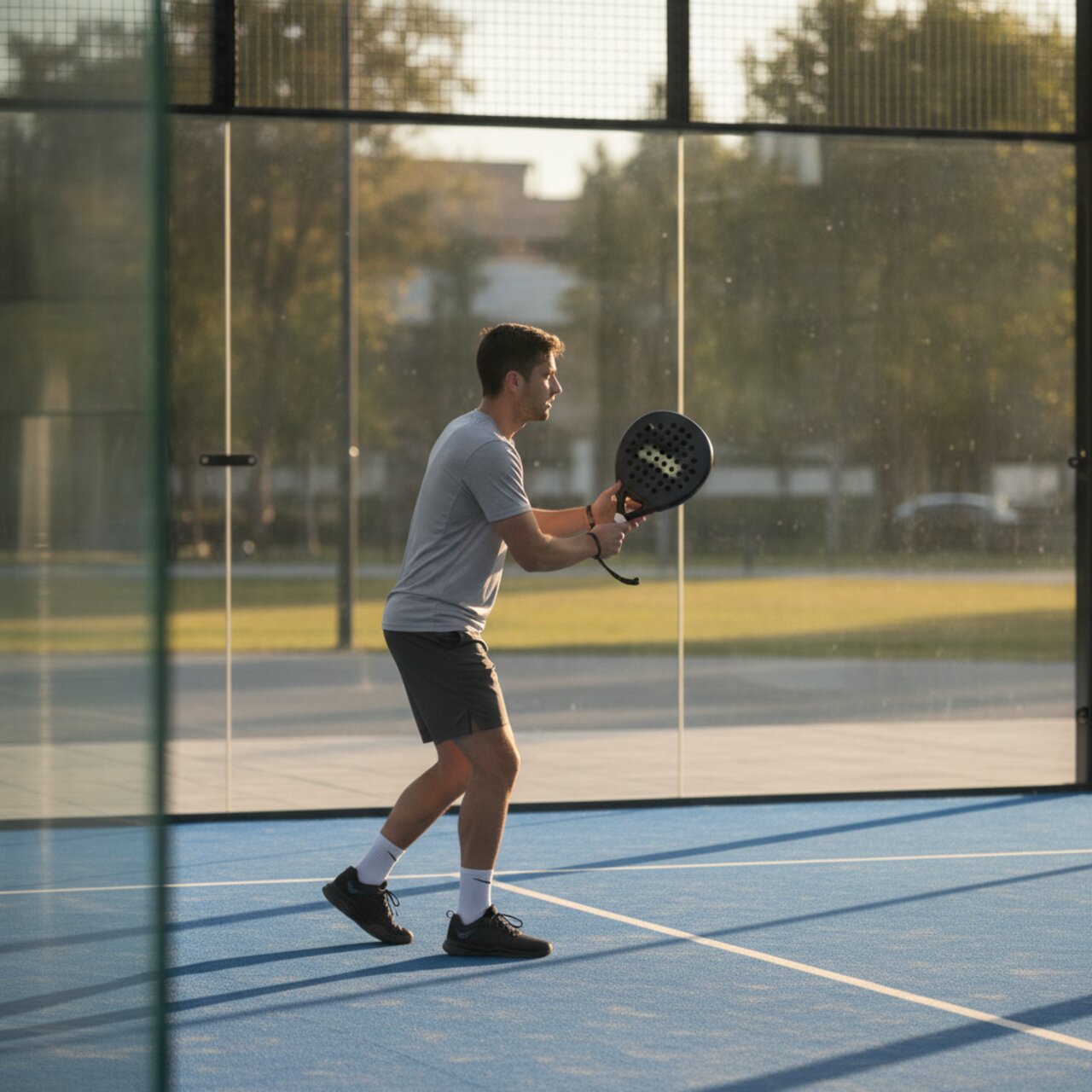
- Get sideways, knees bent. The lower you are, the easier it is to generate height.
- Continental grip or slightly eastern backhand. Not the same grip you use for flat volleys.
- Check where your opponents are standing. If they’re pressing forward, the lob is on.
- Disguise it. Use the same preparation as a chiquita or low drive until the last moment. If they read “lob” early, they’ll back up and punish it.
2. The stroke
Defensive lob:
- Open the racket face upward.
- Swing from low to high and forward. Smooth, controlled motion.
- Aim for height (clear their reach comfortably) and depth (land it close to the back wall).
- Contact point in front of your body, around hip height or below.
- A touch of backspin helps the ball float and makes it harder to attack in the air.
Offensive lob (topspin):
- Close the racket face slightly compared to the defensive version.
- Brush up the back of the ball to generate topspin.
- The ball flies lower over your opponent but kicks up and accelerates after the bounce.
- You need more racket speed and better timing. Don’t try this when you’re off balance.
3. After the shot
- Move to the net. If your lob is deep, opponents retreat. That’s your window to advance.
- Move together with your partner. Both up, in a line.
- If the lob came up short, brace yourself. A smash is coming.
- Watch whether your opponent plays a bandeja, smash or drop shot, and adjust.
Common mistakes
| Mistake | Why it happens | How to fix it |
|---|---|---|
| Short lob that sits in the smash zone | Not enough swing or late contact | Hit in front of your body, follow through upward |
| Lob flies out the back | Too much power or racket face too open | Dial back the power - lobs need precision, not force |
| Opponent always reads your lob | Different preparation than your other shots | Use the same setup as a chiquita until the last second |
| Lob lands too central | Not aiming at the corners | Target your opponent’s backhand side or the side glass |
| Not moving up after the lob | Standing and watching the ball | As soon as you hit, advance. A lob without moving up is pointless |
Advantages of the lob
- ✅ Gets you out of defensive positions and back to the net
- ✅ Forces opponents to retreat and change their shot selection
- ✅ Breaks the rhythm when you’re under sustained pressure
- ✅ Works at every level - beginners and pros use it constantly
- ✅ A well-placed topspin lob in the corner can be an outright winner
Risks of the lob
- ⚠️ A short lob is a free smash for your opponent
- ⚠️ Overusing it lets opponents adjust and position further back
- ⚠️ Headwind kills the lob’s depth and makes it easy to attack
- ⚠️ If you don’t move up after lobbing, you waste the advantage
- ⚠️ The topspin lob needs good timing - get it wrong and it hits the net
Recommended videos
- The best padel lob masterclass ever with German Schafer - Otro Nivel Padel
- How to make an effective lob in padel - train like the pros - Padelarte
- Fede Chingotto and the secret of the perfect lob - PadelForAll
- Everything you need to know about the lob - Alto Padel
- How to improve your lob - technical and tactical analysis - Mejora Tu Padel
Pro tip
The lob isn’t a surrender shot - it’s a strategy shot. The best players lob more than you think. Practice landing it in the backhand corner and watch your point-winning percentage from the back of the court go up.
Track your matches on padellog and see how your game improves over time.