By Mario Gonzalez
How to Play Padel Left Side vs Right Side: Finding Your Perfect Position
Learn the key differences between playing left side and right side in padel, which position suits your game, and how to choose the right side for you.
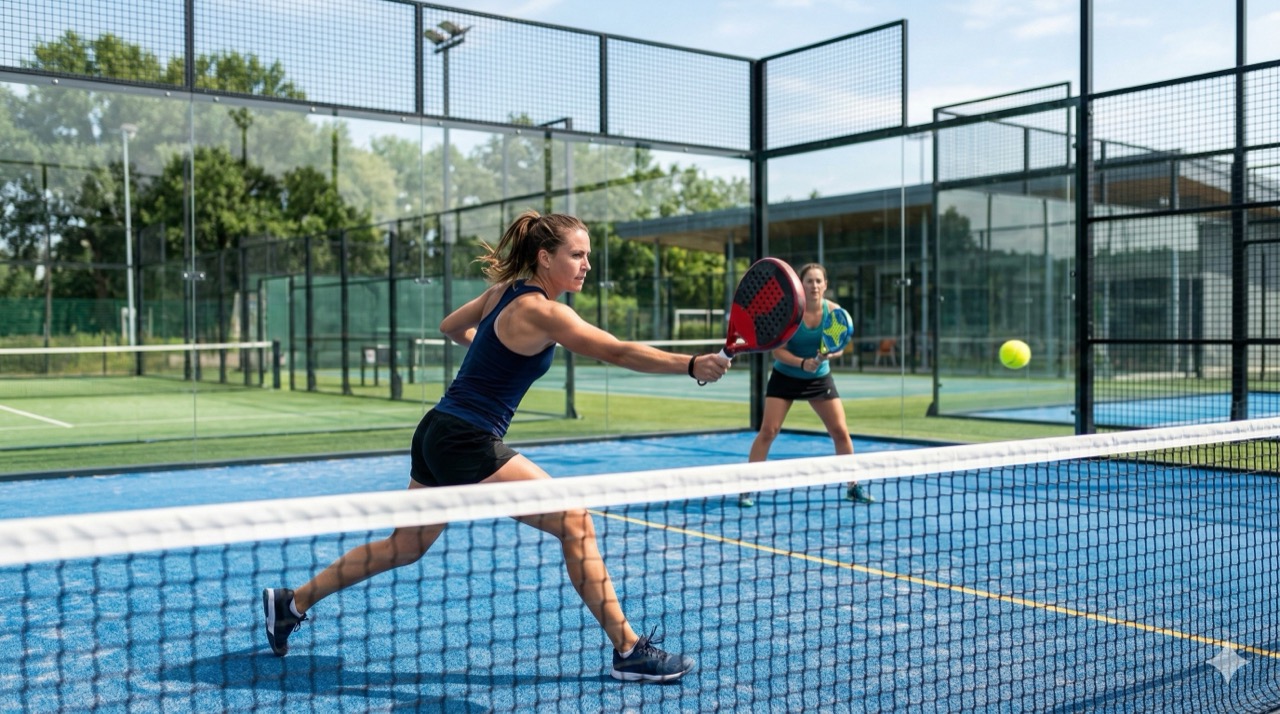
If you’ve ever wondered whether you should play left side or right side in padel, you’re not alone. This is one of the most important decisions you’ll make as a padel player, and it can be the difference between feeling comfortable on court or being constantly out of position.
The truth is, there’s no one-size-fits-all answer. Your ideal side depends on several factors: your dominant hand, your playing style, your strengths and weaknesses, and even who you’re playing with. Let’s break down everything you need to know to find your perfect position.
What Defines Each Side of the Court?
Before we dive deep, let’s clarify the terminology. In padel, we talk about:
Right side (or drive side): This is the position of the player on the right when facing the net from the back. For a right-handed player, this is the side where you hit forehand shots.
Left side (or backhand side): This is the position of the player on the left when facing the net. For a right-hander, backhand shots dominate here.
Now here’s where it gets interesting: these labels flip completely if you’re left-handed. A lefty playing on the left side will be playing with their forehand, not their backhand. That’s why many pros prefer to talk about “deuce side” and “ad side” based on who serves, but that’s a topic for another day.
The Right Side: Characteristics and Player Profile
The right side is traditionally considered the “conductor’s” side. The player occupying this position usually has certain responsibilities and characteristics:
Right Side Characteristics
- More balls to play: Statistically, more balls go through the center and right side of the court.
- Rhythm control: The right side player usually decides when to attack and when to defend.
- Bandeja responsibility: Most bandejas (those lobs that fall mid-court) are handled by the right side player.
- Center protection: The center of the court is shared territory, but the right side player has more responsibility here.
Typical Right Side Player Profile
If you play right side, you probably:
- Are right-handed (though not always - we’ll get to that)
- Have a solid forehand bandeja
- Feel comfortable making quick decisions
- Don’t mind having more responsibility in the game
- Have good forehand volley control
- Know how to defend with cross-court lobs from the back
Key Shots on the Right Side
The shots you need to master if you play right side:
Forehand volley: Your bread and butter. You need to be solid here because you’ll hit a lot of these, especially in the center.
Forehand bandeja: The signature shot of the right side. It must be reliable and controlled, as the bandeja often decides whether you win or lose the point.
Cross-court returns: When you receive a serve (especially to your body or backhand), you need to be able to return cross-court safely.
Forehand smash: Although you won’t always have clear opportunities, when that short lob comes, you need to be able to finish.
The Left Side: Characteristics and Player Profile
The left side has an unfair reputation for being the “weak side,” but that’s a myth. It’s a different side, with different responsibilities, and in the right player’s hands it can be absolutely lethal.
Left Side Characteristics
- Point finisher: The left side player usually has more smash opportunities.
- Wall specialist: The back wall on your side is crucial - you need to master it.
- Surprise factor: You have more freedom to surprise with unexpected smashes or counter-attacks.
- Fewer balls, more decisive: You touch fewer balls, but when they come they tend to be more important.
Typical Left Side Player Profile
If you play left side, you probably:
- Have a solid backhand (obviously)
- Are good at smashing
- Like attacking play more than controlling play
- Trust your partner to manage the rhythm
- Have good wall play
- Are effective in tight spaces
Key Shots on the Left Side
The shots you need to master if you play left side:
Backhand volley: Not as frequent as on the right side, but when it comes it has to be solid. Many backhand volleys are finishing shots.
Backhand wall exits: This is your territory. The back wall on your side is like your office - you have to know it perfectly.
Smash: The left side player usually has more smash options because defensive lobs tend to go to this side.
High backhand volley: For those balls that come high and fast, you need to be able to control them without giving up the advantage.
Which Side Should You Play?
Now comes the million-dollar question. Right or left? Here are the factors you should consider:
1. Your Dominant Hand
If you’re right-handed: The most common is to play right side. Your dominant shot will be in the center of the court, where most of the action happens. However, if you have a very strong backhand and like to smash, the left side might be perfect for you.
If you’re left-handed: This is where things get interesting. Playing right side as a lefty is a brutal advantage (we’ll talk about this in a moment). But you can also play left side and have your dominant forehand on that side.
2. Your Playing Style
You’re more of a controller than an attacker: The right side probably suits you better. Here you have more opportunities to manage the game’s rhythm.
You like aggressive play and smashing: The left side might be your zone. Fewer balls, but more opportunities to finish.
You prefer baseline play: If you feel more comfortable defending from the back, the right side usually offers more opportunities for lobs and organized defense.
3. Your Strengths and Weaknesses
Be honest with yourself:
- Is your bandeja reliable? → Right side
- Is your smash your best weapon? → Left side
- Do you have a better backhand than forehand? → Left side might be ideal
- Do you feel comfortable taking responsibility? → Right side
4. Your Partner
This is crucial and often overlooked. Your ideal side also depends on who you’re playing with:
- If your partner has a weak backhand, you can cover more center from the right
- If your partner is left-handed, the combination of right (lefty) + left (righty) can be deadly
- If you both prefer the same side, one will have to adapt - better it’s the one with more versatility
Left-Handers on the Right Side: The Hidden Advantage
Here comes one of padel’s best-kept secrets: a left-handed player on the right side is pure gold.
Why? Because you have your dominant shot (the forehand) protecting the entire center of the court. Most balls in padel go to the center, and you receive them with your best shot. Plus:
- Your forehand bandeja is more powerful than a typical backhand bandeja
- You can close angles more easily
- Your forehand volley dominates the center
- You create different angles that make opponents uncomfortable
Look at professional pairs: Galán (lefty) plays right side with Lebrón. Tapia (lefty) played right side with Lima. It’s not a coincidence.
If you’re left-handed and playing left side just because you thought “lefties go left,” try the right side. It could completely change your game.
How the Two Sides Complement Each Other
Padel is a team sport. The two sides don’t compete with each other - they complement. When a pair works well, it’s because each player understands their role and covers what the other can’t.
The right side player:
- Controls the rhythm and decides when to accelerate
- Protects the center with their bandeja
- Creates opportunities for their partner to smash
- Maintains consistency in long rallies
The left side player:
- Takes advantage of the smash opportunities their partner creates
- Masters their side’s wall to return impossible balls
- Surprises with attacks from unexpected positions
- Relieves pressure with powerful smashes when necessary
When both players understand this, the pair flows. One builds, the other finishes. One controls, the other attacks. One sets the pace, the other breaks the point.
Common Positioning Mistakes
Even experienced pairs make these errors:
1. Both Players in the Same Zone
This is a classic. Both players go for the same ball and leave half the court empty. Result: point lost from a lob to the uncovered side.
Solution: Constant communication. “Mine!” or “Yours!” should be words you use every point.
2. Leaving the Center Open
The center of the court is no man’s land without coordination. Many pairs leave a huge gap in the middle because each thinks it’s the other’s responsibility.
Solution: The right side player has more responsibility in the center, but both must move as a unit. When one opens up, the other closes in.
3. Not Respecting the Roles
The left side player tries to control the rhythm like they’re on the right, or the right side player won’t let their partner smash and wants to finish every point.
Solution: Understand your role and trust your partner. If you play right side, create opportunities. If you play left side, take advantage of them.
4. Too Static Positioning
Some players plant their feet on “their side” and don’t move from there. Padel is dynamic - your position changes constantly based on where the ball is.
Solution: Move as a pair. If the ball is on the right side, the whole pair shifts right. Always maintain formation.
When Does It Make Sense to Switch Sides?
You’re not married to your side forever. There are times when switching can be smart:
During a Match
- They’re playing very well to your specific side: If opponents are constantly exploiting your side, a switch can break their rhythm.
- Your partner is having an off day: If your teammate isn’t comfortable, switching can refresh the energy.
- Sun or wind is killing you: In outdoor padel, you switch sides every set, but sometimes a tactical change within the set can help.
Long Term
- You find a new partner: Your best side with one partner might not be with another.
- Your game evolves: If you develop a killer smash, maybe the left side gives you more opportunities to use it.
- You want to be more versatile: Many high-level players practice both sides to be more complete.
Famous Pairs and Their Side Choices
Watching how the pros play can teach you a lot:
Alejandro Galán (lefty) + Juan Lebrón (righty):
- Galán on the right, Lebrón on the left
- Galán controls with his forehand from the right, Lebrón finishes with power from the left
- Perfect combination of control + power
Arturo Coello (righty) + Agustín Tapia (lefty):
- Tapia on the right, Coello on the left
- Similar to Galán/Lebrón: lefty controlling from the right, righty attacking from the left
- Tapia sets the pace, Coello breaks points
Paula Josemaría (righty) + Ari Sánchez (righty):
- Josemaría on the right, Sánchez on the left
- Josemaría with control and solid bandeja, Sánchez with smash and speed
- Two righties who understand their roles perfectly
Gemma Triay (righty) + Claudia Fernández (righty):
- Triay on the right, Fernández on the left
- Absolute control from the right (Triay), aggression from the left (Fernández)
What’s interesting is that almost all top pairs have a pattern: a more controlling player on the right and a more aggressive one on the left. And when there’s a lefty, they’re almost always on the right.
Tips to Improve on Your Side
Once you choose your side, here are some tips to improve:
For Right Side Players
- Practice your bandeja relentlessly: It’s your most important shot.
- Work on center volleys: Many balls go there, you have to be solid.
- Improve your communication: You’re the conductor, you have to talk on court.
- Develop different types of bandeja: Not just one - you need power bandeja, control bandeja, spin bandeja.
For Left Side Players
- Perfect your smash: It’s your main weapon, it has to be lethal.
- Master the back wall: Practice wall exits until it’s automatic.
- Work on patience: You’ll touch fewer balls, don’t get desperate.
- Trust your partner: Let them control the rhythm, you focus on finishing.
For Both Sides
- Practice your “weak” side: We all have one, you have to work on it.
- Play with different partners: It helps you adapt and be more versatile.
- Watch professional matches: Observe how they position and move.
- Record yourself playing: Seeing your own positioning mistakes is revealing.
Resources to Keep Learning
If you want to dive deeper into the specific shots for each side, check out our complete guide: Complete Arsenal of Every Padel Shot.
Recommended YouTube Videos on Padel Positioning
These YouTube tutorials will help you better understand the dynamics of each side:
- How to CHOOSE the BEST SIDE for You and Your Partner! - The Padel School
- Are you a RIGHT SIDE PLAYER? - The Padel School
Conclusion: Your Ideal Side Is Waiting
There’s no universal right answer. Your best side is the one that makes you feel comfortable, confident, and effective. It might be the “traditional” side according to your dominant hand, or you might discover that breaking the rules works better for you.
The most important thing is to understand the roles, communicate with your partner, and be willing to adapt. Padel is a team sport, and finding your perfect side has as much to do with your game as with your partner’s.
Experiment, try both sides, and pay attention to where you feel most natural. Your ideal side is where your strengths shine and where you can best help your partner win points.
And remember: whether it’s right or left, what matters in the end is how much you enjoy playing. Because that’s what padel is all about - having fun while improving.
See you on court!