By Mario Gonzalez
Padel doubles positioning guide - master the court like a pro
Learn the 4 essential formations in padel doubles, when to use them, and how to move as a synchronized pair. Avoid common mistakes and dominate the court with smart positioning.
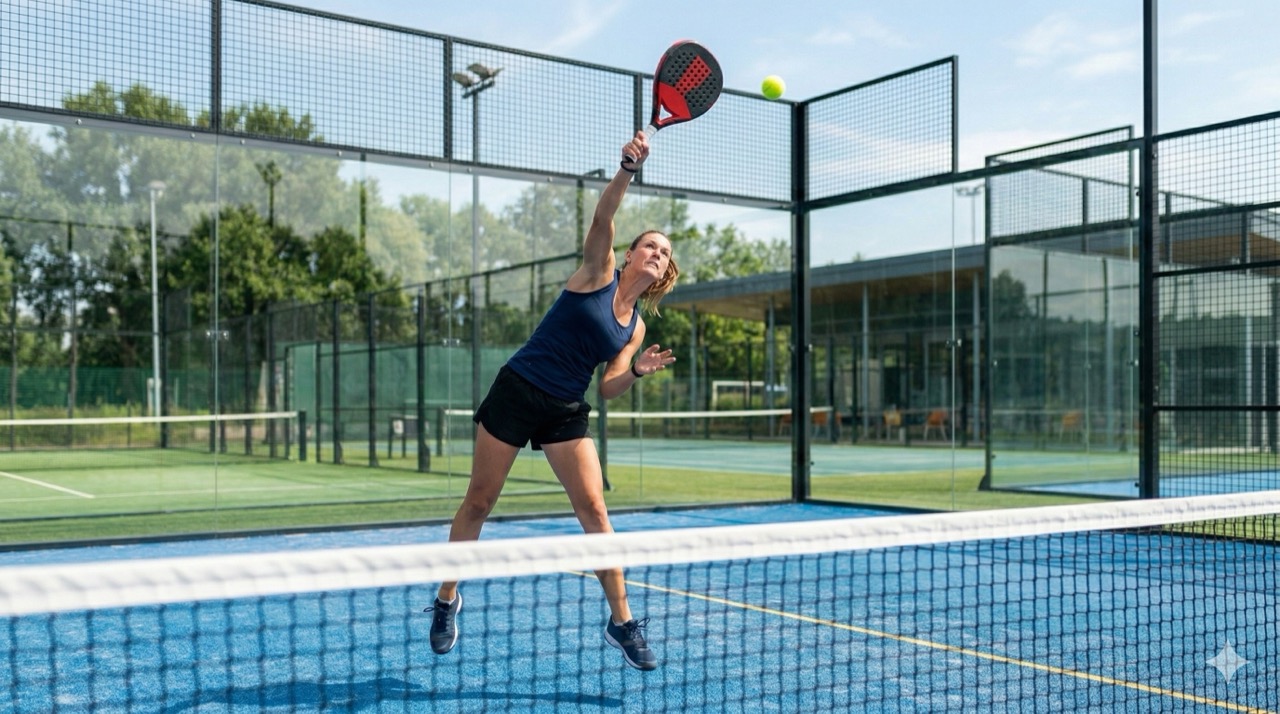
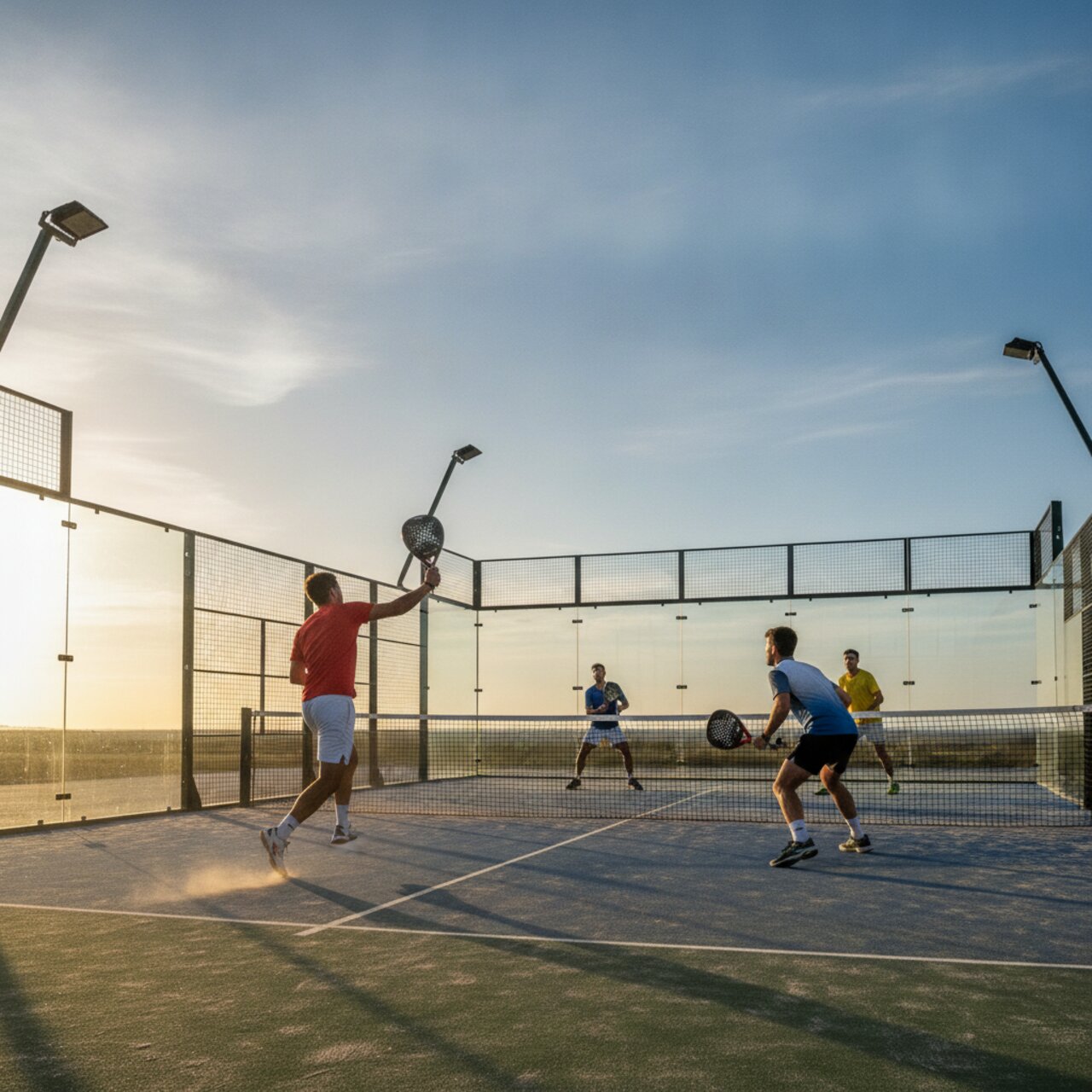
So you’ve learned all the basic shots - your bandeja is coming along, your víbora is getting spicy, and you can smash when the opportunity arrives. But you still feel like you’re always in the wrong place at the wrong time? Welcome to the world of padel positioning, my friend.
Here’s the thing: padel isn’t just about hitting great shots. It’s about being in the right spot to make your partner’s life easier and your opponents’ lives harder. If you’ve mastered every shot in your arsenal but still losing matches, positioning might be your missing piece.
Let’s break down everything you need to know about doubles positioning in padel, from the basic formations to the subtle movements that separate beginners from advanced players.
The 4 basic formations you need to know
Think of these formations like different gears in a car. You’ll shift between them constantly during a point, depending on what’s happening on court.
Both at the net (offensive formation)
This is where you want to be. When both you and your partner are up at the net, you own the court. You’re in attack mode, pressuring your opponents, cutting off angles, and ready to finish points with volleys and smashes.
When to use it: When you’ve hit a good shot that pushes your opponents back (a deep lob, a strong shot to the back glass, or after they hit a weak return). Basically, whenever you’ve gained control of the point.
Why it works: You’re closer to the net, so you have better angles. Your opponents have to hit over you (risky) or try to lob you (which gives you smash opportunities). You’re in control.
Both at the back (defensive formation)
This is your survival mode. Both players are near the back fence, trying to defend against opponents who are smashing and volleying at the net.
When to use it: When your opponents are dominating the net and you’re scrambling to stay in the point. After you’ve hit a weak return that gives them an easy attack.
Why you’re here: Sometimes you don’t have a choice - you’re defending for your life. But the key is not to stay here. You want to work your way forward as soon as you can hit a decent shot.
One up, one back (transition or mixed formation)
This is the most common formation you’ll see - and the most dangerous if you don’t know what you’re doing. One player is at the net, one is at the back.
When it happens: Usually during transitions - one player is moving forward while the other is stuck back, or after a shot down the middle where one player takes it and the other hasn’t adjusted yet.
The problem: This formation has a massive hole right down the middle. Your opponents can exploit this gap easily. You want to get out of this formation as quickly as possible - either both move up or both move back together.
Australian formation (advanced offensive)
This one’s a bit special. Both players are at the net, but instead of being parallel (left and right), one is slightly ahead of the other.
When to use it: When you’re both at the net and one player has positioned themselves to cut off a specific angle or anticipate a particular shot. Also used strategically on serves sometimes.
Why it’s tricky: It requires excellent communication and court awareness. The player behind needs to cover more court width. Use it when you really know what you’re doing.
Left side vs right side - who does what?
This is simpler than people make it. In padel doubles, the court is divided down the middle, and generally:
Left side player (usually the backhand side):
- Covers the left half of the court
- Often handles balls that come down the middle (especially if they’re right-handed, since it’s their forehand)
- Typically the “steadier” player who keeps balls in play
Right side player (usually the forehand side):
- Covers the right half of the court
- Often the more aggressive player who looks for finishing shots
- Takes high balls in the middle when both players can reach it
But here’s the real secret: these “rules” are flexible. Communication matters more than strict zones. If your partner is out of position, you cover. If you’re right-side but closer to a ball on the left, you take it.
The shadow concept - move as one unit
Imagine you and your partner are connected by an invisible rope about 3 meters long. When one moves forward, the other moves forward. When one slides left, the other slides left.
Why this matters: If you’re both at the net and you move to cover a shot on the right side, your partner needs to move right too. Otherwise, you create a huge gap on the left. The same applies when defending - if you both back up together, you maintain your formation.
How to practice it: Play some points where you focus entirely on maintaining your distance and formation, even if it means you don’t go for every ball. You’ll start to feel the rhythm of moving together.
The mirror drill: Stand at the net with your partner. One person leads, making random movements (forward, back, left, right), and the other mirrors them while maintaining the 3-meter spacing. Switch leaders. It feels silly but it works.
Common positioning mistakes beginners make
Let me save you some frustration by pointing out the mistakes I see every single week:
1. Standing too close together If you’re practically holding hands with your partner, you’re leaving massive gaps on both sides. Spread out - you should be about 3-4 meters apart.
2. Both running for the same ball Communication, people! Call for balls early and loud. “Mía!” or “Mine!” solves this problem.
3. Not moving when your partner moves This is the shadow concept we just talked about. Your partner goes right to hit a ball, and you’re still standing in the same spot? That’s a gap waiting to be exploited.
4. Staying one-up-one-back for entire points This formation is a transition state, not a place to live. Work together to either both push up or both fall back.
5. Hugging the side walls Yes, you need to cover the sides, but if you’re pressed against the wall, you’re giving away the middle. Stay central enough to cover your half effectively.
6. Not adjusting when opponents hit the ball Every time your opponents hit the ball, you should be making small adjustments. Not huge movements, but slight shifts based on where the ball is going.
7. Standing flat-footed Stay on your toes, ready to move. If you’re standing still with your weight on your heels, you’re too late to react.
Net position vs defensive position - the details matter
Let’s get specific about where exactly you should stand in each scenario.
At the net (offensive):
- Stand about 2-3 meters from the net (not right on top of it)
- Weight slightly forward on your toes
- Paddle up at chest/face height, ready to volley
- Watch the ball but also track opponents’ positions with peripheral vision
- Cover straight shots first, angled shots second
At the back (defensive):
- Position yourself about 1-2 meters from the back fence
- Give yourself room to move back for lobs and smashes
- Stay central in your half - don’t get pushed too wide
- Paddle ready in neutral position (not too high, not too low)
- Prepare for the next shot while hitting - where will you move after this?
How to transition between formations
This is where the magic happens. Points aren’t won by staying in one formation - they’re won by transitioning smartly.
From defense to offense (back to net): You need to earn your way forward. Hit a deep lob, a good shot to the back glass, or force a weak return. Then, as soon as you see your opponents struggling or moving back, both of you push forward together. Don’t run - advance with control, ready to volley their next shot.
From offense to defense (net to back): This usually happens when opponents hit a good lob over your heads. Both players turn and move back together. The player closest to where the ball will land calls it and hits, while the other gets into defensive position. After the defensive shot, look for an opportunity to work your way back forward.
From mixed to either formation: If you’re caught one-up-one-back, make a quick decision: Can we both push forward right now? If yes, do it. If no, both drop back together temporarily, then look to advance as a pair.
Communication tips with your partner
Positioning only works if you’re on the same page with your partner.
Before the match:
- Decide who takes balls down the middle (usually the forehand player)
- Agree on basic formations you’ll use
- Establish your calling system (“Mine!” vs “Yours!” vs “Mía!” vs “Tuya!”)
During points:
- Call for balls early and clearly
- Use short commands: “Up!” “Back!” “Switch!” “Yours!”
- After points, give quick feedback: “Let’s push up together next time” or “I’ll cover more middle”
Non-verbal communication:
- Watch your partner between points - their body language tells you if they’re tired, frustrated, or ready to attack
- Make eye contact before serves/returns to confirm who’s doing what
- A simple nod or hand signal can indicate “I’ve got this side covered”
YouTube tutorials worth watching
Want to see this stuff in action? Here are some excellent video tutorials that break down positioning concepts:
- “Padel Positioning: Where to Stand in Doubles” - Padel School
- “How to Move as a Pair in Padel Doubles” - The Padel School
- “Padel Tactics: The 4 Basic Formations” - Sandy Farquharson
- “Common Positioning Mistakes in Padel” - Padelonomics
- “Defensive vs Offensive Positioning in Padel” - World Padel Tour
Putting it all together
Here’s your actionable game plan:
Master the basics first: Understand the four formations and when to use each one.
Practice the shadow concept: Play some practice points where you focus only on moving as a pair, not on winning the point.
Start with simple rules: Left takes left, right takes right, forehand player takes middle balls. Adjust as you get more comfortable.
Communicate constantly: Talk before, during, and after points. It feels awkward at first but becomes natural.
Watch your position, not just the ball: Between shots, quickly glance at where you are on court. Too close to your partner? Too wide? Adjust.
Transition deliberately: Don’t rush forward or back randomly. Move with purpose when the situation allows it.
Play with the same partner regularly: Chemistry develops over time. You’ll start anticipating each other’s movements without thinking about it.
Remember, even professional players constantly adjust their positioning throughout a match. It’s not about being perfect - it’s about being aware, communicating, and making small improvements each time you play.
Now get out there and start moving like a team instead of two individuals sharing a court. Your opponents won’t know what hit them.