By Mario Gonzalez
Padel vs Tennis: 10 Key Differences Explained (2026 Guide)
Discover the 10 key differences between padel and tennis. Compare court size, rules, equipment, learning curve, and costs to decide which sport is right for you.
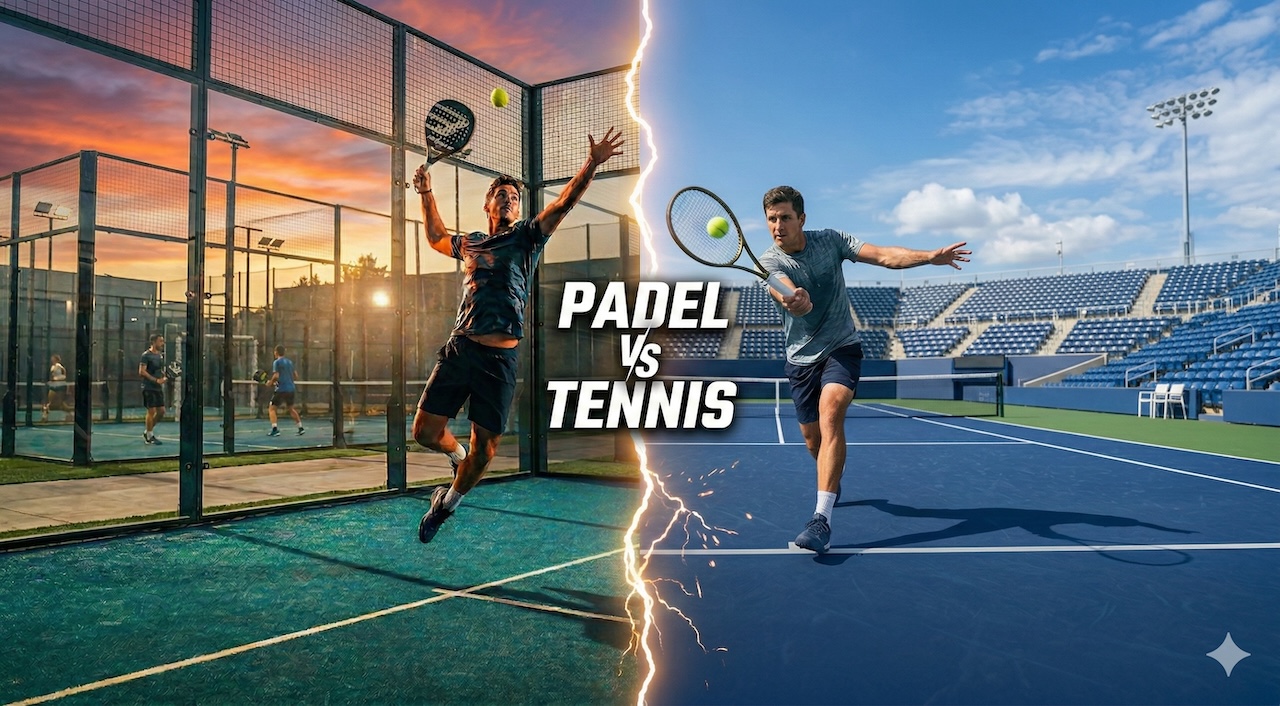
Padel vs Tennis: 10 Key Differences
If you’re a tennis player curious about padel, or wondering which sport to try first, you’re in the right place. While both sports involve rackets and a net, they’re surprisingly different in how they’re played.
Tennis players are discovering padel in record numbers. Why? The sport combines the best of tennis and squash - strategic gameplay, social doubles format, and a learning curve that gets you playing well within weeks, not months.
This guide breaks down the 10 key differences between padel and tennis to help you understand both sports and decide which one (or both!) is right for you.
Quick verdict: Padel is easier to learn, more social, and less physically demanding. Tennis offers singles play, has more established global infrastructure, and provides a different athletic challenge. Most players who try both end up loving both.
Quick Comparison Table
| Aspect | Tennis | Padel |
|---|---|---|
| Court size | 78’ x 36’ (23.77m x 10.97m) | 66’ x 33’ (20m x 10m) |
| Court features | Open court, no walls | Enclosed with glass walls and mesh |
| Racket | Strung racket with open face | Solid racket with perforated surface |
| Ball | Tennis ball (56-59.4g) | Padel ball (56-59.4g, slightly less pressure) |
| Serve | Overhand from above shoulder | Underhand from below waist |
| Playing format | Singles or doubles | Doubles only (4 players) |
| Scoring | Same (15, 30, 40, game) | Same (15, 30, 40, game) |
| Court surface | Grass, clay, or hard court | Artificial turf with sand |
| Learning curve | Moderate to difficult | Easy to moderate |
| Physical demand | High (lots of running) | Moderate (smaller court, strategic) |
| Average rally | 3-5 shots | 8-15 shots |
| Equipment cost | $100-300 to start | $60-200 to start |
| Global reach | Worldwide (200+ countries) | Growing fast (primarily Europe/Latin America) |
The 10 Key Differences
1. Court Size - Padel is Significantly Smaller
Tennis: A regulation tennis court is 78 feet long and 36 feet wide for doubles (27 feet for singles). That’s 2,808 square feet of court to cover.
Padel: A padel court is 66 feet long and 33 feet wide. That’s 2,178 square feet - about 22% smaller than a tennis court.
Why it matters: The smaller court means less running and faster reactions. You can cover the entire court with 2-3 steps, making it accessible to players of all fitness levels. In tennis, court coverage requires significant speed and endurance.
Beginner advantage: Padel’s smaller court means beginners can reach most balls, making rallies possible from day one. In tennis, beginners spend months learning to move efficiently around a much larger space.
2. The Walls - The Game-Changing Difference
Tennis: Open court with no walls. If the ball goes past you, the point is over.
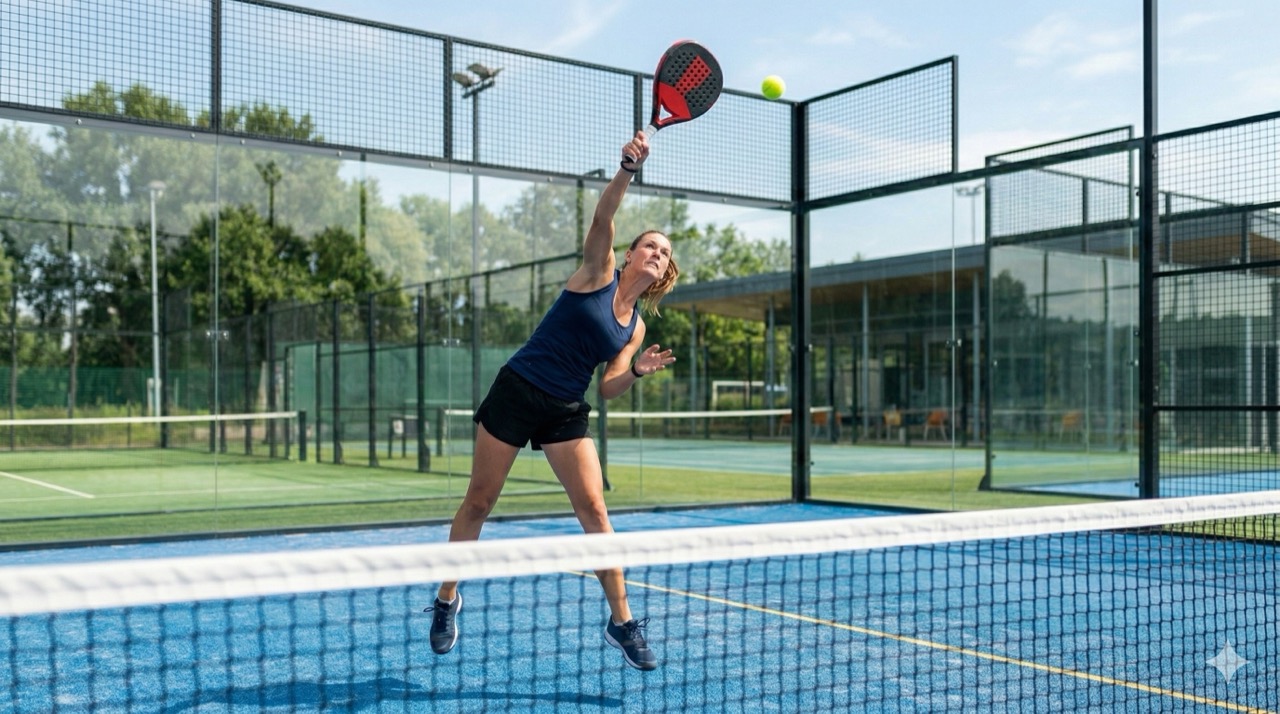
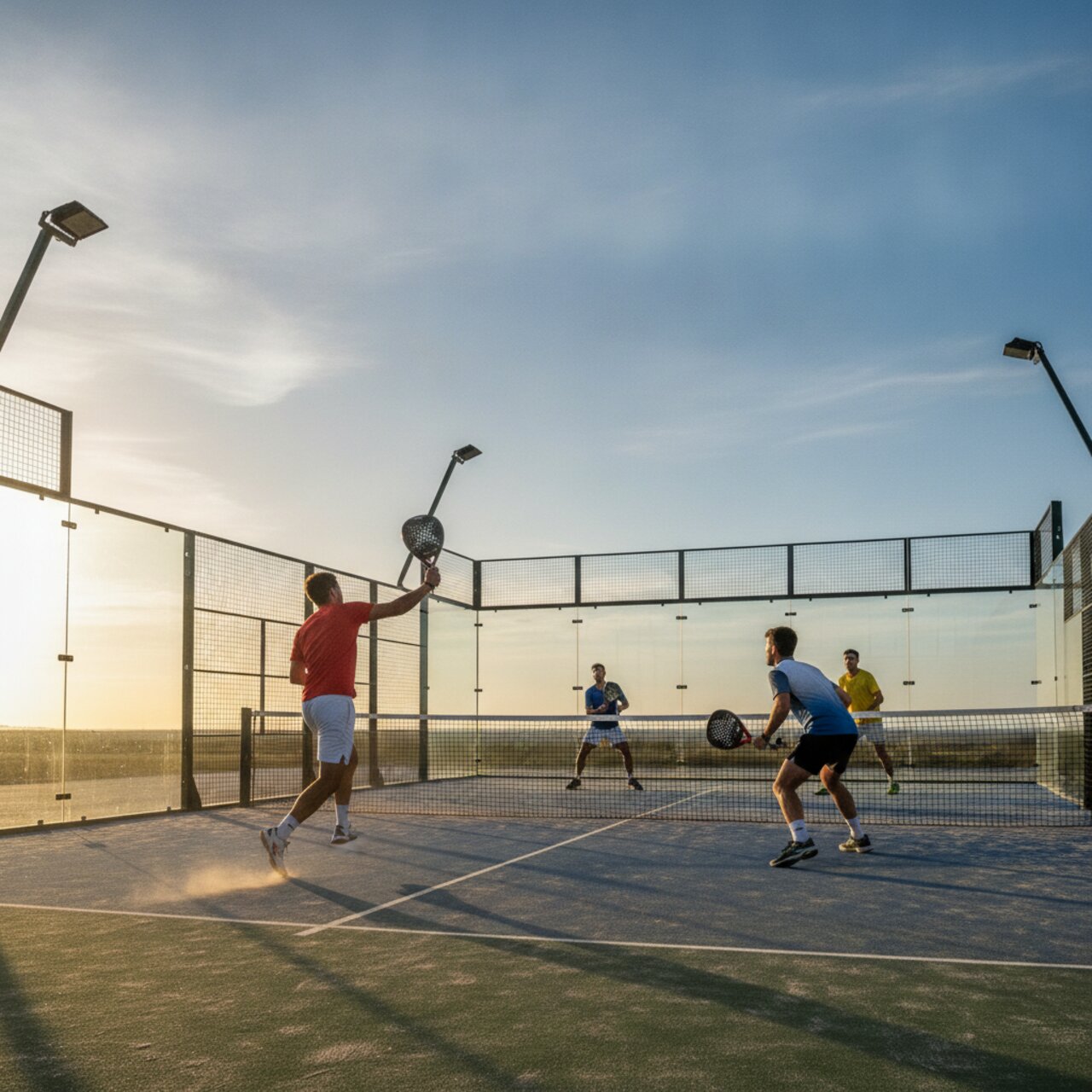
Padel: Enclosed court with glass walls (back and lower sides) and mesh (upper sides). The ball can bounce off walls and remain in play.
Why it matters: This is THE defining difference. In padel, the walls:
- Extend rallies (balls you’d never reach in tennis stay in play)
- Add strategic depth (you can use opponent’s walls for angles)
- Create unique shots (wall play, contrapared, wall smashes)
- Make defense easier and more exciting
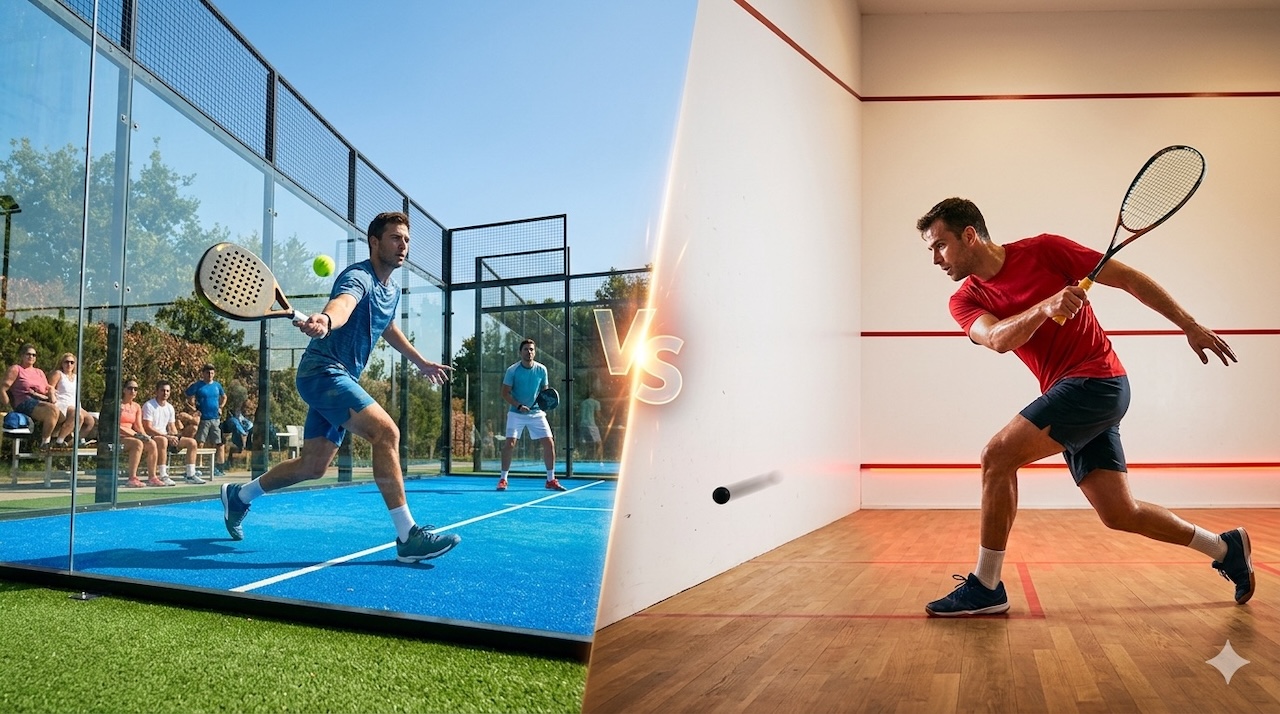
Tennis player perspective: Think of it like adding squash elements to doubles tennis. The walls keep the ball in play and create entirely new shot possibilities.
Learning curve: Wall play takes time to master, but it’s what makes padel addictive. You learn to read angles, time bounces, and use walls offensively.
3. Racket Type - Solid vs Strung
Tennis: Strung racket with an open string bed, typically 27 inches long, weighing 9-12 ounces.
Padel: Solid racket with a perforated surface (small holes), typically 18 inches long, weighing 12-13 ounces. No strings.
Why it matters:
- Power generation: Tennis rackets generate power from string tension and longer swing. Padel rackets generate power from the solid core and shorter, controlled swings.
- Feel: Tennis gives string “bite” and spin. Padel gives solid contact with less spin potential.
- Control: Padel rackets offer more control for beginners due to solid surface.
Can you use a tennis racket for padel? No. The rules require a solid racket, and the playing style is completely different.
Cost difference: Quality tennis rackets: $150-300. Quality padel rackets: $80-200. Both sports have budget options under $100.
4. Serve Rules - Overarm vs Underarm
Tennis: Overhand serve from above shoulder height. Serve is a powerful weapon and point-starter.
Padel: Underhand serve from below waist height, bouncing the ball before striking.
Why it matters:
- Power difference: Tennis serves can reach 130+ mph. Padel serves max out around 60-70 mph.
- Skill requirement: Tennis serve takes months to master. Padel serve can be learned in minutes.
- Point dynamics: In tennis, serve can win points outright. In padel, serve just starts the rally.
What tennis players must unlearn: The powerful overhead serve. Many tennis players struggle initially with the “soft” padel serve requirement.
Beginner advantage: Padel’s easier serve means beginners can play competently from day one. Tennis beginners spend weeks just getting serves in.
5. Playing Format - Singles Option vs Doubles Only
Tennis: Can be played singles (1v1) or doubles (2v2).
Padel: Always doubles (2v2). Singles padel exists but is extremely rare.
Why it matters:
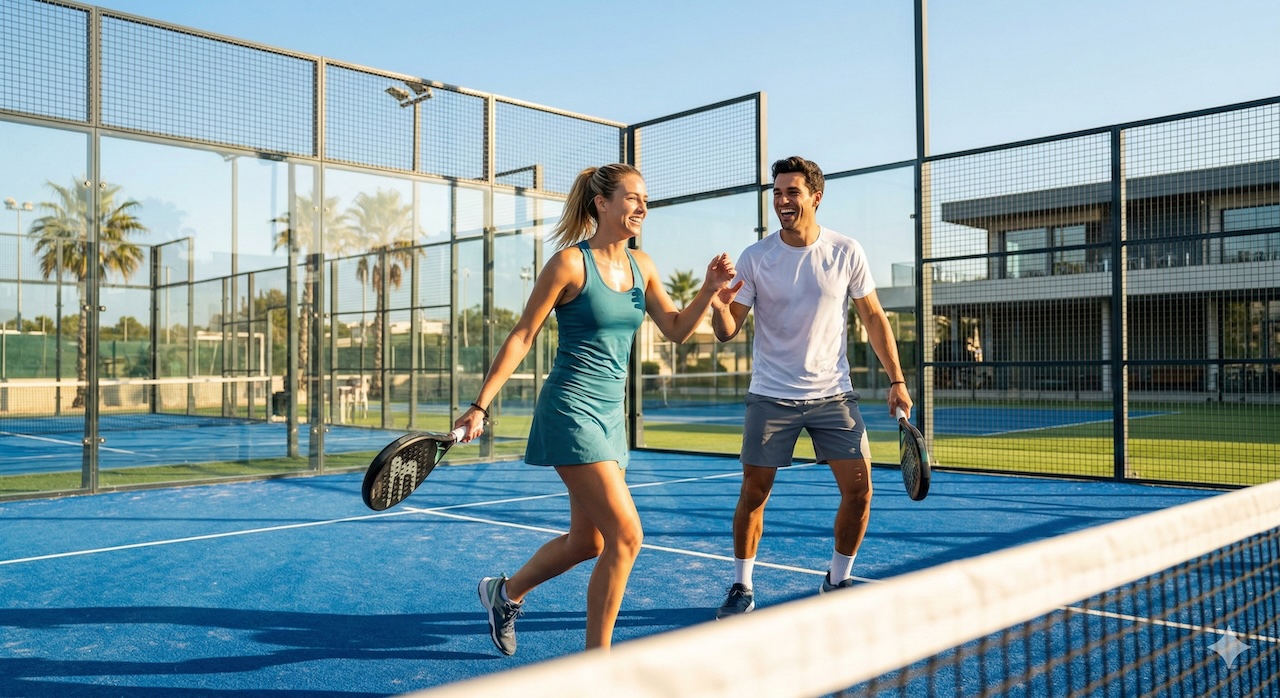
- Social factor: Padel is inherently social - you always play with and against partners
- Court design: Padel courts are designed for doubles width and dynamics
- Strategy: Padel emphasizes partner communication and teamwork
- Scheduling: Tennis gives you the option to play alone; padel requires 4 people
What players prefer:
- Tennis singles: Individual challenge, complete control, intense cardio
- Tennis doubles: Social, strategic, team-oriented
- Padel: All the benefits of doubles, amplified by walls and smaller court
Fitness difference: Singles tennis is one of the most demanding cardio workouts. Padel doubles is more moderate, with emphasis on positioning and strategy over pure speed.
6. Learning Curve - Padel Wins for Beginners
Tennis: Moderate to difficult. Most beginners need:
- 3-6 months to rally consistently
- 6-12 months to play competent matches
- Years to develop good technique
Padel: Easy to moderate. Most beginners:
- Rally within first game
- Play enjoyable matches within 2-3 sessions
- Reach intermediate level in 3-6 months
Why padel is easier:
- Smaller court (less ground to cover)
- Walls keep ball in play (longer rallies)
- Underarm serve (immediately accessible)
- Solid racket (more forgiving than strings)
- Doubles only (partner helps cover court)
What’s harder in padel: Wall play requires learning entirely new angles and timing. But you can enjoy padel before mastering walls - you can’t enjoy tennis without basic stroke competency.
Tennis player advantage: Tennis players pick up padel faster (racket sport fundamentals transfer), but must unlearn some habits (serve, court positioning, string spin).
7. Physical Demands - Tennis is More Intense
Tennis (singles):
- High-intensity cardio
- Explosive sprints covering 25+ feet per point
- 3-5 mile run per match
- Significant strain on knees, ankles
- Burns 600-800 calories/hour
Tennis (doubles):
- Moderate cardio
- More strategic positioning
- Less running than singles
- Burns 400-600 calories/hour
Padel:
- Moderate cardio
- Quick reactions over short distances
- More lateral movement than straight-line sprints
- Easier on joints (smaller court, less impact)
- Burns 400-600 calories/hour
Who it suits:
- Tennis: Athletes who love intense cardio workouts
- Padel: Anyone seeking active fun without extreme physical demands
Age consideration: Padel is popular among 40-60+ age groups because it’s easier on joints while still providing excellent exercise. Tennis at this age often moves to doubles for similar reasons.
8. Rally Length - Padel Keeps Ball in Play Longer
Tennis average rally: 3-5 shots (singles), 5-8 shots (doubles)
Padel average rally: 8-15 shots, often 20+ shots
Why the difference:
- Walls in padel keep balls alive that would be winners in tennis
- Smaller court means easier to retrieve
- Serve isn’t a weapon (unlike tennis)
- Doubles format with walls creates more opportunities for defense
What this means:
- Padel: More rallying, more strategy, more fun exchanges
- Tennis: More point-ending shots, more serve-and-volley, more winners
Spectator appeal: Both are exciting but differently - tennis has explosive power points, padel has chess-like rallies with spectacular wall shots.
9. Equipment Cost - Padel Slightly Cheaper
Tennis startup costs:
- Racket: $50-300 (quality: $150-250)
- Shoes: $60-150 (tennis-specific)
- Balls: $3-5 per can (wear out faster)
- Court fees: $0-40/hour (public courts often free)
- Total: $100-500 to start
Padel startup costs:
- Racket: $60-250 (quality: $100-180)
- Shoes: $60-150 (tennis shoes work)
- Balls: $6-8 per can (last longer)
- Court fees: $20-40/hour (rarely free courts)
- Total: $60-400 to start
Long-term costs:
- Tennis: Lower if public courts available; higher for private clubs
- Padel: Consistent court fees (most are private facilities)
- Both: Similar maintenance (shoes, balls, occasional racket replacement)
Value verdict: Tennis has more free court options. Padel has slightly cheaper equipment. Overall cost is similar for both sports.
10. Social Factor - Padel is Built for Community
Tennis:
- Singles: Individual challenge
- Doubles: Social, but optional
- Practice: Can hit against wall alone
- Lessons: Often individual
Padel:
- Always 4 players (inherently social)
- Constant partner communication required
- Cannot practice alone (need walls AND partner)
- Built for social clubs and groups
Why it matters:
- Community building: Padel creates tight-knit groups
- Partner dynamics: You rely on teammate every point
- Social events: Padel clubs emphasize group play and social leagues
- Communication: Constant “mine/yours” calls and strategy
What players love:
- Tennis: Option for solo challenge or social doubles
- Padel: Guaranteed social experience, team bonding
Beginner experience: Padel’s social nature makes it less intimidating - you always have a partner supporting you. Tennis singles can feel isolating when learning.
Which Sport is Right for You?
Choose Padel If You…
- ✅ Want to rally and have fun from day one
- ✅ Prefer social, team-oriented sports
- ✅ Have less time to dedicate to learning
- ✅ Want easier-on-joints exercise
- ✅ Love strategic, chess-like gameplay
- ✅ Enjoy trying something new and different
- ✅ Want to meet people through sport
- ✅ Prefer moderate over intense cardio
Choose Tennis If You…
- ✅ Want the option for singles play
- ✅ Love high-intensity cardio workouts
- ✅ Enjoy a long-term skill development journey
- ✅ Have access to free public courts
- ✅ Want a globally established sport
- ✅ Prefer open court without walls
- ✅ Like individual challenge and competition
- ✅ Want Olympic-level competitive structure
Why Not Both?
Many players do both! Benefits:
- Cross-training: Different muscle groups and skills
- Variety: Prevents burnout from one sport
- Social options: Different friend groups for each
- Weather: Padel often has indoor options
- Skill transfer: Both improve racket sport IQ
Common path: Tennis players add padel for social fun and joint-friendly exercise. Padel players try tennis for individual challenge.
Can Tennis Skills Transfer to Padel?
What Carries Over ✅
- Racket control: Hand-eye coordination translates perfectly
- Positioning: Net play and court awareness
- Footwork: Movement patterns (with adjustments)
- Scoring: Identical point system
- Game sense: Reading opponents, shot selection
- Doubles strategy: Communication, court coverage
What You Need to Unlearn ❌
- The serve: Completely different motion
- Groundstrokes: Shorter swing, less follow-through
- Court positioning: Stay closer to net in padel
- Power focus: Padel emphasizes placement over power
- Open stance: Padel uses more square stance
- String spin: Can’t generate same topspin with solid racket
Common Mistakes Tennis Players Make
- Serving overarm: Muscle memory is hard to break
- Standing too far back: Tennis baseline habits
- Overhitting: Trying for power instead of placement
- Ignoring walls: Not using walls strategically
- Long swings: Tennis follow-through doesn’t work in padel
Adaptation time: Most tennis players are comfortable in padel within 4-6 sessions, competent within 2-3 months. For a step-by-step plan, see our transition guide for tennis players.
Frequently Asked Questions
Is padel easier than tennis?
Yes, padel is significantly easier to learn. Most beginners can rally within their first game, while tennis takes months to reach the same level. The smaller court, forgiving walls, and underarm serve make padel immediately accessible. However, mastering advanced padel (wall play, strategic positioning) still takes time.
Can you play padel with a tennis racket?
No. Padel rules require a solid racket with perforated surface. A tennis racket’s strings and length make it illegal and impractical for padel. The sports use different equipment because they require different playing styles. Tennis rackets cost $50-300; padel rackets cost $60-250.
Which sport burns more calories - padel or tennis?
Tennis singles burns more calories (600-800/hour) due to intense running and larger court coverage. Tennis doubles (400-600/hour) and padel (400-600/hour) are comparable. Both provide excellent cardiovascular exercise, but tennis singles is more intense while padel is more sustainable for longer sessions.
Is padel cheaper than tennis?
Slightly. Equipment costs are similar ($60-300 startup), but tennis often has free public courts while padel facilities charge $20-40/hour. Long-term, tennis can be cheaper if you use public courts. However, equipment wear (balls, shoes) is similar for both sports.
Can tennis players beat padel players?
Not automatically. Tennis players pick up padel faster due to transferable skills (racket control, positioning), but specialized padel players who master wall play and strategy will win. Within 6 months of regular play, former tennis players often compete at similar levels. The sports are different enough that expertise in one doesn’t guarantee dominance in the other.
Which sport is more popular globally?
Tennis is far more established globally with presence in 200+ countries and Olympic status. Padel is the fastest-growing racket sport, booming in Spain, Latin America, and now expanding rapidly in Europe, Middle East, and North America. Tennis has more infrastructure today; padel has faster growth momentum.
Is padel just tennis with walls?
No. While both use rackets and a net, they’re distinct sports. The walls fundamentally change strategy, shot selection, and gameplay rhythm. It’s like saying squash is “tennis with walls” - technically similar elements, but completely different games. Padel has unique shots (bandeja, vibora, contrapared) that don’t exist in tennis.
Can older players enjoy padel more than tennis?
Generally yes. Padel’s smaller court and lower joint impact make it popular among 40-70+ age groups. Many former tennis players switch to padel for easier-on-joints exercise while maintaining racket sport engagement. Tennis singles becomes very demanding with age, while padel remains accessible.
Conclusion: Two Great Sports, Different Appeals
Padel and tennis are both fantastic racket sports, but they offer different experiences:
Tennis is the globally established sport with singles options, high-intensity cardio, and a long development curve. It rewards pure athletic ability and individual performance.
Padel is the fast-growing social sport with easy entry, strategic depth, and team dynamics. It rewards placement, communication, and wall mastery.
Our recommendation: Try both. Seriously. Many tennis courts now have padel courts nearby. Rent equipment for 2-3 sessions of each and see which clicks. You might discover you love both for different reasons.
Ready to try padel? Download padellog to find courts near you, track your matches, and connect with players:
📱 Download for iOS | 📱 Download for Android
Related articles: