By Mario GonzalezGuides
Padel at the Olympics: Where It Actually Stands
Padel at the Olympics: not in LA 2028, not IOC-recognised yet, and Brisbane 2032 just got harder. Here is the real status and what would need to change.
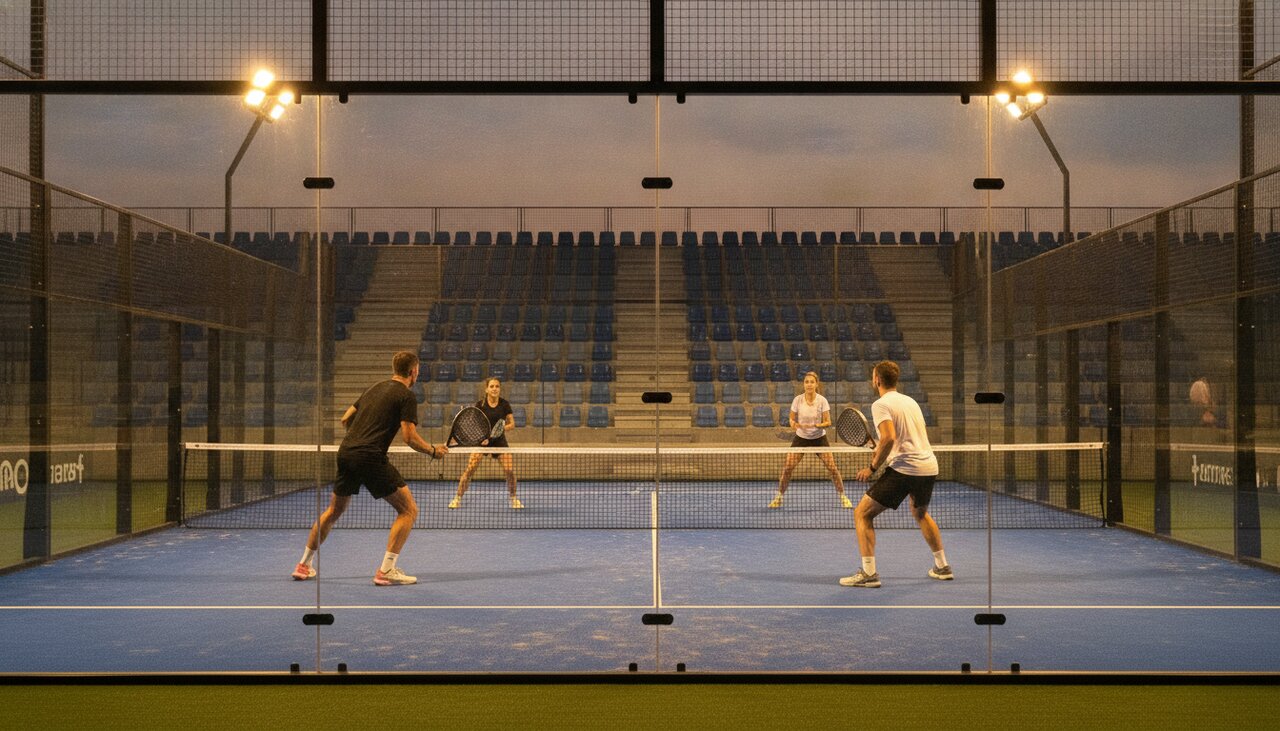
Padel at the Olympics is the most confidently misreported story in the sport. Depending on which article you land on, padel is “an IOC-recognised Olympic sport”, “confirmed for Brisbane 2032”, or “one country away” from qualifying. None of those are true. What is true is more interesting, and the picture changed noticeably in the first half of 2026, mostly in the wrong direction for padel.
Here is the actual state of play as of August 2026: padel is not an Olympic sport, it will not be at Los Angeles 2028, its governing body does not hold IOC recognition, and the Brisbane 2032 programme is being cut rather than expanded.
Is padel an Olympic sport? The short answer
No. Padel has never appeared at a Summer Olympic Games, is not on the Los Angeles 2028 programme, and has not been approved for any future edition.
The confusion comes from padel’s genuine success at other multi-sport events run inside the Olympic movement. Padel was played at the South American Games in Asunción in 2022, at the European Games in Kraków in 2023, and it is on the programme for the 2026 Mediterranean Games in Italy, the Asian Beach Games in Sanya, and the Asian Games in Aichi-Nagoya in September 2026. It is confirmed for the European Games in Istanbul in June 2027.
Those are continental multi-sport events. They sit under national Olympic committees and continental Olympic councils, and appearing at them is a meaningful credential. They are not the Olympic Games, and a medal at the European Games is not an Olympic medal.
Los Angeles 2028 is closed, and padel was never in it
The LA 2028 additional-sport slots were decided by the IOC in October 2023. Five sports got in: baseball/softball, cricket, flag football, lacrosse, and squash. Padel was not a candidate at the decisive stage and did not miss out narrowly.
That decision matters for a structural reason people skip past. Squash — the closest comparison to padel in size, indoor-venue profile, and racquet-sport identity — spent roughly thirty years lobbying, was rejected three times, and only got in on the fourth attempt with a host city that wanted it. Padel has been seriously organised at global level for less than a decade. If you want the timeline of how young the modern professional structure really is, the history of padel from Acapulco to the world puts the dates in order.
The claim that gets repeated most: “padel is IOC-recognised”
This one is everywhere, and it is wrong.
The IOC maintains a list of recognised international federations whose sports are not on the Olympic programme. Those federations sit in ARISF, the Association of IOC Recognised International Sports Federations, which had about 40 members as of early 2025. Squash was in it. Cricket, lacrosse, karate, chess and netball are in it. The International Padel Federation is not.
FIP is not hiding this, either. It has spent two years openly courting recognition, including hosting the ARISF president at a Premier Padel event in late 2025. You do not invite the president of a club you already belong to.
Why this matters more than any other item on the list: under the Olympic Charter, a sport can only be on the programme if it is governed by an IF the IOC recognises. Recognition is not a nice-to-have credential that improves padel’s odds. It is the gate. Every conversation about 2032 or 2036 starts after that box is ticked, and it is not ticked.
Brisbane 2032: the target, and why it got harder
Brisbane 2032 is FIP’s declared objective. The federation launched a formal Olympic Project at its General Assembly in Doha in October 2024 and appointed a dedicated advisor to run it. That part of the reporting is accurate.
What changed is the IOC’s mood. In May 2026, IOC president Kirsty Coventry told sports leaders in Lausanne that the expansion era is over and the Brisbane programme will be smaller than the 36 sports at LA 2028. Sports cut from Brisbane, she said, could return at a later Games — which is a polite way of confirming that things are coming off the list, not going on it.
The knock-on effect is brutal for anyone queuing outside. The LA 2028 newcomers are now themselves competing to stay in for Brisbane, and squash, flag football and lacrosse have all been floated as unlikely to survive the cut. Squash’s LA28 athlete quota was already halved from 32 to 16 per gender in April 2025. A sport fighting to keep a place it just won is a bad sign for a sport with no place at all.
The timeline is the other thing to keep straight. The IOC scheduled an extraordinary Session for June 2026 to approve the criteria by which the Brisbane programme will be judged, not the programme itself. The actual list of Brisbane sports is expected between late 2026 and 2027. Nothing about padel has been decided, and nothing about padel is due to be decided this summer.
There is also a host-city problem nobody in padel likes discussing. Additional sports are proposed by the local organising committee, which is why LA proposed flag football and cricket. Australia has roughly 80 padel courts and around 50,000 recreational players, according to FIP’s own 2025 world report. Brisbane has very little domestic reason to spend one of its scarce proposal slots on padel.
The “75 countries” rule you keep reading about
Almost every padel-Olympics article quotes the same thresholds: a men’s sport must be played in 75 countries across four continents, a women’s sport in 40 countries across three. Then it concludes that padel is close and will get there soon.
Those numbers are real Olympic Charter language, but they stopped being the deciding mechanism after the Agenda 2020 reforms. Sports no longer qualify automatically by hitting a participation count. The host organising committee proposes additional sports, and the IOC evaluates them on cost, venue availability, youth appeal, broadcast value, host-market relevance and governance. That is how surfing, skateboarding and sport climbing got into Tokyo, breaking into Paris, and flag football into Los Angeles.
Padel passes the participation test comfortably on paper anyway. FIP counts 87-plus member federations, up from 32 in 2019, around 150 countries with organised play, and more than 77,000 courts worldwide after 15.2% growth in 2025. Reach is not what is holding padel back.
What padel has genuinely built
The credential list is stronger than the misreporting suggests, and it is worth separating from the fiction.
FIP handed full management of its anti-doping programme to the International Testing Agency, with the ITA delivering the programme since January 2025 under the World Anti-Doping Code, including an athlete biological passport and testing at Premier Padel events. Independent anti-doping is a hard prerequisite for recognition, and padel now has it — a point that older critiques of the sport’s governance no longer reflect.
The Olympic Council of Asia recognised FIP in November 2025 and made padel an official Asian Games sport. FISU recognised padel in February 2025, which opens the university pathway. Kraków 2023 delivered around 20,000 spectators for the finals in the city’s Market Square with 23 countries competing, and the IOC’s positive read of that event is directly credited with getting padel into Istanbul 2027.
The professional circuit has also stopped being a liability. The tour war that split the sport is over, and a single unified calendar is far easier to present to the IOC than two rival tours suing each other. If that period is a blur, Premier Padel vs World Padel Tour covers the split and the merger, and the 2026 season by the numbers shows what the unified tour looks like in practice.
What would actually need to happen
Four things, roughly in order.
IOC recognition of FIP. Nothing else counts until this happens. It is a formal application assessed on governance, anti-doping, athlete representation and financial transparency, and it typically arrives years before any programme discussion.
A host committee that wants it. For 2032 that means Brisbane choosing padel over the sports already fighting for the same shrinking slots, in a country with 80 courts.
Venue and cost economics. Padel’s pitch here is genuinely good: courts are small, temporary, cheap to build and easy to place in an existing arena or a city square. In a Games explicitly trying to spend less, that argument lands better now than it would have ten years ago.
A competitive format that isn’t just Spain and Argentina. An Olympic event where two nations plausibly take every medal is a hard sell. Padel’s national spread is widening quickly, but the top of the pro game is still concentrated, as anyone glancing at the players worth watching in 2026 will notice.
2036 is the more realistic target
Ask people inside the sport privately and 2036 comes up more than 2032. The reasoning is straightforward: the 2036 host is not yet chosen, with the decision expected around 2028, and Qatar and Saudi Arabia are both in the conversation. Both are deeply invested in padel — Qatar Sports Investments effectively funds the professional tour, and FIP has held general assemblies in Doha.
An additional sport needs a host that wants it. A Gulf host would want padel the way Los Angeles wanted flag football. That is a far more plausible route than persuading Brisbane to add a sport during the first deliberate contraction of the Olympic programme in decades.
So the honest summary: padel is not an Olympic sport, is not recognised by the IOC, is not on the LA 2028 programme, and is a long shot rather than a favourite for Brisbane 2032. It is building a real case, it fixed its anti-doping gap, and 2036 is where the opportunity actually sits. Anyone telling you it is already decided has not read past a press release. If you are newer to the sport and wondering what all the institutional noise is about, what padel actually is is the better place to start than any Olympic headline.