By Mario GonzalezEquipment
Padel Racket Shapes Explained: Round, Teardrop, and Diamond
Understand the 3 padel racket shapes and how each affects your game. Complete guide to choosing the right shape for your playing style.
Padel Racket Shapes Explained: Round, Teardrop, and Diamond
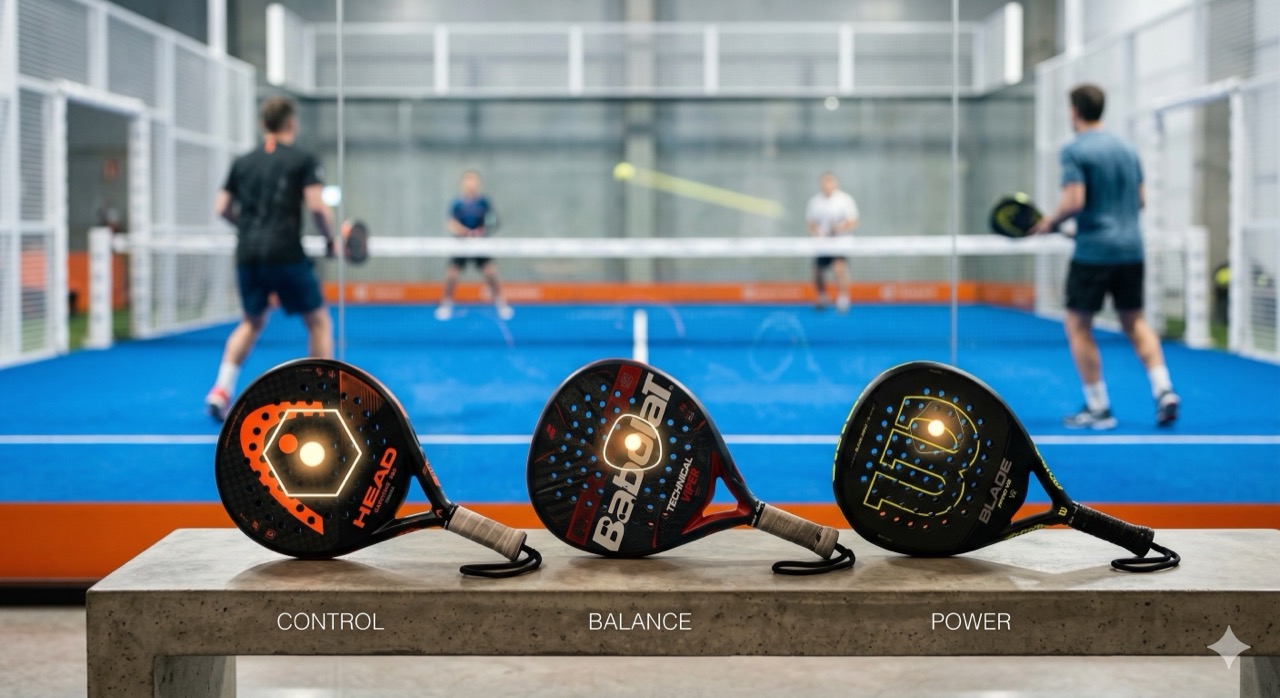
The shape of your padel racket fundamentally changes how you play. Yet many players overlook this when choosing a racket, focusing only on brand or price.
This guide breaks down the three main padel racket shapes and shows you which one matches your playing style.
The Three Padel Racket Shapes
Round Rackets: The Control Master ⭕
Sweet spot size: Large
Power: Low to medium
Control: Very high
Learning curve: Easiest
Round rackets have the sweet spot centered on the racket face, making them the most forgiving shape. The weight distribution favors balance and maneuverability over raw power.
Best for:
- Beginners and intermediate players
- Control-focused players who value precision
- Players building technique foundations
- Those with arm or shoulder issues
- Doubles players who emphasize net play
Playing characteristics:
- Extra margin for error on off-center hits
- Better for defensive play and counter-attacks
- Easier wrist control and shot variety
- Less power from your natural swing
Popular round rackets: Bullpadel Vertex, Babolat Air Viper, Head Bela
Teardrop Rackets: The Balanced Hybrid 💧
Sweet spot size: Medium
Power: Medium
Control: Medium
Learning curve: Moderate
Teardrop rackets balance the benefits of round and diamond shapes. The slightly larger head provides more power than a round racket while maintaining reasonable control.
Best for:
- Intermediate players transitioning to advanced play
- All-around players who want balance
- Players who serve and attack frequently
- Those seeking more power without sacrificing control
- Doubles and singles alike
Playing characteristics:
- Better power generation than round rackets
- Adequate control for defensive play
- Versatile across different shot types
- Smaller sweet spot than round (less forgiving)
Popular teardrop rackets: Head Alpha Pro, Nox AT10, Wilson Bela
Diamond Rackets: The Power Weapon ♦️
Sweet spot size: Small
Power: Very high
Control: Low
Learning curve: Hardest
Diamond-shaped rackets are elongated vertically with the sweet spot positioned higher on the frame. This geometry concentrates power for aggressive play but demands precision.
Best for:
- Advanced and professional players
- Aggressive, attacking players
- Those with strong technique and racket control
- Players who dominate from the baseline
- Singles specialists
Playing characteristics:
- Maximum power generation
- Difficult to control on mishits
- Rewards proper technique
- Requires consistent form to be effective
Popular diamond rackets: Adidas Metalbone, Star Vie Metheora, Dunlop Biomimetic
Side-by-Side Comparison
| Feature | Round | Teardrop | Diamond |
|---|---|---|---|
| Sweet spot | Very large | Medium | Small |
| Power | Low | Medium | High |
| Control | Very high | High | Low |
| Forgiveness | Excellent | Good | Poor |
| Best for | Beginners | Intermediate | Advanced |
| Serves harder | ❌ | ✅ | ✅✅ |
| Defends better | ✅✅ | ✅ | ❌ |
| Easier to learn | ✅✅ | ✅ | ❌ |
| Cost | $80-150 | $120-200 | $150-300 |
How Shape Affects Your Game
Serving
Round: Serves with moderate pace. The sweet spot’s central location gives consistent serves but less power.
Teardrop: Good serving speed with reasonable control. The slightly higher sweet spot generates more pace.
Diamond: Explosive serves with high velocity. The elevated sweet spot naturally generates speed but demands precision.
Attacking / Smash
Round: Controlled smashes. Less power but easier accuracy. Great for placement over pace.
Teardrop: Balanced attack. Solid power with good control. Most versatile for varied situations.
Diamond: Devastating smashes. Maximum power but requires clean contact. Rewards technique.
Defending / Lobs
Round: Excellent defensive options. The forgiving sweet spot makes lobs and blocks consistent.
Teardrop: Adequate defense. Decent margin for error but more challenging than round.
Diamond: Difficult defensive play. Mishits are punished. Requires technical excellence.
Net Play
Round: Ideal at net. Quick reactions and deft touch are easier with this shape.
Teardrop: Solid net game. Good for aggressive net plays and volleys.
Diamond: Aggressive net play works well. More power on net attacks, less touch.
How to Choose Your Shape
If you’re a beginner: Start with a round racket. Focus on technique, not power. You’ll progress faster when every shot feels controllable.
If you’re intermediate: Try a teardrop. You have the technique to handle the smaller sweet spot while gaining the power boost.
If you’re advanced: Match your playing style. Aggressive players gravitate toward diamond. All-around players prefer teardrop. Control specialists stay with round.
If you have arm/shoulder issues: Round rackets are gentler. The forgiving sweet spot reduces impact stress.
If you serve frequently: Diamond or teardrop shape helps. Better leverage for first serves and kick serves.
If you love net play: Round rackets excel here. The quick response and touch feel natural at the net.
Common Mistakes When Choosing Shape
Buying diamond because you saw pros use it: Professionals have the technique to exploit a diamond racket’s power. If you’re not hitting clean contact consistently, a diamond will feel uncontrollable.
Staying with round forever: At intermediate level, a teardrop gives you more options without sacrificing too much control. Growth happens when you challenge yourself.
Ignoring feel for stats: The “best” shape is whichever one feels right in your hand. Borrow rackets and test before buying. Feel matters as much as specifications.
Changing shapes too often: Your game develops consistency with one shape. Give any new racket at least 5-10 hours of play before deciding.
Shape Matters, But Technique Matters More
Your racket shape influences how you play, but your technique determines how well you play. A beginner with a diamond racket will struggle. An advanced player with a round racket will dominate.
Choose a shape that matches your current level and style. Focus on improving your technique within that shape. Upgrade shapes only when your game has outgrown your current racket’s capabilities.
Related Reading
- Best Padel Rackets 2026: Top 10 Picks Reviewed - Find the perfect racket for your shape and style
- Padel Equipment Checklist - Complete guide to all padel gear you need
- How to Change Padel Racket Grip - Technique guide for grip replacement