By Mario GonzalezEquipment
How to Change Your Padel Racket Grip: Step-by-Step Guide
Learn how to change your padel racket grip correctly. Complete guide with techniques, materials, and tips for a secure, comfortable hold.
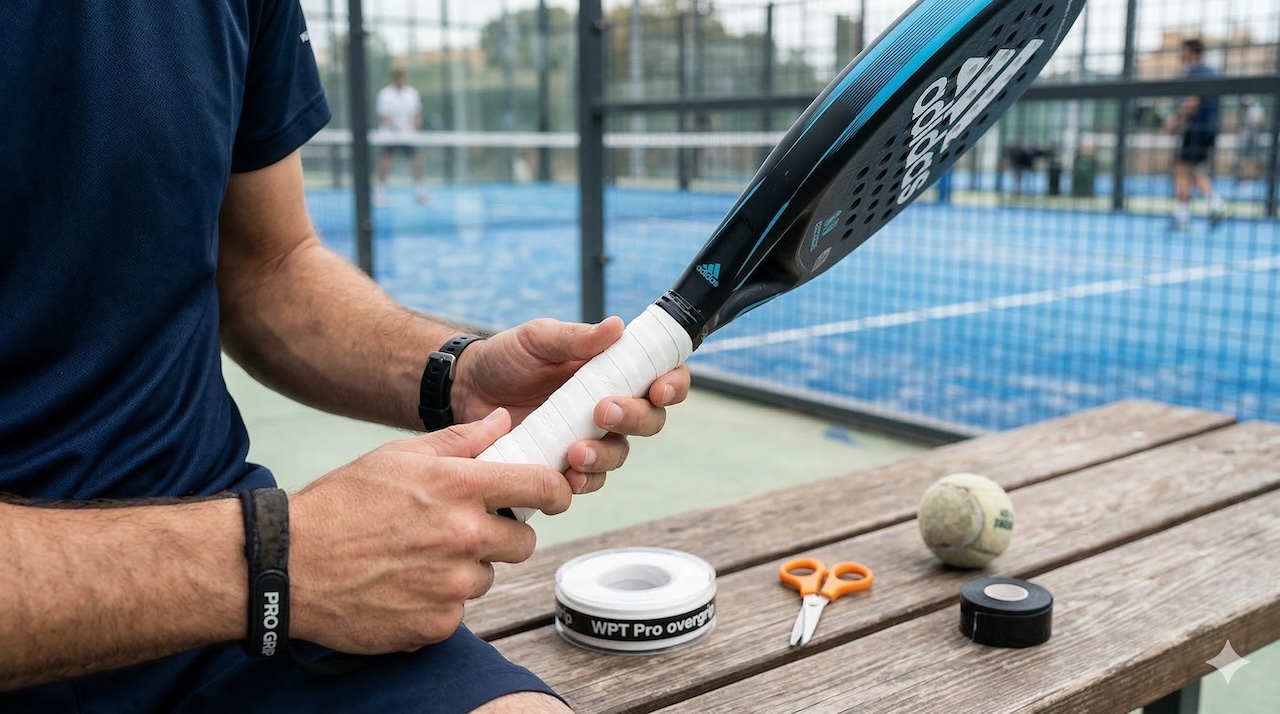
Your padel racket grip is the only contact point between your body and the racket. A worn, slippery, or poorly applied grip directly affects your control, power, and confidence on every shot. Learning to change your padel racket grip is a basic skill every player should master—doing it correctly makes the difference between a secure hold and one that fails you at critical moments.
When to Change Your Grip
Many players wait too long to replace their grip, losing performance without realizing it. Watch for these signs:
Visual indicators:
- Shiny or smooth patches where texture once existed
- Cracks, peeling, or holes appearing
- Original color faded from wear
Performance indicators:
- The racket slips during shots, especially with sweaty hands
- You grip harder than normal to maintain control
- Reduced feel and feedback on ball contact
Recommended frequency:
- Intensive players (3-4 times per week): every 2-3 weeks
- Regular players (1-2 times per week): every 4-6 weeks
- Casual players: every 2-3 months
If you sweat heavily or play in humid conditions, cut these timeframes in half.
Base Grip vs Overgrip: Know the Difference
Before changing your grip, understand your two options:
Base grip (replacement grip)
The original grip that comes with your racket. It has more thickness (1.5-2mm) and cushioning. Replacing it completely requires removing the original grip and installing a new one from scratch.
When to replace the base grip:
- The original grip is completely destroyed
- You want to modify the handle thickness
- You need a fresh foundation after extended use
Overgrip
A thin layer (0.4-0.7mm) applied over the base grip. Most players use overgrips because:
- They cost less than base grips
- Quick and easy to replace
- Allow gradual handle thickness adjustment
- Provide fresh feel with minimal effort
For optimal performance, keep a solid base grip underneath and change overgrips regularly. This combination gives you the best of both worlds.
Materials You Need
Gather everything before starting:
- New overgrip (or base grip for complete replacement)
- Scissors for cutting excess material
- Finishing tape (usually included with the grip)
- Clean cloth to wipe down the handle
- Utility knife (only if removing base grip)
How to Apply an Overgrip: Step by Step
Follow these steps for a professional finish:
Step 1: Prepare the racket
Place the racket with the head resting on a stable surface, handle pointing up. Remove any remnants of the previous overgrip completely. Wipe the handle with a dry cloth to remove sweat or adhesive residue.
Step 2: Identify the starting end
Every overgrip has one end with an angled point—this is where you start. Some have a small adhesive strip on this tip to secure it to the handle.
Remove the protective plastic from the adhesive side if present. The textured side faces outward, in contact with your hand.
Step 3: Secure the starting point
Place the overgrip tip at the base of the handle, right at the edge where the butt cap ends. The angle of the tip should point opposite to your wrapping direction.
For right-handed players: Start at the left base of the handle and wrap counter-clockwise (viewed from above).
For left-handed players: Start at the right base and wrap clockwise.
Press this first point firmly—a bad start ruins the entire wrap.
Step 4: Wrap with consistent tension
Here’s the key to a good grip: maintain constant tension while wrapping. Each rotation should:
- Overlap the previous layer by 3-5mm
- Cover the handle evenly without gaps
- Spiral upward until reaching the handle’s end
Pro tip: Stretch the overgrip slightly as you wrap. This thins the material, increases adhesion, and creates a firmer finish. Don’t stretch so hard it tears—moderate, consistent tension works best.
If the grip bunches up, loosens, or forms bubbles, unwrap back to that point and restart.
Step 5: Control the overlap angle
The amount of overlap determines final thickness:
- Minimal overlap (2-3mm): Thinner grip, ideal if your handle already feels thick or you prefer more racket feel
- Standard overlap (4-5mm): Balance between comfort and control
- Maximum overlap (6-7mm): More cushioned grip, reduces vibration but adds thickness
Keep the same overlap angle throughout for a uniform finish.
Step 6: Finish at the top
When you reach the handle’s end, cut the overgrip diagonally with scissors. This angled cut allows the end to lay flat without bulges.
Wrap the finishing tape around the top, covering where the overgrip ends. Apply 2-3 rotations with the tape, stretching it slightly for better adhesion.
Step 7: Check your work
Grip the racket and verify:
- No loose sections or air bubbles
- Uniform overlap throughout the length
- Appropriate firmness
- Finishing tape secured properly
Fixing problems now is easier than mid-match.
How to Replace the Base Grip
When the original grip is destroyed, you need a complete replacement:
Removing the old grip
- Peel off the finishing tape
- Unwrap the grip from top to bottom
- Use a utility knife carefully if adhesive resists
- Clean adhesive residue with a damp cloth
- Let the handle dry before applying the new grip
Installing the new base grip
The process mirrors overgrip application, but:
- Base grip material is thicker and less stretchy
- Requires more force to maintain tension
- Overlap must be more precise since it affects final diameter significantly
- Some base grips have adhesive across the entire inner surface
Common Grip Change Mistakes
Avoid these frequent problems:
Inconsistent tension: The grip feels loose in some areas and tight in others. Solution: maintain the same tension throughout the entire wrap.
Uneven overlap: Creates bumps and uncomfortable spots. Pay attention to keeping a constant angle.
Crooked start: If the first anchor point isn’t properly aligned, the whole grip ends up off-center. Take your time at the start.
Loose finishing tape: It peels off during play. Stretch the tape while applying for better adhesion.
Excessive thickness: Stacking multiple overgrips or using too much overlap. This reduces control and fatigues your hand.
Grip and Overgrip Recommendations
| Type | Brand/Model | Best for | Price range |
|---|---|---|---|
| Tacky overgrip | Wilson Pro Overgrip | Maximum stickiness, dry hands | $3-5 (3-pack) |
| Absorbent overgrip | Tourna Grip | Sweaty hands, high absorption | $5-8 (3-pack) |
| Perforated overgrip | Yonex Super Grap | Ventilation and balanced grip | $4-6 (3-pack) |
| Cushioned base grip | Bullpadel Hesacore | Extra comfort, vibration reduction | $15-20 |
| Thin base grip | Wilson Cushion-Aire | Direct feel, no added thickness | $8-12 |
How Many Overgrips Can You Stack?
A common question: can you layer multiple overgrips on top of each other?
Recommendation: Maximum 2 overgrips over the base grip. More than two layers:
- Reduce racket feel
- Increase diameter excessively
- Can cause forearm fatigue
- Excess cushioning absorbs shot energy
If you need more thickness, consider a thicker base grip or ergonomic products like Hesacore that add volume in a shaped, functional way.
Frequently Asked Questions
Can I reuse an overgrip? Not recommended. Once removed, the adhesive loses effectiveness and the material is already compressed. Overgrips are inexpensive consumables—replace them when needed.
How often should I change the base grip? Base grips last much longer than overgrips. With regular use and protection from overgrips, a base grip can last 6-12 months. Replace it when cushioning is lost or material deteriorates.
Does grip color matter? Only aesthetically. Some players prefer dark colors because they hide dirt, but performance is identical regardless of color.
Dry-feel or tacky grip for playing? Absorbent grips (“dry feel”) perform better when moistened by sweat. Tacky grips lose stickiness with humidity. Choose based on your hand type.
Maintaining Your Grip
Between changes, these habits extend grip life:
- Wipe the grip with a damp cloth after playing
- Let the racket dry outside its bag after each session
- Store the racket in a dry place, avoiding extreme temperatures
- Use wristbands to reduce sweat reaching the grip
- Keep spare overgrips in your bag for quick changes
Mastering grip replacement is one of those simple skills that immediately improves your playing experience. A racket with a fresh, properly applied grip gives you confidence to swing freely without worrying about your hold. Invest 5 minutes in changing your grip correctly—your game will thank you.
Want more equipment advice? Check out our guide on how to choose a padel racket or browse the best padel rackets of 2026. And if you’re just starting out, our complete beginner’s guide covers everything you need to know.