By Mario GonzalezBeginner's Guide
Padel vs Squash - Complete Comparison Guide
Discover the key differences between padel and squash. Learn which sport suits you best based on court size, equipment, intensity, and learning curve.
Padel vs Squash: Complete Comparison Guide
If you’re looking for a new racket sport, you’ve probably noticed both padel and squash are growing in popularity. But what’s the difference? Which one is right for you? In this guide, we’ll compare these two exciting sports across every major dimension—so you can make an informed decision.
Game Overview
Padel
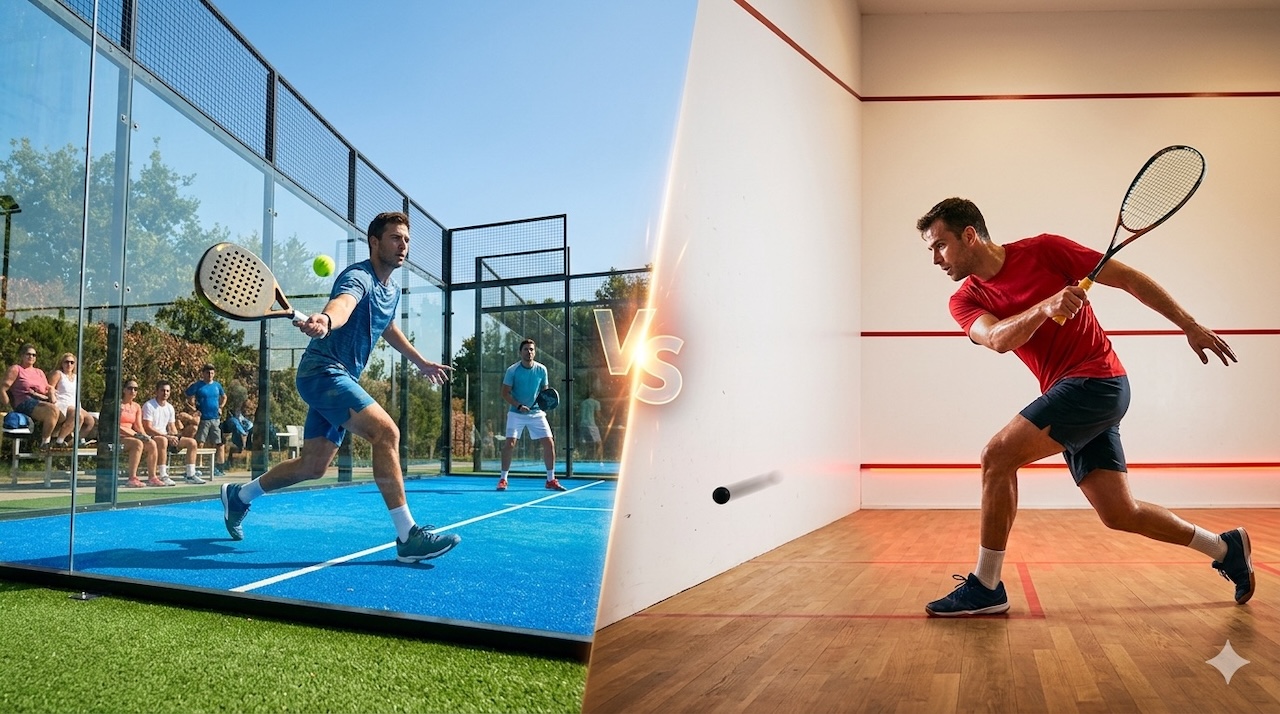
Padel is played on a court roughly the size of a tennis doubles court (66 feet long × 33 feet wide). If you’re brand new to the sport, our guide on what padel is covers the basics. The key difference: the court has glass and metal walls on all four sides. Players can use the walls like in squash, but the walls are part of the game design, not an obstacle.
Padel uses a solid paddle (racket) without strings and a pressurized ball similar to tennis. The game is typically played in doubles (2v2), though singles exists. Scoring follows the traditional tennis system: 0, 15, 30, 40, game.
Squash
Squash is played on a smaller, enclosed court (45 feet long × 21 feet wide) with four solid walls that define the playing area. The ball must bounce within the lines on the front wall—this is how points are scored. Players can play singles or doubles, though singles is far more common.
Squash uses a small, strung racket and a rubber ball. The game relies heavily on wall play and court coverage. Scoring is either traditional (15 points to win) or rally scoring (11 points to win).
Side-by-Side Comparison
| Feature | Padel | Squash |
|---|---|---|
| Court Size | 66ft × 33ft (266 sq m) | 45ft × 21ft (88 sq m) |
| Players | Usually 2v2 (doubles) | Usually 1v1 (singles) |
| Racket Type | Solid paddle, no strings | Strung racket |
| Ball | Pressurized tennis-like ball | Rubber ball (bouncier or slower) |
| Walls | Part of active play | Boundary / scoring area |
| Court Walls | Glass + metal | Solid walls |
| Scoring | Tennis-style: 0, 15, 30, 40 | Rally scoring: 11 or 15 points |
| Game Length | 30-60 minutes (best of 3 sets) | 30-90 minutes (singles intensity) |
| Typical Play | Social, recreational doubles | Competitive, intense singles |
Key Differences Explained
1. Court & Movement
Padel: The larger court means more space to move. Players cover less ground per shot, and the game emphasizes positioning and teamwork. You’re never more than a few steps from the action.
Squash: The tiny court demands explosive movement. Players sprint between shots, diving for corners and covering extreme angles. It’s high-intensity from start to finish.
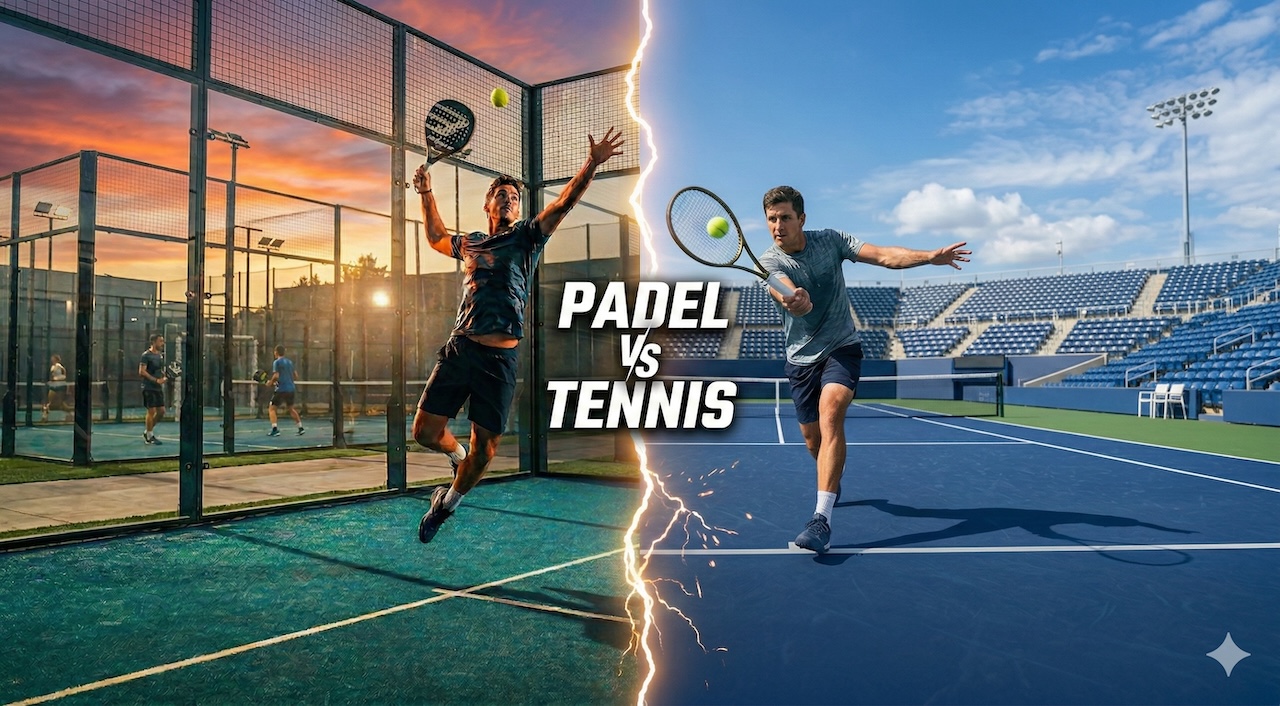
Winner for casual players: Padel (lower impact on joints, more social). The court layout also makes it play very differently from tennis, as our padel vs tennis comparison breaks down.
2. Learning Curve
Padel: Beginners can play competitively within 1-2 weeks. The sport is forgiving—the walls help, longer rallies are common, and doubles means less pressure on individual shot-making. Perfect for recreational players.
Squash: Steep learning curve. Beginners struggle with the tiny court, wall angles, and ball control. You’ll spend weeks hitting the ball into the net or out of bounds. Takes 2-3 months to feel competent.
Winner for beginners: Padel (far more accessible)
3. Intensity & Cardio
Padel: Moderate cardio. You move consistently but not frantically. Rallies tend to be longer, so you get sustained activity rather than explosive bursts. Heart rate: 130-150 BPM (comfortable intensity).
Squash: High intensity. Short, explosive movements followed by brief rest. You’ll be gasping for air. Heart rate: 160-180 BPM (very intense). Ranked as one of the most demanding sports cardio-wise.
Winner for fitness: Squash (if you want maximum intensity); Padel (if you want sustainable, enjoyable cardio)
4. Social Factor
Padel: Built for doubles, which means:
- Your partner shares the pressure
- You develop teamwork and communication
- Easier to have fun while losing
- Great for group events and club nights
- Less intimidating for beginners
Squash: Singles is the standard, which means:
- You’re responsible for every point
- High pressure, competitive environment
- Less social during play (but pre/post-game camaraderie exists)
- Better for competitive athletes
Winner for social play: Padel (far more enjoyable in groups)
5. Cost & Equipment
Padel Equipment:
- Paddle: €50-200 ($55-220)
- Court rental: €15-30/person per hour ($16-33)
- Shoes: €60-120 ($65-130)
- Total startup: €150-400 ($165-440)
Squash Equipment:
- Racket: $50-150
- Court rental: $15-30/person per hour (similar to padel)
- Shoes: $60-120
- Total startup: $150-350
Difference: Comparable costs, but padel courts are more widely available in Europe.
6. Accessibility
Padel: Exploding in popularity. Courts are increasingly common in Spain, Latin America, Portugal, and expanding in Europe. Growing in the US.
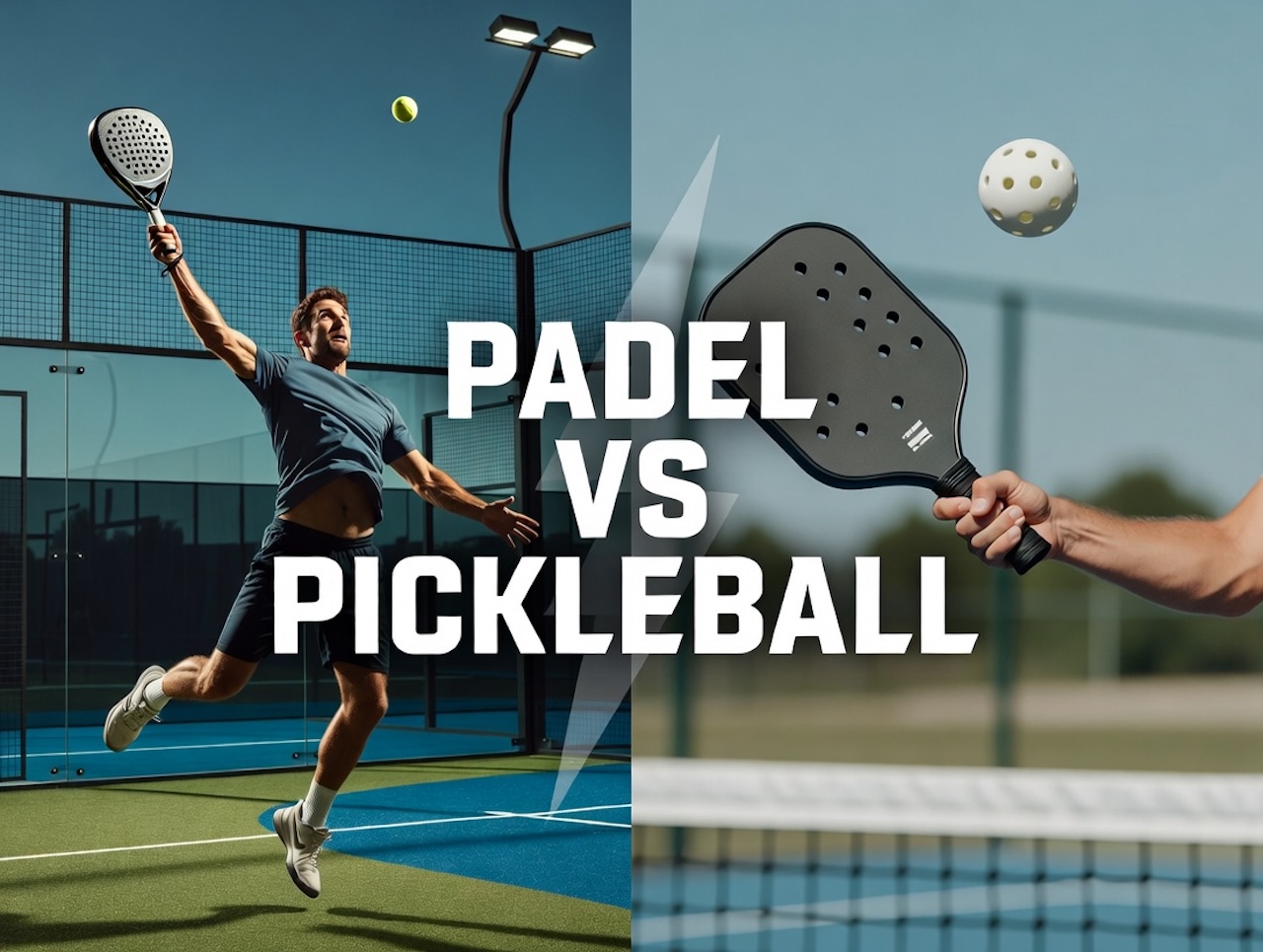
Squash: Established but niche. Strongest in the UK, Egypt, and Australia. Fewer courts globally than padel. For another popular racket-sport matchup, see padel vs pickleball.
Winner for finding courts: Padel (especially in Europe)
Which Sport Should You Choose?
Play Padel If You…
- ✅ Want to have fun with friends (doubles format)
- ✅ Prefer a social, recreational experience
- ✅ Are a beginner and want to feel competitive quickly
- ✅ Want moderate cardio without extreme intensity
- ✅ Value teamwork and communication
- ✅ Have joint or injury concerns (lower impact)
- ✅ Play in Europe, Spain, or Latin America
Play Squash If You…
- ✅ Want a solo, competitive challenge
- ✅ Love intense, explosive workouts
- ✅ Are willing to invest time learning
- ✅ Prefer one-on-one competition
- ✅ Want to truly test your physical limits
- ✅ Play in the UK, Egypt, or established squash regions
The Verdict
For most casual players: Padel wins. It’s more accessible, social, and fun for beginners. You’ll have competitive rallies immediately and enjoy the experience with friends.
For serious athletes: Squash offers unmatched intensity and competitive challenge. But expect a steeper learning curve and a more solitary experience.
The real answer: Why not try both? Many clubs offer intro sessions. Padel is easier to fall in love with quickly, while squash rewards long-term dedication. Some players enjoy both—padel for social rounds and squash for solo training.
Getting Started
Start with Padel
- Find a local padel club
- Book a beginner’s lesson (highly recommended)
- Join a social group or book a friendly doubles match
- Start playing weekly—improvement is fast
- Invest in a proper paddle once you know you’ll stick with it
Start with Squash
- Join a squash club with coaching
- Take 4-6 weeks of lessons (essential)
- Practice on the court regularly (2-3x/week)
- Join club leagues once you’re comfortable
- Play with slightly better players to improve faster
Ready to start? Both sports are rewarding, but padel’s lower barrier to entry makes it perfect for beginners. Whatever you choose, you’re in for an exciting new sport. Get out there and play!