By Mario Gonzalez
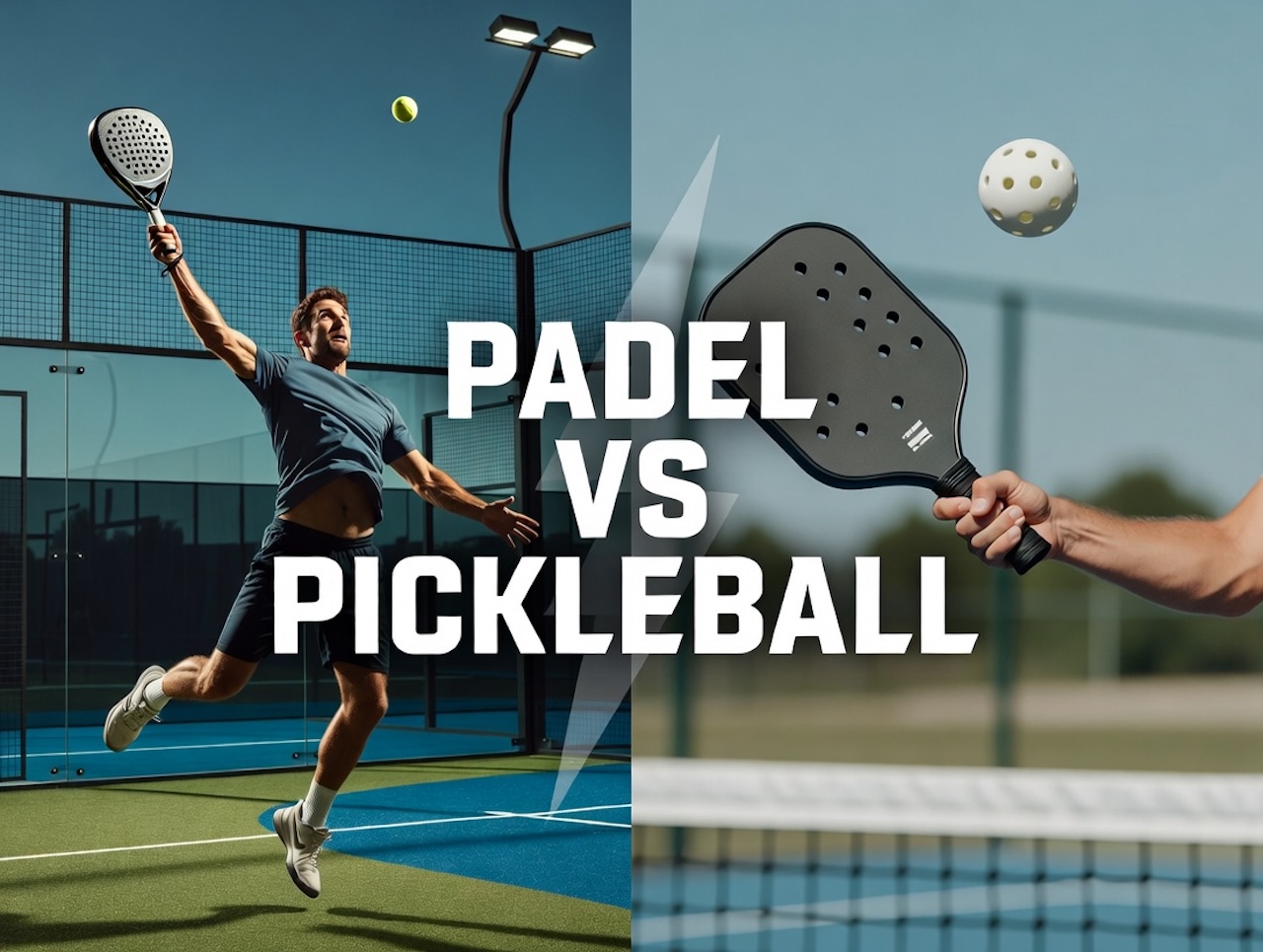
Padel vs Pickleball: 8 Key Differences Explained (2026 Guide)
Discover the differences between padel and pickleball. Compare court size, equipment, rules, and gameplay to find which racket sport is right for you.
Padel vs Pickleball: 8 Key Differences Explained (2026 Guide)
Both padel and pickleball are exploding in popularity worldwide, leaving many people wondering: “What’s the difference?” and “Which one should I try?”
While both are fun, social racket sports played on smaller courts than tennis, they’re actually quite different games. This guide breaks down the key differences to help you understand what makes each sport unique - and which one might be perfect for you.
Quick Comparison Table
| Feature | Padel | Pickleball |
|---|---|---|
| Court Size | 66’ x 33’ (larger) | 44’ x 20’ (smaller) |
| Walls | Yes (glass/mesh, part of game) | No walls |
| Racket | Solid paddle with holes | Solid paddle with holes |
| Ball | Depressurized tennis-like ball | Plastic ball with holes (wiffle) |
| Format | Always doubles (2v2) | Singles or doubles |
| Serve | Underhand, below waist | Underhand, below waist |
| Bounce | Must bounce before serve return | Must bounce on both sides (double bounce rule) |
| Scoring | Same as tennis (15-30-40) | Rally scoring to 11 (win by 2) |
| Origin | Mexico (1969) | USA (1965) |
| Speed | Faster, more athletic | Slower, more accessible |
| Difficulty | Moderate learning curve | Very easy to learn |
| Physical Demand | Medium-high | Low-medium |
The 8 Key Differences
1. The Court: Size and Walls
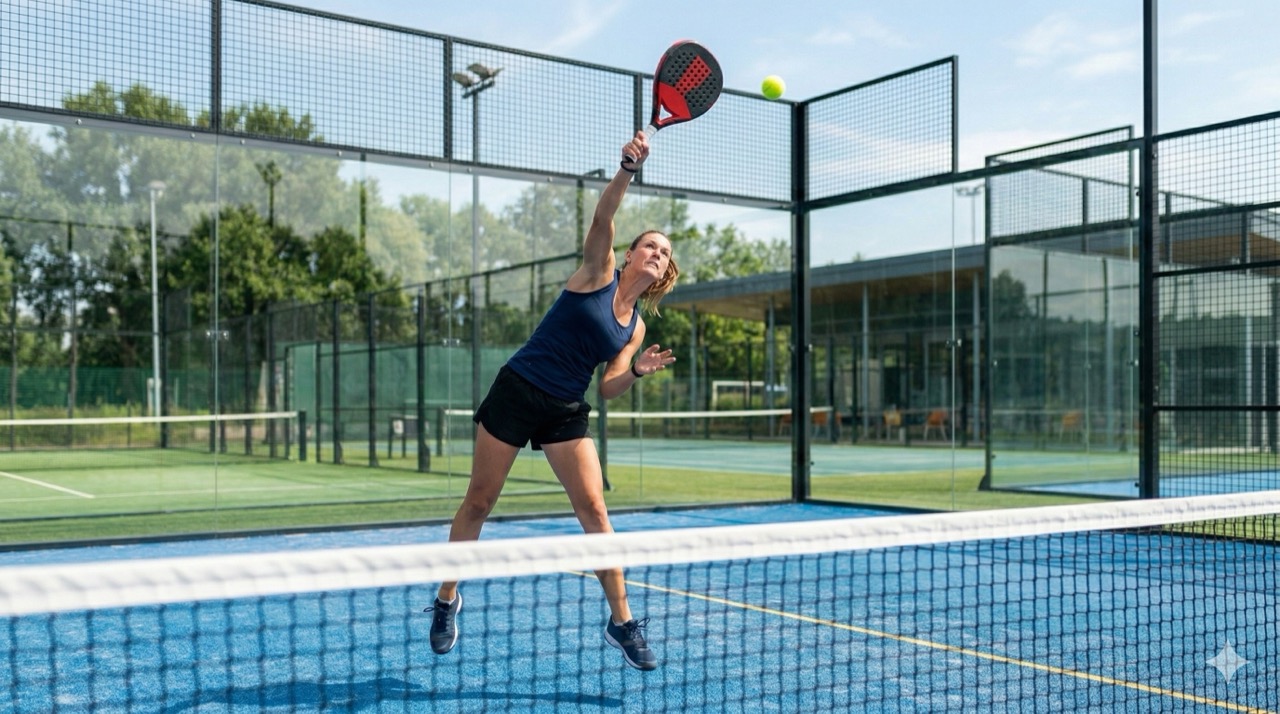
Padel Court:
- Size: 20m x 10m (66’ x 33’)
- Walls: Enclosed with 3-4m high glass walls at back and mesh on sides
- Surface: Artificial turf or concrete
- Unique feature: Walls are part of the playing area!
- Looks like: Tennis meets squash
Pickleball Court:
- Size: 13.4m x 6.1m (44’ x 20’)
- Walls: No walls, open court
- Surface: Hard court, similar to tennis
- Unique feature: 7’ non-volley zone (“kitchen”) near net
- Looks like: Mini tennis court with painted lines
Why it matters:
- Padel’s walls create longer rallies and strategic angles
- Pickleball’s smaller, open court is easier to cover
- Padel requires more space and infrastructure (walls)
- Pickleball courts fit in smaller areas (easier to build)
2. Equipment: Rackets and Balls
Padel Equipment:
- Racket: Solid paddle, 18“ long, with perforations (holes)
- Weight: 340-390g (12-14oz)
- Ball: Depressurized tennis ball (softer, slower than tennis)
- Material: Carbon fiber or fiberglass
- Price: $60-300 for racket
Pickleball Equipment:
- Racket (paddle): Solid paddle, 15-17“ long, no holes
- Weight: 200-280g (7-10oz) - much lighter!
- Ball: Plastic wiffle ball with 26-40 holes
- Material: Wood, composite, or graphite
- Price: $30-200 for paddle
Key differences:
- Pickleball paddles are lighter and smaller
- Pickleball ball is plastic (very different feel)
- Padel racket looks more like tennis gear
- Pickleball ball makes distinctive “pop” sound
3. The Serve
Padel Serve:
- Underhand only (below waist)
- Ball must bounce once before hitting
- Serve diagonally into service box
- One serve (not two like tennis)
- Can’t hit fence directly
- Not a weapon (low power)
Pickleball Serve:
- Underhand only (below waist)
- Must hit ball out of the air (no bounce)
- Serve diagonally into service box
- One serve per point
- Must land in service court
- Can’t land in the kitchen
- Also not a weapon
Similarities: Both underhand, one chance, diagonal
Difference: Padel bounces first, pickleball hit directly
4. Scoring System
Padel Scoring (same as tennis):
- 15, 30, 40, game
- Deuce at 40-40
- Sets to 6 games (or 7-6 tiebreak)
- Best of 3 sets typical
- Can take 60-90 minutes
Pickleball Scoring:
- Rally scoring to 11 points (win by 2)
- Can also play to 15 or 21
- Server’s score called first
- Only serving team can score (traditional)
- Or rally scoring (both teams score)
- Games are 10-20 minutes
Why it matters:
- Pickleball games are much quicker
- Padel scoring feels familiar to tennis players
- Pickleball scoring is confusing at first (calling the score)
- Padel matches take longer commitment
5. Gameplay: Speed and Style
Padel Gameplay:
- Faster paced - ball moves quicker
- More athletic - requires better fitness
- Strategic wall play - unique skill to master
- Longer rallies - walls keep ball in play (15+ shots common)
- Net dominance - controlling the net is key
- Power + finesse - both matter
Pickleball Gameplay:
- Slower paced - wiffle ball slows everything down
- Less athletic - easier on joints and stamina
- Kitchen strategy - non-volley zone creates unique tactics
- Moderate rallies - 5-10 shots typical
- Dinking battles - soft, controlled shots at net
- Control > power - placement matters most
Playing style:
- Padel = more like tennis (faster, more running)
- Pickleball = more like ping pong (slower, less running)
6. Learning Curve
Padel:
- First hour: Confusing (walls, bounces, strategy)
- First month: Starting to click
- Time to competence: 2-3 months
- Skill ceiling: Very high (takes years to master)
- Transfer from tennis: Helps but also creates bad habits
Pickleball:
- First hour: Can play and have fun immediately!
- First month: Already pretty good
- Time to competence: 1-2 weeks of regular play
- Skill ceiling: High but more accessible
- Transfer from tennis: Actually helpful
Bottom line:
- Pickleball is MUCH easier to learn
- Padel has steeper learning curve but more depth
- Both are easier than tennis
7. Physical Demands
Padel:
- Cardio: Moderate to high
- Running: Significant (larger court)
- Lateral movement: Constant
- Jumping: Frequent (smashes)
- Joint impact: Medium (smaller than tennis, bigger than pickleball)
- Arm strain: Moderate (softer ball than tennis)
- Best for: Ages 15-70, moderate fitness required
Pickleball:
- Cardio: Low to moderate
- Running: Minimal (small court)
- Lateral movement: Some
- Jumping: Rare
- Joint impact: Low (very forgiving)
- Arm strain: Minimal (light paddle, slow ball)
- Best for: Ages 8-85+, all fitness levels
Injuries:
- Padel: Ankle sprains, knee issues, shoulder strain
- Pickleball: Less common, but “pickleball elbow” from overuse
8. Social and Cultural Aspects
Padel:
- Always doubles - inherently social
- Popular in: Spain, Argentina, Sweden, Middle East
- Growing: Rapidly in Europe, emerging in USA
- Vibe: European, sophisticated, tennis-like
- Courts: Dedicated facilities, clubs
- Player base: Younger average age (25-50)
- Pro scene: Premier Padel tour, big prize money
Pickleball:
- Singles or doubles - flexible
- Popular in: USA, Canada (massive!)
- Growing: Fastest-growing sport in North America
- Vibe: American, recreational, inclusive
- Courts: Community centers, driveways, anywhere
- Player base: Older average age (50-70)
- Pro scene: PPA tour, MLP, rapidly growing
Which Sport is Right for You?
Choose Padel if you:
✅ Like tennis and want something similar
✅ Want a more athletic, faster-paced game
✅ Enjoy strategic depth and wall play
✅ Are younger (under 60) and reasonably fit
✅ Live in Europe, Middle East, or major US cities
✅ Want to play something “cooler” and less common
✅ Like longer, more involved matches
✅ Prefer outdoor courts
Choose Pickleball if you:
✅ Want the easiest possible learning curve
✅ Are older or have joint/fitness concerns
✅ Want quick, fun games (10-20 minutes)
✅ Like playing both singles and doubles
✅ Live in North America (courts everywhere!)
✅ Want to join a huge, welcoming community
✅ Prefer slower-paced, tactical play
✅ Can play indoors or outdoors
Choose Both if you:
✅ Love all racket sports!
✅ Want variety in your routine
✅ Like different social groups
✅ Appreciate different game styles
✅ Travel between Europe and North America
Similarities Between Padel and Pickleball
Despite the differences, they share common ground:
Both:
- Smaller courts than tennis
- Played with solid paddles
- Underhand serves only
- Easier to learn than tennis
- Very social and fun
- Great exercise
- Doubles-friendly
- Growing rapidly
- Less injury risk than tennis
- Can be played at older ages
Cost Comparison
Padel Costs
- Racket: $60-300
- Shoes: $70-150
- Balls: $6-8 (club usually provides)
- Court rental: $20-40/hour (split 4 ways = $5-10)
- Total start-up: $130-450
- Per-session: $5-10
Pickleball Costs
- Paddle: $30-200
- Shoes: $50-100 (regular court shoes work)
- Balls: $20 for 12 balls (last months)
- Court: Often free (public courts)
- Total start-up: $80-300
- Per-session: Often free!
Winner: Pickleball is significantly cheaper, especially with free public courts
Finding Courts
Padel Courts
- Dedicated padel facilities (growing)
- Tennis clubs (many adding courts)
- Private sports centers
- Use padellog court finder
- Google “padel courts near me”
- Availability: Moderate (depends on location)
Pickleball Courts
- Public parks (free!)
- Community centers
- Tennis courts (many converted)
- Retirement communities
- Use “Places2Play” pickleball directory
- Availability: Excellent in North America
Can You Play Both?
Absolutely! Many people do. Here’s how skills transfer:
From Padel to Pickleball:
- ✅ Paddle control transfers well
- ✅ Doubles strategy similar
- ✅ Court positioning basics apply
- ❌ Need to slow down (different pace)
- ❌ Adjust to no walls
From Pickleball to Padel:
- ✅ Soft hands and control help
- ✅ Net play basics transfer
- ✅ Doubles communication applies
- ❌ Need to learn wall play
- ❌ Adjust to faster pace
Professional Scenes
Padel Pro Tour
- Premier Padel: Official FIP tour
- Prize money: $1M+ annually (top events)
- Top players: Earn $500k-$2M/year
- Viewership: Growing on YouTube, streaming
- Sponsors: Major sports brands investing
Pickleball Pro Tour
- PPA Tour: Professional tour
- MLP: Major League Pickleball (team format)
- Prize money: $2M+ in total purses (2026)
- Top players: Earn $200k-$500k/year
- Viewership: Massive growth, ESPN coverage
- Sponsors: Huge investment from brands
Both have rapidly growing professional scenes with increasing prize money and viewership.
Common Questions
Is padel harder than pickleball?
Yes. Padel has a steeper learning curve, requires better fitness, and involves wall play which takes time to master. Pickleball is significantly easier to learn.
Which sport is better exercise?
Padel burns more calories (400-600/hour vs 250-400/hour) and requires more running. Pickleball is gentler on joints but still good exercise.
Can a tennis player play padel or pickleball?
Yes to both! Tennis skills transfer better to padel (similar speed and court size). Pickleball requires more adjustment (slower pace, different strategy).
Which sport is more popular?
In North America: Pickleball dominates (millions of players). In Europe/South America: Padel is much bigger. Globally: Both are growing fast but different markets.
Can you play pickleball on a padel court?
Theoretically yes, but you’d ignore the walls and it would be awkward due to size difference. Not practical.
Can you play padel on a tennis court?
No - padel requires walls which tennis courts don’t have.
Which sport has better equipment?
Padel equipment is generally more expensive and “premium” feeling. Pickleball paddles are cheaper but perfectly functional. Both have quality options.
Is one sport more social than the other?
Both are very social! Padel is always doubles which forces social interaction. Pickleball has a reputation for being especially welcoming and community-oriented.
The Verdict: Padel vs Pickleball
There’s no “better” sport - they serve different purposes:
Padel = More athletic, strategic depth, tennis-like, European vibe
Pickleball = More accessible, social, American, easy to start
Best choice: Try both! Most cities now have courts for each. You might love both for different reasons.
Track Your Progress in Either Sport
Whether you choose padel, pickleball, or both, tracking your progress helps you improve faster.
For padel players, use padellog to:
- Log all your matches
- Track your improvement
- Find courts and players
- Analyze your statistics
Download padellog - iOS | Android
Summary
Padel:
- Larger court (66’ x 33’)
- Has walls (unique!)
- Tennis-like ball
- Always doubles
- Faster, more athletic
- Popular in Europe
- Moderate learning curve
Pickleball:
- Smaller court (44’ x 20’)
- No walls
- Plastic wiffle ball
- Singles or doubles
- Slower, more accessible
- Popular in North America
- Very easy to learn
Your action plan:
- Check which sport has more courts in your area
- Try both if possible (one session each)
- Choose based on availability, preference, and fitness level
- Or play both - variety is fun!
See you on the court! 🎾🏓
Related articles: