By Mario GonzalezTechnique
Playing From the Corners in Padel: How to Escape the Toughest Spot on Court
Playing from the corners in padel decides tight matches. Learn to read the double rebound, move early, and pick the right escape shot when the pressure is on.
Playing from the corners in padel is the skill that quietly decides close matches. Every intermediate player can handle a ball that comes off one flat pane of glass. Far fewer can handle the ball that clips the side wall, dies into the back wall, and squirts out at an angle nobody expected. That double rebound is why good opponents aim there, and why the corner is the one place on court where a point can be lost without anybody hitting a winner.
The bad news is that the corner punishes hesitation more than any other zone. The good news is that almost all of the difficulty is positional rather than technical. If you get to the right place at the right moment, the shot itself is ordinary. Most corner errors happen a second and a half before contact, not at contact.
Why the Corners Are the Hardest Place on a Padel Court
A ball hitting a single wall has one predictable bounce. A ball hitting two walls in sequence loses pace unevenly, changes direction twice, and often comes out shorter and lower than your eyes expect. You are also standing in the part of the court with the least room behind you and the least room to your side, so a small misjudgement leaves you jammed against the glass with the paddle trapped against your body.
There is a tactical dimension too. When you are pinned in a corner, your partner has to cover more of the court, which stretches the pair and opens the diagonal. A net team that puts three balls in a row into the same corner is not trying to hit a winner, they are trying to make your side of the court structurally unsound. Understanding that changes what you are trying to achieve: the aim is not a spectacular escape, it is buying enough time to reset the pair.
Depth matters more than pace when you are the one under attack, which is the same principle that governs when to attack versus when to defend. A corner ball is almost never a point-winning opportunity. Treat it as one and you hand over the point.
Reading the Double Rebound
Two distinct patterns produce almost every awkward corner ball, and they behave very differently.
Side wall first, then back wall
The ball touches the side glass, loses pace, then hits the back wall and comes out slowly and close to the glass. This is the more common of the two and the one players tend to misjudge by standing too far forward. Because the ball has already been slowed twice, it will emerge later and shorter than instinct says.
Give yourself space. Move toward the back corner and let the ball come to you rather than reaching for it as it appears. The classic error is stepping in early, then having to hit the ball behind your body with no swing path.
Back wall first, then side wall
The ball reaches the back glass with more pace, rebounds forward, and then catches the side wall on the way out. This one accelerates away from the corner at a sharp angle, moving toward the middle of the court. It rewards patience in the opposite way: you have to open your body toward the centre and travel with the ball rather than staying planted in the corner.
Reading which of the two is coming starts at the opponent’s contact point. A ball struck cross-court with sidespin usually finds the side wall first. A flatter, deeper drive down the middle of your half tends to hit the back wall first. Watching the paddle face at contact tells you more than watching the ball’s first bounce.
Footwork: Getting There Before the Ball Does
Corner play is footwork wearing a technique costume. Three habits fix most of it.
Turn and travel early. As soon as you see the ball heading for the corner, turn your hips and run, do not shuffle sideways with your body facing the net. Sideways shuffling is slow and leaves you square to the glass, which is the worst possible orientation for hitting out of a corner.
Go past the ball, then come back to it. Arrive slightly deeper and slightly wider than where you expect to hit, then step forward into contact. Hitting while moving backward drains all the depth from your shot, and depth is the only thing that will buy you time. Moving forward into the ball, even by half a step, keeps the shot deep enough to matter.
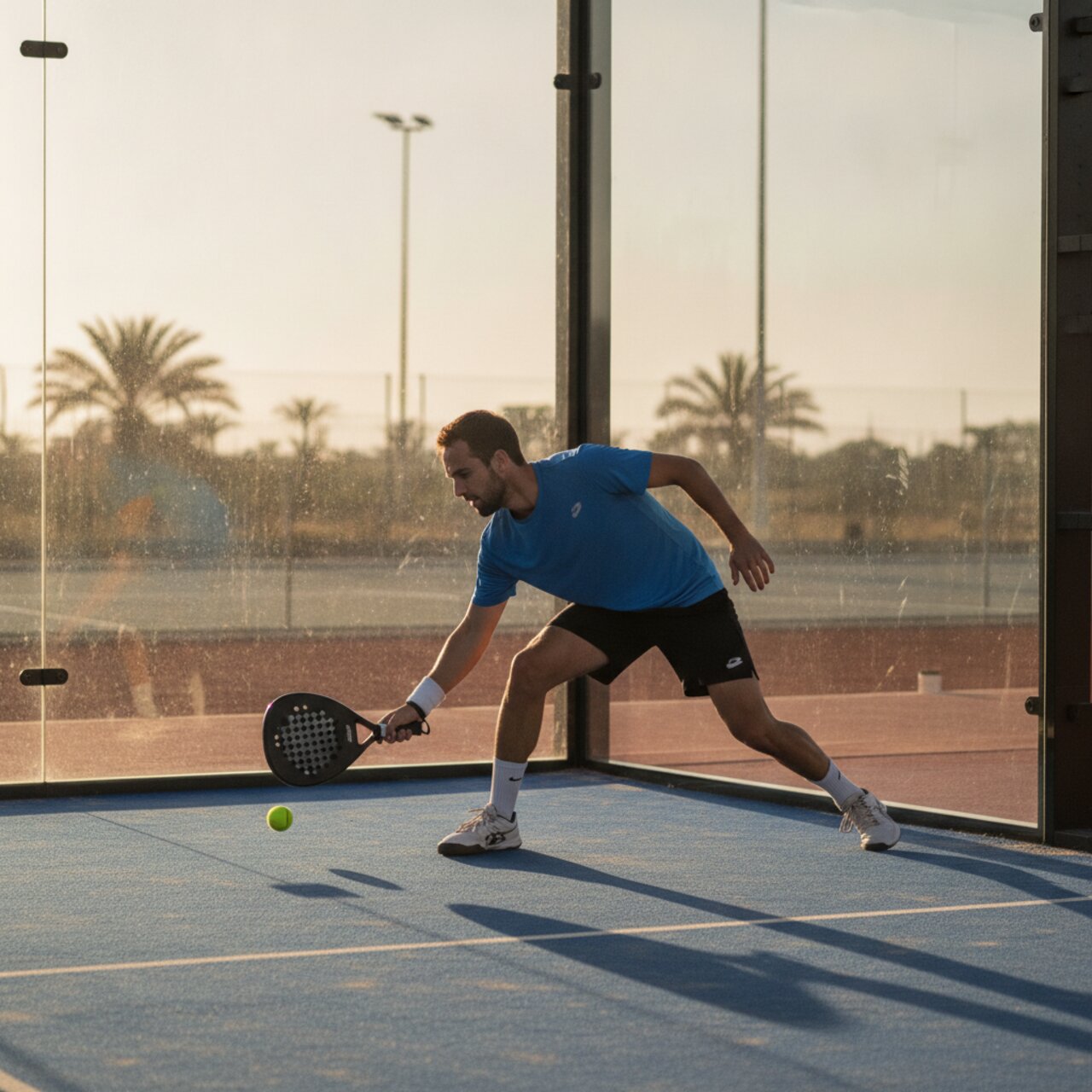
Stay side-on and keep the paddle out in front. In the corner your swing space is limited by the glass behind you and beside you. A compact, side-on position with the paddle held away from your chest gives you room the square-on position simply does not have.
The recovery matters as much as the arrival. After you hit from a corner, your default is to return toward the middle of your half and re-establish the pair, a habit built on the same logic as the zones described in the padel court positioning guide. Standing and admiring your escape is how one corner ball becomes three.
The Three Escapes From the Corner
You have three realistic options out of a deep corner. Pick before you get there, not after.
The deep lob. This is the default and it should be. A high, deep lob buys three or four seconds, pushes the net pair back, and gives your partner time to rejoin you. From a corner you have the angle to lob cross-court over the opponent’s backhand side, which is the highest-percentage version. The mechanics of a lob under pressure, especially getting height without losing depth, are covered in detail in the defensive lob guide.
The low cross-court. When the ball comes out of the corner at a comfortable height and you have time to step into it, a low cross-court ball at the net players’ feet forces a difficult volley up. It is riskier than the lob, since a loose one sits up perfectly for a smash, so use it when you are balanced and the ball is above knee height.
The back wall boast. When the ball has passed you completely and the corner has swallowed you, playing the ball off your own back glass is the last option available. It is a survival shot rather than a tactic, and the back wall boast technique needs its own practice before you can rely on it in a match. Attempting it untrained is usually worse than conceding the point cleanly.
What you should not do is drive flat down the line from a deep corner. The window is tiny, the net is highest at the edges of your vision from that position, and a net player with any anticipation cuts it off for a winner.
Common Mistakes and How to Fix Them
Standing too close to the glass. The single most common fault. Players hug the back wall, then find the ball rebounding into their body with no space to swing. Fix it by consciously starting a metre off the glass and letting the ball come, rather than crowding the spot where you think it will land.
Waiting to see the bounce before moving. If you wait for confirmation, you have already lost the half-second you need. Commit to a read at the opponent’s contact and adjust while you travel. Being slightly wrong but early beats being right but late.
Hitting while backing up. Falling away from the ball produces a short, floating reply that invites the smash you were trying to avoid. Arrive early enough to step into contact, even if it is only a small step.
Trying to win the point from the corner. Ambition in a corner is expensive. Your success rate on aggressive shots from deep corners is poor, and the failed attempts hand over free points. Play the boring lob and stay in the rally.
Freezing after the shot. Recovering to a neutral position is part of the shot, not a separate action. Both players should slide back toward the centre together, keeping the pair’s shape intact, which is the core of good doubles positioning.
Drills for Corner Play
Feed and read. Have a partner stand at the net and feed balls deliberately into one corner, alternating between side-wall-first and back-wall-first patterns. Your only job is to call out which pattern it is before the ball touches the second wall. Do it for five minutes without hitting anything. Recognition is the bottleneck, so train it separately.
Corner-to-lob. Same feed, but now every ball must come back as a deep cross-court lob landing behind the service line. Count how many out of twenty land deep. Under twelve means you are hitting while moving backward, not stepping into the ball.
Two-corner shuttle. Your partner alternates feeds between the two back corners, forcing you to travel across the back of the court. Six balls, then rest. This drill builds the turn-and-travel habit and exposes how quickly your positioning degrades when you are tired, which is exactly when corner balls arrive in a real match.
Point play with a corner rule. Play conditioned points where the net pair must send at least one ball into a corner. The defending pair scores double if they win a point in which they successfully escaped a corner. Rewarding the escape rather than the winner rewires what you look for.
Turning Corner Defence Into Court Position
The measure of good corner play is not how spectacular the escape looks, it is whether you and your partner are back level and balanced three shots later. A deep lob from the corner that lets you both walk back to the baseline together has done its job completely, even though nothing about it was impressive.
Build the pieces separately. Groove the lob so it works under pressure, learn to read the two rebound patterns until you no longer think about them, and drill the back wall boast so it exists as a genuine option rather than a panic. If any of the terminology here is unfamiliar, the padel glossary covers the shot names in one place. Get comfortable in the corners and opponents lose their most reliable way of breaking your pair apart.