By Mario GonzalezStrategy
When to Attack vs When to Defend in Padel: Reading the Point
Learn when to attack vs when to defend in padel. Read court position, ball height, and balance to pick the right moment and stop forcing low-percentage shots.
Most points in padel are lost, not won. Intermediate players give away free points by attacking from positions that don’t justify it, then defending passively when they hold every advantage. Knowing when to attack vs when to defend is the difference between controlling a rally and reacting to it. The decision comes down to three readable signals: where you are on the court, how high the ball sits, and whether your body is balanced.
Get those three right and you stop forcing low-percentage shots. You start picking the moments where aggression actually pays off, and you defend with purpose instead of panic.
Why Reading the Point Beats Raw Power
A hard smash from a bad position loses more points than a controlled lob from a good one. Padel rewards patience because the walls keep the ball in play far longer than tennis. The team that attacks at the wrong moment hands their opponents a counter, and a well-placed counter off a rushed attack is one of the easiest points in the game to win.
The skill isn’t hitting harder. It’s recognizing which phase of the point you’re in and committing fully to the right response. Indecision, half-attacking and half-defending, is what gets punished. When you commit late, you arrive at the ball off balance and your shot quality collapses.
Think of every point as having three states: you’re attacking, you’re neutral, or you’re defending. Your job is to read which state you’re in within a fraction of a second and respond accordingly. The same ball demands a different shot depending on the state.
The Three Signals That Tell You What to Do
Court Position
Position is the first thing to read because it sets the ceiling on what’s possible. If both you and your partner are at the net, you’re in an attacking state by default. If you’re both pinned at the back glass, you’re defending. When one player is up and one is back, you’re in transition, and transition is where most points are decided.
The team controlling the net controls the point. That’s the core truth of padel positioning. If you’re at the net with your opponents at the back, every ball you can volley downward is an attacking opportunity. If you’ve been pushed back, your goal shifts entirely: get the ball back to neutral and earn your way forward again. Understanding the three court zones makes these reads automatic over time.
Ball Height
Ball height at the moment of contact is the clearest attack-or-defend signal in the game. A ball above net height that you can strike going downward is an attacking ball. A ball at or below knee height is a defending ball, full stop, no matter how much you want to be aggressive.
The contact point dictates the shot. Above your shoulder and inside the court, you can smash or hit a víbora. At chest height, a bandeja keeps you at the net without overcommitting. Below the waist, you’re lifting the ball, and the lift should usually be a deep lob, not a desperate flat drive that floats into the open court.
Body Balance
The third signal is your own balance, and it’s the one players ignore most. You can be at the net with a high ball and still have no business attacking if you’re stretched, falling backward, or moving laterally at full speed. Balance determines whether you can execute, not just whether the opportunity exists.
A simple rule: if your weight is moving forward and your feet are set, attack. If you’re reaching, lunging, or backpedaling, neutralize first. A controlled ball that resets the point beats a winner attempt that you shank into the net because your base was gone.
When to Attack
Attack when all three signals line up: you’re at or moving toward the net, the ball is above net height, and your body is balanced enough to drive through the shot. That’s the green light. A high, slow ball that lands near the service line while you’re set at the net is the most common attacking opportunity, and intermediate players still pass it up too often.
Look for the short ball that your opponents leave when they defend poorly. A weak lob that doesn’t clear your reach is a gift. Step in, take it as a bandeja or víbora depending on the height, and aim at the gaps or the legs of the player closest to the net rather than swinging for raw power.
Attack the player who is out of position. If your opponents just switched sides or one of them is recovering from a wide ball, the open court is your target. You don’t need a winner. You need a ball aggressive enough that their return floats, giving you the next ball to finish. Most attacking points are built over two or three shots, which is exactly the logic behind the three-shot attack pattern.
One caution: attacking does not always mean smashing. A sharp, well-placed bandeja that keeps your opponents pinned at the back is an attacking shot even though it isn’t a winner. Maintaining pressure is attacking. You’re attacking the position, not just the ball.
When to Defend
Defend when the ball is low, when you’ve been pushed off the net, or when your balance is gone. Defending well is not passive, it’s a deliberate effort to neutralize the point and climb back to the net. The deep lob is your primary defensive weapon, and a good one flips the whole point.
When your opponents are smashing and you’re at the back glass, your job is to read the bounce off the wall and stay calm. Let the ball come off the glass, take it at a comfortable height, and lift it deep. A lob that lands within a meter of the back wall forces your opponents to back up and often hands the net back to you. The defensive read against an attacking team is a skill worth drilling on its own.
Against a strong attacking pair, the worst thing you can do is try to out-hit them from a defensive position. A flat counter from below the waist usually finds the net or floats long. The percentage play is the lob, repeated patiently, until they leave a short ball or miss. Defense in padel is a waiting game, and the team that stays disciplined usually gets the error.
Reading your opponents helps you defend earlier. If you can see from their body language that a smash is coming, you can split-step and set your base before they make contact, which buys you the extra fraction of a second that turns a desperate get into a controlled lob.
The Transition Moment: Neither Attacking nor Defending
The hardest read is the in-between ball, when you’re moving from defense toward the net and the point hasn’t resolved. This is the transition phase, and it’s where good teams separate from average ones. You’ve hit a deep lob, your opponents are backing up, and now you’re advancing through the middle of the court.
Don’t sprint blindly to the net. Move forward under control and split-step as your opponents make contact. If their reply is weak and high, you continue forward and attack. If it’s a strong ball at your feet, you absorb it with a soft volley or a chiquita and keep advancing. The transition ball is rarely an attacking ball, but it sets up the one that is.
The mistake here is treating transition as attack. Players rush the net, get caught with a low ball at their feet, and pop up an easy floater. Move forward, but let the ball height decide your shot once you arrive.
Common Game Situations
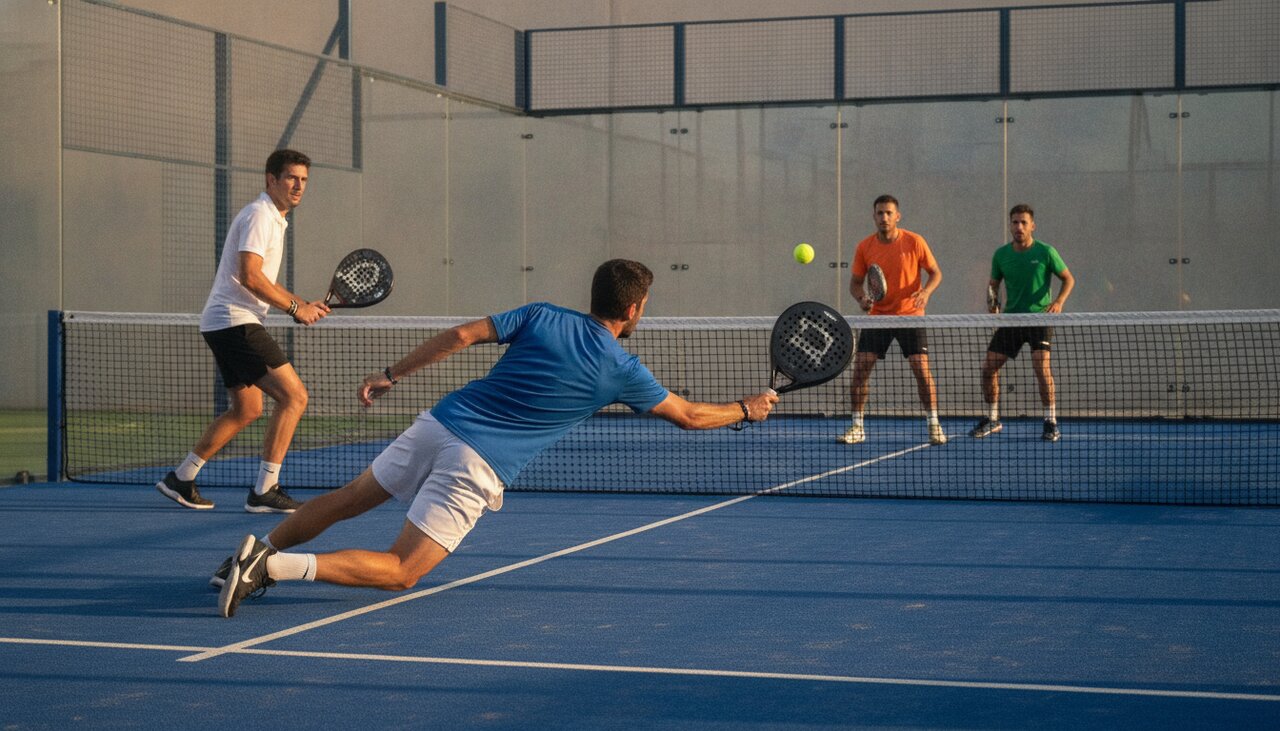
You’re at the net, opponents lob you deep. Don’t backpedal and smash off balance. If you can take it as a bandeja while moving back under control, do it and hold your ground. If the lob is too deep, let it pass, drop back, and reset with your own lob. Giving up the net temporarily beats a wild overhead into the net.
You’re defending and get a chest-high ball. This is your chance to change the point. Instead of another lob, consider a controlled drive down the middle or a sharp angle if your opponents are tight together. A chest-high ball at the back is the one moment defense can flip to attack.
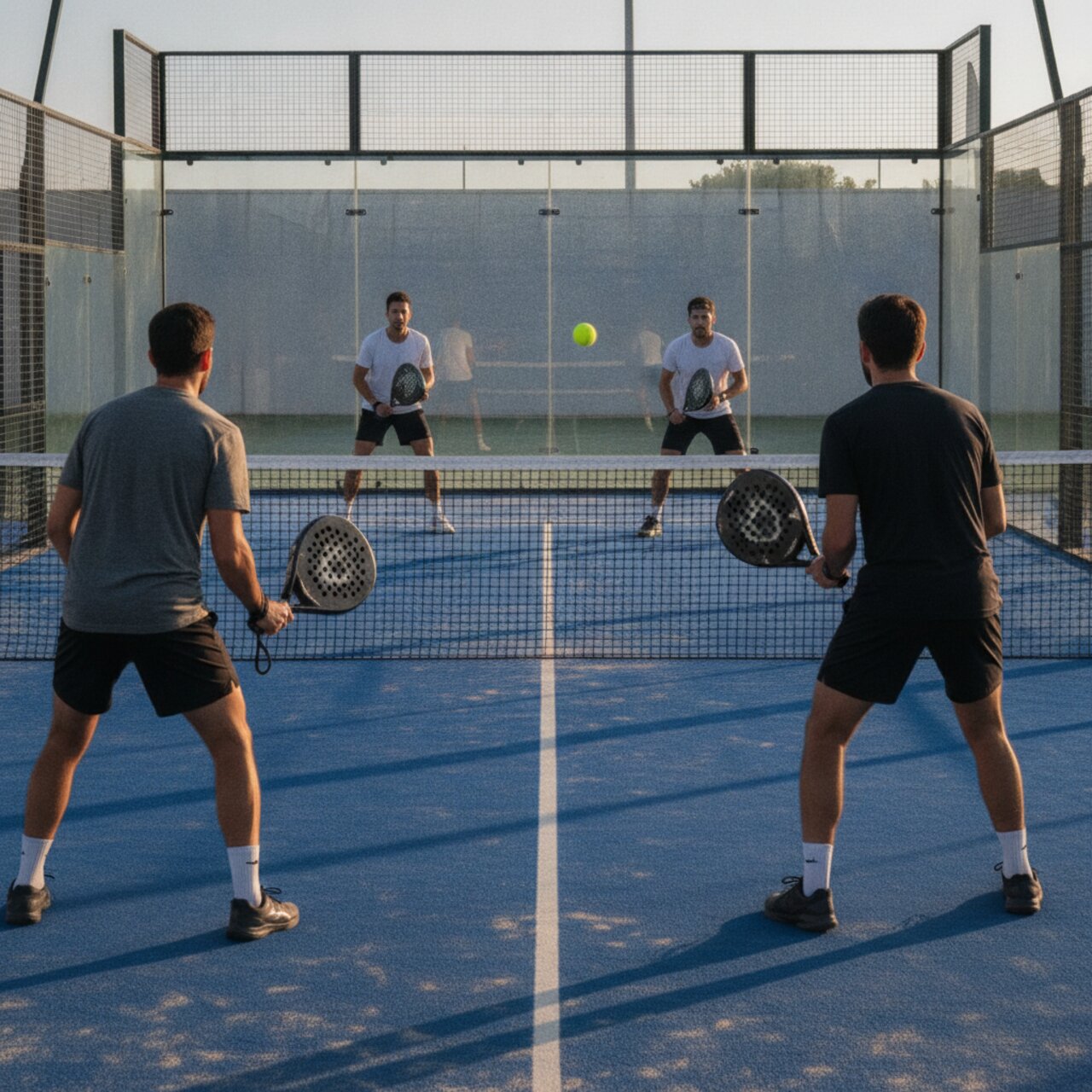
Both teams at the net. Whoever hits down first usually wins. Volley low and at the opponents’ feet, stay patient, and wait for the ball that sits up. Don’t try to blast through four players packed at the net. Place it, force the pop-up, then finish.
You’re stretched wide and off balance. Lob. Every time. A defensive lob from a wide position buys you time to recover your court position. Trying to hit a winner from outside the court is how points get thrown away.
Practice This Read
Set up a simple drill with two pairs. One team stays at the net, one defends from the back, and they play points where the back team can only lob until they get a ball above net height. The moment a defender gets a high ball, they’re allowed to attack. This trains both the patience to wait and the recognition of when the green light appears.
A second drill: feed yourself low and high balls at the net and commit to the correct response without thinking. Low ball, soft volley or bandeja. High ball, drive it down. The goal is to make the height read instant so you’re never caught deciding mid-swing.
Play ten points where your only rule is that you cannot attack a ball below net height. You’ll lose a few you wanted to force, but you’ll feel how many cheap errors disappear. That discipline, more than any single shot, is what reading the point gives you.
The players who win consistently aren’t the ones hitting the hardest. They’re the ones who attack the right ball, defend the wrong one without complaint, and never confuse the two. Master that and you’ll win points you used to give away.