By Mario GonzalezStrategy
How to Find Your Best Padel Partner, Backed by Stats
Your best padel partner is not always your best friend on court. Here is how to find your best padel partner with pair stats instead of a hunch or a feeling.
There are friends you enjoy playing with, and there are partners you win with. Sometimes they’re the same person. Often they’re not, and picking by feel keeps you paired with the wrong one. To find your best padel partner, you need the one thing memory can’t give you: your actual win rate alongside each person you play with.
Padel is a doubles game, so your results are never fully your own. Who stands next to you shapes almost every match. Getting that choice right is one of the biggest levers you have, and it’s decided by data, not by who’s the most fun on a Friday.
Why chemistry is a bad way to pick
Ask most players who their best partner is and they’ll name whoever they had a great night with recently, or simply their closest friend in the group. Both answers are guesses. You remember the fun, the telepathic winners, the comeback. You don’t remember the three quiet losses with the same person a month ago.
Chemistry is real, but it’s a feeling, and feelings run hot on your best days. The only honest way to rank your partners is to look at how you actually do with each of them across a run of matches, wins and losses included.
The stat that names your best partner
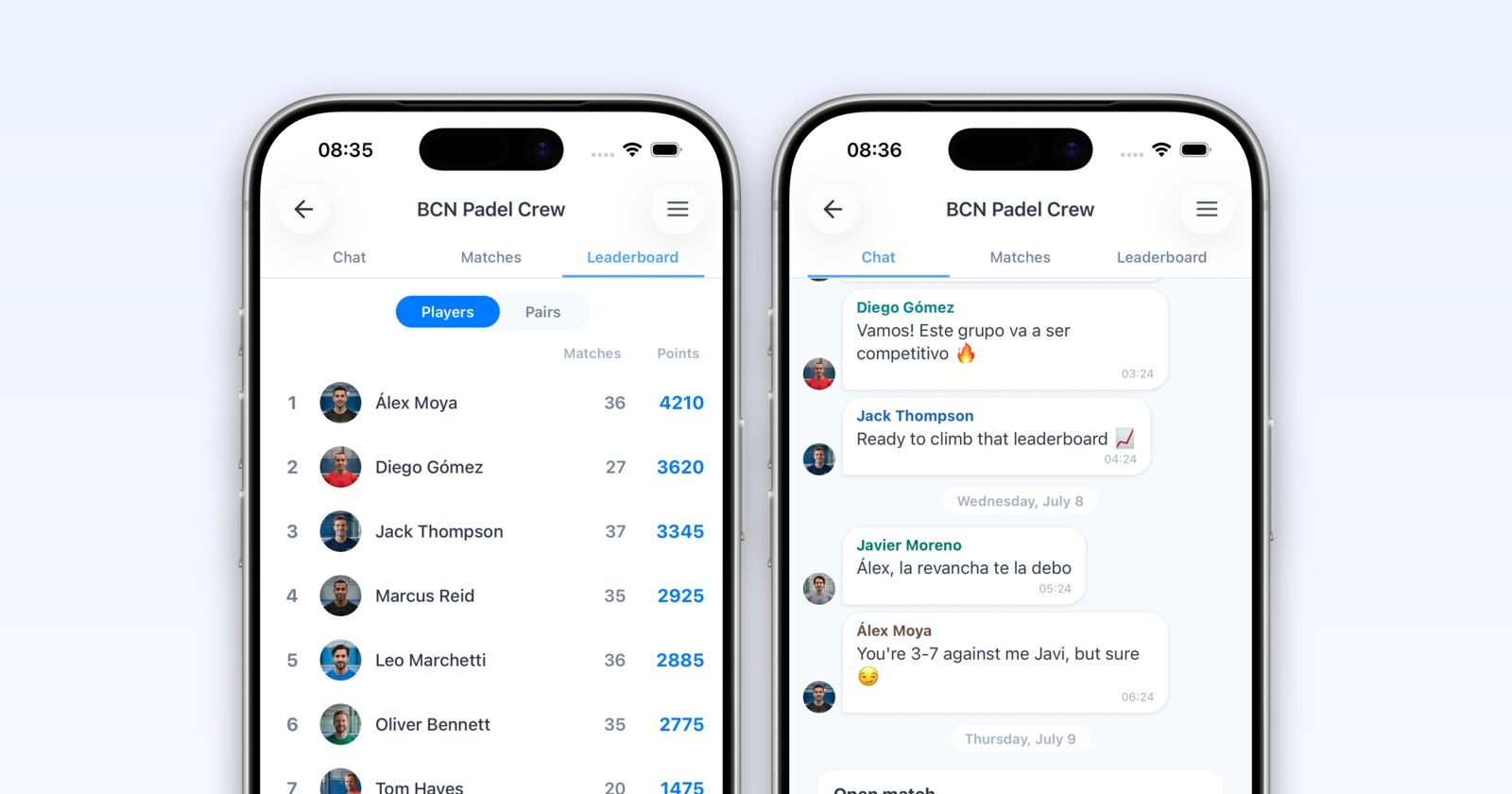
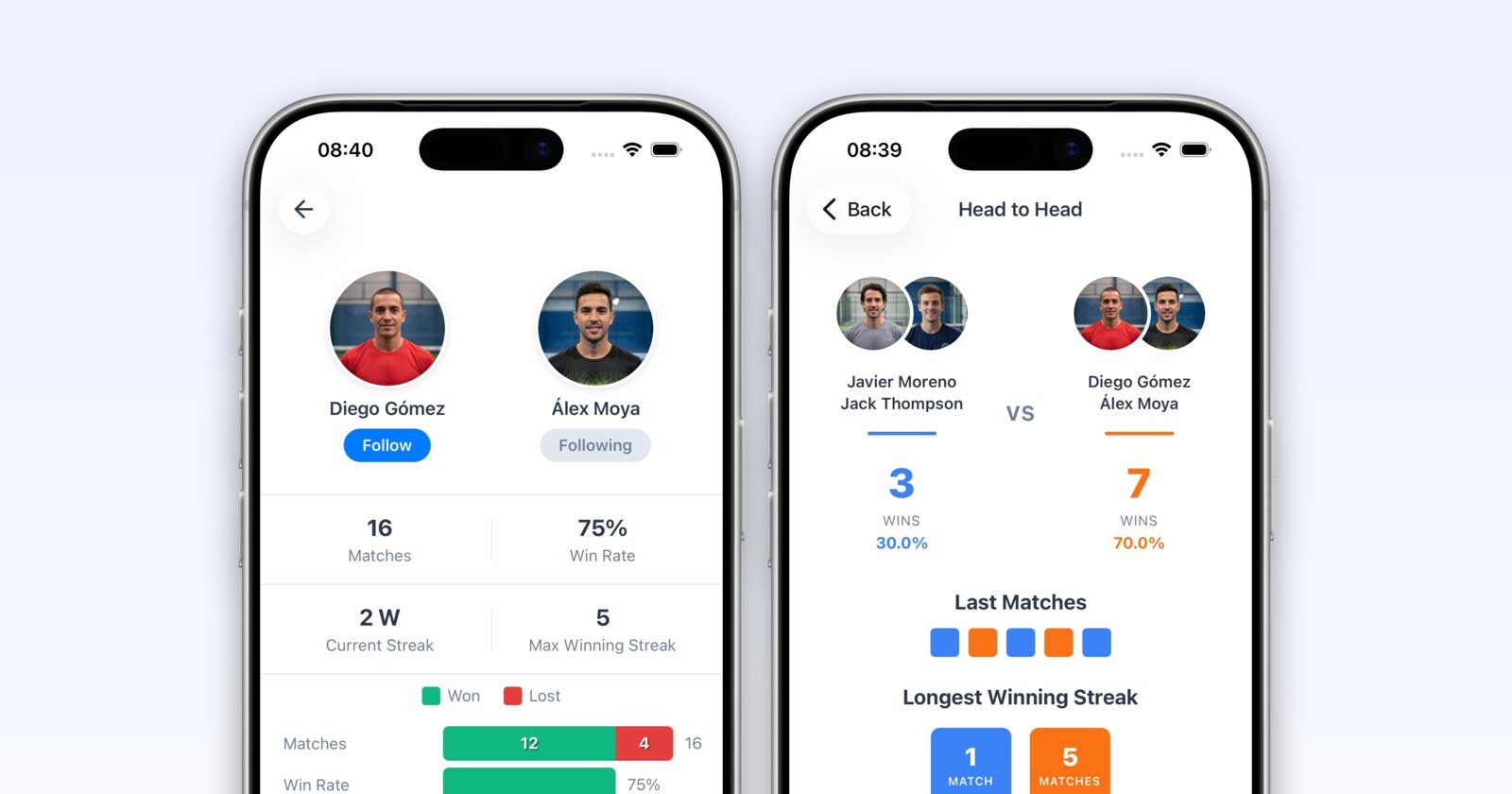
Win rate by pair does the work. Log who you played with in every match and you get a simple table: your win percentage with each partner over the number of matches you’ve played together. The partner at the top, past a fair sample, is your best one. Not your favorite, your best.
This falls straight out of tracking your matches. Once the log exists, the pair breakdown is automatic, and it’s usually the number that surprises players most about their own game.
The traps that fool you
A pair win rate is only trustworthy if you read it properly, and three things throw it off.
Sample size is the first. Going 3-0 with someone is a nice night, not proof they’re your best partner. Give any pairing at least six or seven matches before you take the number seriously, and more before you build a plan around it.
Strength of opponents is the second. If you only ever play the weaker half of the group alongside one partner, your win rate together is inflated. A slightly lower rate against tougher pairs often means more.
The third is deciding who carried whom. A high win rate with the strongest player in the group might be measuring them, not the partnership. Cross-check by looking at how that same partner does with others, and how you do without them.
What makes a pairing click, beyond the number
The win rate tells you which pairings work. Understanding why helps you build more of them. Side fit is the big one: two players who both only feel comfortable on the same side will fight over it, while a natural left-and-right pairing covers the court cleanly. Complementary styles matter too, an aggressive net player next to a steady defender often beats two of either.
None of that overrides the results, though. Treat the reasons as an explanation for what the data already shows, not a substitute for it. If two players “should” click on paper but lose together, believe the record.
How to find your best partner with data
Start by logging every match with the partner named, the same minimal habit behind any padel stat. After a few weeks you’ll have enough to rank your pairings by win rate.
Read that ranking with the traps in mind. Set a minimum of six or seven matches per pairing, glance at the level of opposition behind each number, and check who you win with independently of who’s carrying. The partner who survives all three checks is the one to call when a match actually matters. It also sharpens the group’s bigger picture, because the same pair data feeds who’s really the best in your group.
A worked example
You’d swear your best partner is Javi. He’s your mate, you always have a laugh, and last month you won a tight one together. The log disagrees. With Javi you’re 9-9 across 18 matches, an even 50%. With Sara, who you pick far less often, you’re 11-4 across 15, a 73% win rate, and most of those came against the stronger pairs in your group.
Nothing about your Friday feeling pointed at Sara. The record does, clearly. Pick her for the matches that count and you’ve just improved your results without changing a single thing about your own game.
Then go build your roster
Once you know which partnerships win, the next step is playing them more often, and finding new candidates to test. If your pool of partners is thin, widen it. Our guide on how to find padel partners covers building a reliable roster, and every new pairing is just more data waiting to be logged.
Let the app do the counting
Ranking your partners by hand means filtering every match by who you played with, which is exactly the chore nobody keeps up. Padellog builds your pair stats automatically: log your matches and it shows your win rate with every partner, your best pairs, and how each holds up against real opposition, updated with every result.
Find your best padel partner the honest way, by counting the wins and the losses with each of them, and pick accordingly. If it isn’t on Padellog, it doesn’t count.