By Mario GonzalezStrategy
How to Settle Who's the Best Player in Your Padel Group
Every padel group argues about who is the best player. Here is how to settle it for good with win rate, head-to-head records, and a fair group leaderboard.
Every padel group has the same running argument: who is the best player in your padel group? The loud winner from last Sunday says it’s him. The guy who lost twice says the pairings were unfair. Nobody has proof, so the debate resets every week and nothing ever gets decided.
The problem isn’t the argument. It’s that padel groups try to settle it from memory, and memory is a terrible referee. You remember your best nights and your rivals’ worst ones. Settling it properly takes two things: agreeing on what “best” actually means, and keeping an honest record.
Why memory always picks the wrong winner
Ask four players who won the most matches over the last two months and you’ll get four different answers, all confident. That’s not lying, it’s how recall works. A single blow-out win sticks in your head far longer than three quiet losses.
There’s also the partner problem. Padel is a doubles game, so your results are tangled up with whoever you played next to. Win alongside the strongest player in the group and you look great. Get stuck rotating with beginners and your record suffers, even if you personally played well. Judging individuals from doubles results, by feel, is close to impossible.
The fix is boring and effective: write every match down. Once you have the record, the answer stops being an opinion.
What “best” actually means in padel
“Best” isn’t one number. Before you rank anyone, decide which of these your group cares about, because they can point at different people.
Win rate. The share of matches a player wins. The cleanest headline stat, but only fair once everyone has played enough games. One player at 100% after three matches isn’t ahead of someone at 68% across forty.
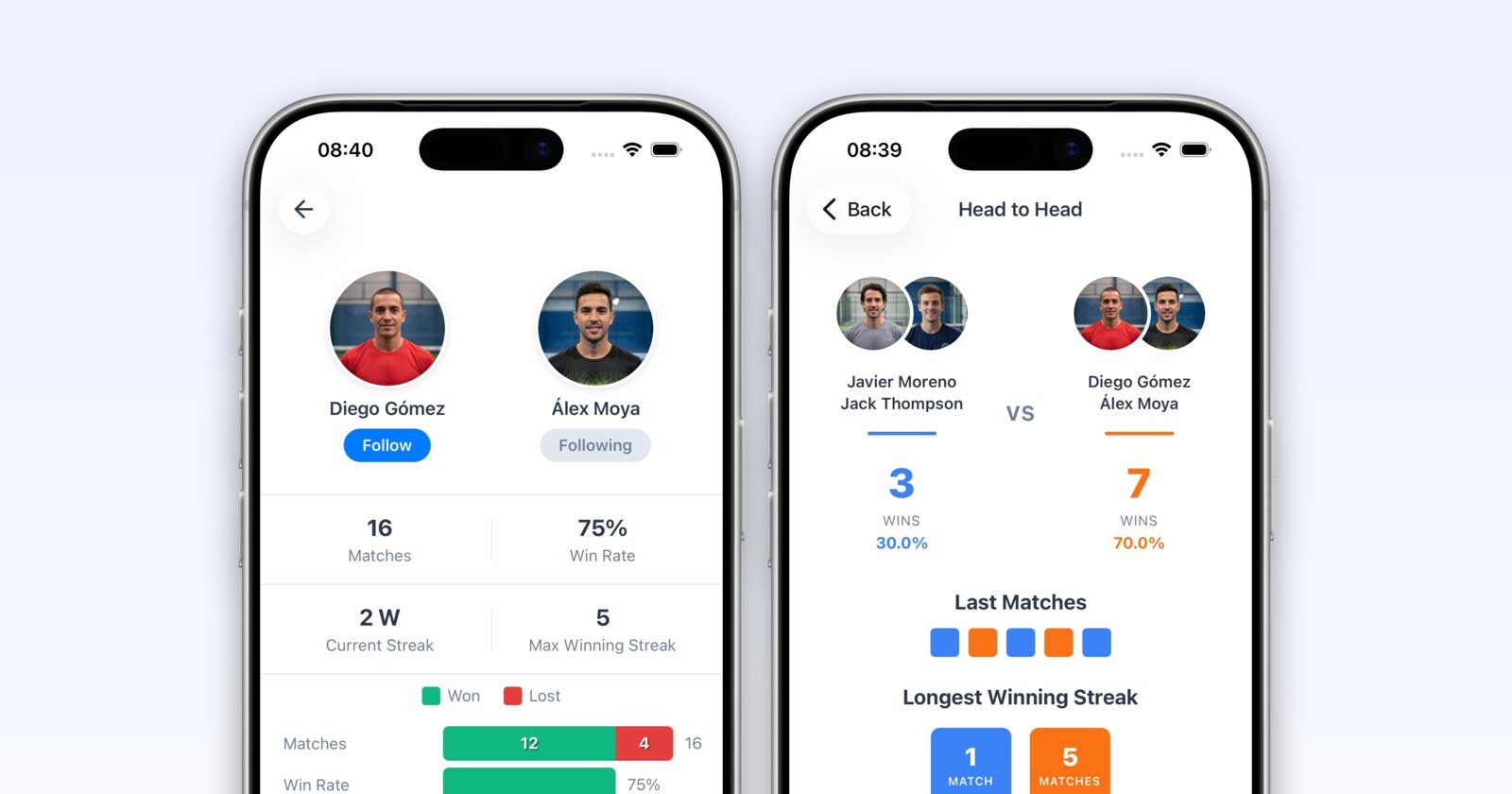
Head-to-head. How you do directly against a specific rival. Two players can have similar win rates yet one owns the other whenever they meet. For a two-person “who’s better” argument, the head-to-head record between them settles more than any overall percentage.
Strength of competition. Beating beginners every week inflates a record. A slightly lower win rate against the toughest players in the group often means more.
The partner effect. Some players lift whoever they’re next to. Others only win with a strong partner carrying them. Tracking results by pair separates the two.
Consistency. A player who wins 6 of every 10 nights, every month, is arguably “better” than someone who wins 9 one week and 2 the next. Streaks and month-to-month stability show this.
The stats that decide the best player in your padel group
You don’t need all of the above to crown someone. Four numbers do most of the work.
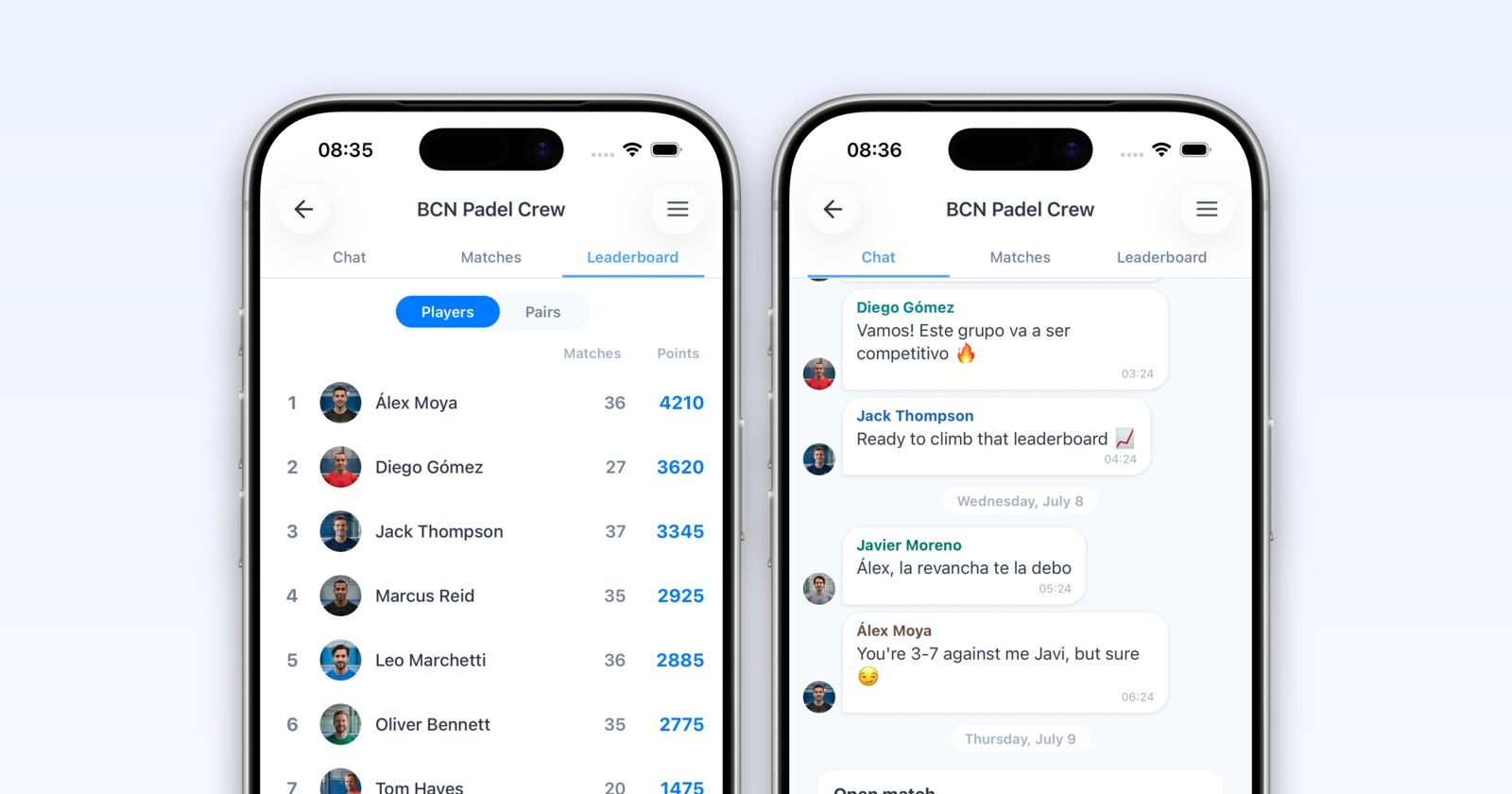
Win percentage, with a minimum match threshold, is your primary ranking. Set the threshold at something like 10 matches so nobody tops the table on a lucky handful of games. Below the threshold, a player is “still qualifying,” not ranked.
Head-to-head records handle the direct rivalries that win rate can’t. If two players sit within a few points of each other, whoever wins their personal meetings breaks the tie.
Best-pair data answers the partner question. Log who played with whom and you’ll quickly see which duo has the highest win rate, and which players only shine with a specific partner. This is often the most surprising number in a group, and knowing your best position on court feeds directly into it.
Matches played keeps everyone honest. A ranking means little if the person on top has dodged the strongest players. Volume next to win rate tells you who’s earned their spot.
How to rank your group fairly, step by step
Start by logging every match the group plays: the score, both teams, and the date. Skipping the “small” games is how records get skewed, so log all of them, including the ones you lost.
Once the log exists, rank by win percentage but only count players past your minimum-match threshold. This one rule removes almost every unfair result, because it stops a hot week from beating a strong season.
Then apply head-to-head to any close pairs on the table. If two players are within a few percentage points, the one who wins their direct meetings ranks higher. Ties in raw win rate are common in small groups, and this is the fairest way to break them.
Finally, sanity-check against strength of opponents. If your table has someone high who has only ever played the weaker half of the group, that’s worth a footnote. The scoring you use matters here too: consistent match formats make the records comparable.
Done honestly, this produces a ranking nobody can wave away. The player at the top got there on volume, win rate, and results against real opposition, not on one memorable night.
A worked example: the Tuesday group
Say five players, Ana, Ben, Carlos, Dan, and Ellie, play doubles every Tuesday for two months. From memory, Ben is “obviously the best” because he won the last three nights loudly. The log tells a different story:
- Ana: 24 matches, 17 wins (71%)
- Ben: 18 matches, 12 wins (67%)
- Carlos: 25 matches, 8 wins (32%)
- Dan: 24 matches, 6 wins (25%)
- Ellie: 9 matches, 7 wins (78%)
On raw win rate Ellie tops the table at 78%, but she has played only 9 matches, under the 10-match threshold, so she is still qualifying rather than ranked. That leaves Ana first at 71%. Ben, the presumed king, is second. Then check their head-to-head: Ana’s team has beaten Ben’s 4 of the 6 times they met directly. The debate is over, and it landed nowhere near where the group assumed. This is the normal result once a record replaces memory.
Handling the classic excuses
Every ranking gets challenged. Two objections come up every time, and the record answers both.
“The pairings were unfair.” Sometimes that’s true on a single night, which is exactly why you rank across dozens of matches instead of one. Over a couple of months the rotations even out, and the best-pair data shows whether a player genuinely only wins when carried by a strong partner.
“It’s too small a sample.” A fair complaint at 5 matches, not at 30. The minimum-match threshold exists for precisely this, and the honest answer to a doubter is to go play more matches, which is the point anyway. A ranking that survives a full season of games is one nobody in the group can talk their way out of.
Make it official: run a season
A one-off ranking is satisfying for about a week. What keeps a group engaged is turning it into a season with a clear start and end, a live table everyone can see, and a champion at the finish.
Seasons fix the biggest weakness of casual play: nothing is at stake. Give the group a three-month table and suddenly every Tuesday match matters, the bottom half has something to climb toward, and the “who’s best” debate has an actual answer on a specific date. Reset it and start again. Groups that run seasons play more, because there’s always a reason to book the next court.
Settle it without the spreadsheet
You can do all of this in a shared spreadsheet. Most groups try, and most spreadsheets die within a month because one person has to chase everyone for scores and enter them by hand.
This is the whole reason we built Padellog. Everyone logs their own matches in seconds, and the app builds the group leaderboard, head-to-head records, and best-pair rankings automatically. Win rate updates itself, the season table is live, and the minimum-match logic is handled for you. When the argument starts, you open the app instead of raising your voice.
The best player in your padel group is a real, answerable question. Start logging your matches, hold everyone to the same record, and let the leaderboard end the debate. If it isn’t on Padellog, it doesn’t count.