
By Mario GonzalezStrategy
Pre-Match Routines That Work: Prepare for Padel Competition
Build an effective pre-match routine in padel to improve focus, confidence, and performance. Learn warmup drills and mental preparation strategies.
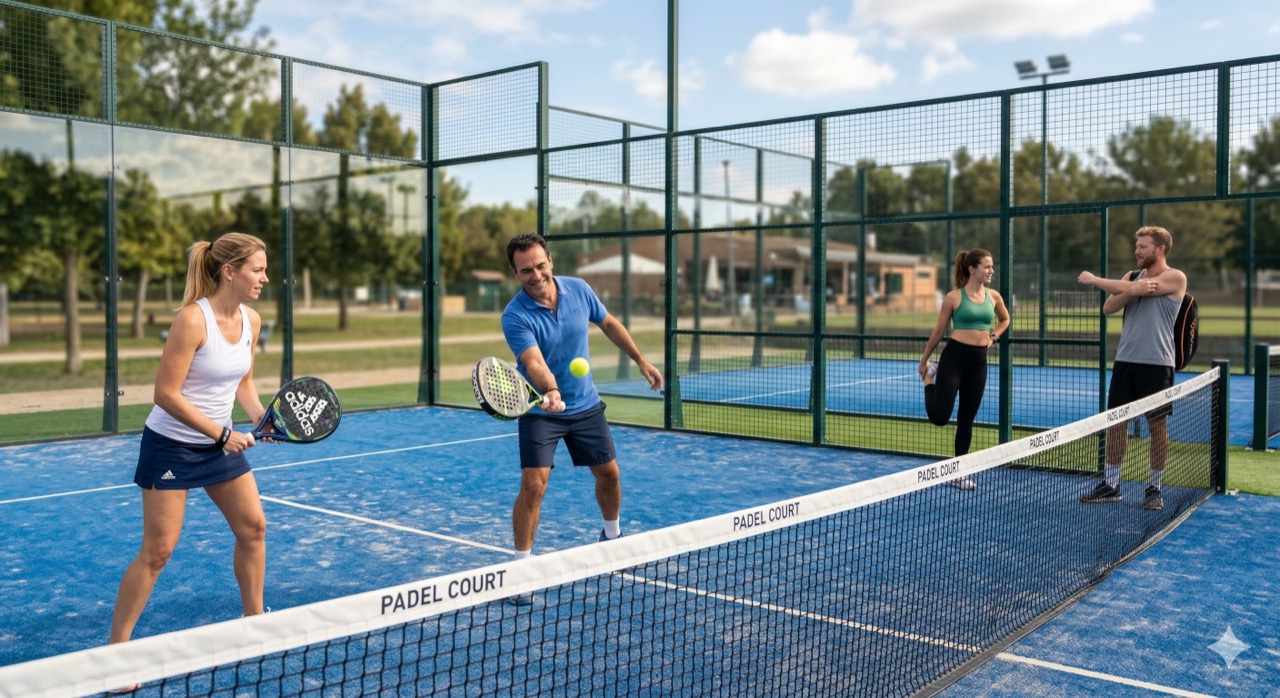
The difference between winning and losing matches often comes down to preparation. Professional padel players spend as much time preparing mentally and physically before a match as they do playing the match itself. Your pre-match routine is the foundation that carries you from practice into competition.
A solid pre-match routine does three things: it warms up your body for athletic performance, it primes your mental state for competition, and it establishes technical confidence by practicing the exact shots you’ll use in the match.
The Physical Warmup (20-25 Minutes Before Match)
Start your warmup 25-30 minutes before the match begins. This timing gives you enough time to raise your heart rate and loosen muscles without arriving at the court fatigued.
Dynamic stretching comes first (5 minutes). Don’t hold static stretches before competition—they reduce power and responsiveness. Instead, do arm circles, leg swings, walking lunges, and torso rotations. Move through your full range of motion with controlled, deliberate movements.
Follow this with light jogging or court movements. Move forward and backward across the court at 60% intensity for 2-3 minutes. This elevates your heart rate gradually and gets your legs loose without wearing you down.
Technical Warmup on Court (15 Minutes)
Once on the court with your partner, structure your warmup in phases.
Phase 1: Baseline rallies (3-4 minutes). Hit cross-court drives at 70% power. Focus on consistency and court positioning. Get a feel for how the court plays—is the sun in your eyes from the baseline? Where is the wind coming from? Are there dead spots on the court? These small details matter.
Phase 2: Approach and volley sequences (3-4 minutes). Practice hitting baseline drives that move your opponent back, then advancing to net and hitting volleys. This is the exact sequence you’ll execute in the match. By doing it repeatedly during warmup, your body remembers the pattern under match pressure.
Phase 3: Serve and return (3-4 minutes). Hit your serve multiple times at 85% intensity. Pay attention to where you’re placing it and how it’s landing. Practice returning one or two serves from your opponent. Your serve is the only shot you control completely, so getting comfortable with it before the match is critical for confidence.
Phase 4: Game situations (2-3 minutes). Play a few points at match intensity. This is where you transition from practice mindset to competition mindset. Hit the shots you’ll actually use under pressure and experience the rhythm of real points.
Mental Preparation (Before You Take the Court)
Mental preparation begins even before the physical warmup. Thirty minutes before your match, start shifting your focus.
Review your tactical plan. Spend 5 minutes thinking about your opponent. What are their weaknesses? How will you attack them? Do they struggle with pressure on the forehand side? Are they weak on the return of serve? Write down 3-5 tactical notes and review them.
Visualize key moments. Close your eyes and see yourself winning a difficult point. Visualize yourself hitting a clean volley, executing a passing shot, hitting a break-point return that they can’t handle. This primes your nervous system for successful execution.
Control what you can control. Professional competitors know they can’t control their opponent, the weather, or referee calls. What they can control is effort, focus, and decision-making. Remind yourself of this. You’re not trying to control the match outcome—you’re controlling your own focus and effort on each point.
Mindset Anchors: Bringing Confidence to the Match
Develop 2-3 small rituals that signal to your brain that you’re ready. These anchor your mental state.
Some players bounce the ball a specific number of times before serving. Others have a specific breath pattern they use before returning serve. A few players touch their racket strings and their heart before each point. These aren’t superstitions—they’re focus devices that interrupt anxiety and bring your attention to the present moment.
Create your anchor before the match starts. Pick something small and specific that you can repeat consistently. During the match, use it when you feel nervous or distracted. It brings you back to the prepared mental state you established during warmup.
The 30-Minute Window Before You Play
The hour leading into your match matters intensely. Here’s how to structure it:
30 minutes before: Complete your physical warmup (dynamic stretching, light movement).
25 minutes before: Arrive at the court and hit your technical warmup sequence on court.
10 minutes before: Finish your last serve practice and game-situation points.
5 minutes before: Step off court. Do your mental visualization. Review your tactical plan. Set your mental anchor.
2 minutes before: Take a few deep breaths. Shake out your arms and legs to stay loose. Step onto the court ready to compete.
This structured approach prevents the chaos that ruins many players. You’ve done the work. Now you trust your preparation and play the match.
Preparation for Different Match Types
Tournament matches require more mental preparation. Add 10 extra minutes to your pre-match routine where you visualize specific situations from the tournament (tight breaks, high-pressure moments). Remind yourself of why you entered the tournament and what you want to achieve.
Practice matches don’t require as much mental intensity. Focus your pre-match routine on technical elements and tactical awareness rather than psychological preparation.
Doubles matches need additional warmup time to coordinate with your partner. Spend extra time practicing your net positioning, covering for each other, and hitting lobs. Familiarity with your partner’s positioning is critical before the match starts.
Common Pre-Match Mistakes
Many players skip the physical warmup to conserve energy. This backfires—a proper 20-minute warmup actually gives you more energy during the match by improving cardiovascular efficiency and muscle readiness.
Others arrive late and rush their warmup. A rushed warmup increases anxiety and leaves you without technical confidence. Always arrive with time to spare.
Some players warmup at full intensity, arriving at the match already tired. Warmup at 60-75% intensity. The match itself is where you play at 100%.
Finally, many players ignore the mental component entirely. They warmup physically, hit some balls, and assume they’re ready. Mental preparation determines who executes under pressure. It’s not optional.
Progressive Routine Development
Your pre-match routine won’t be perfect the first time. Track what works and what doesn’t. After 5-10 matches, you’ll know which elements improve your performance.
Does visualizing make you more confident? Keep it. Does a specific stretching sequence help you avoid injuries? Include it. Does reviewing your tactical plan reduce nervousness? Make it part of your routine.
The best pre-match routine is one that you’ve practiced so many times that it feels automatic. It becomes your bridge from practice to competition.
Adapting Your Routine to Specific Conditions
If you’re playing in hot weather, adjust your warmup intensity. Do less vigorous movement initially, but spend more time on hydration checks. Your body will warm up faster in heat, so focus more on technical practice and mental preparation.
Playing in wind requires different warmup emphasis. Spend extra time hitting into the wind and with the wind during your warmup. Get a feel for how the wind affects your serves and volleys. This takes mental stress out of early match moments.
When playing on unfamiliar courts, arrive earlier if possible. Walk the perimeter, check for sun glare, and notice court-specific factors. A 5-minute court familiarization adds security to your pre-match routine.
Early morning matches often feel flat physically. Add 5 extra minutes of dynamic stretching and get blood flowing with some light running. Your body needs extra time to activate when competing early.
Evening matches sometimes feel rushed. Plan to arrive 15 minutes earlier than usual, which gives you psychological breathing room. You’re not rushing your routine, which reduces anxiety.
The Psychology Behind Pre-Match Routines
Your brain doesn’t distinguish between real match situations and practiced scenarios. When you warmup with purpose and intensity, your nervous system adapts to that reality. By the time you step on the court for competition, your body recognizes the patterns from warmup and responds automatically.
This explains why professional players look calm during competition—they’ve practiced the exact scenario hundreds of times. Your pre-match routine builds this familiarity.
Your routine also serves as a transition ritual. It marks the shift from normal life into competitive mode. Once you complete your routine, your mind is in match-ready state. This psychological clarity alone improves performance by 10-15%.
Common Mistakes in Pre-Match Preparation
Some players change their routine before important matches. This is counterintuitive but creates anxiety. Stick with what works. Consistency builds confidence far more than last-minute tweaks.
Others underestimate the mental component. They’re comfortable physically but mentally unprepared. This leads to poor shot selection and decision-making in early match moments. The mental warmup is not filler—it determines how you execute under pressure.
Some players go too hard during warmup and lack energy for early match games. This is a critical mistake. A proper warmup energizes you without fatiguing you. If you’re tired after warmup, you’ve prepared incorrectly.
Finally, some players skip key elements when running late. They hit a few balls and assume readiness. Incomplete preparation shows immediately in first-set performance. Budget time for your full routine with a buffer.
Bringing It All Together
A complete pre-match routine—physical warmup, technical practice, mental visualization, tactical review, and mental anchoring—takes about 45 minutes. This investment returns ten-fold during the match.
You’ll serve with more confidence. You’ll execute shots more cleanly under pressure. You’ll make better tactical decisions. You’ll stay composed when points get tight. These aren’t accidents—they’re the direct result of systematic preparation.
Understanding how match preparation fits into your broader training approach helps you see the bigger picture. Every pre-match routine reinforces your training and competitive development.
Making Your Routine Your Own
While the structure above provides a template, your specific routine should reflect your personality and preferences. Some players need more mental time, others need more physical activity. Some benefit from silence, others from music. Experiment within the framework until you find what works for you.
Track your results. After 5-10 matches, review which routine elements correlated with strong performances. Double down on those. Cut elements that didn’t help.
Your routine should feel natural and automatic after a few matches. It shouldn’t feel like a checklist you’re rushing through—it should feel like a familiar script that prepares you for the role you’re about to play.
The professionals do this because it works. You don’t need special equipment or complicated routines. You need consistency, focus, and a structured approach to the hour before you compete. Master your pre-match routine, and you’ve solved a major component of match success.