By Mario GonzalezStrategy
The Mental Game of Padel: How to Stay Focused and Win Under Pressure
Master the mental side of padel. Learn focus techniques, pressure management, partner communication, and mental routines used by top players to perform consistently.
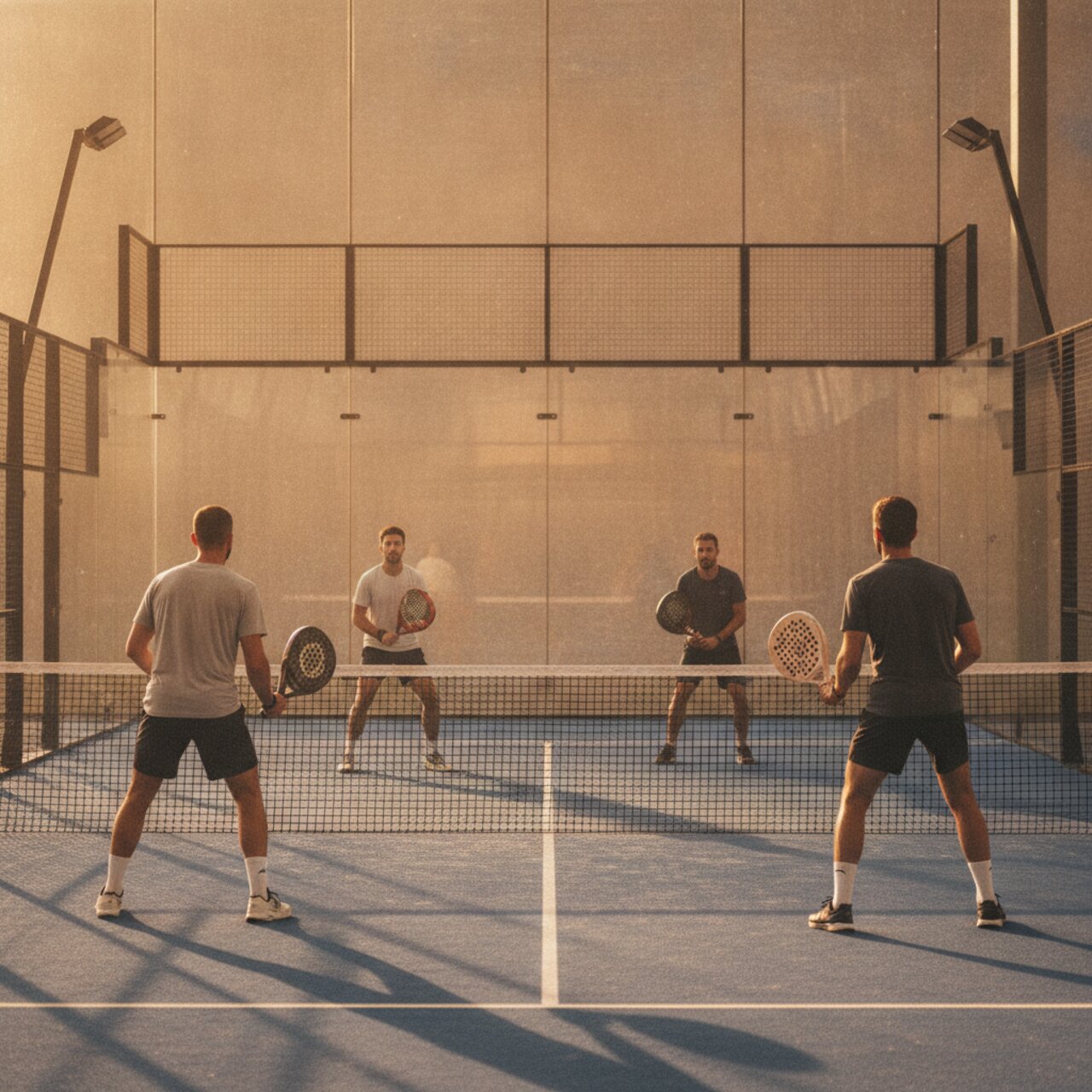
Two teams. Equal skill. Same equipment. Different outcome.
The difference? Mental game.
Padel is as much mental as physical. Your mind determines whether you execute under pressure, recover from errors, communicate effectively with your partner, and close out tight matches.
This guide covers the psychological skills that separate consistent winners from players who “should have won.”
Why Mental Game Matters in Padel
Padel is uniquely mental because:
- Partner dependency: Your mental state affects your partner (and vice versa)
- Momentum swings: Points cluster—mental strength prevents collapses
- Pressure moments: Golden Point, deuce, tie-breaks decide matches
- Error compounding: One mental error often triggers more
- Rally length: Long points test focus and decision-making
Reality: A player at 80% skill + 100% mental will beat 100% skill + 60% mental most days.
Pre-Match Mental Preparation
The Night Before
Sleep matters more than pre-match practice:
- 7-9 hours sleep (non-negotiable)
- No late-night screen time
- Visualize 2-3 successful points before bed
Mental prep (10 minutes):
- Review opponent strengths (if known)
- Visualize your best shots
- Set 1-2 tactical goals (not outcome goals)
Don’t: Overthink, watch stressful content, stay up “strategizing”
Morning of the Match
Physical readiness supports mental clarity:
- Light breakfast 2-3 hours before
- Hydrate (400-600ml water)
- Warm up body (dynamic stretching)
Mental routine (5 minutes):
- Three deep breaths
- Positive self-talk: “I’m prepared. I’ll compete hard.”
- Focus on process not outcome
Outcome focus (bad): “I must win” / “I can’t lose this”
Process focus (good): “I’ll stay aggressive” / “I’ll communicate well”
Pre-Match Warm-Up
Physical warm-up (10 minutes):
- Light jogging, dynamic stretches
- Practice swings, volleys, serves
- Get body ready, reduce injury risk
Mental warm-up (simultaneous):
- Start positive self-talk early
- Connect with partner (build chemistry)
- Establish pre-point routine
Key: Warm-up is mental rehearsal, not just physical prep
In-Match Focus Techniques
The Reset Ritual (Between Points)
Purpose: Clear previous point, focus on next
The ritual (15-20 seconds):
- Turn away from court (face back fence)
- Deep breath (4-second inhale, 4-second exhale)
- Racket check (bounce ball, adjust strings—physical anchor)
- Look at partner (brief connection, nod)
- Turn back (ready position, focus forward)
Why it works: Physical routine triggers mental reset
Use after: Every point (good or bad)
The “Next Point” Mentality
Rule: The last point is irrelevant. Only the next point exists.
After winning a great point:
- Don’t celebrate excessively (15 seconds max)
- Acknowledge it briefly
- Refocus immediately on next point
After making an error:
- No racket throwing, self-criticism, dwelling
- “Next point” (out loud if helpful)
- Reset ritual, move on
After bad call:
- Accept it (arguing wastes mental energy)
- “Next point”
- Use frustration as fuel, not distraction
Mental trick: Imagine the scoreboard resets to 0-0 after every point
Staying Present (Avoiding Mental Drift)
The problem: Mind wanders to past errors or future consequences
Symptoms:
- Thinking about last point while playing current one
- Worrying about losing before match ends
- Planning celebration before winning
- Distracted by crowd, conditions, or irrelevant details
The fix—Anchor to present:
Physical anchors:
- Feel your grip on the racket
- Notice your breathing
- Hear the ball contact
Tactical anchors:
- Focus on one shot at a time
- Identify opponent positioning
- Plan next two shots only
Verbal anchor:
- “Here” (say mentally)
- “This point” (refocus phrase)
- “Breathe” (if tense)
Managing Pressure Moments
Deuce / Golden Point
Physiological response: Heart rate increases, breathing shallow, muscles tight
Mental approach:
Before the point:
- Take extra time (use full 25 seconds)
- Deep breath (slow heart rate)
- Remind yourself: “One point. That’s all.”
During the point:
- Simplify (don’t try spectacular shots)
- Execute your strength (go to what works)
- Trust your training
Mental reframe: This is not “win or lose”—it’s just another point with slightly higher stakes
Break Points
When serving to save break point:
Don’t: Think about losing the game Do: Focus on serve placement, follow first volley
Mental mantra: “Just a good serve. Then react.”
When receiving on break point:
Don’t: Try to hit a winner off return Do: Get return deep, apply pressure, let point develop
Mental mantra: “Make them earn it.”
Tie-Breaks
Mental challenge: Every point feels huge, errors magnified
Strategy:
1. Mini-goals: Break tie-break into chunks
- Goal 1: Win first 2 points (start strong)
- Goal 2: Get to 4 points before opponent
- Goal 3: Close it out at 6 points
2. Simplify: Reduce shot variety
- Serve safely (high percentage)
- Return deep (no risks)
- Volley to feet (force errors)
3. Stay patient: Tie-breaks are often won by whoever makes fewer errors, not more winners
Mental truth: Tie-breaks reward consistency + composure, not heroics
Closing Out Matches
The challenge: Leading 5-2, then losing 5-7
Why it happens:
- Mental relaxation (“We’ve won”)
- Opponent desperation (nothing to lose)
- Overthinking (“Don’t choke”)
How to prevent:
At 5-3 or 5-4 (close to winning):
- Remind yourself: “Job’s not done”
- Increase intensity slightly (don’t coast)
- Stick to what’s been working
- “Finish strong” mentality
If opponent fights back (5-5):
- Don’t panic (it’s now a close match, treat it that way)
- Reset mentally (pretend it’s 0-0)
- Refocus on your tactics
Mental mantra: “Next game. That’s all I need.”
Partner Communication & Mental Sync
Positive Communication Only
During points: Minimal talk
- “Mine!” / “Yours!” (ball calls)
- “Switch!” (position change)
- That’s it
Between points: Positive reinforcement
- “Nice shot!”
- “Good try!”
- “Let’s go!”
Never (during match):
- Blame partner for errors
- Sigh, eye-roll, or show frustration at them
- Argue about who should have taken a ball
- Give unsolicited advice mid-match
Rule: If you can’t say something supportive, say nothing
Managing Partner Frustration
When your partner is frustrated:
Don’t:
- Criticize them
- Add pressure (“Come on, focus!”)
- Mirror their negative energy
Do:
- Stay calm (your composure stabilizes them)
- Positive body language (fist bump, smile)
- Simple encouragement (“We got this”)
- Take responsibility (even if not your fault): “My bad, let’s reset”
Mental leadership: Often the mentally stronger player at that moment leads the team back
Pre-Point Partner Check-Ins
Quick strategies between points:
Non-verbal:
- Eye contact (connection)
- Nod (we’re together)
- Fist bump (mutual support)
Verbal (when needed):
- “Same tactics” (keep doing what works)
- “Let’s stay aggressive” (mindset reminder)
- “Watch the lob” (tactical reminder)
Keep it brief: 5 seconds max, then refocus
Recovering from Errors & Bad Runs
After a Bad Point
Immediate reaction (first 3 seconds):
- Physical release okay (racket bounce, frustrated grunt)
- Limit to 3 seconds max
- Then reset ritual
Mental reframe:
- “Part of the game”
- “Everyone makes errors”
- “Doesn’t define the match”
Action: Execute reset ritual, move on
During a Bad Run (Losing 3-4 Points Straight)
Mental trap: “We’re going to lose” / “Everything’s going wrong”
Break the pattern:
Physical change:
- Call timeout (tie shoes, wipe racket)
- Walk to back fence
- Change position on court briefly
Mental change:
- “Reset. New game starts now.”
- Focus on one small win: “Just win this point”
- Return to basics (simplify shots)
Tactical change:
- Try something different (lob more, change serve)
- Force opponent to adjust
Partner sync:
- Quick huddle: “Let’s get one back. Aggressive.”
Bouncing Back After Losing First Set
Mental challenge: Momentum with opponent, you’re down
Reframe:
- “Match just started” (best of 3 means nothing’s decided)
- “I know their game now” (you’ve learned their patterns)
- “Fresh set, fresh start”
Tactical adjustment:
- What worked in set 1? Do more of it.
- What didn’t work? Try something different.
- Identify one change to make
Physical reset:
- Use set break to breathe, hydrate, refocus
- Start set 2 with high energy (send a message)
Visualization & Mental Rehearsal
Pre-Match Visualization (Night Before)
Duration: 5-10 minutes
Visualize:
- Successful shots: Your best serve, perfect volley, winning smash
- Pressure moments: Executing well at deuce, closing out match
- Recovery: Missing a shot, staying calm, winning next point
How:
- Close eyes
- See it vividly (court, ball, opponents)
- Feel the emotions (confidence, calm)
- Repeat 3-5 scenarios
Science: Brain rehearses patterns, making them more automatic
In-Match Visualization (Brief)
When: During breaks (set change, long breaks)
Visualize next 2-3 points:
- See yourself executing your tactic
- Imagine successful outcome
- Feel the confidence
Duration: 20-30 seconds max
Building Mental Toughness Over Time
Practice Under Pressure
Create match conditions in practice:
- Play practice matches with stakes (loser buys drinks)
- Practice tie-breaks specifically
- Simulate pressure: “Win next 2 points or run a lap”
Why: You can’t learn pressure management without pressure
Post-Match Reflection
After every match (win or lose):
What went well mentally?
- When did I stay composed?
- What mental techniques worked?
- How was my communication?
What needs improvement?
- When did I lose focus?
- What triggered me mentally?
- What will I do differently next time?
Document: Keep a mental game journal (brief notes)
Build Confidence Through Preparation
Confidence comes from:
- Practice (you’ve trained for this)
- Pattern recognition (you’ve seen this situation before)
- Previous success (you’ve done it already)
Action:
- Practice regularly
- Track wins (evidence you can win)
- Review successful matches
Mantra: “I’ve prepared. I belong here.”
Common Mental Game Mistakes
1. Outcome Obsession
Mistake: Thinking about winning/losing instead of playing
Fix: Focus on process (executing tactics) not outcome
2. Perfectionism
Mistake: Getting frustrated by any error
Fix: Accept that errors are part of padel—even pros miss
3. External Focus
Mistake: Blaming conditions, bad calls, luck
Fix: Control only what you can control (your effort, attitude, tactics)
4. Negative Self-Talk
Mistake: “I’m terrible” / “I always choke” / “I can’t…”
Fix: Replace with “Next point” / “I’ve got this” / “I’m learning”
5. Carrying Errors Forward
Mistake: Dwelling on previous point during current point
Fix: Reset ritual between every point (no exceptions)
Advanced Mental Techniques
Emotional Control Ladder
Level 1: Recognize emotion (“I’m frustrated”) Level 2: Accept emotion (“It’s okay to feel this”) Level 3: Choose response (“I won’t let it affect my play”) Level 4: Return to focus (“Next point”)
Practice: Notice → Accept → Choose → Refocus
The “10-Second Rule”
Rule: You get 10 seconds to react emotionally to any point (good or bad)
After 10 seconds: Back to neutral, focused state
Why: Allows brief release without compromising performance
Energy Management
Match is long (45-90 minutes):
- Don’t peak emotionally too early
- Save energy for close moments
- Consistent medium-high energy better than spikes and crashes
Breathing controls energy:
- Deep, slow breaths = calm down
- Quick, sharp breaths = energize
Mental Game Routines from Top Players
Common elements all pros share:
- Consistent pre-serve routine (same every time)
- Between-point reset ritual (turn away, breathe, refocus)
- Positive body language (even when losing)
- Quick error recovery (no dwelling)
- Partner encouragement (constant support)
- Process focus (one point at a time)
Watch professional padel: Notice mental game, not just shots
Building Your Mental Game System
Start simple:
Week 1-2: Master reset ritual
- Use it between every point
- Practice until automatic
Week 3-4: Add pre-point routine
- Develop consistent serve/return preparation
- Make it yours (racket check, breath, ready position)
Week 5-6: Improve self-talk
- Notice negative thoughts
- Replace with neutral/positive
Week 7-8: Partner communication
- Practice positive reinforcement
- Eliminate blame/criticism
Month 2: Pressure practice
- Create match-like pressure in training
- Test mental techniques under stress
Ongoing: Reflect and refine
- Post-match mental review
- Track what works
The Ultimate Mental Game Truth
Your opponent is facing the same mental challenges you are.
The team that manages their minds better wins.
Padel rewards:
- Composure over panic
- Patience over rushing
- Resilience over giving up
- Partnership over blame
Master your mind, and you’ll maximize your physical skills.
Next Steps
Implement one mental technique this week:
- Choose: Reset ritual? Pre-point routine? Better self-talk?
- Practice it in every match
- Track impact on performance
- Add another technique next week
Track your mental game progress with Padellog—record how you felt during matches, identify mental patterns, improve your psychological consistency.