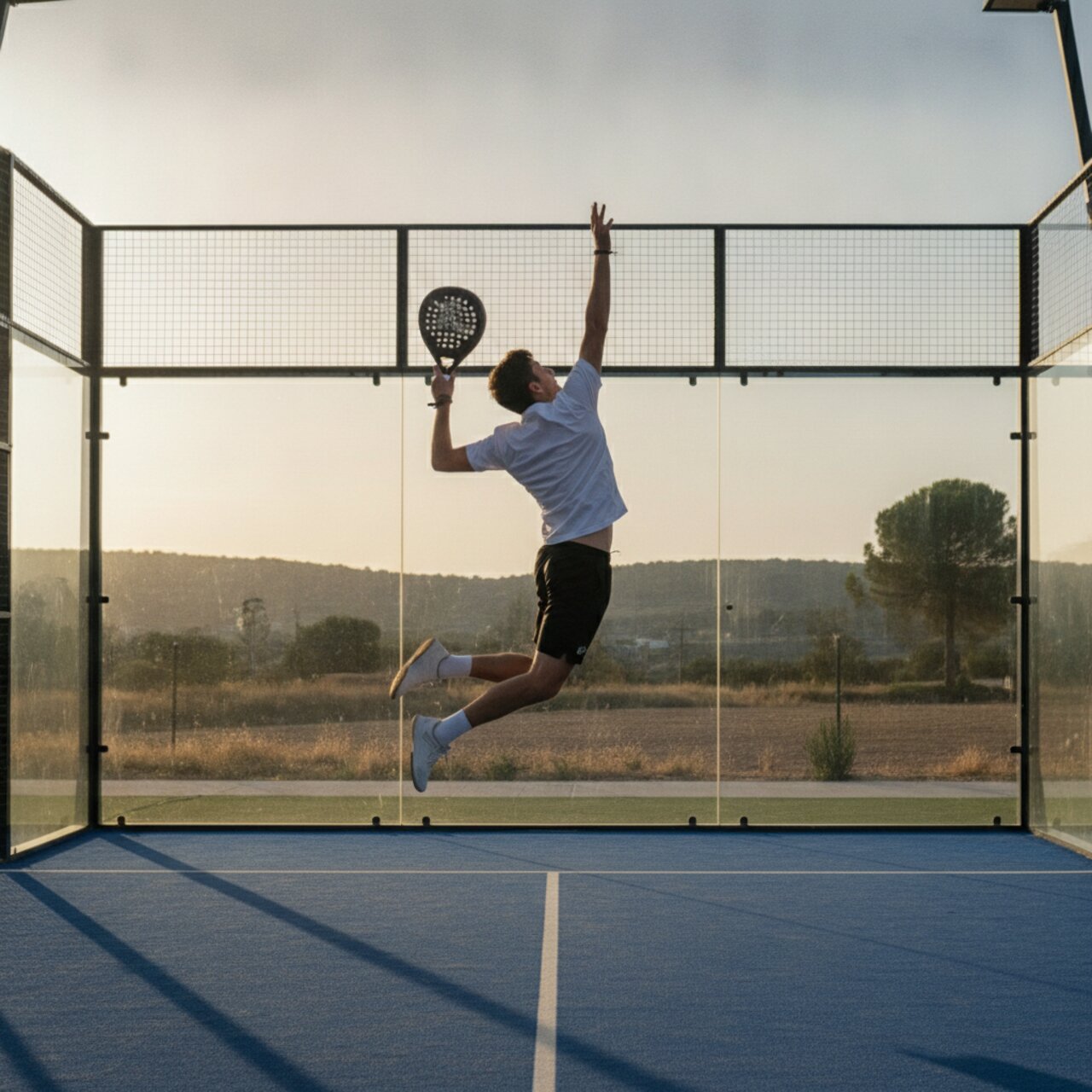
By Mario GonzalezTechnique
The Counter-Attack in Padel: Turning Defense Into Offense
Learn the counter-attack in padel: when to flip from defense to offense, how to read a soft ball, and the patterns that steal the net from opponents.

The best defenders in padel are not the players who chase every ball. They are the ones who wait, absorb pressure, and then punish a single loose shot. That switch from surviving to attacking is the counter-attack, and it is the fastest way to win the net back when you have been pinned deep behind the baseline.
A counter-attack in padel is any shot that turns a defensive position into an offensive one. You are not trying to hit a winner from the back wall. You are trying to send back a ball that forces your opponents off the net, buys you the two steps you need to move forward, and puts you level in the point again. Get this right and you stop losing rallies you were never actually losing, you were just reacting a beat too late.
What a Counter-Attack Actually Is
Most points at the intermediate level follow a predictable shape. One team wins the net, the other team defends from deep, and the net team grinds them down with volleys and bandejas until an error comes. The defending team loses not because they get overpowered but because they stay passive, feeding neutral balls back until one sits up.
The counter-attack breaks that cycle. Instead of returning another floating lob or a soft ball to the feet, you pick a moment where the attacking team gives you something usable and you go through them, past them, or over them with intent. The goal is a change of momentum, not a highlight-reel winner.
Three things separate a real counter-attack from a hopeful swing:
- You have read the ball early. You recognized a short, high, or slow ball before it bounced, not after.
- You have moved your feet. You stepped into the shot rather than reaching for it.
- You have a target. You know whether you are attacking the gap, the far player’s body, or the space behind them.
Without those three, you are just hitting hard from a bad position, which is how defenders hand points away.
When to Counter-Attack
Reading the right ball is 80% of the skill. You are hunting for a shot from the net team that has lost its bite. Four situations come up again and again.
The short bandeja or víbora
When the net player’s bandeja lands short and sits up around waist height, they have handed you an invitation. A well-hit bandeja should die low near the back glass. A short one that bounces up in the middle of the court is your cue to step in and take the ball early, before it drops. Move forward, take it at the top of the bounce, and drive it flat at the feet of the player who hit it, they are still recovering their net position and cannot easily volley a ball at their shoelaces.
The floating volley
A defensive or stretched volley that floats back with no pace is one of the clearest counter-attack chances in the game. The net team is out of position, often one player deep, and the ball is slow enough for you to set your feet. This is the moment to hit down the middle hard or go for the sideline gap.
The over-hit smash you dig out
When a smash comes at you off the back glass and you defend it well, the attacker has committed their weight forward and expects an easy follow-up. A firm, low counter through the middle catches them leaning the wrong way. You are not trying to win it outright, you are trying to turn their attack into your attack.
The slow ball to your forehand
Any ball that lands in your comfort zone with time to spare deserves a decision, not an automatic lob. If you have a clean forehand and the net team is even slightly split, driving the ball hard and low is often a better play than another defensive lob that resets the point in their favor.
The common thread: pace has dropped, height has risen, or the net team is out of shape. Learning when to attack versus when to defend is the strategic layer that sits on top of this shot.
How to Execute the Counter-Attack
The mechanics change depending on whether you are driving flat, going over the top, or chipping low. The footwork and intent stay the same.
Step 1: Split step and read
As the net player commits to their shot, do a small split step so you can move in any direction. Your eyes are on their paddle face and body, not the ball yet. A short, floaty contact from them is your green light. The earlier you read it, the more time you buy.
Step 2: Move forward, not sideways
The instinct under pressure is to back up or reach. Fight it. Take one or two steps toward the ball and toward the net. Meeting the ball in front of your body, on the rise, lets you redirect its pace instead of generating all of it yourself. Every step forward you take is a step closer to reclaiming the net.
Step 3: Contact point and paddle angle
For a flat drive, meet the ball slightly ahead of your lead hip with the paddle face vertical or a touch closed. Keep the swing compact, this is a punch, not a full groundstroke. You want a firm, low ball that clears the net by no more than a foot and travels fast. Overswinging sends it long or floats it right back to the volleyer.
Step 4: Recover forward
The counter-attack only pays off if you follow it in. After you drive the ball, keep moving toward the net so you can volley the reply. A great counter that you hit from the baseline and then admire is a wasted opportunity, because the net team resets and you are defending again.
Choosing your shot
- Flat drive through the middle: safest and most effective. The middle splits the net team and forces a decision about who takes it.
- Drive at the feet: aim at the player closest to the net when they are recovering from a bandeja. Low balls at the feet produce weak volleys.
- Down the line: highest risk, best reward. Use it when the far player has drifted toward the middle and left the sideline open.
- Aggressive lob: if both opponents crowd the net, a deep, flat topspin lob over the backhand shoulder flips them to defense without you needing pace at all.
Common Mistakes and How to Fix Them
Hitting hard from a bad position
The most common error is confusing a counter-attack with hitting hard. If you are stretched, off balance, or behind the baseline with the ball dropping below your knees, that is not a counter-attack ball, it is a defend-and-reset ball. Fix it by being honest about the ball you actually received. Save the drive for the ball that lets you step in.
Standing still and swinging
Reaching for the counter with static feet turns a good chance into a floating error. If you cannot take a step into the ball, you are not in position to attack it. Fix it by treating the split step as non-negotiable and rehearsing the forward step until it is automatic.
Aiming for lines under pressure
Down-the-line counters look great and miss often. Under real pressure the margin on a sideline shot is tiny. Fix it by defaulting to the middle. The middle gives you net clearance, court length, and the confusion of two players deciding who hits it.
Not following the ball forward
Plenty of players hit a beautiful counter and then stay rooted at the baseline. The point of the shot is to win the net back, so a static counter wastes half its value. Fix it by committing: if the ball is good enough to attack, it is good enough to move in behind.
Countering everything
If you try to counter-attack every ball, you will spray errors and hand the net team free points. Discipline is the skill. Most balls in a defensive rally should be neutral, patient shots. The counter is the exception you take two or three times a set, not the default.
Drills to Build the Counter-Attack
Feed and step-in drill
Have a partner stand at the net and feed you deliberately short, floaty balls to the service line area. Your only job: split step, step forward, and drive flat through the middle, then continue to the net. Do 20 reps focusing on meeting the ball in front and following in. This trains the read-move-recover sequence more than the swing.
Bandeja versus counter
One player hits repeated bandejas from the net while you defend from deep. On any bandeja that lands short and sits up, you counter-attack at their feet and move in. On any good, low bandeja, you lob or reset. This teaches the decision, not just the shot, so you learn to tell an attackable ball from a defendable one.
Two-up, two-back transition
Play cross-court points from a two-back position against two players at the net. Score a bonus point every time you win the net during the rally, not just when you win the point. The scoring pushes you to hunt counter-attack opportunities instead of grinding passively, which is exactly the habit you want under match pressure.
Fitting the Counter-Attack Into Your Game
The counter-attack is the bridge between defense and offense, so it sits alongside every other skill you use from deep. Pair it with a reliable defensive lob so opponents never know whether a soft ball will come back neutral or come back hard. Combine it with solid work playing from the corners, because most counter chances appear right after you have dug a ball out of the back glass.
Track your matches and you will see the pattern in your own numbers: points where you countered and won the net versus points where you stayed passive and got worn down. Logging your matches in Padellog makes those tendencies visible, so you can see whether your defense is actually turning into offense or just delaying the loss.
Start small. Pick one counter-attack ball per game, the short bandeja that sits up, and commit to stepping in and driving it through the middle. Once that feels natural, add the floating volley and the dig-out counter. Defense stops being the place points go to die and becomes the place you start winning them.