By Mario GonzalezFitness
Hydration for Padel Players: Electrolytes, Timing and Quantities
A practical hydration guide for padel players covering how much to drink, when to drink it, and when plain water needs electrolytes to keep you sharp.
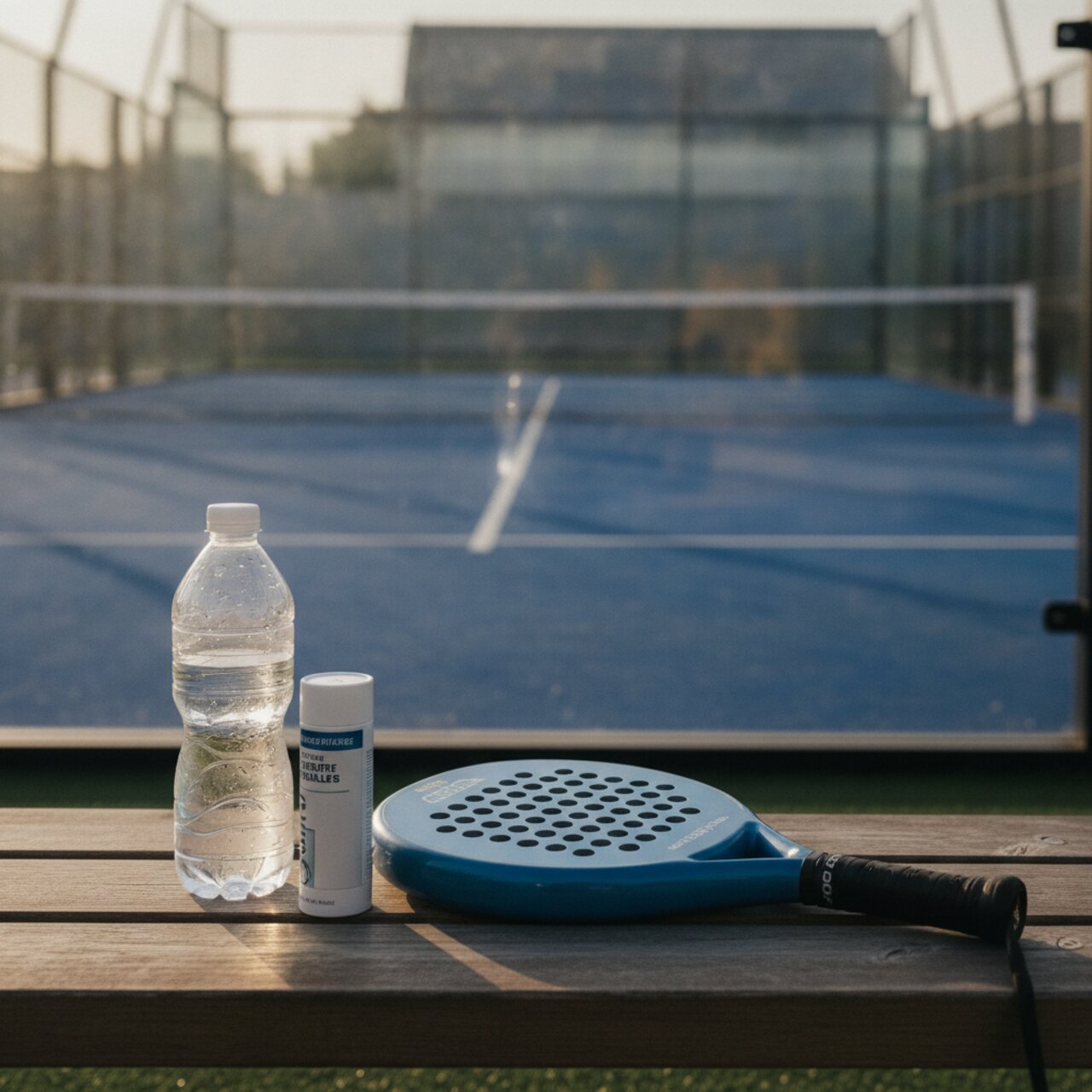
Good hydration for padel players is rarely about drinking more water. It is about drinking the right amount at the right time, and knowing when water alone stops being enough. A padel match runs 60 to 90 minutes of repeated sprints, lunges and overhead swings, often on an enclosed court where heat builds fast. Lose 2% of your body weight in sweat and your reaction time, footwork and shot accuracy all drop measurably, usually right when the match tightens up in the third set.
Most players only think about drinking once they already feel thirsty. By then performance has dipped. This guide breaks hydration into the three windows that matter, before, during and after, with real quantities and clear rules for when to reach for electrolytes instead of a water bottle.
Why Hydration for Padel Players Is Different
Padel looks less physical than it is. You rarely cover huge distances, so it feels lighter than running or singles tennis, but the stop-start pattern keeps your heart rate high and your sweat glands working the whole match. On an indoor court with poor airflow, court-side temperatures often sit several degrees above outside, and sweat evaporates slower, so you cool less efficiently and lose more fluid.
The number that matters is sweat rate. Most recreational players lose between 0.5 and 1.5 litres of sweat per hour of padel. In summer heat or a humid indoor club, that climbs past 2 litres for heavier sweaters. Sweat also carries sodium, typically 500 to 1,000 mg per litre, which is why drinking large amounts of plain water on a hot day can leave you feeling worse, not better. You dilute what sodium you have left and your body holds onto less of what you drink.
Knowing your own sweat rate turns guesswork into a plan. Weigh yourself without clothes before a match and again straight after, towelling off first. Each kilogram lost is roughly a litre of fluid you did not replace. Add whatever you drank during play, and you have your hourly sweat rate. Do this two or three times across different conditions and you will know whether you are a light or heavy sweater, which changes everything about how you hydrate.
Two players on the same court can need very different amounts. One finishes a match barely damp; the other soaks through a shirt in the first set. The weigh-in test is the only way to know which one you are, and it takes five minutes. Once you have a rough figure, you can stop drinking on instinct and start drinking to a number.
Before the Match: Start Topped Up
Hydration starts hours before you step on court, not at the warm-up. Arriving already short on fluid is the most common mistake, and you cannot fix it with a few gulps before the first serve.
Drink around 500 ml of water in the two hours before you play, sipped steadily rather than downed in one go. A useful check is urine colour: pale straw means you are well hydrated, dark yellow means you are behind and should drink more. If you have time, finishing with 150 to 250 ml about 15 minutes before warming up tops you off without leaving your stomach sloshing.
For matches in real heat, or if you know you sweat heavily, add sodium to that pre-match drink. An electrolyte tablet or a pinch of salt in your water helps you retain the fluid and primes your body before the first drop of sweat. This matters more than most players realise, especially if you played the day before or trained that morning and started the day already depleted. The same fuelling logic applies to food, which the guide on what to eat before a padel match covers in detail.
During the Match: Small and Frequent
The rule on court is small amounts, often. Your body absorbs fluid in a steady trickle, not a flood, so draining half a bottle at the changeover sits heavy and does little. Aim for 150 to 250 ml every time you change ends, which in padel comes around every two games.
Over a 90-minute match, that adds up to somewhere between 500 ml and a full litre, depending on the heat and how hard you are sweating. Heavy sweaters in summer should plan for more and bring a second bottle rather than ration the first. Cold or temperate conditions need less, and forcing down water you do not need just gives you a sloshing stomach and bathroom breaks.
This is where electrolytes earn their place. For a short, cool match under an hour, plain water is fine. Once you cross the hour mark, play in the heat, or sweat heavily, water alone cannot keep up with the sodium leaving your body. An electrolyte drink with 300 to 700 mg of sodium per litre helps you absorb fluid faster and holds off the cramp that tends to strike in long third sets. The classic warning sign is a calf or foot that twinges during a lunge late in the match, your body telling you the sodium balance has tipped.
You do not need a sugary sports drink for this. A purpose-made electrolyte tablet dropped in your bottle delivers the sodium without 30 grams of sugar you did not ask for. Save the carbohydrate drinks for genuinely long sessions, tournaments with back-to-back matches, or training blocks where you need the extra fuel, the kind of demand covered in building stamina and endurance for padel.
After the Match: Replace What You Lost
Recovery hydration is the window most players skip entirely, walking off court and grabbing a beer before any water. Yet what you drink in the hour after play shapes how you feel the next day and how ready you are for your next session.
The simple target is to replace 125 to 150% of the fluid you lost, because you keep sweating and producing urine after you stop. If you finished a kilogram lighter than you started, that means drinking 1.25 to 1.5 litres over the following two to three hours, sipped rather than gulped. Pair it with sodium, either through an electrolyte drink or simply salty food in your post-match meal, so your body actually holds the fluid rather than passing most of it.
This matters far more when you play twice in a day or on consecutive days. Turning up to a Sunday match already dehydrated from Saturday is a recipe for early-set fatigue and cramp. Rehydration is one piece of the wider recovery routine between matches that keeps you playing at your level across a busy weekend. Alcohol works against all of this, since it is a diuretic that pulls more fluid out, so save the celebration until you have rehydrated properly.
Reading the Warning Signs
Your body signals dehydration well before you collapse, and learning the early cues lets you act in time. Thirst is a late signal, not an early one, so do not wait for it.
The first signs on court are subtle: shots landing long or short by a fraction, slower reactions to a fast volley, a sense that your legs feel heavier than the score justifies. A dry mouth, mild headache and dark urine after the match confirm you were running short. Muscle cramps, particularly in the calves and feet during the back end of a match, point to sodium loss rather than pure fluid loss, which is the cue to add electrolytes next time rather than just more water.
Overhydration is the rarer mirror image and worth knowing. Drinking large volumes of plain water with no sodium across a long, hot session can dilute your blood sodium and leave you nauseous, bloated and worse off than mild dehydration. The fix is not less water but balanced water, fluid with sodium in it, which is exactly why electrolytes feature so heavily in any sensible hydration plan.
Building Your Hydration Plan
A workable plan fits a few habits around the three windows. Drink 500 ml in the two hours before play, then 150 to 250 ml every changeover, then 1.25 to 1.5 times your sweat loss afterwards. Use plain water for short, cool matches and switch to electrolytes once you pass an hour, play in heat, or know you sweat heavily.
Tune those numbers to yourself. Do the weigh-in test a couple of times, learn whether you are a light or heavy sweater, and adjust the quantities up or down. A 60-kilogram player in a cool indoor club and a 90-kilogram player sweating through a summer match have very different needs, and a single rule cannot cover both.
Hydration will not win you points on its own, but dehydration will lose them, quietly, in the moments that decide tight matches. Get the routine right and you keep the sharp footwork and clean contact you trained for, all the way into the third set. Pair it with smart pre-match fuelling and a proper recovery routine, and you have removed one of the most avoidable reasons padel players fade. If you want to track how you hold up across long matches and busy weekends, logging your games in Padellog makes those patterns easy to see.