By Mario GonzalezEquipment
Padel Ball Pressurizer: Keep Your Balls Fresh Between Sessions
A padel ball pressurizer restores pressure and extends ball life. Learn how these tubes work, whether they are worth it, and how to use one correctly.
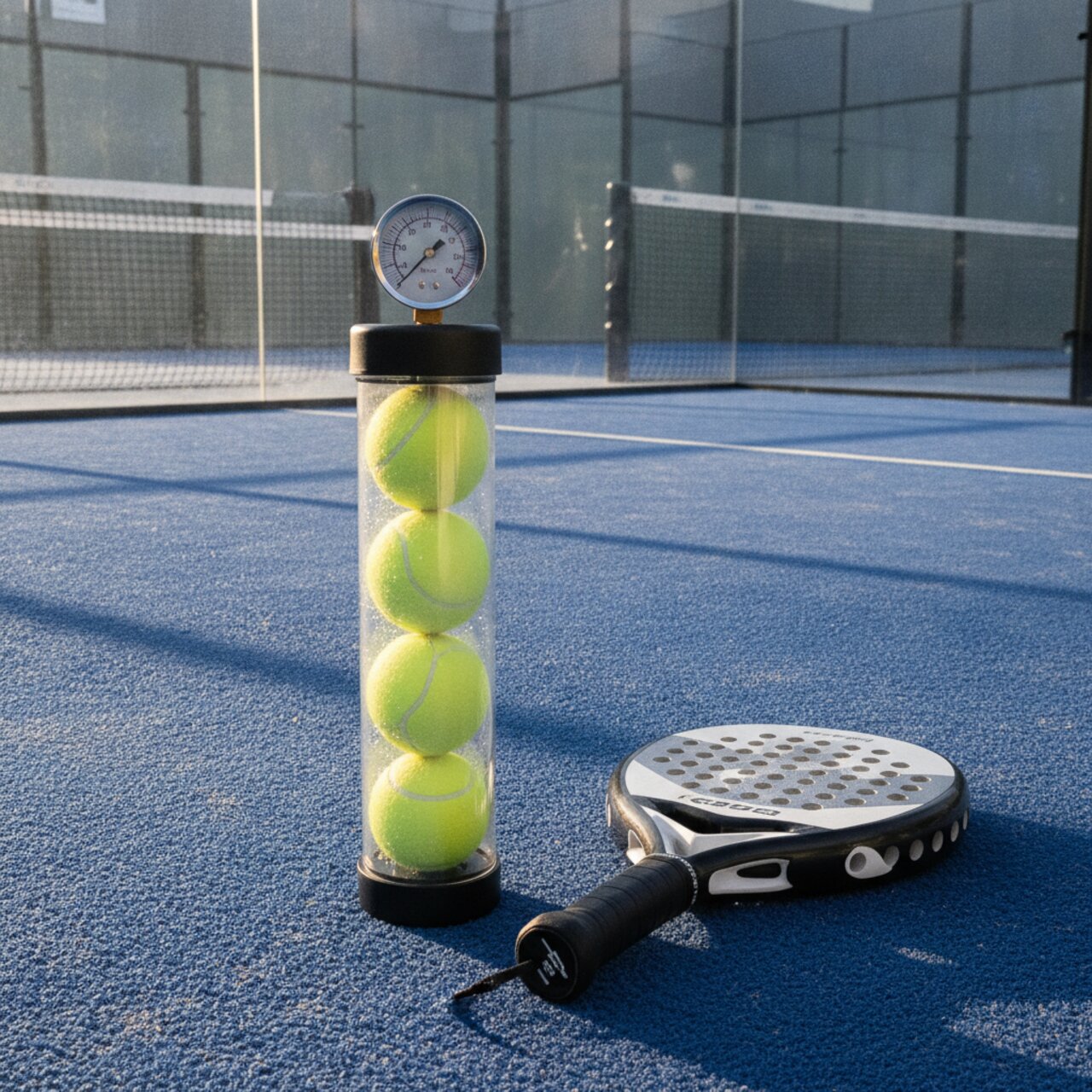
Open a fresh tube of padel balls and they play fast, bounce true, and pop off the strings. Two weeks later the same balls feel heavy and dead, even though the felt still looks fine. A padel ball pressurizer fixes that. It is a sealed container that stores your balls under the same internal pressure they had inside the factory tube, so they stop losing their bounce the moment you crack the seal.
Padel balls are pressurized: their liveliness comes from air packed inside the rubber core at roughly 8 to 10 PSI above the outside atmosphere. From the second you open the tube, that air starts leaking out through the rubber wall. A pressurizer slows and reverses that process, which is why players who buy balls by the case almost always own one.
What a Padel Ball Pressurizer Actually Does
The core problem is simple physics. The rubber shell of a padel ball is slightly porous, so the compressed air inside slowly migrates out to equalize with the lower-pressure air around it. Manufacturers ship balls in a sealed tube pressurized to match the ball, which is why an unopened tube stays fresh for months or years.
A ball pressurizer recreates that sealed environment. You load your used balls, screw or clamp the lid shut, and pump the container up to a set pressure, usually printed on the cap or the pump gauge. Because the air pressure outside the ball now matches or exceeds the pressure inside, the ball stops leaking. Over several days, air even pushes back through the rubber and partially re-inflates a soft ball.
Two things are worth being honest about. A pressurizer does not repair worn felt, and it cannot fully revive a ball that has been dead for months. What it does extremely well is preserve good balls between sessions and recover balls that are only a few days past their prime.
Do You Actually Need One
The math decides this quickly. A pressurizer costs somewhere between the price of two and five tubes of balls, depending on the model. If you play once a week with a fresh tube each time, you are burning through balls faster than you probably need to, and the device pays for itself within a couple of months.
You benefit most if you fit one of these profiles:
- You play two or more times a week. Balls that would normally die between sessions stay usable for three or four outings instead of one.
- You buy balls in bulk. A case of balls opened and left loose in a bag goes flat fast. Stored in a pressurizer, an opened case lasts far longer.
- You practice solo or drill often. Drilling chews through balls, and pressurized storage keeps a working set alive for weeks. If you train alone, pair this with our solo padel practice drills to get more out of each set.
If you play casually once every two or three weeks and open a fresh tube each time, a pressurizer is a nice-to-have rather than a real saving. The people who see the biggest difference are regular players and anyone who hates the mushy feel of a half-dead ball.
Types of Ball Pressurizers
Not all pressurizers work the same way, and the mechanism affects both price and convenience.
Pump-and-valve tubes are the most common. You place the balls inside, seal the lid, and use an integrated or external pump to raise the internal pressure, checking a small gauge. They hold three to four balls and are the best value for most players.
Twist-to-seal containers use a threaded lid that compresses the air as you tighten it, with no separate pump. They are simpler and cheaper but give you less control over the exact pressure, and the seal wears over time.
Large-capacity boxes store a full case of balls or more, aimed at clubs, coaches, and players who buy in volume. They cost more up front but protect a much bigger investment in balls.
For a home player, a pump-and-valve tube holding four balls hits the sweet spot between price, capacity, and control.
How to Use a Padel Ball Pressurizer Correctly
Getting real life extension out of the device comes down to a few habits.
Store the balls the moment you finish playing, not the next morning. Every hour a used ball sits at normal pressure, it loses a little more air, so the sooner you seal them, the more you preserve.
Pump the container to the recommended pressure, then check it again after a few hours. New pressurizers and cold storage can cause a small drop as the system settles, and topping it up keeps the balls under steady load.
Give soft balls at least 24 to 48 hours in the tube before you expect them to feel lively again. Re-inflation through the rubber is gradual. Balls that were only lightly used bounce back close to new; balls that were already flat recover partially but never fully.
Keep the pressurizer somewhere with a stable temperature. Air pressure rises with heat and drops with cold, so a tube left in a hot car or a freezing garage will read inconsistently and stress the seal.
Finally, wipe the balls down before storing them. Court dust and moisture that get trapped inside accelerate felt wear, which no amount of pressure can undo.
Pressurizer vs Simply Buying New Balls
There is a fair argument that balls are cheap and time is not. If you value grabbing a fresh tube and never thinking about it, that is a legitimate choice, especially for competitive matches where you want guaranteed peak bounce.
Where the pressurizer wins is everyday play. Warm-ups, drills, social games, and practice sets do not demand tournament-fresh balls, and a pressurized set that plays at 85 percent of new is perfectly good for those. Reserve your freshest balls for matches that matter and let the pressurizer carry the rest of your week.
There is also a waste angle. A single player easily discards dozens of tubes a year. Extending each set’s life by two or three sessions cuts that number sharply, which matters if you would rather not toss barely-used rubber into the bin every week.
Maintenance and Common Mistakes
The pressurizer itself needs a little care. The rubber gasket on the lid is the part that fails, so keep it clean and free of grit, and replace it if the container stops holding pressure. A tube that will not stay pumped almost always has a dirty or cracked seal, not a broken body.
The most common mistake is expecting miracles from old balls. If you drop dead balls into the tube hoping to resurrect them, you will be disappointed. Pressurizers preserve; they do not raise the dead. Load balls while they still have some life and you will get the results people rave about.
The second mistake is inconsistent use. A pressurizer only helps if the balls live in it between every session. Leave them rattling around your bag for a week and you have wasted the device. Build the habit of sealing them up the moment you leave the court.
FAQ
How long do balls last in a pressurizer? Balls stored consistently in a pressurizer commonly last three to five sessions instead of one, and an opened set can stay usable for several weeks rather than days. Actual life depends on how hard you hit and the court surface.
Can a pressurizer bring dead balls back to life? Only partially, and only if they are recently soft rather than long dead. A ball that lost its bounce a few days ago can recover most of its feel after a day or two under pressure. A ball flat for months will not come back.
What pressure should I set it to? Follow the number printed on your specific model, typically in the range that matches a factory ball tube. If the device has no marking, pump until the gauge reads the recommended level and top it up after the system settles.
Does it work for tennis balls too? Yes. The same physics applies to any pressurized ball, so most padel pressurizers double as tennis ball savers, though tennis balls need their own recommended pressure.
A ball pressurizer is one of the cheapest upgrades a regular player can make. It will not sharpen your bandeja or fix your positioning, but it keeps every ball you own playing closer to fresh, which quietly improves every session. If you are building out the rest of your kit, our padel equipment guides and the notes on when to replace your padel racket cover the gear decisions that matter most. To track how your game develops as your equipment improves, download Padellog and log every match.