By Mario GonzalezBeginner
Padel for Tennis Players: A Quick Transition Guide
Padel for tennis players is easier than you expect. Learn which skills carry over, which habits to drop, and how to adapt fast in your first padel sessions.
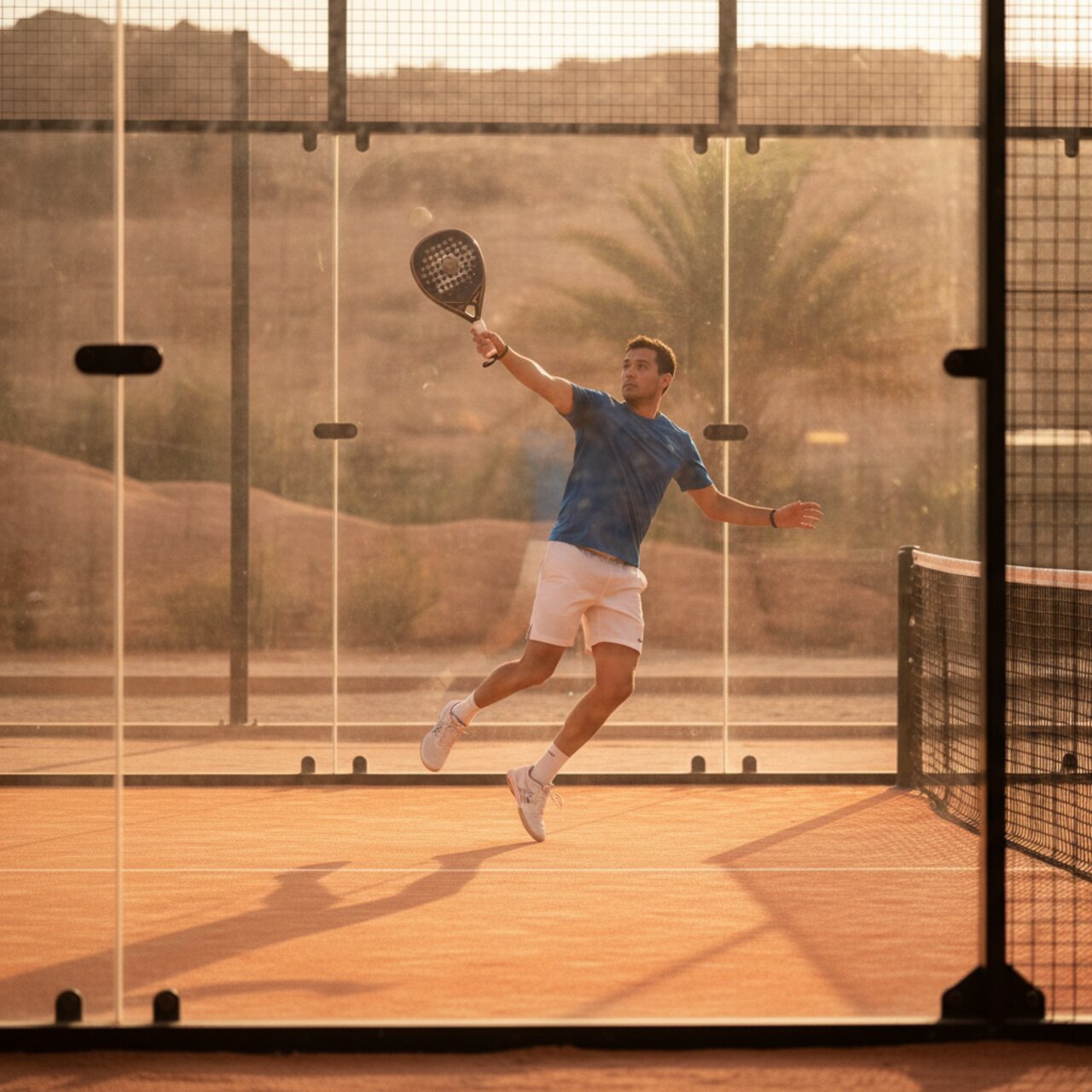
Padel for tennis players starts with good news: you already own half the toolkit. Your hand-eye coordination, your court sense, your ability to read pace and spin, your scoring knowledge, all of it transfers. The bad news is that the other half actively works against you. The flat, powerful groundstrokes that win tennis points will float long off the back glass in padel, and the overhead smash you trust will sail out the back of the court.
The transition usually takes a few weeks to feel comfortable and a few months to stop thinking like a tennis player mid-rally. This guide breaks down exactly what carries over, what you need to unlearn, and how to shorten that adjustment.
What Carries Over From Tennis
Your biggest advantage is contact quality. Years of tracking the ball and meeting it cleanly mean you rarely shank, and that skill is immediately useful at the net where padel is mostly played. Tennis players also tend to have strong volleys, and the padel volley rewards exactly the compact, blocked motion you already use on a quick exchange.
The scoring is identical: 15, 30, 40, deuce, advantage, six games to a set. You will not waste a single minute learning the system, which puts you ahead of complete beginners. If you want a refresher on how points and games work, the padel scoring system guide covers it in full.
Footwork instincts help too, though they need recalibration. You already split-step, you already move as a unit with a partner if you have doubles experience, and you already understand court geometry. Padel just compresses all of it into a smaller box.
The Habits You Have to Unlearn
Power Is a Liability, Not a Weapon
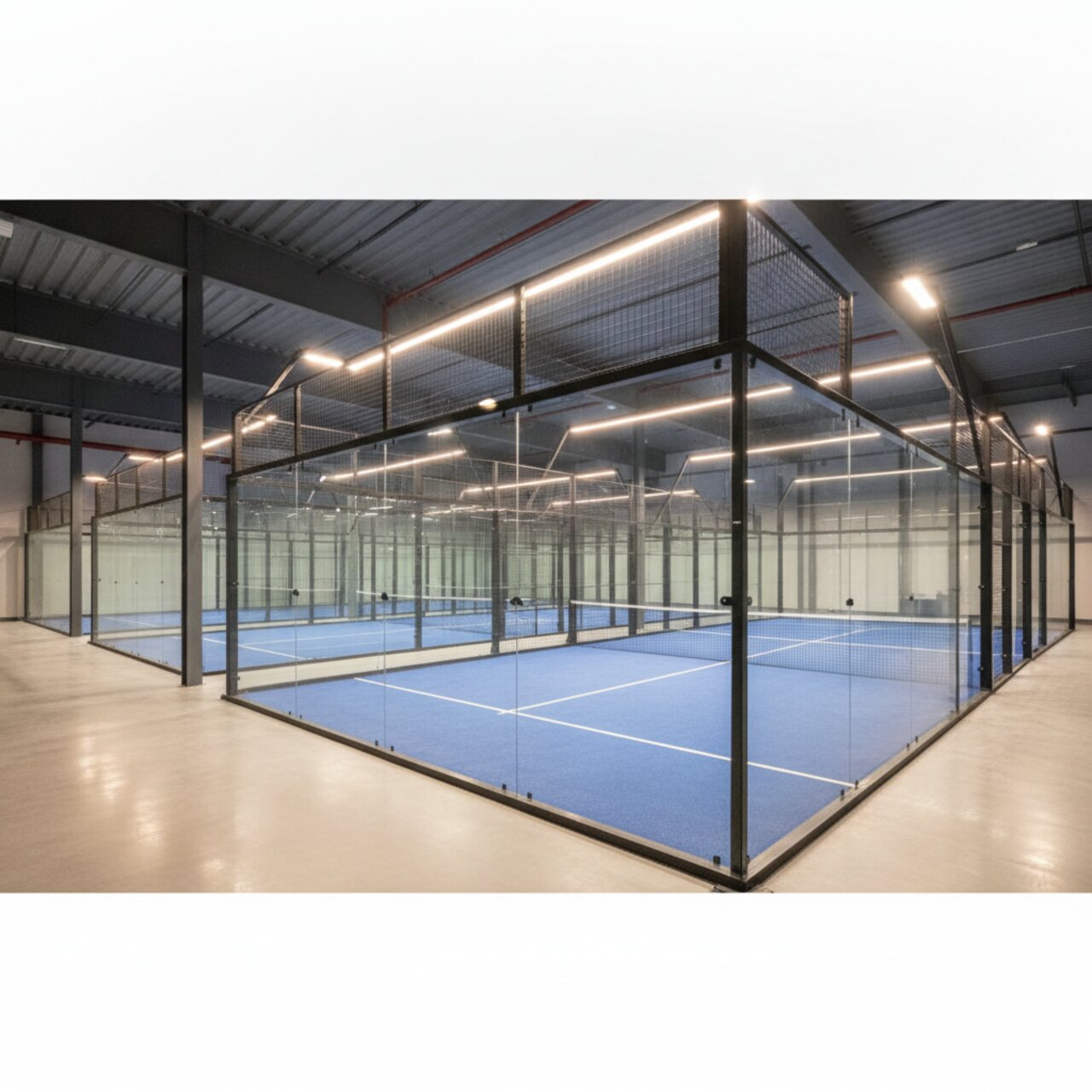
In tennis, hitting harder usually buys you time and forces errors. In padel, the court is 20 by 10 meters and surrounded by walls, so a hard flat drive often comes straight back off the glass to your opponent, sometimes faster than you hit it. Worse, overhitting sends the ball out the back before it can drop.
Placement beats power on almost every padel shot. A well-angled ball at 60 percent pace that pulls an opponent off the court wins more points than a 100 percent drive that they return off the back wall. Tennis players lose more points to overhitting than to any other single habit.
The Walls Are in Play
This is the mental hurdle that defines the transition. In padel, the ball can bounce on the floor and then off the back or side glass, and it stays live. A shot that would be a clean winner in tennis is often just the start of the point.
You have to retrain two instincts at once. On defense, let the ball pass you, wait for it to come off the glass, and play it as it drops back into the court instead of lunging at it. On offense, stop celebrating winners that aren’t winners yet. Reading the back wall and how the ball behaves off the glass is the single most valuable skill you can build early.
The Serve Is Underhand
The padel serve is hit underhand, below waist height, with the ball bounced once on the ground first. There is no big first serve, no kick serve, no ace machine. The serve is a way to start the point on slightly favorable terms, not a weapon.
Spend your energy on placement: serve to the corner, aim for the side glass so the ball kinks awkwardly, and follow your serve to the net every time. The serving team’s goal is to take the net, not to win the point outright.
The New Shots You Need to Learn
The Bandeja Replaces Your Overhead
Your tennis smash is built to end points with pace. In padel, a full smash from deep usually goes out or comes back off the glass with interest. The replacement is the bandeja, a controlled overhead played with slice that keeps you at the net and keeps the ball low and deep on the bounce.
It feels weird at first because you are deliberately not hitting hard. Think of it as a defensive overhead that maintains your position. The bandeja technique guide walks through the grip, contact point, and the slicing motion that makes it land safely.
The Lob Is an Attacking Shot
In tennis the lob is mostly a desperation play. In padel it is a primary tactic. A deep lob over an opponent at the net forces them back, lets your team move up, and flips control of the point. Good padel players lob constantly and on purpose.
Tennis players often resist this because lobbing feels passive. Drop that bias. A well-placed lob that pushes the other team off the net is one of the most effective shots in the game.
The Víbora and Other Wrist Shots
Once the bandeja feels natural, the víbora adds an aggressive overhead option with more pace and side spin. It bridges the gap between the safe bandeja and the full smash, and it’s a shot tennis players tend to enjoy because it lets them use some of their natural aggression within control.
Positioning: Live at the Net
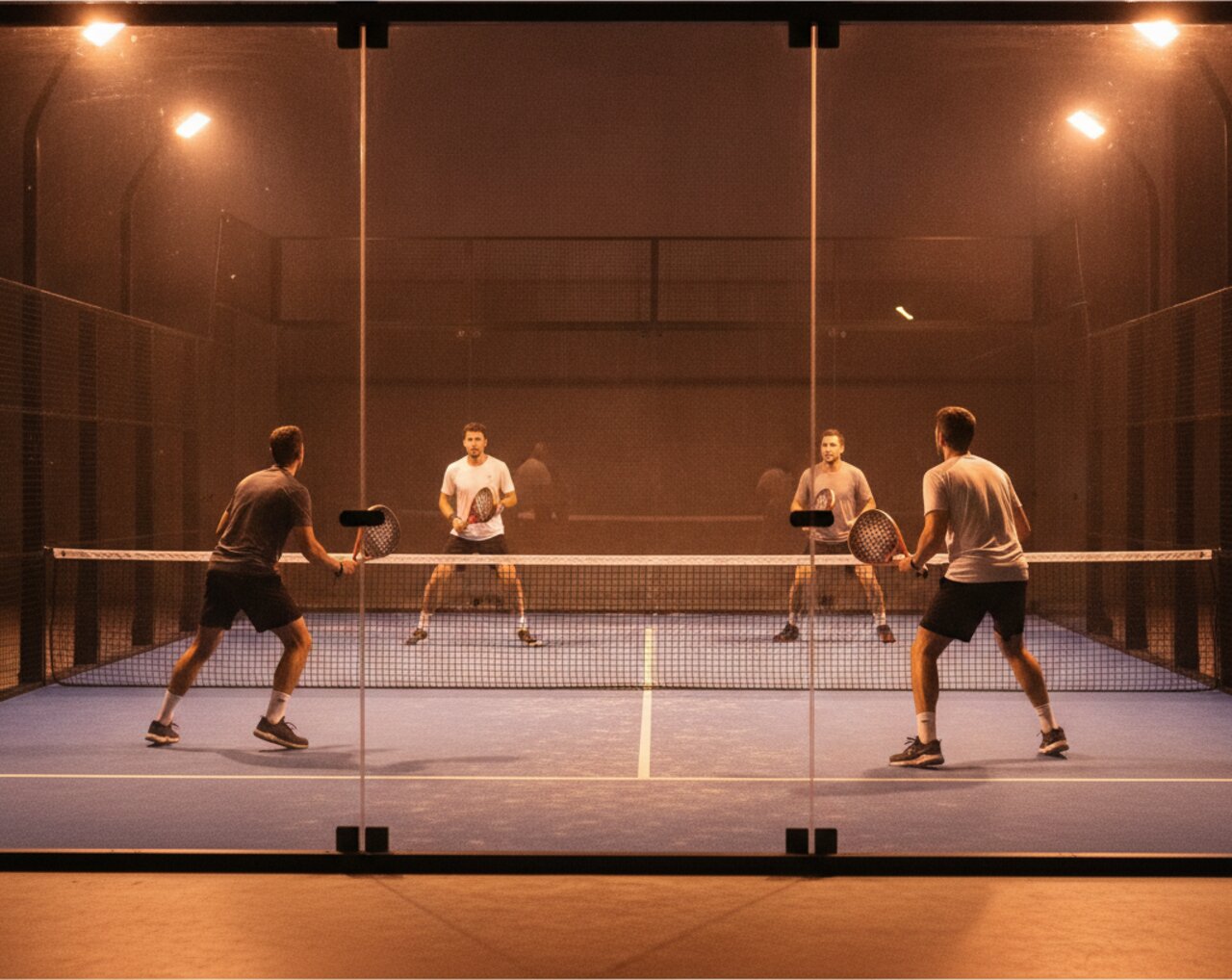
Tennis singles trains you to defend the baseline. Padel rewards the opposite. The team controlling the net wins the large majority of points, so your default goal is to get forward and stay forward with your partner side by side.
When you are pushed back, retreat together and look for a lob to reclaim the net. When you have the net, hold it and force your opponents to hit up to you. If you came from doubles tennis this feels familiar; if you came from singles, it is the biggest tactical adjustment. The doubles positioning guide shows how the two players move as a connected unit.
Equipment Differences
The padel racket is solid with a perforated face, no strings, and it is much shorter than a tennis racket with no handle to choke up on. Use a continental (hammer) grip for almost everything; the eastern and semi-western grips from tennis will hold you back. The shorter frame means your timing and contact point shift closer to your body, which takes a few sessions to dial in.
Balls look like tennis balls but are slightly less pressurized and play a touch slower. Padel shoes have a herringbone or omni tread built for the quick lateral steps and short stops the smaller court demands, so don’t show up in tennis court shoes expecting the same grip.
The Five Mistakes Tennis Players Make
Most tennis converts lose points to the same handful of habits. Catch these early and you’ll cut your adjustment time in half.
Smashing everything. The reflex to put away any high ball with a full overhead sends the ball out or off the glass for a free counter. Default to the bandeja and save the smash for short, low lobs near the net.
Standing too far back. Tennis trains you to anchor at the baseline. In padel that hands your opponents the net and the point. Get forward with your partner and only retreat when forced.
Lunging at balls headed for the glass. Reaching for a ball that was going to come off the back wall turns an easy play into a rushed one. Trust the wall, let it pass, and take it on the rebound.
Over-rotating on groundstrokes. A full tennis backswing produces too much pace for the small court. Shorten the swing and aim for depth and angle instead of power.
Ignoring the lob on defense. When you’re pinned at the back, a flat drive usually feeds the net team. A deep lob resets the point and buys you time to move up.
What to Expect in Your First Month
Your first few sessions will feel deceptively easy at the net and frustrating everywhere else. You will hit balls long off the back wall, you will smash points away that should have been rallies, and you will instinctively try to crush the ball when a soft angle was the play.
By week three or four, the walls start to feel like opportunities rather than surprises, and you stop over-swinging. Most tennis players reach a solid intermediate level faster than newcomers because the contact and movement fundamentals are already there. The plateau, when it comes, is usually about touch and patience rather than power, which is the opposite of what tennis trained you to value.
Next Steps
Start by playing points rather than drilling in isolation; padel is learned in the rally. Get comfortable letting balls come off the glass, commit to the bandeja instead of the smash, and lob with intent. For a full grounding in the basics, the complete beginner guide covers rules, court layout, and fundamentals in one place, and the padel glossary decodes the Spanish shot names you’ll hear on court. If you want a side-by-side breakdown of how the two sports differ, the padel vs tennis comparison lays out every key distinction.
Track your matches from the start. Logging your results and seeing which shots win and lose you points speeds up the mental shift away from tennis instincts and toward padel patterns far more than playing blind ever will.