By Mario Gonzalez
The passing shot in padel: how to blow it past your opponents
Learn the padel passing shot: parallel and cross-court technique, when to use it, common mistakes and videos to master this counterattack weapon.
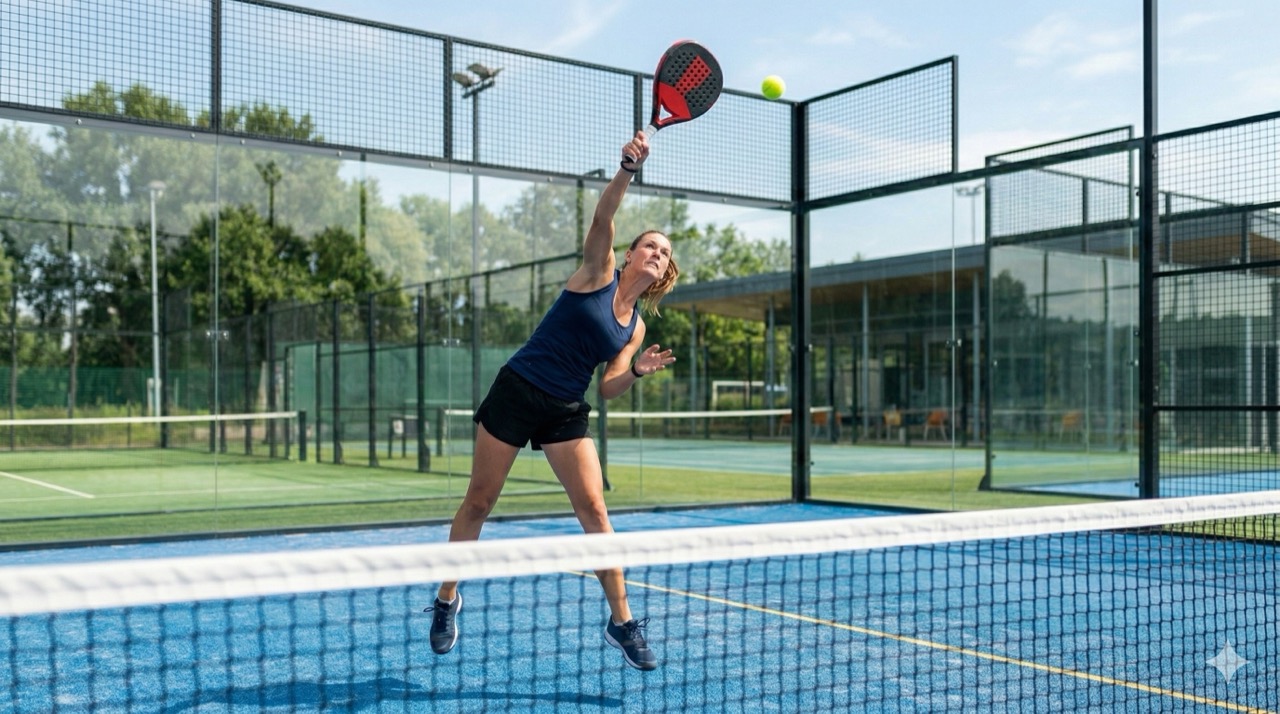
The padel passing shot: threading the needle at full speed
Your opponents are at the net, feeling comfortable, controlling the point. Then the ball flies past them down the line before they can blink. That’s a passing shot. And in padel - where walls give second chances on most shots - a clean passing is pure gold.
It’s not about raw power. The passing shot is about reading gaps, disguising direction and pulling the trigger at the right moment.
What is the passing shot?
A shot you hit from the back of the court that goes past the net players on either side, too fast or too well-placed for them to volley. The ball zips through the gap before they can react.
Two main flavors:
- Parallel passing (down the line): the ball travels close to the side wall, past the nearest opponent. Risky because the corridor is narrow, but when it lands, it’s almost unreturnable.
- Cross-court passing: the ball crosses the court diagonally. More angle, more space to work with. Safer choice and the one you’ll use most often.
For the full picture of every shot in padel, check out the complete arsenal of padel shots.
When to use it
- Opponent rushes the net after a weak shot: they’ve given you a comfortable ball and charged forward. The passing punishes that.
- Both opponents close to the center: they’re covering the middle but leaving the tramlines exposed. Parallel passing tears them apart.
- Ball bounces off the side glass at a nice height: instead of the expected lob or chiquita, surprise them with a passing.
- One opponent creeps too far forward: the space beside them is huge. Hit it there.
- After several lobs: you’ve been lobbing, they expect another. Switch it up. The passing catches them leaning backward.
How to execute it step by step
1. Setup
- Read their positions. Where’s the gap? Down the line or cross-court?
- Short backswing. You don’t need a massive wind-up for this shot.
- Bend your knees and get sideways to generate power from body rotation.
- Hide your intention. If they know it’s going parallel, they’ll cover it. Same preparation for every option until the very last moment.
2. The stroke
Parallel passing:
- Contact the ball slightly in front of your body.
- Aim tight along the side wall, threading it between the opponent and the fence.
- Medium-high speed. Fast enough to beat them, but not so hard it rebounds off the side wall into an easy ball.
- Flat or slightly sliced for a low bounce.
Cross-court passing:
- Contact point a touch further forward than the parallel version.
- Use hip and torso rotation to direct the ball diagonally.
- You can commit more power here since you have more court to work with.
- Aim between both opponents or past the far one.
- A bit of topspin helps the ball dip quickly after crossing the net.
3. After the shot
- If it’s clean, rush the net. You’ve just earned the attacking position.
- If they get a racket on it, expect a short volley or a desperate response. Stay alert.
- Move up together with your partner. If you go, you both go.
Common mistakes
| Mistake | Why it happens | How to fix it |
|---|---|---|
| Ball hits the side fence | Too much power on the parallel | Ease off and prioritize placement over speed |
| Opponent always intercepts it | Direction is too predictable | Mix parallel and cross-court, disguise your prep |
| Ball arrives too high at the opponent | Racket face too open at contact | Close the face slightly and make contact further forward |
| Doesn’t clear the net | Too much slice or half-committed swing | The passing needs commitment - hit through it |
| Attempting it from too far back | This isn’t a baseline shot | Use it when you’re inside the court with a comfortable ball height |
Advantages of the passing shot
- ✅ Can be an outright winner when it’s clean
- ✅ Forces opponents to guard the sides, not just the middle
- ✅ Creates doubt in the opposing pair when it works
- ✅ Perfect complement to the lob - alternate both and you’re unpredictable
- ✅ Even if they touch it, the side wall rebound can leave an awkward ball
Risks of the passing shot
- ⚠️ The parallel has razor-thin margins - a foot too wide and it’s out
- ⚠️ Well-positioned opponents get an easy volley if you miss the gap
- ⚠️ Requires good reading of their positioning - blind passings lose points
- ⚠️ Not effective from very low or awkward balls - better to lob
- ⚠️ Overusing it makes opponents spread wider, opening up the center
Recommended videos
- Best decision-making on lobs and passing shots - Alto Padel
- 2 essential plays - tactical tutorial - Mejora Tu Padel
- The best padel lob masterclass with German Schafer - Otro Nivel Padel
- How to defend turns and counterattack - Alto Padel
- Tactical tricks for playing slow and smart - Mejora Tu Padel
Pro tip
The best passing shot isn’t the hardest one - it’s the most unexpected one. Prepare as if you’re about to lob or play a soft chiquita, then redirect at the last instant. That split second of surprise is all you need.
Log your matches on padellog and track your progress over time.