By Mario GonzalezStrategy
Staying Calm Under Pressure in Padel: How to Handle Break Points
Learn to stay calm under pressure during break points in padel. Master breathing techniques, mental resets, and tactical clarity when it matters most.
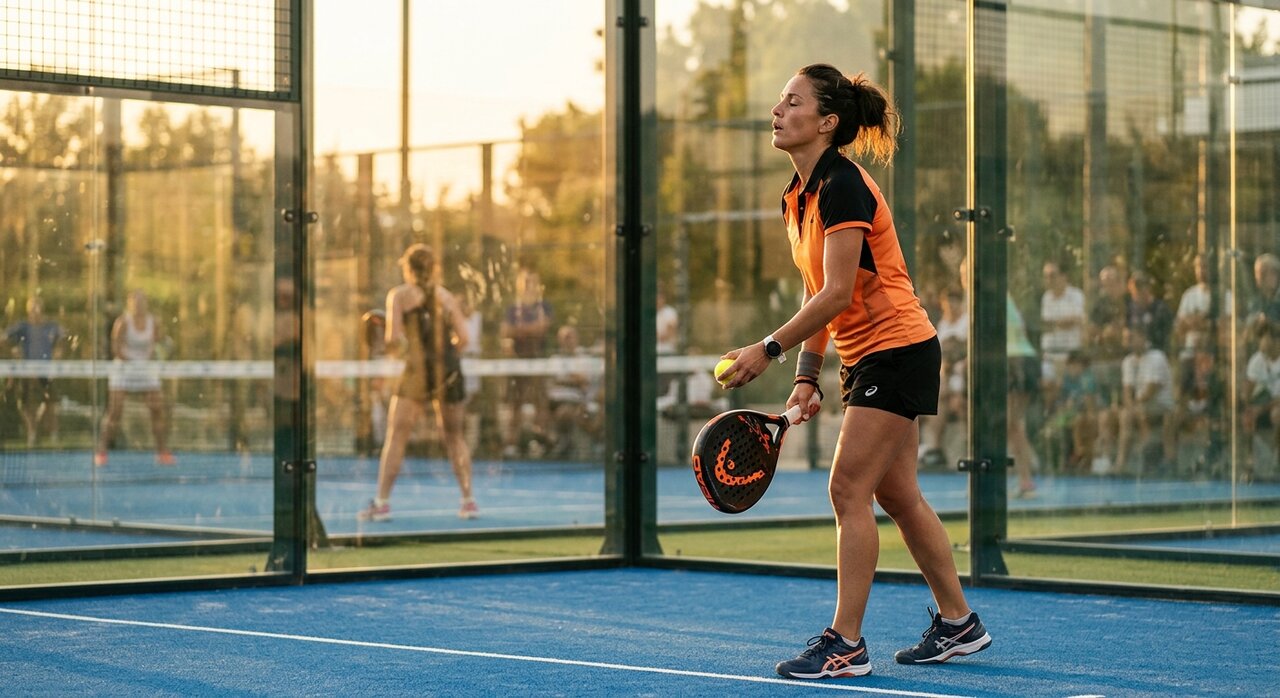
How to Stay Calm Under Pressure in Padel
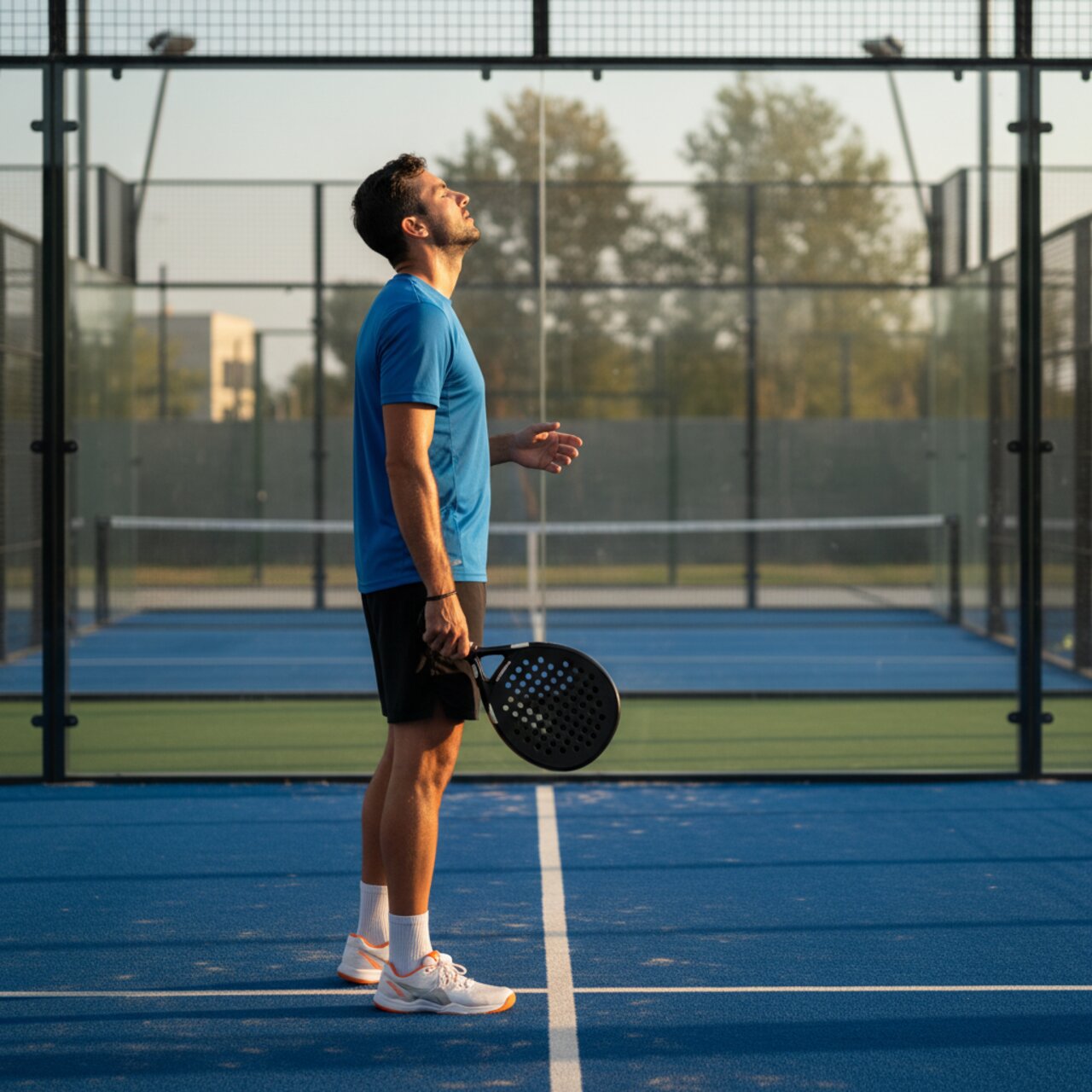
Your heart pounds. Your hands grip the racket tighter than they should. It’s break point—win this and you take the set. Lose it, and you’re serving to stay in the match.
Staying calm under pressure in padel separates players who perform from those who freeze. The technical skills don’t change. The court is the same size. But something shifts when the score becomes critical, and that shift determines outcomes more than any shot in your arsenal.
This guide breaks down what happens during high-pressure moments and gives you specific tools to perform when it matters most.
Why Pressure Moments Feel Different
The same player who calmly executes a bandeja at 3-3 suddenly tightens up at 5-5 on set point. Understanding this shift is the first step to controlling it.
The Physiological Response
When stakes rise, your body activates a stress response:
- Heart rate increases — Blood flows away from fine motor skills toward large muscle groups
- Breathing becomes shallow — Less oxygen means slower decision-making
- Grip pressure rises — Touch and feel decrease as tension increases
- Vision narrows — You see less of the court, missing positioning opportunities
This response evolved for survival threats, not padel matches. Your body doesn’t distinguish between a charging predator and a break point. The physiological activation is the same—and equally unhelpful for executing a precise chiquita.
The Mental Shift
Beyond physical changes, your mind operates differently under pressure:
- Future focus — Instead of the current shot, you’re thinking about outcomes
- Self-monitoring — You analyze your technique mid-shot instead of trusting muscle memory
- Consequence calculation — “If I miss this…” loops become intrusive
- Past recall — Memories of previous chokes surface at exactly the wrong moment
The combination creates what sports psychologists call paralysis by analysis. You’re trying to manually control processes that work best automatically.
Pre-Point Reset: The 10-Second Protocol
Before each pressure point, use a structured reset. This isn’t superstition—it’s deliberate activation of your parasympathetic nervous system to counteract stress.
Step 1: Physical Reset (4 seconds)
Walk to the back of the court or your serving position with deliberate, slow steps. Roll your shoulders once. Bounce lightly on your toes. This movement breaks the freeze response.
Step 2: Breath Control (4 seconds)
Take one deep breath using the 4-4 pattern:
- Inhale through your nose for 4 seconds
- Exhale through your mouth for 4 seconds
This single breath lowers heart rate measurably. Professional players often take this breath before crucial points—watch their chest movement.
Step 3: One Simple Thought (2 seconds)
Choose a single tactical focus, not multiple instructions. Examples:
- “Deep to backhand”
- “Stay low”
- “Watch the ball”
Avoid complex sequences (“hit deep, then move to net, watch for lob”). Your conscious mind can only hold one instruction effectively under stress.
During the Point: Trust Over Thought
Once the point starts, shift from planning to execution.
The Quiet Mind Approach
When serving or returning under pressure:
- Look at your target — Not at your opponent’s racket, not at your partner, not at the net
- Feel the racket head — Focus on the physical sensation of the grip
- Move your feet first — Footwork triggers automatic technique
This approach works because it occupies conscious attention with process elements (target, grip, feet) rather than outcome elements (win/lose, break/hold).
If You Freeze Mid-Point
Sometimes pressure hits during the rally. You feel yourself tightening, hesitating, playing not to lose rather than to win. Quick fixes:
- Exhale audibly — A sharp exhale releases held tension instantly
- Look at your partner — Eye contact resets social brain areas and reminds you you’re not alone
- Play the obvious shot — Under pressure, go to your most reliable option, not your most creative
The goal isn’t to play perfectly. It’s to play normally while your body tries to panic.
Tactical Clarity on Pressure Points
Pressure amplifies uncertainty. Having predetermined plays for critical situations reduces cognitive load when you need simplicity most.
On Your Serve: Break Point Against You
Your opponents need one point. Keep it simple:
- Serve location: Go to your highest-percentage spot, even if predictable. Reliability beats surprise when you’re tight.
- After serve: Commit to the net or stay back—decide before serving, not during.
- Rally mindset: If the rally extends past four shots, consider it a win regardless of outcome. Pressure points often go to whoever lasts longest.
Many break points are lost on unforced errors, not winners. Make them beat you.
On Their Serve: Break Point for You
You have the advantage—they’re serving under pressure. But the opportunity can create its own tension.
- Return positioning: Move one step inside baseline. This signals aggression without overcommitting.
- Target: If your return crosses the net safely, it’s a good return. Depth matters more than precision on pressure returns.
- After the return: Take the net if possible. Pressure the server into executing perfect volleys under stress.
Your job is to extend the rally. Make them feel the weight of their serve, shot after shot.
Partner Communication During Pressure
In doubles, how you communicate with your partner becomes critical during tense moments.
What to Say
Keep verbal communication brief and positive:
- “Let’s go” (energy, not instruction)
- “One point” (focus, present moment)
- Racket tap (connection without words)
Avoid tactical discussions during high-pressure sequences. If you need to change strategy, wait until you’re ahead by two points and the pressure drops.
What Not to Say
Even well-intentioned comments can add pressure:
- “This is it” (emphasizes stakes)
- “Don’t miss” (plants negative imagery)
- “Relax” (rarely relaxing to hear)
Your tone matters more than words. Forced cheerfulness or visible frustration transfers instantly to your partner.
Body Language Check
Between points, face your partner. Make brief eye contact. Stand tall even if you feel uncertain. Your body tells your partner—and your opponents—whether you’re handling pressure or struggling with it.
Building Pressure Tolerance Through Practice
Match pressure can’t be fully simulated, but you can build tolerance through specific practice methods.
Point Scoring Drills
Instead of continuous rallies, play points to 5 or 7 with consequences:
- Loser does 10 burpees
- Winner chooses next drill
- First to 3 points serves next game
The stakes don’t need to be high—just enough to make winning and losing feel different.
Situational Practice
Practice starting from behind:
- 0-40 on your serve, play until game complete
- 15-40, service game
- 5-6 in set, play to set conclusion
This builds familiarity with pressure situations. The scenario becomes less novel, less panic-inducing when it happens in matches.
Breathing Under Load
Practice your breathing reset during physical exertion:
- Sprint court length
- Immediately take your 4-4 breath
- Execute a serve or return
This trains the breath reset when your heart rate is actually elevated—more realistic than practicing breathing at rest.
Recovery Between Pressure Points
One pressure point often follows another. How you recover in the 20-25 seconds between points affects the next point significantly.
The Walk Pattern
Create a physical routine between points:
- Walk to back of court (disengage from previous point)
- Stop at baseline, reset posture
- Walk to position, begin pre-point protocol
This pattern is automatic for some professionals. Watch Fernando Belasteguín between points—his walk is identical whether he won or lost the previous point.
Processing the Previous Point
If you lost the previous pressure point:
- No analysis yet — Understanding what went wrong can wait
- Let frustration pass through — Feel it for two seconds, then release on exhale
- Next point is new — The score changed, but your ability didn’t
If you won:
- Brief acknowledgment — Fist pump, word to partner, move on
- No celebration yet — Match isn’t over, celebrate after
- Maintain intensity — The next point matters as much as the last
The Long Game: Developing Mental Strength
Pressure management improves with exposure and reflection. Track your performance in pressure situations using a match journal or app like Padellog to identify patterns.
After Matches: Honest Review
Ask yourself:
- Did I follow my pre-point routine on crucial points?
- What thoughts intruded during pressure moments?
- How did my body feel (grip, breathing, tension)?
- Did I communicate effectively with my partner?
Don’t just track results—track process. You might win despite poor pressure management (opponents missed), or lose despite handling pressure well (opponents played exceptional points).
Reframing Pressure
Players who consistently perform under pressure often share a perspective shift. Instead of viewing break points as threats, they see them as opportunities:
- “This is why I practice—to play points that matter”
- “Pressure means the match is close—that’s what I want”
- “I’d rather be serving at break point than watching from the bench”
This reframe isn’t immediate. It develops through repeated exposure and intentional reflection. But players who genuinely enjoy pressure situations have an enormous advantage over those who merely tolerate them.
Practical Application
Your next match will include pressure moments. Before it arrives:
- Practice your breathing reset at least once per practice session
- Decide your default plays for serving and returning under pressure
- Agree on communication style with your partner for tight moments
- Set a process goal (“I will follow my routine on every break point”)
Pressure isn’t going away. Your response to it determines whether crucial points reveal your best padel or your most anxious. The techniques here work—but only if you practice them before you need them.
For more on the mental side of padel, see our guides on dealing with losing streaks and building confidence after bad matches. If your fundamentals need work, doubles positioning affects how much pressure you face in the first place.