By Mario GonzalezGuides
Premier Padel vs World Padel Tour: The Split, the Merger, Explained
Premier Padel vs World Padel Tour, explained: the 2022 split, the 2023 merger, and how Majors, P1 and P2 events, the calendar and rankings work today.
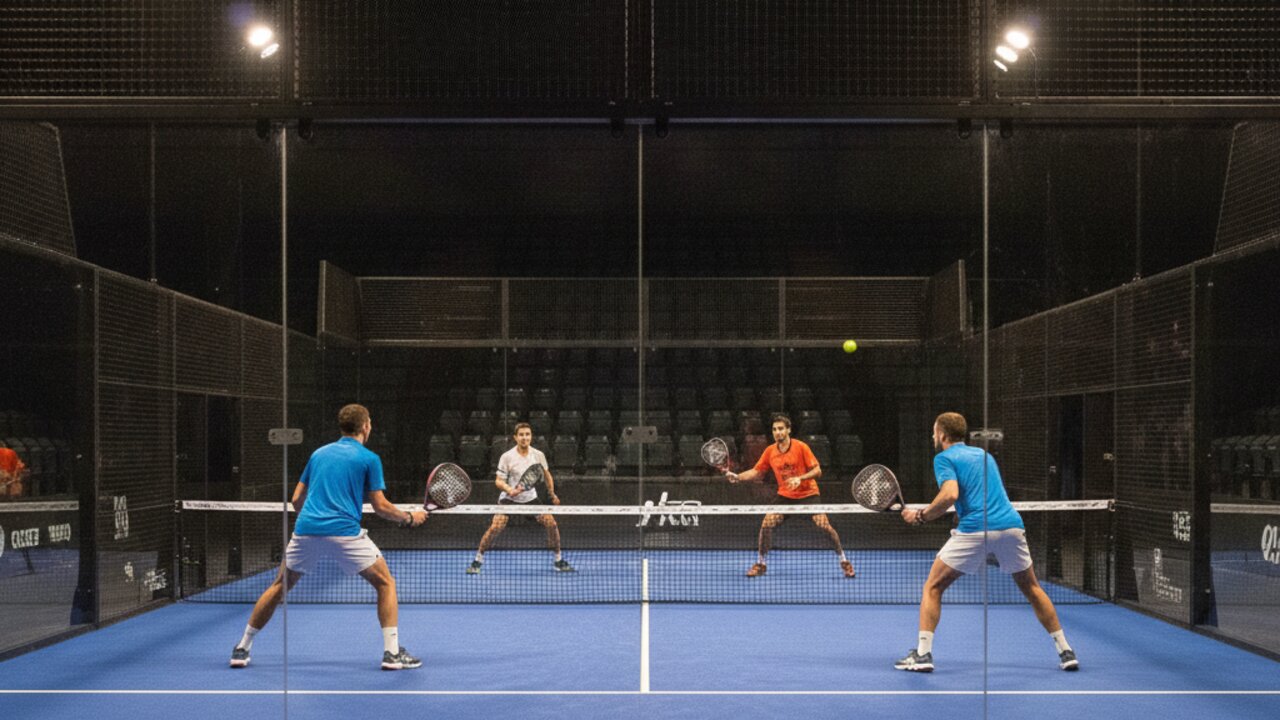
If you started following professional padel in the last couple of years, the Premier Padel vs World Padel Tour question is probably the first thing that confused you. For a decade there was one main circuit. Then suddenly there were two, the best players were caught in the middle of a legal fight, and now there is one again with a different name. Here is what actually happened, how the current tour is structured, and why any of it matters if you just want to watch the best pairs in the world.
Premier Padel vs World Padel Tour: what actually happened
The short version: World Padel Tour was the dominant professional circuit from 2013 to 2023. Premier Padel launched in 2022 as a rival backed by the sport’s global governing body. The two fought for control of the calendar and the players for roughly eighteen months, then merged at the end of 2023. From the 2024 season onward, Premier Padel is the single top-level tour, and World Padel Tour no longer exists as a competition.
That is the whole story in a paragraph. The details are worth knowing, because they explain why the tour looks the way it does now and why older highlight videos carry a different logo.
World Padel Tour: the circuit that built the modern game
World Padel Tour, usually shortened to WPT, ran from 2013 until the end of 2023. It was organized by a private promoter, Setpoint Events, and for most of its life it was the professional game. If you watched Fernando Belasteguín, Juan Lebrón, Alejandro Galán, Ale Salazar or Gemma Triay in their prime, you watched them on WPT.
WPT professionalized padel. It brought consistent broadcasting, a stable ranking, and a recognizable calendar that ran mostly through Spain with a growing number of stops in Latin America and the rest of Europe. Players signed contracts that committed them to the tour and, critically, restricted them from playing rival events. That last detail is the seed of everything that followed.
For years none of this was a problem because there was no rival worth the name. The sport had grown fast, though, and a decade of near-monopoly meant the players had little leverage over prize money, scheduling, or the direction of the tour.
Premier Padel: the FIP-backed challenger
In 2022, a new circuit appeared with two heavy backers. The first was the International Padel Federation (FIP), the sport’s official governing body. The second was Qatar Sports Investments (QSI), the group that also owns Paris Saint-Germain and has deep experience running major sports properties. Alongside them stood the Professional Padel Association, the players’ body that had formed to represent the athletes.
That combination mattered. A players’ association plus the official federation plus serious investment meant Premier Padel could offer bigger prize pools and, more importantly, argue that it was the legitimate tour because the sport’s own governing body was behind it. Many top players wanted to play it immediately.
The problem was their WPT contracts. Those deals blocked players from competing in rival events, so the first season of Premier Padel triggered a wave of disputes, fines, and lawsuits. Players who showed up to Premier Padel events risked penalties from WPT. For most of 2022 and 2023 the two tours ran in parallel, and the athletes were stuck choosing between contractual obligations and where they actually wanted to compete.
The merger that ended the rivalry
In late 2023, the fight ended the only sensible way it could: the two circuits agreed to combine. World Padel Tour wound down its competition, and Premier Padel absorbed the professional calendar. From the 2024 season, there has been one unified top tour again.
For players the merger was a relief. No more parallel calendars, no more choosing sides, no more fines for playing the “wrong” event. For fans it meant the best pairs, the biggest tournaments, and a single ranking finally lived under one roof. If you want the longer arc of how the sport reached this point, the history of padel from Acapulco to the world fills in the decades before the tour wars.
How Premier Padel is structured: Major, P1 and P2
The current tour uses a tiered system that will feel familiar if you follow tennis. Events are grouped by prestige, prize money, and ranking points.
Majors sit at the top. These are the four biggest tournaments of the year, the padel equivalent of tennis Grand Slams, held in marquee venues with the largest prize pools and the most ranking points on offer. Winning a Major is the headline achievement of a season.
P1 events are the next tier down. They are still elite tournaments with strong fields and significant points, roughly comparable to the ATP Masters 1000 level in tennis. There are several of these across the calendar.
P2 events form the tier below P1. The fields are still professional and the points still count, but the prize money and ranking weight are lower than at a P1 or a Major. P2s give more players a realistic shot at a deep run and important points.
Below the main tour sits a separate development circuit run by the FIP, which feeds new talent upward, but the Major, P1 and P2 structure is what you will see when you watch the top players. There is also a season-ending Premier Padel Finals, a closed event contested only by the best pairs of the year based on their ranking.
How the calendar and rankings work
A Premier Padel season runs roughly from early in the year through to a season-ending finale, packing more than twenty tournaments into the calendar. Events move around the world now, with regular stops in Qatar, Italy, Mexico, Spain, France and beyond, rather than the old Spain-heavy WPT schedule.
Rankings work on a rolling points system. Players earn points based on how far they advance at each event and on that event’s tier, so a quarterfinal at a Major is worth far more than a title at a smaller stop. Those points determine three things that matter week to week: your seeding at the next tournament, your qualification for the Finals, and where you sit in the race for the year-end number one ranking. The mechanics mirror the club and player ratings most of us track in our own games, and if that side interests you, how padel rankings and ratings work breaks down the amateur version.
One quirk worth knowing: rankings are tracked separately for each player, but padel is a doubles sport, so a pair’s success depends on both partners staying healthy and staying together. A split partnership can send two top-ten players tumbling while a new pairing climbs.
What it means for fans
For anyone watching in 2026, the practical takeaways are simple. There is one tour, Premier Padel. When you see World Padel Tour branding, you are looking at footage from 2023 or earlier. The tournaments you want to circle are the four Majors, followed by the P1 events and the year-end Finals.
The unified tour has also made the sport easier to follow. A single ranking means the “who is actually number one” argument that dogged 2022 and 2023 is over. When a pair like Arturo Coello and Agustín Tapia dominates now, they are dominating everyone, not just the half of the field that chose their circuit.
If you are newer to the sport and some of the terms above are unfamiliar, the padel glossary of essential terms covers the vocabulary, and what padel is and how it works starts from the beginning. Once you understand how the pro events are seeded and drawn, the tournament formats explained guide shows how the same structures scale down to the leagues and Americanos you play at your own club.
Watch a Major final, learn to spot which side each player covers, and the tour that took two years and a merger to sort itself out becomes the easiest sport in the world to enjoy.