By Mario GonzalezStrategy
What Amateurs Can Actually Steal from Pro Padel
Pro padel is worth copying, but only in parts. Which habits from the Premier Padel circuit transfer to club level, and which ones will cost you matches.

Watching pro padel is the cheapest coaching available, and it is also how a lot of club players pick up their worst habits. The shots that decide a Premier Padel final depend on conditions that do not exist on a Tuesday night at your club: a partner who covers three metres in the time you cover one, a ball struck hard enough to come off the back wall at a usable height, and a body that has been trained to repeat that movement four hundred times a week.
Copy the wrong half of what you see and your error count goes up while your win rate goes down. Copy the right half and you get better without changing a single stroke.
Why copying pro padel backfires at club level
The professional game and the club game are played on the same court with the same ball, and almost nothing else is shared.
A pro rally is a negotiation. Both pairs know that a flat winner from the back of the court is not available, so points are built: lob, reposition, pressure, error. Rallies past twenty shots are routine, and the pair that wins is usually the one that stayed patient longest. A club rally is decided far earlier and far more crudely. Most club points end with a mistake, not a winner, and a large share of those mistakes are attempts at shots the player saw on a screen.
The physical gap is the part people underestimate. When Coello hits a por tres out of the court, three things had to be true first: the smash was hit at a height and speed that produced a predictable bounce, he had the footwork to get outside the court in time, and his partner had already slid across to cover the entire width alone. Remove any one of those and the shot is a gift to the opponents. At club level all three are usually missing at once.
Speed distorts what you see, too. On television the pros look like they have time. They have time because their positioning is finished before the ball arrives, not because the ball is slow.
Steal these: the habits that transfer completely
The transferable parts of pro padel are the unglamorous ones. Nobody makes highlight reels out of them, which is exactly why club players skip them.
Moving as a unit, not as two individuals
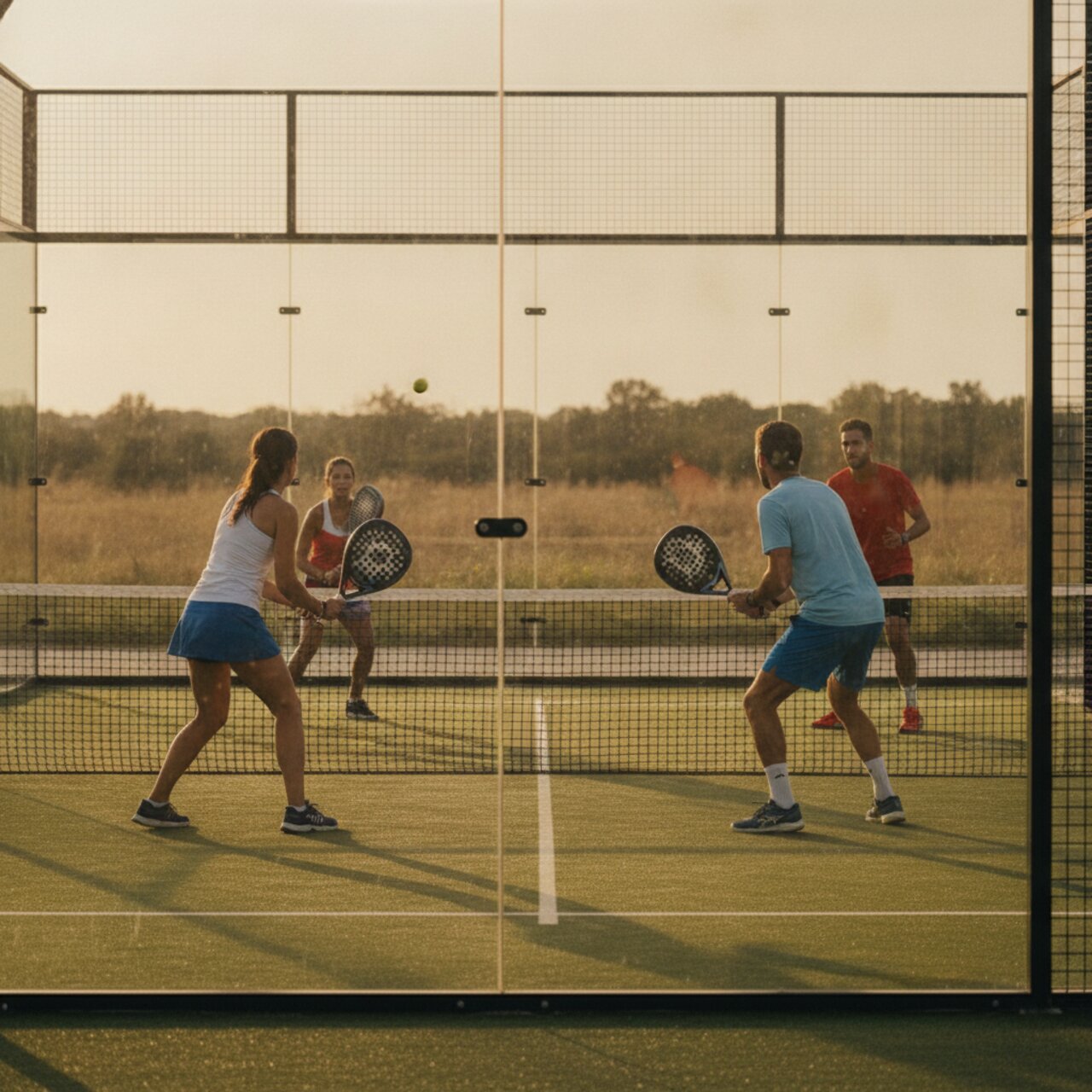
Watch any elite pair with the sound off and look only at the gap between them. It barely changes. When one player is pulled wide, the other slides the same distance in the same direction. When one goes back, both go back.
This is free. It costs no fitness, no technique and no talent, and it eliminates the single most common way club pairs lose points: one player at the net, one at the baseline, and a hole through the middle. If you fix nothing else this season, fix this. The three court zones framework is the simplest way to make it concrete with your partner.
Lobbing far more than feels natural
The lob is the most-played offensive shot in professional padel, and club players treat it as an emergency measure. That inversion is the biggest single tactical gap between the two levels.
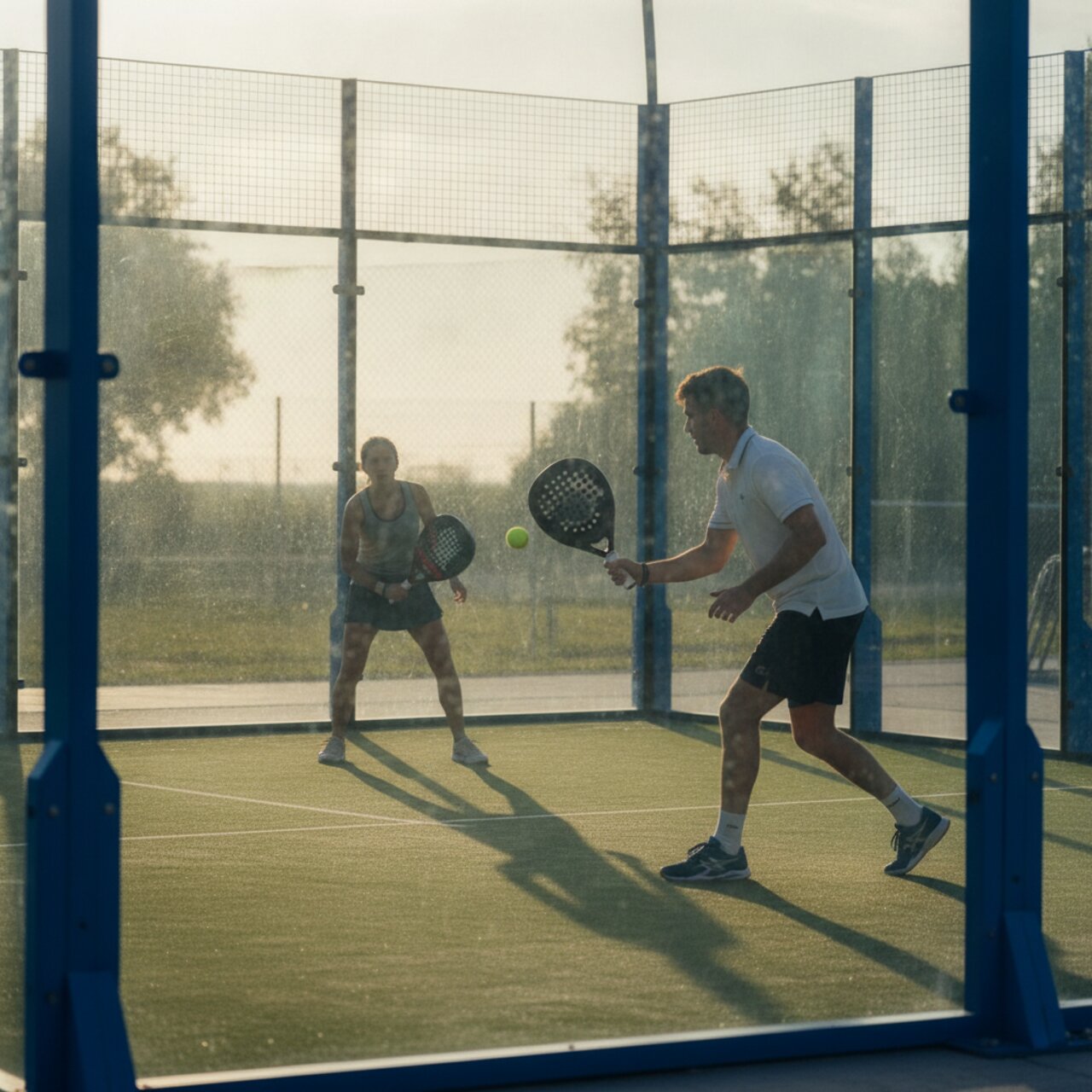
Pros lob because it is the cheapest way to take the net from someone who already has it, and because a good lob costs almost nothing when it fails. Club players avoid it because it feels passive and because their lobs are short. The fix is depth, not courage. Practise landing the ball inside the last metre and you will find you can win the net position against players who are technically better than you. Start with the mechanics in the lob technique guide.
Choosing the bandeja over the smash
Every pro plays the bandeja constantly and the flat smash rarely, because the bandeja keeps them at the net and the smash risks giving it away. Club players do the opposite: they see a ball above head height and swing at it as hard as possible, then lose the point three shots later from a position they no longer control.
Holding the net is worth more than the chance of a winner. If your bandeja is not reliable enough to be your default answer to a lob, that is the highest-value thing you can practise this month — the bandeja guide covers the swing path and contact point.
Resetting between points
Pros have a routine between points and they run it whether they just won or just lost. Ball to the back, breath, a word with the partner, back to position. It looks like padding. It is the mechanism that stops one bad point becoming three.
This transfers perfectly because it has no physical requirement whatsoever. You can adopt it in your next match.
Talking constantly
Elite partners talk after almost every point, and they talk in instructions rather than commentary. “Yours on the middle.” “Lob the next one.” “I’ll take the wall.” Club players either say nothing or apologise. Copy the instruction habit and drop the apologies.
Leave these: what does not survive the drop in level
Some pro habits are actively harmful below a certain speed of play.
The exit smash. The por tres and por cuatro need a specific bounce that club-level smashes do not generate, plus a partner able to defend the whole court while you are outside it. Learning the shot is a legitimate long-term goal. As something you attempt in a real match, it belongs a long way down the list.
Winners from defensive positions. Pros occasionally counter a smash with a hard flat shot down the line because they have read the shot early and their opponents are momentarily out of position. When you try it from the back corner off a ball above shoulder height, the realistic outcomes are the net or the glass. From defence, lob.
The víbora as a default. The víbora has become the signature shot of the modern pro game and it is genuinely difficult, requiring a wrist and shoulder action that takes years to make repeatable. Played badly it sits up at the perfect height for the opposition. Earn it after the bandeja is automatic.
The chiquita duel. At the top level a chiquita battle is a patience contest between four players who never miss. At club level the third or fourth chiquita in a row is almost always the one that goes into the net. Play one, then lob.
Serving hard. Pro serves are placed, not hit. The serve in padel exists to get you to the net, and any pace you add mainly increases your fault count and gives the returner more to work with.
The grey zone: transfers with modification
Serve-and-volley transfers, but slower. Pros are at the net before the return arrives; you probably will not be, so take one step fewer and split-step early rather than sprinting into a volley you cannot control.
Side switching and the Australian formation transfer, but only with a settled pair who have agreed the signals in advance. Improvised switching creates more confusion than it causes.
Style copying transfers least of all. The reason the great partnerships worked was structural, not stylistic: one player builds, the other finishes, and both accept the role. That pattern repeats across every famous pro pairing, and it is available to any club pair willing to have an honest conversation about who does what.
How to watch pro padel and actually learn something
Watching more matches does not help by itself. Watching them differently does.
Pick one player and follow only them for an entire set, including the points where the ball is nowhere near them. You will see the repositioning that broadcast cameras normally cut away from, and that off-ball movement is the part you can copy.
Then watch a set with a single question in mind. Count how many lobs each pair hits. Count how many balls the net players let bounce versus volley. Count how many points end in a winner rather than an error. The numbers will not match your assumptions, and the gap between what you assumed and what you counted is your list of things to work on. If you want a starting point for who to follow, the players worth watching in 2026 breaks down each pro’s style and preferred side.
Finally, check whether any of it is working. Adopting the lob habit or the unit-movement habit should show up as a measurable change over ten or fifteen matches, and guessing is not a good way to find out. Log the results and look at the pattern — which match stats are worth tracking covers the handful that actually tell you something.
The pros are not doing magic. They are doing the boring things perfectly and the spectacular things occasionally, and the highlight reel shows you the ratio backwards.