By Mario GonzalezBeginner
How to Choose a Padel Club: What to Look For
Choosing a padel club? Learn what to look for in courts, booking, community, coaching, facilities, and price so you pick a place that fits how you play.
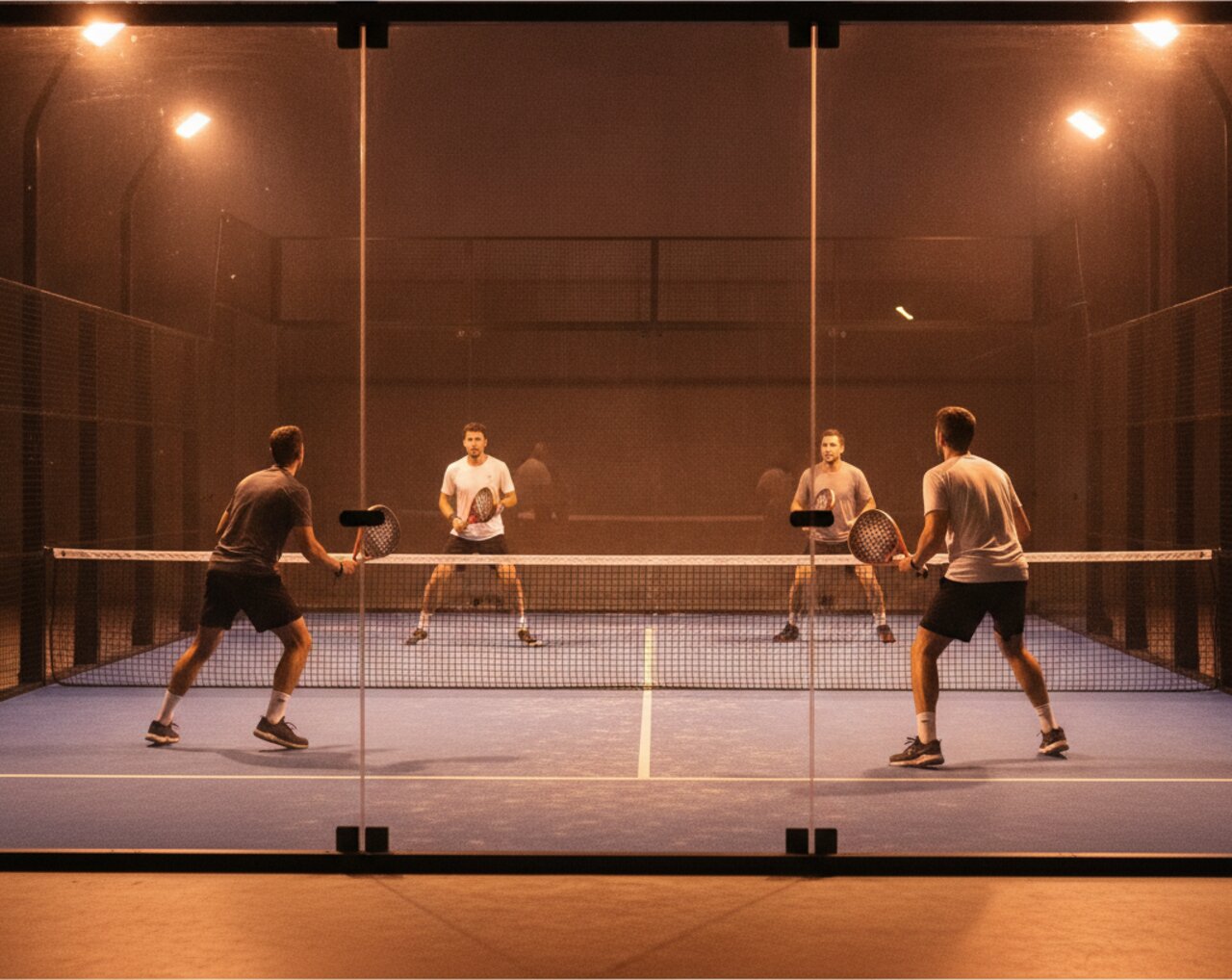
The padel club you pick shapes your game more than most beginners expect. It decides how often you play, who you play with, and how quickly you improve. A good padel club makes booking easy, matches you with players at your level, and keeps its courts in decent shape. A bad one drains your motivation with sticky glass, impossible peak-hour slots, and a WhatsApp group that never fills a fourth spot.
Before you sign up or buy a bulk booking pack, it helps to know what actually matters. Court quality, community, coaching, and price all pull in different directions, and the right balance depends on why you play. Here is how to judge a club on each front so you commit to the right one.
Start With the Courts
Courts are the one thing you can’t fix yourself, so inspect them first. Padel is played indoors and outdoors, and each has trade-offs. Indoor courts protect you from wind and rain, which means consistent conditions year-round but usually higher prices. Outdoor courts are cheaper and often more pleasant in good weather, but a windy afternoon changes how every lob and bandeja behaves.
Look at the glass and the turf. Cracked or foggy glass panels make back-wall play unpredictable, and the back wall is half of padel. The artificial turf should have an even spread of sand; bald patches or loose piles make the bounce inconsistent and the surface slippery. Run your shoe across it. If sand kicks up in clouds, the court is overdue for maintenance.
Lighting matters more than people think. Most club play happens after work, under lights. Dim or uneven lighting turns evening matches into guesswork, especially on lobs that disappear into a dark ceiling. If you visit during the day, ask to see the courts lit up, or come back at 8 p.m. and watch a match in progress.
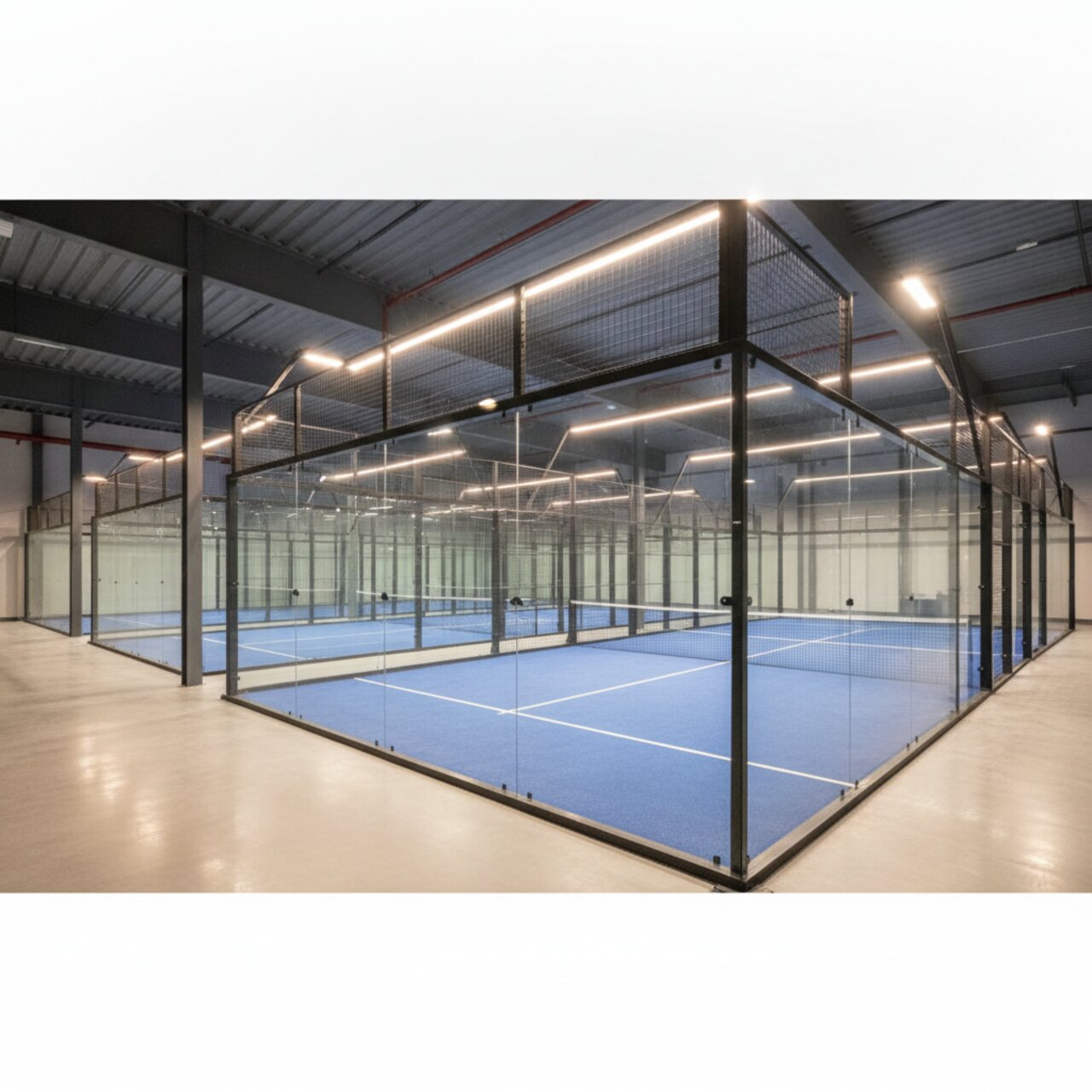
Panoramic (fully glass) courts feel premium and are great for spectators, but for a beginner the court type matters far less than whether it’s well kept. A tired club with fancy courts is worse than a modest club that resurfaces its turf on schedule.
Booking and Availability
A club is only useful when you can actually get on a court. This is where many players get stung: they join a club with beautiful facilities, then discover every slot between 6 and 10 p.m. is booked solid two weeks out.
Ask three questions before committing. How far in advance do courts open for booking? How quickly do peak slots fill? And what does the booking system look like? A club with a clean app or website where you can see live availability is worlds better than one that runs bookings through phone calls and a paper diary.
Check the cancellation policy too. Padel is doubles, and plans fall apart when one of four people bails. A club that lets you cancel up to 12 or 24 hours ahead without penalty is far more forgiving than one that charges you for a no-show partner.
If you’re flexible on timing, off-peak availability is a genuine advantage. Morning and early-afternoon slots are usually wide open and often cheaper. Retirees, shift workers, and remote workers quietly get the best deal at most clubs.
The Community and Level of Play
You can’t play padel alone, so the people at a club matter as much as the courts. The best facility in town is useless if you never find three others to play with.
Watch how the club handles social play. Strong clubs run organized sessions: mixed-level round robins, americano tournaments, ladder leagues, and open mornings where you show up and get slotted into a match. These are how newcomers build a regular group. A club that only rents courts and leaves you to sort out partners on your own is fine if you already have a crew, and frustrating if you don’t.
Ask about the level of the regulars. If you’re a beginner and the club is full of ex-tennis players smashing víboras, you’ll struggle to find balanced matches. A club with an active beginner and intermediate scene will do more for your progress than a prestigious club where you’re always the weakest player on court.
Look for a functioning communication channel. A well-run WhatsApp group or club app where members post “need one for 7 p.m.” and get an answer in minutes is a sign of a healthy community. If you’re starting from zero, our guide on how to find padel partners covers ways to plug in quickly.
Coaching and Clinics
If you’re new or want to improve fast, coaching availability should weigh heavily in your decision. A club with resident coaches, beginner clinics, and small-group classes gives you a structured path instead of picking up bad habits over months of casual play.
Ask what’s on offer and at what cost. Group clinics of four to six players are the sweet spot for most improvers: cheaper than private lessons and more social, while still giving you real feedback on your technique. One-on-one sessions are worth it when you’re fixing a specific weakness, like a serve that keeps sitting up or a bandeja that floats long.
Even if you don’t plan to take lessons now, a club with a strong coaching program tends to attract engaged players and maintain a better standard overall. That culture rubs off on the casual games too.
Facilities Beyond the Court
The court is the main event, but the rest of the club decides whether an evening game is a pleasure or a chore. Clean, well-sized changing rooms with hot showers matter when you’re heading straight from work or on somewhere afterwards. A cramped, grubby locker room is a small thing that quietly wears you down over a season.
Parking is worth checking, especially at busy suburban clubs where a full car park at 7 p.m. can cost you ten minutes you don’t have. If the club sits in a city centre, find out whether there’s a deal with a nearby garage.
A few extras genuinely add value. A pro shop that sells grips, balls, and the odd racket saves you a separate trip when your overgrip wears through mid-week. A café or bar turns the club into somewhere you stay and socialise after matches, which is exactly how loose acquaintances become regular partners. String demo rackets into the mix and beginners get to try gear before buying, which beats guessing from a website.
None of this outranks good courts and easy booking, but between two similar clubs, the one where you’ll actually want to hang around usually wins.
Location, Price, and What Value Really Means
The most honest predictor of how much you’ll play is how close the club is. A world-class club 40 minutes away loses to an average club 10 minutes from home, because you’ll actually go to the closer one. Be realistic about the drive when you’re tired after work.
Price comes in different shapes. Some clubs charge per court rental, split between four players. Others sell memberships with discounted or included court time. Do the math on how often you realistically play. If you’re on court twice a week, a membership often pays off; if you play twice a month, pay-per-use is smarter. Beginners underestimate the total cost, so it’s worth reading our breakdown of how much it costs to play padel before committing to a plan.
Value isn’t just the cheapest court. A slightly pricier club that fills your matches, keeps its turf fresh, and runs a beginner league can be a far better deal than a bargain club where you can never get four people together. Weigh what you’re actually getting against what you pay.
How to Test a Club Before Committing
Don’t judge a club from its website. Visit in person, ideally during a busy evening, and pay attention to a few things. Are the courts full and the vibe friendly? Is the staff helpful when you ask about beginner sessions? Are the changing rooms clean? Small signals like these tell you how the place is run.
Book a single session or a trial before buying any package. Play a match, see how the booking flow feels, and notice whether anyone strikes up a conversation. Many clubs offer a first-timer rate or a free introductory clinic. Use it.
It also helps to know basic court etiquette before your first visit, so you blend in and make a good impression on players who might become regular partners.
Making Your Decision
Rank what matters most to you. If you’re a complete beginner, prioritize community and coaching over premium courts. If you already have a group, availability and location outrank everything. If you play competitively, court quality and level of play move to the top.
There’s no rule that says you can only belong to one club. Plenty of players keep a home club for regular games and drop into a second one for its better courts or a specific league. Once you understand what to look for in a padel club, you can mix and match to build the setup that fits your game.
If you’re still finding your feet with the sport itself, start with our complete beginner’s guide to padel, then use everything here to choose the club that will keep you coming back.