By Mario GonzalezStrategy
Playing With (and Against) a Left-Handed Padel Player
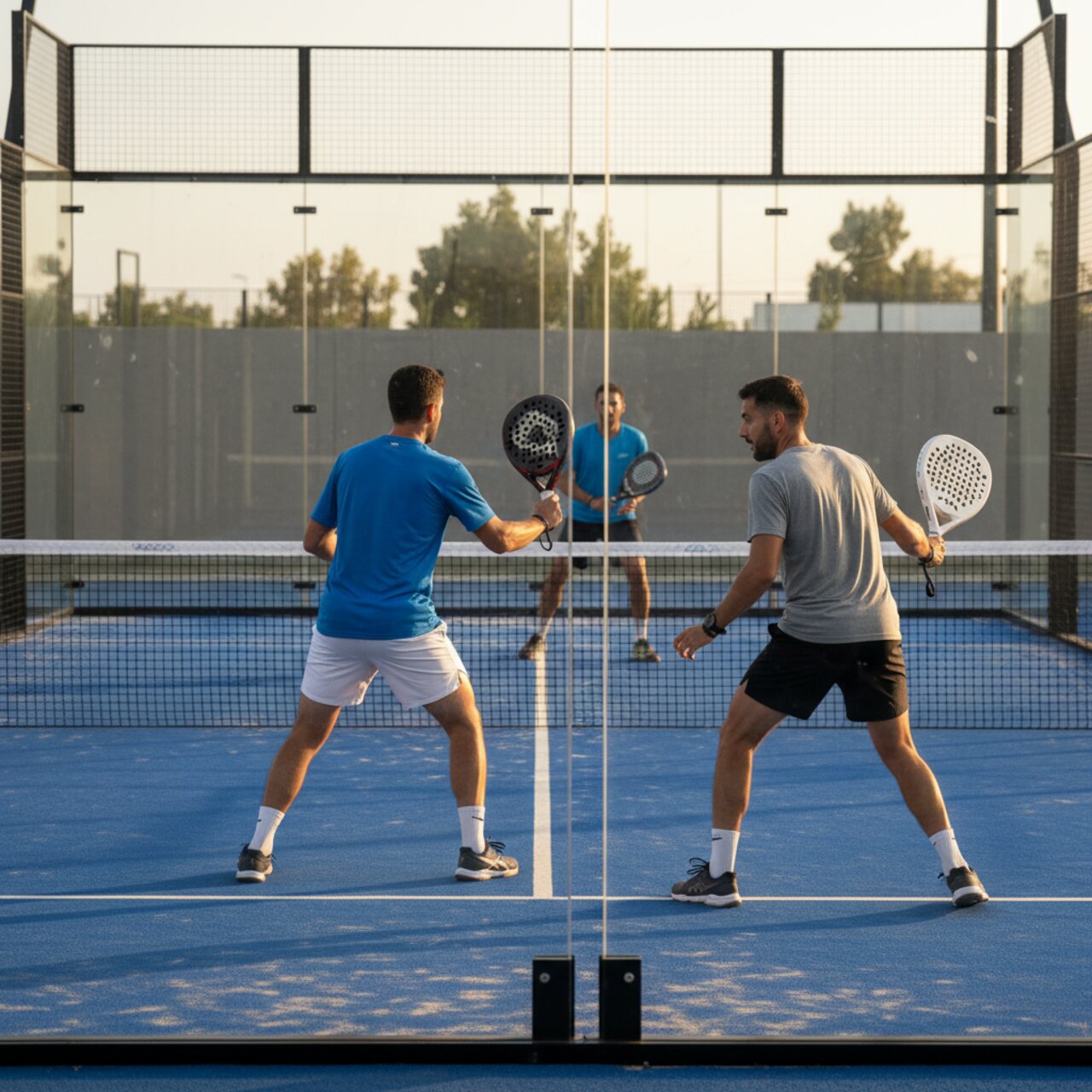
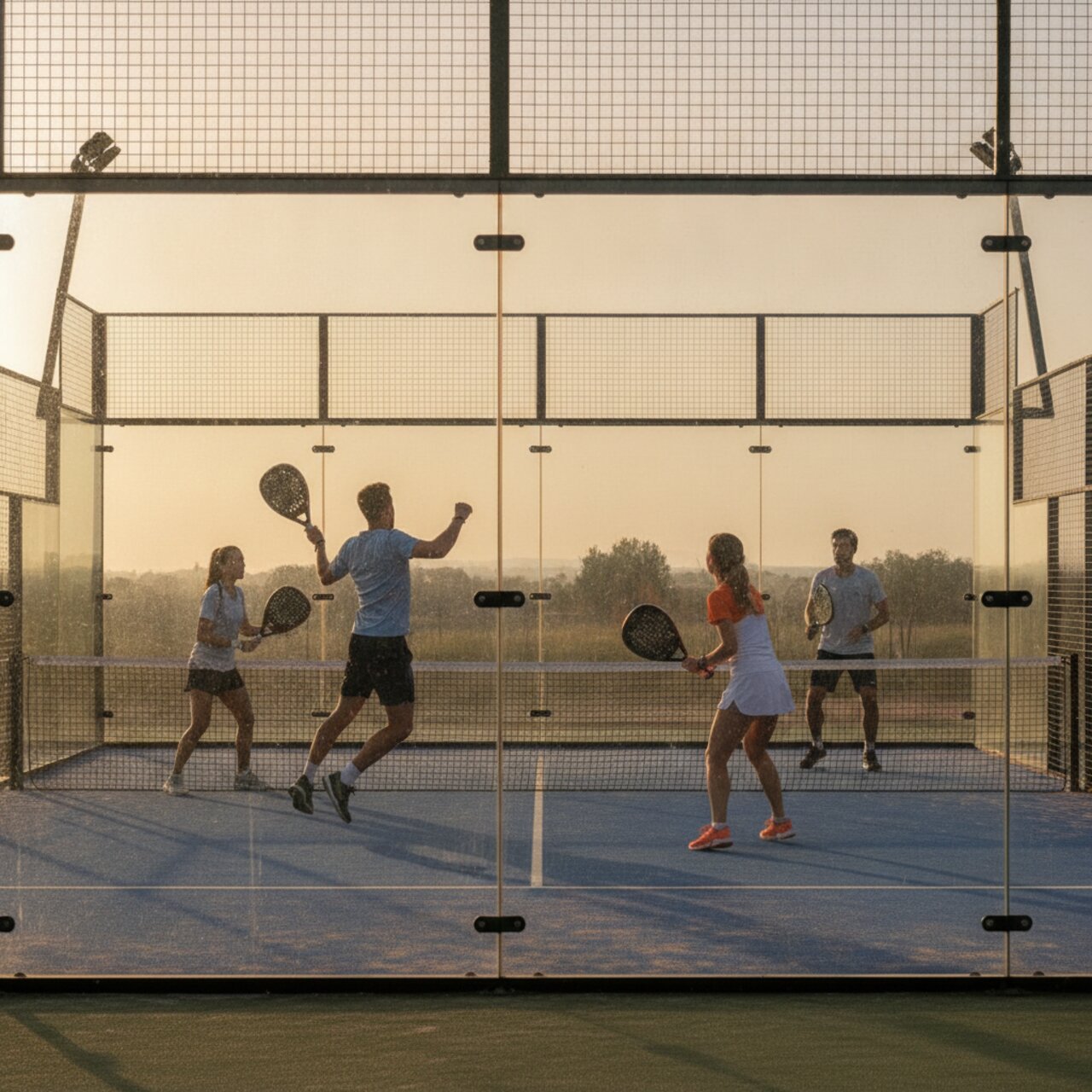
A left-handed padel player flips the court. Side selection, the two-forehand middle, which diagonal to attack, serve direction and inverted spin off the glass.

Roughly one player in ten is left-handed, which means most club players face a left-handed padel player every few weeks and partner one a few times a season. Almost none of them adjust. They keep lobbing to the corner that has always been the backhand corner, keep serving to the spot that has always found the weaker wing, and keep wondering why the match felt strange.
Handedness is not a talent question. It is a geometry question. A lefty on court moves the backhands to different corners, moves the forehands to different diagonals, and reverses the direction of the spin coming off the glass. Once you know where those things have moved, the adjustment takes about two games.
Why a Left-Handed Padel Player Changes the Geometry
Start with the layout everyone learns first. A right-hander on the left side takes deep balls out of the left corner with the backhand and covers the middle with the forehand. A right-hander on the right side is the mirror image: forehand out toward the right tramline and corner, backhand covering the middle. That is why the left is called the backhand side even though the player standing there hits plenty of forehands.
Swap in a left-hander and both of those maps flip. A lefty on the right side covers the middle with the forehand and the right tramline with the backhand. A lefty on the left side covers the left corner with the forehand and the middle with the backhand.
Nothing else about the sport changes. The court is the same size, the walls behave the same way, and the shots are the same shots. What changes is which of the four quadrants in front of you produces a weak reply, and that is the only thing tactics are ever about.
The Two Configurations, and What Each One Costs
A lefty–righty pair has exactly two options, and they are not equivalent. Pick one deliberately rather than by whoever grabbed a side during the warm-up.
Lefty Right, Righty Left: Two Forehands in the Middle
This is the famous one, the configuration Galán and Lebrón used, and it is the default for good reason. Most balls in padel pass through the central third of the court, and this pair meets them all with a dominant hand. Middle volleys are forehand volleys. Middle lobs are comfortable overheads for either player. A pair set up this way is very hard to break down through the centre.
The bill arrives on the outside. Both backhands are now against the side walls, so the two tramlines and both deep corners are the soft spots. Play this configuration and you have to accept that the lines are your weakness, then defend them with position: stand roughly half a metre wider at the net than a right-handed pair would, and lean toward the outside on any ball you have already committed to.
Lefty Left, Righty Right: Two Forehands on the Outside
Less common, occasionally correct. Here each player defends their own corner and tramline with the forehand, which matters enormously if one of them has an unreliable backhand coming off the back glass. Deep defence gets noticeably easier.
The middle becomes the problem, and at two different heights. Volleys through the centre are backhand volleys for both players. Lobs down the middle are awkward for both, because each has to move across the ball before they can hit a proper overhead rather than simply turning into it. Against a pair that lobs well, this configuration bleeds points.
The choice comes down to one honest question: are you losing more points in the middle or in the corners? If the answer is corners, and especially if it is back-glass corners, try the second configuration for a set. Our left side vs right side guide covers what each position demands beyond handedness.
Playing With a Lefty: Three Things to Agree Before the First Point
Who takes the middle lob. In a right-handed pair this is settled by default, since the left-side player turns naturally into the ball. In the two-forehand configuration both players turn naturally into it, and the result is two people arriving at the same ball with the same idea. Agree out loud, by name, before you start. The most common way this pair loses points is not a weakness at all; it is a collision.
Who covers the tramline lob. Each of you is defending a line with your backhand. Decide whether the ball lobbed over the outside shoulder is chased by the player it went over or taken by a cross-court switch, because improvising it at 4-4 does not work.
Warm up in the configuration you intend to play. Pairs routinely spend ten minutes hitting cross-court in one arrangement and then start the match in the other. You want the first backhand out of the corner to happen in the warm-up, not on the second point.
Playing Against a Lefty: Which Diagonal to Attack
The instinct almost every club player has is to build points through the middle. Against a lefty–righty pair in the standard configuration, that instinct is exactly backwards.
Attack the outside instead. Lob into both deep corners rather than down the centre. Drive down the tramlines rather than at the centre line. When you get a low ball at the net, angle it toward the side glass rather than at their feet in the middle. Each of those finds a backhand, and after four or five of them the pair usually starts drifting wide, which finally opens the middle you wanted in the first place.
If they are set up the other way, with both forehands on the outside, invert everything: hammer the middle at volley height and lob down the centre line, and stop trying to find the corners.
Two games of evidence tell you which you are facing. Hit one lob into each corner and one firm ball down the centre, and watch which reply floats. That takes thirty seconds and beats any assumption about what lefties are supposed to be weak at.
There is also a habit to break in yourself. If you have played hundreds of matches against right-handers, your hand knows where the backhand corner is without being asked. Against a lefty you will feed forehands for a full set before you notice. Say the correction to yourself between points for the first few games: “his backhand is the other side.”
Serve and Return When the Handedness Flips
Serving is where the flip bites hardest, because the standard patterns are built on right-handed receivers.
Against a right-handed receiver on the right side, the wide serve toward the side wall finds the forehand, which is why most players serve into the body or down the middle there. Against a left-handed receiver in that same position, the wide serve now finds the backhand. That serve goes from a compromise to your best option, and it is free points for anyone who notices.
The same inversion applies on the other side. A wide serve to a right-handed left-side receiver attacks the backhand; against a lefty standing there it hands over a forehand, and the serve into the T becomes the one that hurts.
When you are unsure, serve at the body. A serve into the hip jams any receiver regardless of which hand holds the racket, and it produces the floated return your partner wants. The rest of the serve fundamentals do not change at all.
On return, the useful adjustment is the lob. A lefty on the right side is often the pair’s main overhead threat in the two-forehand configuration, which is the opposite of the usual arrangement. Lob over the other one.
Reading the Spin Off the Glass
The detail that catches experienced players is not positional at all. It is spin direction.
A right-hander’s sliced víbora hit toward the side wall carries sidespin that pushes the ball into the glass and drops it dead in the corner. A left-hander hitting what looks like the same shot puts the opposite rotation on it, so the ball kicks off the glass and comes back out toward the middle instead of dying. If you are defending, you set up in the corner expecting a ball that never arrives there and then reach for it late.
The same goes for the sliced serve and the bandeja. Give yourself one extra ball of patience on anything a lefty hits into the side glass: let it come out and take it after the kick rather than chasing where you expect it to sit.
When Both of Them Are Left-Handed
Two lefties across the net are rarer than a lefty–righty pair and much more disorienting, because there is no partial adjustment to make. The whole court mirrors.
Their backhand side is the right, not the left. The player who takes the overheads sits on the right. The deep corner that produces awkward backhand wall exits is the right corner. Every piece of standard advice you have absorbed about attacking a pair applies with left and right swapped, and the pairs that beat two lefties are simply the ones who noticed within the first three games.
If you are a left-hander reading coaching content, the same translation runs the other way: nearly every article, including the one you are reading, describes the court from a right-handed default. Read “left side” as “the side where your backhand faces the wall” and it lines up.
Drills That Build the Adjustment
Corner and centre audit. A feeder sends twenty balls alternating between the two deep corners and the centre line, at mixed heights. The receiving pair does nothing but play them back deep. Count where the errors land. Whichever configuration you are testing, this shows you the weak quadrant in five minutes instead of five matches.
Middle-ball calling. Cone on the centre line at the net, feeder hits twenty balls into the central third at volley height. Every ball must be called by name before contact, and any ball taken by the wrong player counts as lost even if it goes in. Two-forehand pairs usually start around 13 out of 20 and reach 18 within a couple of sessions.
Inverted glass reads. A left-handed feeder (or a right-hander feeding from the mirrored side of the court) hits ten sliced balls into each side wall. The defender may not move until the ball touches the glass. The point is to stop pre-committing to where a right-hander’s spin would have put it.
Serve direction sets. Play a practice set where every serve must go to the receiver’s backhand, which forces you to work out which corner that actually is for each opponent before you toss. It is a tedious drill and it removes the habit faster than anything else.
Keep Track of Who You Struggle Against
Most players have one particular opponent at their club they lose to repeatedly without ever working out why, and often enough that opponent is left-handed. If you log your matches in Padellog, the head-to-head record makes the pattern visible: same rival, same scoreline shape, several times over.
Facing a left-handed padel player is a two-game problem, not a talent gap. Work out where their backhand actually is, aim there, and stop letting your hands run on a map drawn for someone else.