By Mario GonzalezStrategy
Switching Sides in Padel: When and How to Cross With Your Partner
Switching sides in padel turns scramble into structure. Learn when to cross with your partner, how to do it cleanly, and the situations where it wins points.
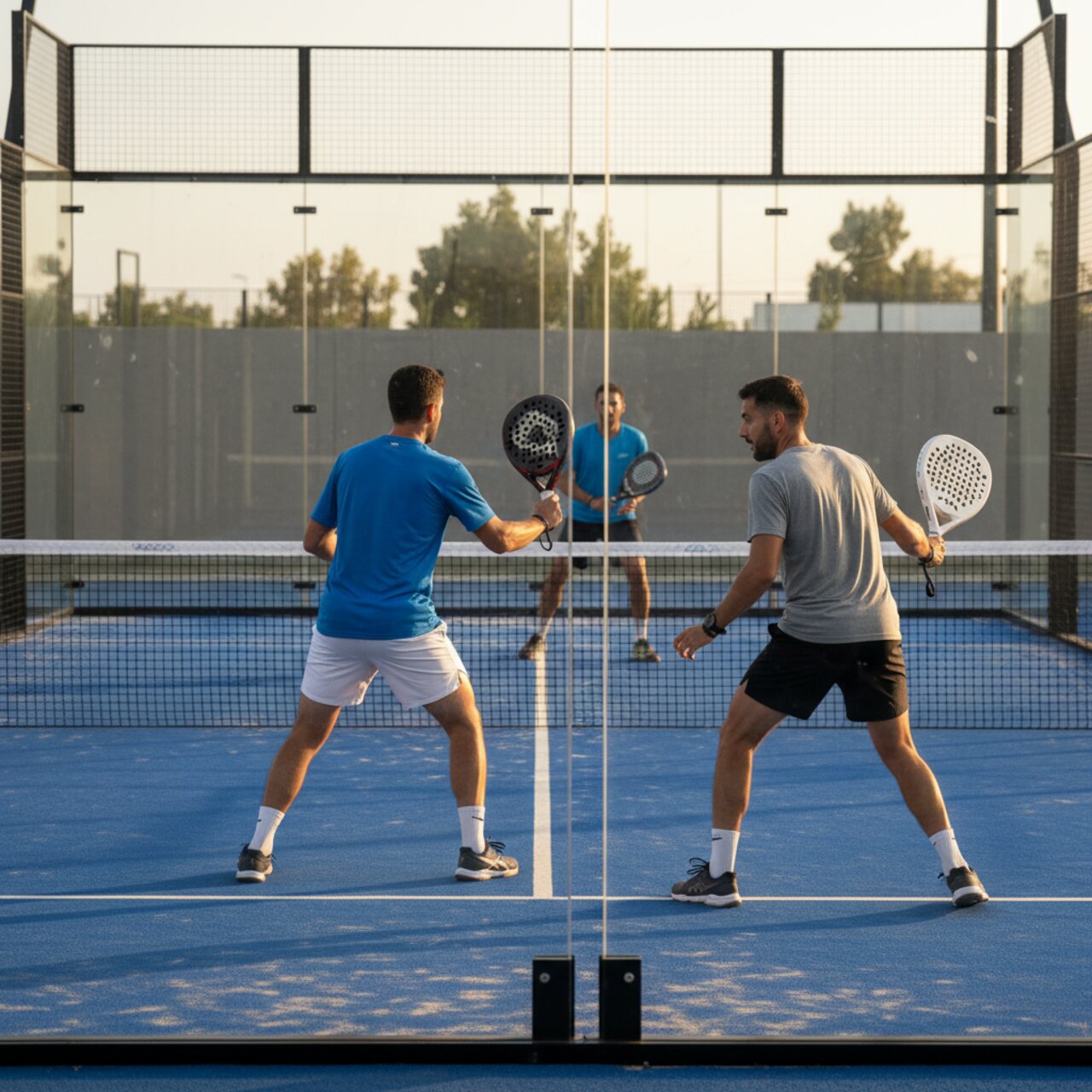
Watch any high-level padel match and you’ll see the two players trade positions mid-point, sliding past each other to cover the court as a single unit. Switching sides in padel is the tactical swap that keeps your strongest shot in the right place and stops a wide ball from breaking your team apart. Done well, it looks effortless. Done badly, it leaves a gaping hole that good opponents punish instantly.
Most recreational teams never switch on purpose. They stay glued to their starting side, scramble when a ball pulls them out of position, and watch points fall apart because nobody knew who was covering what. Learning when to cross and how to do it cleanly is one of the fastest ways to make a partnership feel coordinated instead of chaotic.
What Switching Sides Actually Means
Switching sides has nothing to do with changing ends of the court after odd games. That’s a scoring rule. The switch we’re talking about is when you and your partner trade the left and right halves of your own side of the net, either during a rally or as a planned move before the point even starts.
In a normal padel formation, one player holds the right side (usually the drive side) and the other holds the left (the backhand side, where most attacking overheads get finished off). A switch sends each player into the other’s territory. Sometimes it lasts a single shot. Sometimes it’s permanent for the rest of the point. Either way, both players have to move together so the cross doesn’t open up empty space.
There are two distinct versions. The first is reactive: a ball forces you to cross to cover for your partner. The second is proactive: you choose to switch because it puts your team in a better position. Strong teams use both.
Why Switching Sides Wins Points
The whole point of a switch is to keep the right player on the right ball. Your team has a best smasher, a best defender, and a stronger backhand wall somewhere between the two of you. When a rally drags one of you out of position, refusing to switch means your weaker option ends up hitting the most important shot.
Crossing also buys time. When a lob sails over your partner’s head, the fastest way to keep the ball in play is for you to take it while they slide across to fill your old spot. Trying to backpedal and reach your own lob almost always produces a weak, floating reply that gets smashed back at you.
A planned switch can attack a weakness too. If your opponent on the right has a shaky return, putting your aggressive net player in front of them changes the math of every serve. Good positioning, as covered in our padel doubles positioning guide, creates the platform. The switch is how you adjust that platform in real time.
The Two Ways to Switch
Crossing During a Rally
This is the reactive switch, and the lob is the most common trigger. Your opponents lob over your partner’s head on the left. Instead of letting them turn, backpedal, and scramble, you call the ball, move across to take it as a bandeja or overhead, and your partner rotates behind you to cover the right side you just left.
The golden rule: the player who is not hitting the ball is the one who has to fill the gap. If you commit to crossing for a ball, you trust your partner to read it and slide over. If they hesitate, you both end up on the same side and the other half of the court is wide open.
Switching as a Planned Tactic
The proactive switch is a decision, not a reaction. The classic example is putting both forehands in the middle, where most balls are played. A left-handed and right-handed pair often switch so both drives cover the center, turning the middle into a strength instead of a question mark.
You might also switch permanently mid-match to hide a struggling shot, to get your best volleyer closer to a nervous opponent, or to change the rhythm when you’re getting read too easily. This kind of switch is usually agreed between points, not improvised.
When to Switch Sides
A lob over your partner’s head is the clearest signal. They can’t turn and chase it effectively, so you take it and they cover. The same logic applies when a sharp cross-court ball drags one of you off the court completely. Rather than sprint back to your original spot, finish the point from wherever you land and let your partner take the vacated side.
Switch when your overhead specialist needs to be on the ball. If your partner finishes smashes far better than you do, crossing to put them on a high, attackable lob is worth the temporary scramble. The extra movement is a fair price for a put-away instead of a defensive reset.
Switch to protect a weakness, whether it’s yours or your partner’s. A player whose backhand is breaking down under pressure can be shielded by moving them to the drive side for a stretch. Understanding which side suits each player tells you which switches actually help and which just trade one problem for another.
Finally, switch to disrupt opponents who have figured you out. If they keep targeting the same player with the same pattern, a planned cross forces them to solve a new picture.
How to Switch Cleanly
Call it early and call it loud. The hitting player should announce the cross the instant they decide to take the ball: a sharp “mine” or “switch” gives your partner time to react. Late communication is why most switches fall apart. Clear calls are the backbone of good partner communication, and switching is where they matter most.
Cross through the middle, not around the back. The player covering for their partner should move on a tight diagonal through the center of the court, not loop behind the baseline. The shorter path gets you set before the next ball and keeps you connected.
Re-establish your spacing immediately. Picture the three-to-four meter rope that ties you to your partner. After a switch, that rope often stretches because one player traveled further than the other. Close the gap and square up before the next shot, recovering toward the center the way solid court positioning demands.
Decide whether the switch is temporary or permanent, and make sure both of you agree. After a single-shot cross, you usually rotate back to your original sides at the first calm moment, like when you send up a deep defensive lob and have time to reset. If you’ve switched on purpose, stay put and commit to the new arrangement.
Common Mistakes That Break the Switch
Both players chasing the same ball is the most common disaster. Two rackets converge on one lob, nobody covers the open side, and the next shot floats into empty court. Fix it with one rule: the player who calls first, takes it.
Crossing too late forces a rushed, off-balance shot and leaves your partner stranded. If you can’t get to the ball in a controlled position, it’s often better to let your partner play it defensively and reset than to commit to a cross you can’t complete.
Silent switching ruins even well-timed crosses. A switch your partner doesn’t know about is just two players ending up on the same side. Every cross needs a verbal trigger, every time.
Forgetting to reset is the slow leak. Teams cross to cover a lob, win the exchange, and then stay scrambled on the wrong sides for the next three shots because nobody recovered. After the immediate danger passes, get back to your preferred sides at the first safe opportunity.
Drills to Practice Switching
The lob-and-cross drill builds the reactive switch. A feeder lobs over the left player’s head on repeat. The right player crosses to take the overhead while the left player rotates to cover the open side. Run it slowly at first, focusing only on clean movement and clear calls, then speed it up to match-pace.
The shadow switch drill trains coordinated movement without a ball. You and your partner play out switches on command, calling and crossing as if reacting to lobs, paying attention only to keeping your spacing tight and never landing on the same side. It’s the same principle as the shadow positioning work in our doubles positioning guide.
The signal drill sharpens proactive switches. Before each point, one of you decides whether to switch on the return and signals it quietly. You play out the planned cross from the first ball, getting comfortable committing to a switch you chose in advance rather than one forced on you.
Get switching right and your partnership starts covering ground that two separate players never could. Pair clean crosses with smart positioning and the aggression you’d bring against attacking teams, and your team will look a level above where it actually is.