By Mario GonzalezStrategy
Padel Hand Signals: How to Communicate With Your Partner During Serves
Learn how padel hand signals work, what each gesture means, and how to use them with your partner to control the point from the very first serve of a rally.

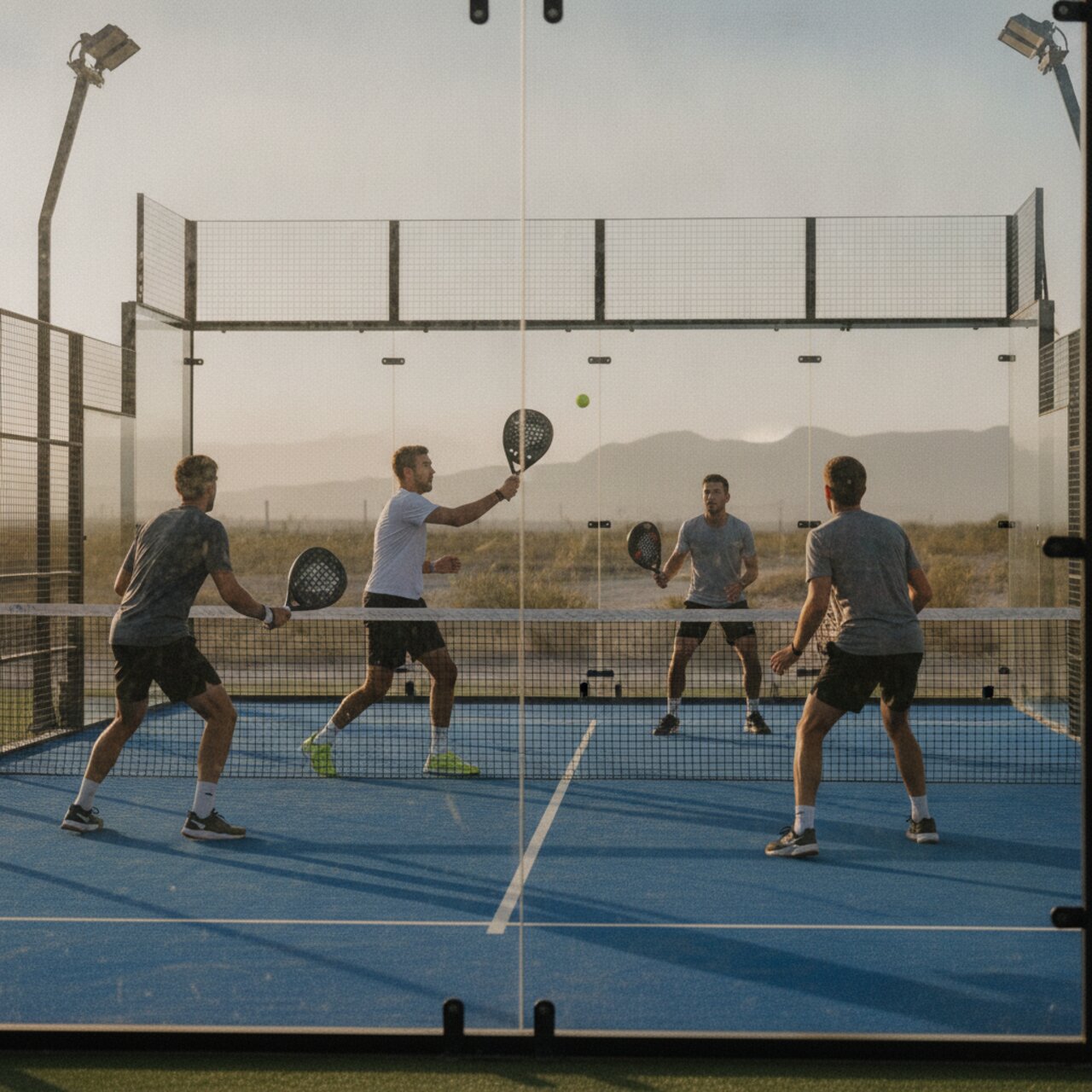
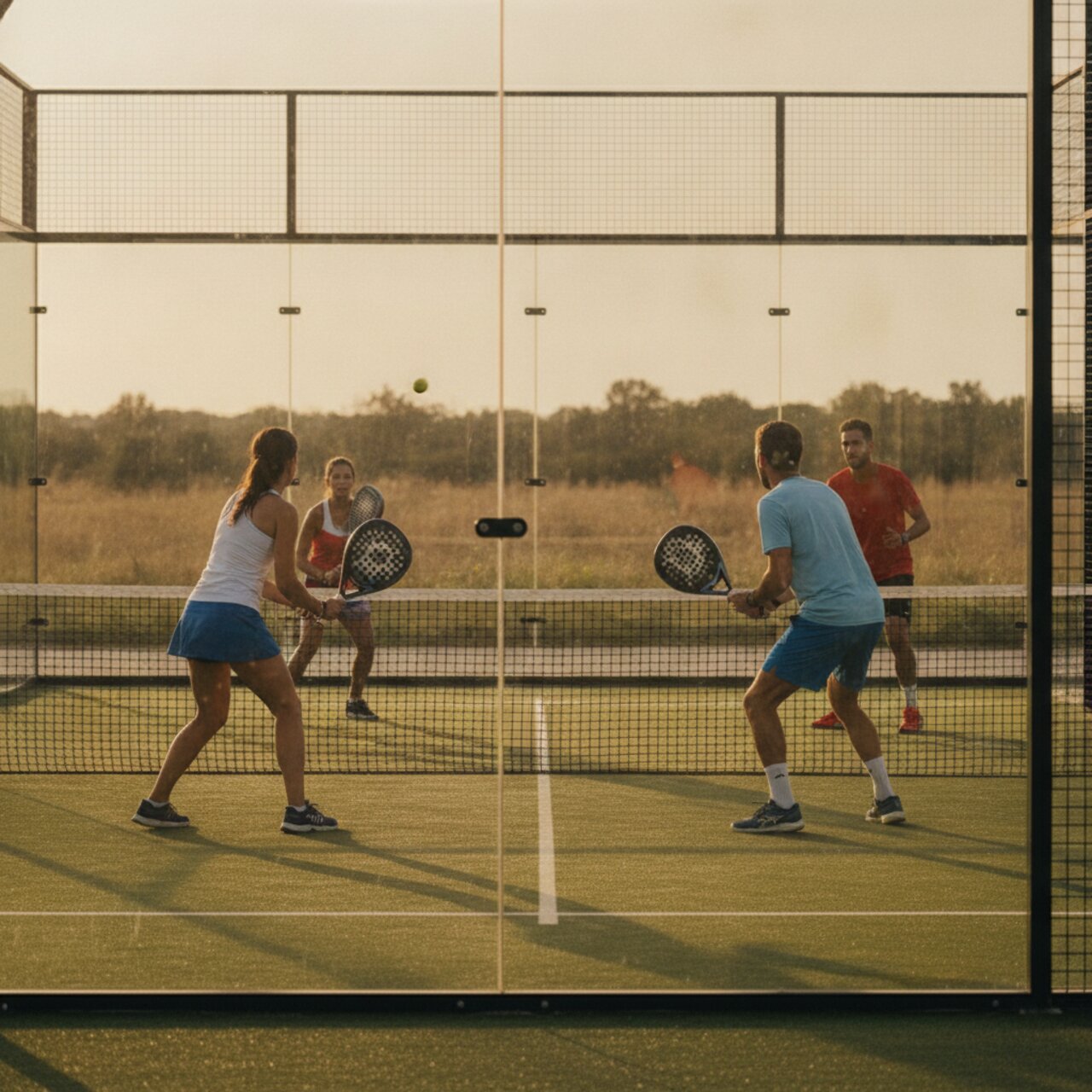
Watch any professional padel match and you will notice the net player crouch slightly before every serve, one hand tucked behind their back, flashing a quick gesture toward their partner. Those are padel hand signals, and they are the difference between two players guessing what the other will do and two players running one plan. Used well, they let you decide who attacks the return before the ball is even struck.
Most club-level pairs never bother with them. That is exactly why learning them gives you an edge: you start every point with a shared intention while your opponents are still reacting.
What Padel Hand Signals Are and Who Gives Them
Hand signals are pre-agreed gestures the net player shows to the server just before the serve. The net player faces the net, hides the signal behind their back or against their leg so the opponents can’t read it, and communicates two things: whether they plan to move across to intercept the return, and sometimes where they want the serve placed.
The net player gives the signal because they are the one who will act on it. They stand at the net during their team’s serve, and they are the player with the best chance to cut off a weak return with a volley. The server’s job is to read the signal, serve accordingly, and cover the space the net player leaves behind.
This only applies when your team is serving. During returns you communicate differently, usually with quick words or by reading your opponents’ body language rather than fixed signals.
The Standard Signals and What They Mean
There is no official rulebook for signals, but most pairs use a simple system built around the same core gestures. Agree on yours before the match and keep them minimal.
Closed fist: stay. The net player will hold their position and not cross. The server covers their own half normally. Use this when the returner is dangerous down the line or when you simply want a stable, low-risk point.
Open hand: cross. The net player intends to poach, moving diagonally to intercept the return with a volley. The moment the signal is given, the server knows they must rotate to cover the side the net player is vacating. This is your attacking signal.
Pointing finger: serve direction. Some pairs add a second layer where the net player points to indicate where the serve should go. One finger pointing to the outside means serve wide (to open the angle); pointing inward means serve down the T toward the centre. A wide serve to the backhand often sets up an easier poach because it pulls the returner off court.
Fake or double signal: deception. Advanced pairs sometimes show a poach signal, then have the net player hold position, or vice versa. The goal is to make the returner hesitate. Only add this once the basic system is automatic; otherwise you confuse your own partner more than the opponents.
Keep the vocabulary to two or three signals when you start. A fist and an open hand cover 90% of situations.
Why Signals Beat Talking It Out
You could just tell your partner “I’m going to poach this one.” Signals are better for three reasons.
They are silent, so opponents can’t hear the plan. They are fast, given in the half-second before the serve without breaking rhythm. And they force both players to commit to a decision, which removes the hesitation that kills so many points. When the server knows a poach is coming, they serve to set it up and move early to cover; when they don’t know, they freeze and the whole team is caught flat.
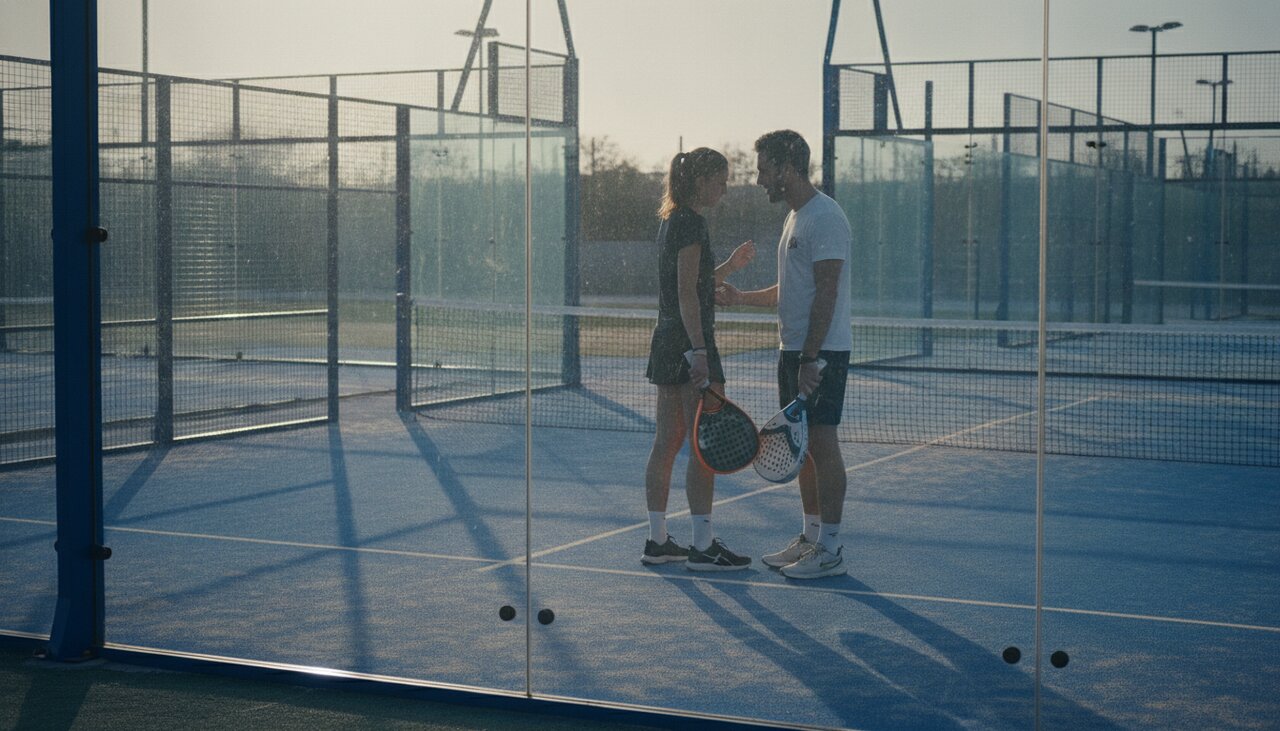
Signals also build the automatic understanding that separates a real pair from two individuals sharing a court. This is the same shared-language idea behind good on-court communication with your partner during rallies, just compressed into a single gesture at the most predictable moment of the point: the serve.
How to Start Using Hand Signals: A Step-by-Step System
Decide your signals off court. Before you play, agree on the gestures. Fist for stay, open hand for cross, and one direction signal if you want it. Write nothing down; just rehearse them for two minutes so both of you recognise them instantly.
The net player signals first. Take your net position, crouch slightly, and place your signalling hand behind your back at hip height where only your partner can see it. Show the signal clearly, then confirm the serve target if you use direction signals.
The server acknowledges and serves. A small nod is enough. Serve to match the plan. If the signal was “cross,” serve to a spot that pulls the returner wide so the poaching lane opens up.
Move on the serve, not after the return. This is where most pairs fail. If the net player signalled a poach, they must start moving the instant the return is struck, not wait to see the ball. The server rotates simultaneously to cover the vacated side. Two players trading positions in one smooth movement is the entire point of the signal.
Reset and re-signal every point. Signals are not set-and-forget. Give a fresh one before each serve so your plan adapts to the score, the returner’s tendencies, and how the last few points went.
Game Situations Where Signals Change the Point
Break point against you on serve. Call a stay with the fist. This is not the moment for a risky poach; hold your positions, serve to the body to jam the return, and play a disciplined point.
Returner keeps blocking crosscourt. If the returner has hit three straight soft crosscourt returns, signal the poach. You already know where the ball is going, so the net player can commit early and put away an easy volley.
A left-hander in the ad court. Serve direction matters more here. Point to serve into their backhand or jam their body, because a wide serve to a lefty’s forehand gives them an easy angle. Pair the direction signal with a stay until you see how they return.
You’re serving to a weaker opponent. Signal aggressive poaches repeatedly. Force the weaker returner to try passing shots down the line under pressure, which is the shot they are least comfortable with. This ties directly into smart doubles positioning, where controlling the net decides most points.
The signal is only as good as the serve that follows it, so make sure your placement supports the plan. If you are still building a reliable, well-placed serve in padel, work on that first, then layer signals on top.
Drills to Make Signals Automatic
Signal-and-call drill. For 10 serves, the net player signals and then says the plan out loud after the point. Check that the server read it correctly every time. The goal is zero miscommunications before you add speed.
Mandatory poach drill. Play a game where the net player must poach every time they signal open hand, no exceptions, even if the return looks tough. This trains the commitment and early movement that make poaching work. You will lose some points; that is the cost of building the habit.
Silent set. Play a full practice set where talking is banned once you take your positions. Everything runs on signals. It forces both players to trust the system and exposes any gaps in your agreed vocabulary.
Score-pressure signals. Play tie-break points where you deliberately mix stays and poaches based on the score. Practise calling the conservative fist on the most important points and the aggressive open hand when you are ahead and can gamble.
Run these for a few weeks and the signals stop feeling like a checklist. They become the natural rhythm of how you and your partner start every point, the same way calling “mine” and “yours” becomes second nature once you have played enough together.
Start with two signals, use them every single serve, and move together the instant the return leaves the opponent’s racket. That combination, more than any single fancy gesture, is what turns two players into a pair that controls the point from the first ball. For more on turning individual habits into team strategy, brush up on the shared padel terminology so you and your partner are always describing the same thing.