By Mario GonzalezStrategy
Reading Your Opponents in Padel: Anticipating Shots Through Body Language
Learn to read your opponents in padel by spotting body language cues. Anticipate the lob, drive, and drop shot before contact, and win more easy points.
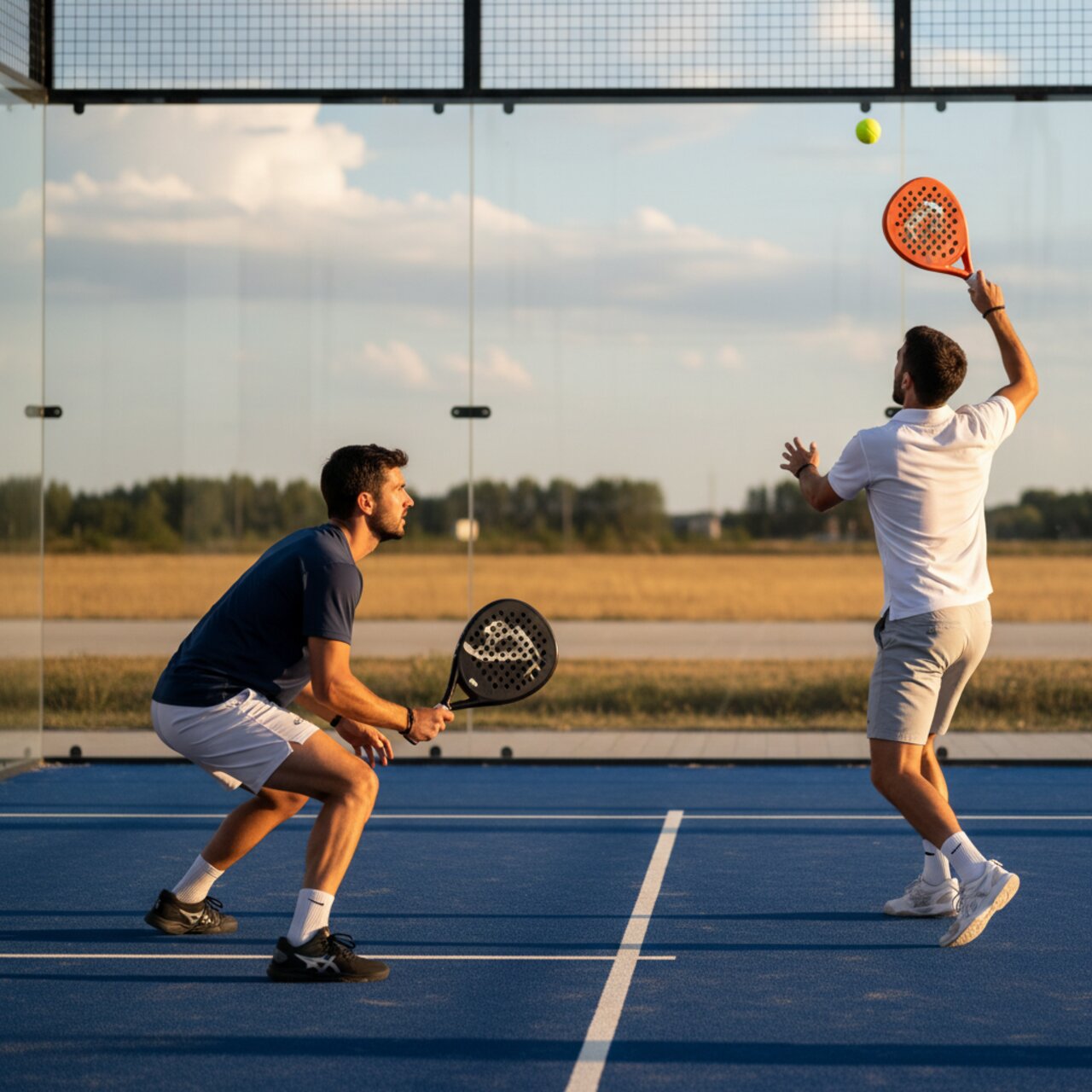
The best defenders in padel rarely look faster than everyone else. They look earlier. Reading your opponents in padel means picking up the small physical tells that telegraph a shot before the ball is struck, then moving while your rival is still committing to the swing. That extra half-second is the difference between a clean defensive reply and a ball that flies past you.
Anticipation is not guessing. It is pattern recognition built from watching the same physical preparations produce the same shots, match after match. Once you know what a high contact point, an open racket face, or a dropped shoulder usually means, you stop reacting to the ball and start reacting to the player.
What “Reading the Opponent” Actually Means
Every shot in padel requires preparation, and preparation is visible. A player cannot hit a hard flat drive and a soft lob with the same swing path, the same grip, or the same body angle. Those differences leak out in the half-second before contact.
Your job is to watch the preparation, not the ball. Recreational players track the ball obsessively and only start moving when it leaves the opponent’s racket. By then you are already late against anyone with decent pace. Advanced players split their attention: they keep the ball in peripheral vision while reading the opponent’s torso, racket, and feet.
This skill compounds with experience. The more matches you play against a particular style, the faster you recognize the cues. But the framework below gives you a head start, so you are not waiting years to develop the instinct.
Why Anticipation Wins Points
Padel courts are small, and reaction time is brutal. From the back wall, you have roughly half a second to respond to a smashed ball. Reading your opponents in padel buys back time that the court geometry takes away.
Anticipation also fixes your positioning. When you know a lob is coming, you can drop back before the ball is hit instead of scrambling backward off-balance. When you read a drop shot, you start forward early and arrive with your feet set rather than lunging. Good footwork begins before contact, and contact-based footwork is always rushed.
There is a psychological payoff too. When you read two or three shots correctly in a row, your opponent senses it. They start aiming for smaller targets, going for more on each ball, and the unforced errors follow. Pressure flows back across the net without you hitting a single winner.
The Cues That Tell You What’s Coming
Racket Preparation Height
The height of the backswing is the single most reliable tell in padel. A racket that drops below the ball, with the face opening toward the sky, is preparing to lift, which means a lob or a soft defensive shot. A racket that takes back high and level, with the player coiling the shoulder, is loading for a drive or a flat attack.
Watch the takeaway, not the follow-through. By the time the racket comes forward, the shot is already decided and you have lost your window.
Contact Point and Body Position
Where the player meets the ball relative to their body narrows the options dramatically. A ball struck well in front, with the weight moving forward, is almost always offensive. A ball taken late, beside or behind the hip, forces a defensive reply because the player cannot generate controlled pace from that position.
When an opponent is stretched wide or pushed deep behind the baseline, eliminate the hard winner from your expectations. They are far more likely to lob or float a defensive ball to buy recovery time. Move to cover the high ball, not the rocket.
Shoulder and Hip Rotation
Full shoulder turn with the non-racket arm pointing across the body signals commitment to power. The bigger the coil, the harder the intended strike. Minimal rotation, where the player stays open and uses mostly arm and wrist, points to a touch shot, a block, or a redirect.
Hips tell you direction. A player whose hips rotate fully through the ball is driving crosscourt or down the line with intent. Hips that stay relatively closed often mean a blocked or steered ball that will land softer and shorter than a full swing.
The Eyes and Head
Less reliable than the racket, but still useful against players who haven’t learned to disguise. Many club players glance at their target a fraction before they hit, especially on the bandeja and overhead shots where they are choosing between a safe deep ball and an aggressive angle. A quick look toward the open court is often a giveaway, though stronger players deliberately stare you down or look away to deceive.
Grip and Wrist
On overheads particularly, watch the wrist. A loose, cocked wrist preparing to snap signals a flat víbora or smash with pace and spin. A firmer, more passive wrist with the racket face slightly open indicates a controlled bandeja aimed at depth rather than power. The difference decides whether you hold your defensive position or brace for a hard ball off the side wall.
Reading Specific Situations
When They’re at the Net
A net player setting up to volley gives away direction through their shoulder turn and racket face. An open face angled toward your sideline is steering the ball wide; a closed, punching action aims for depth or the middle. If their volley preparation is short and compact, expect a controlled placement, not a put-away, and resist the urge to commit early to one side.
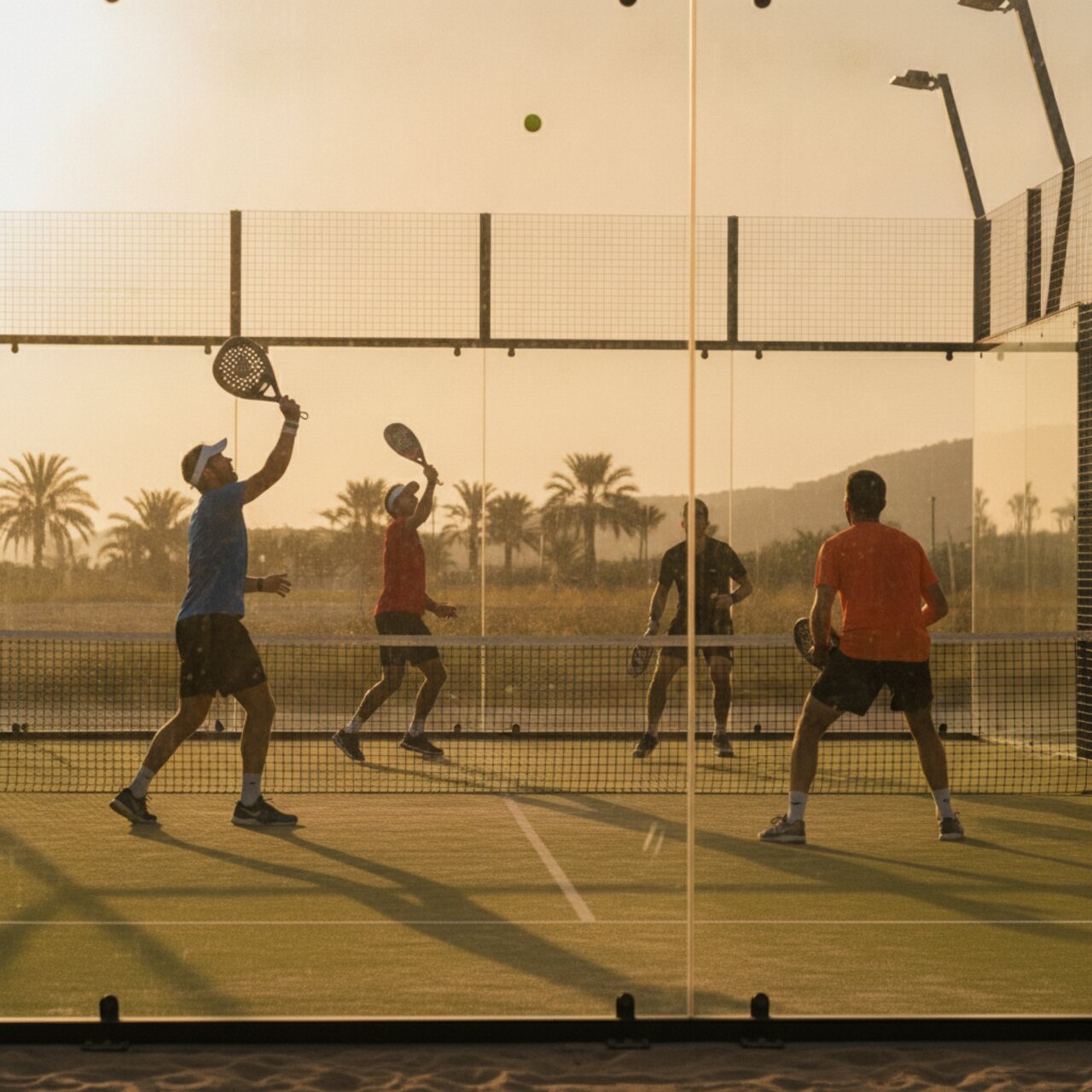
When they wind up for a smash, read the wrist and contact point. A high contact point well in front with a snapping wrist means a flat smash, often out through the back wall or hard at your feet. A contact point taken slightly behind the head usually produces a bandeja or a softer overhead, so hold your ground rather than retreating in panic.
When They’re at the Back
Players defending from the back of the court are easier to read because they have fewer options. A low contact point with an opening racket face is going up, almost always a lob. Drop back and prepare to attack the descending ball rather than camping at the net.
A player who sets their feet, coils the shoulder, and takes the ball at a comfortable waist height is attempting a drive, frequently a passing shot down the line or crosscourt. Hold your net position, stay low, and cover the line if you’ve pushed them wide, since the down-the-line pass is the natural escape from a wide ball.
Spotting the Drop Shot
The drop shot betrays itself through deceleration. The backswing looks like a normal preparation, but the forward swing slows and shortens, and the wrist softens at contact. Players also tend to hit drop shots from a more upright, balanced stance because the shot requires touch rather than effort. When you see a comfortable, unhurried setup followed by a decelerating racket, start forward immediately.
How to Train Your Anticipation
Reading your opponents in padel is a trainable skill, not a gift. Build it deliberately.
Watch preparation in warm-ups. During the knock-up, stop tracking only the ball and start cataloguing how each opponent prepares. Note how their lob preparation differs from their drive. You will collect three or four reliable tells before the match even starts.
Play “call the shot” points. In practice, have a drill where you call out “lob,” “drive,” or “drop” the instant you read the cue, before the ball is struck. You will be wrong often at first. Track your accuracy over a few sessions and watch it climb as your eye sharpens.
Shadow without a ball. Have a partner mime different shots while you react with the correct movement. Removing the ball forces you to read the body, which is the entire point of the exercise.
Review your own footage. If you record matches, watch points back and pause at the moment of your opponent’s preparation. Predict the shot, then play it forward. This builds the database of patterns far faster than live play alone, and it pairs naturally with the kind of match analysis that sharpens your tactical reads.
Keep Your Own Tells Hidden
Reading works both ways. As your anticipation improves, assume your opponents are reading you too. Disguise your shots by keeping a consistent preparation for different outcomes: take the racket back the same way for a lob and a drive, then change only at the last instant. Use your eyes to deceive rather than reveal. The players who read the court best are usually the hardest to read themselves.
Anticipation built on body language turns padel from a reaction sport into a prediction sport. You stop chasing the ball and start meeting it, because you decided where to go before your opponent finished deciding what to hit. Pair these reads with disciplined court positioning and a calm mental approach, and you become the player who always seems to be in the right place, a full beat ahead of the ball.