By Mario GonzalezStrategy
Controlling the Tempo of a Padel Match: Slowing It Down and Speeding It Up
Controlling the tempo of a padel match is a tactic, not a mood. Learn when to slow the game down, when to speed it up, and how to do it without stalling.
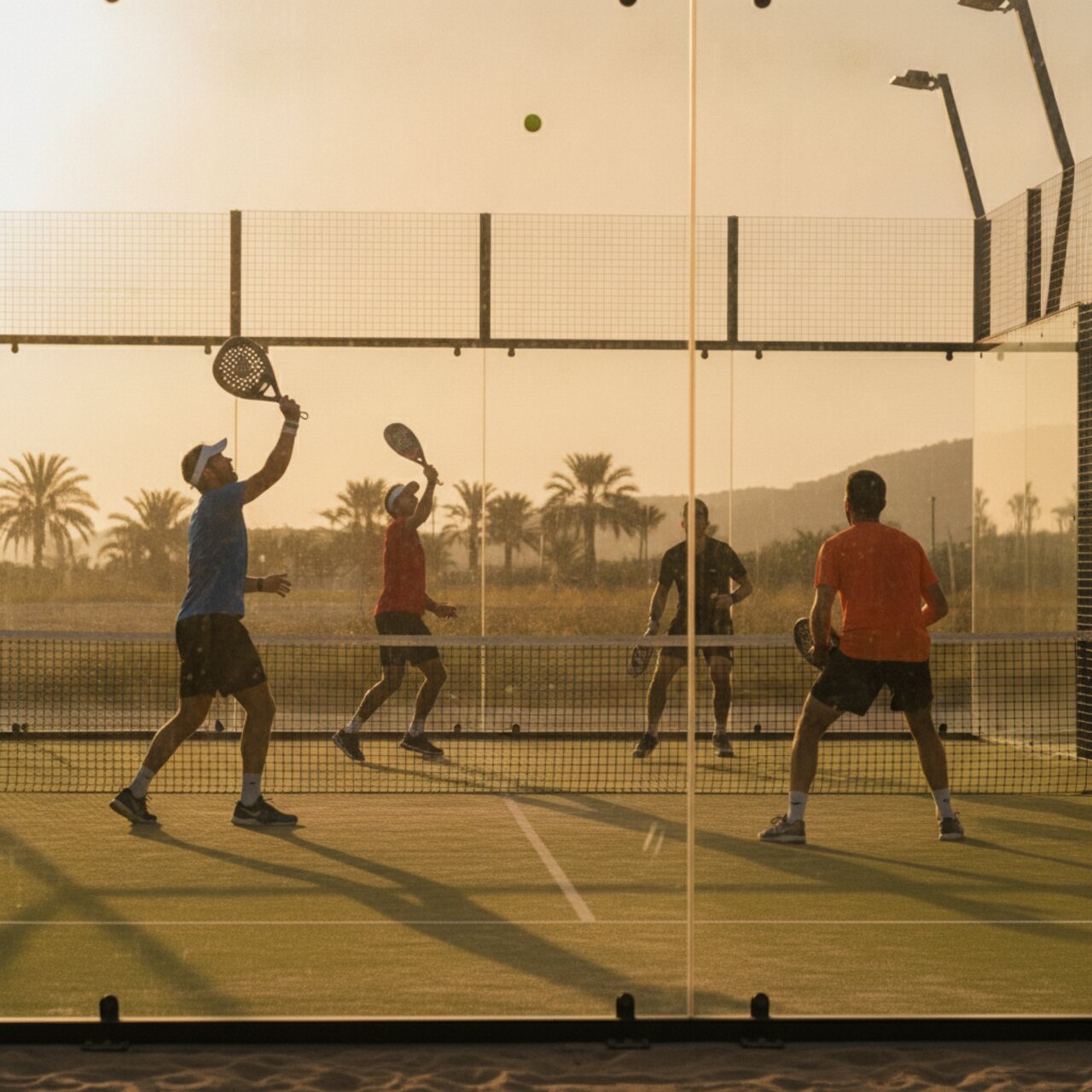
Two pairs of roughly equal level play a set and one of them wins it 6-2 without hitting a single shot the other pair could not have hit. Controlling the tempo of a padel match is usually what happened. One pair played at the speed that suited them, dragged the other pair into it, and the losing pair walked off convinced they had simply played badly.
Tempo is the most available tactic in padel and the least used. It costs nothing physically, it requires no new shot, and you can change it on the next point. Most club players never touch it because they have never thought of a match as having a speed at all.
The Two Clocks You Are Actually Playing
A padel match runs on two separate clocks, and they are controlled in completely different ways.
The first is the clock between points: from the moment the ball dies to the moment the next serve is struck. The rules allow you a maximum of 20 seconds there. Most amateurs use eight, sometimes five, because standing still feels like doing nothing. Across the 60 to 90 points of a two-set match, that is a very large amount of unused control.
The second clock runs inside the rally, and it is set by shot selection rather than by your watch. A high lob to the corner buys three or four seconds. A flat drive down the middle removes two. Two players trading volleys at the net are hitting roughly a ball a second; the same two players in a lobbing exchange are hitting one every three. Same court, same players, entirely different match.
Pairs who talk about tempo usually only mean the first clock, which is why their attempt at it looks like nothing more than walking slowly. The second clock is where most of the match actually gets decided.
Why Controlling the Tempo of a Padel Match Wins Free Points
Amateur padel is a rhythm sport. Your opponent’s forehand is far more reliable on the fifth ball at the same pace than it is on the first ball at a new one, because repetition is doing half the work for them. Change the speed and you take that help away without touching their technique.
There is a physical argument too. Padel points are short and sharp, so recovery does not happen during rallies, it happens between them. Whoever controls the gap between points is deciding how recovered both pairs are for the next one. A player who has just run three corners and wants twenty seconds should not be allowed twelve.
The emotional case is the one you see most obviously. A pair on a run wants the next point immediately, while the pair that has just dropped four in a row needs the match to stop for a moment. Whichever side of that you are on, the tempo lever is right there.
Read the Match Before You Change Its Speed
Slowing down is not automatically correct. Deciding which way to push requires a read, and four signals give you one quickly.
Breathing at the changeover. Watch the opponents walk to the fence. Hands on hips, a long drink, a slow return to position — they want the match slow, so you keep it fast.
The kind of errors they make. Errors on the second or third ball of a rally mean they are rushing, and rushing players want you to hurry them into more of it, so keep the pace up. Errors on the tenth ball mean they are impatient, which is an invitation to lengthen every rally you can.
Runs on the scoreboard. Four of the last five points to them is enough evidence. Something is working for them and repetition is part of it, so break the pattern before the set gets away.
Their between-point ritual. A player who bounces the ball three times, always, on every serve, is telling you they are a rhythm player. Those are the opponents worth disturbing. A player with no routine at all is already playing at a random speed and there is less to take away.
Conditions matter as well. On a cold night the ball dies fast and long pauses leave everyone stiff; in August heat, the pair with better fitness should be shortening the gaps, not lengthening them.
How to Slow a Padel Match Down
Between points, the moves are small and legal. Walk to the back fence after every point, not just the ones you lose. Collect the ball yourself rather than letting your partner feed it to you. Dry the grip, adjust it, look at your partner, then take position. If you are receiving, do your thinking before you get into the receiving stance, because once you are set the server is entitled to go.
The important half happens inside the rally, and it starts with the lob. A well-hit defensive lob is the brake pedal of padel: it adds three or four seconds to the point, pushes the opposing pair back off the net and turns their smash into a bandeja. Nothing else changes the speed of a rally so completely with one shot.
Low balls do similar work. A ball dropped at the feet of a net player forces a soft, upward volley and kills any exchange that was building pace. Deep, high crosscourt balls with height over the net stretch the point without risk. And when you are at the back under pressure, defending patiently from the corners rather than trying to end the point with one flat drive extends the rally in the direction you want.
Then set yourself an explicit target: two more shots per rally than you have been playing. Not “be patient”, which nobody can act on, but a number you can count while you play.
The honest caveat is that a pair who only slows down when they are losing gets read instantly, and their opponents start doing it back. The whole thing works better as a setting you can switch either way than as a panic response to being 1-4 down.
How to Speed a Padel Match Up
Speeding up is mostly about eliminating dead time rather than hitting harder. Keep the second ball in your pocket so you never hunt for it. Take your position first and serve within a couple of seconds of the receiver being ready. After a point you win, do not celebrate for eight seconds — get back and go.
Inside the rally, the accelerators are the flat drive through the middle, the volley taken early and hit down at the feet, and choosing the víbora over the bandeja when the opponents are already out of position. Coming to the net one shot earlier than usual shortens every point in the game, which is the fastest way to raise the average speed of a whole match.
The best moment to speed up is the point immediately after a long rally that you won. They are breathing hard, they are still thinking about the previous point, and the sooner the next serve happens the less of both they get to fix. This is also why fast play is the natural answer to opponents who lob constantly — a pair built on grinding out long defensive points is happiest when the match has plenty of air in it.
One check before you do it: if your last two errors came from rushing, speeding up will make three. Fast tempo suits the pair that is hitting cleanly. Take that lever away from yourself when you are the one spraying balls.
Situations Where Tempo Decides the Match
They win four points in a row. The single clearest cue in the whole game. Break the sequence — take your full time, change which ball you are using, talk to your partner about something concrete, then play the next point deliberately slower. You are not stopping their good play, you are stopping the repetition it relies on.
You have just won a marathon point. Do not stand there enjoying it. That point cost them more than it cost you, because winning a long rally feels better than losing one. Serve while that is still true.
You are serving at 4-5 down. The instinct is to hurry the game away, and it is exactly wrong. Slow this one right down: full time between points, a lob or two early in each rally, nothing attempted before the fourth shot. Playing pressure points slowly is the tactical half of staying calm at break point.
Your partner is unravelling. A partner who has missed three in a row does not need advice, they need time. Take a slow walk to the fence with them between points. The tempo lever is often a partner-management tool before it is a tactical one.
The last game of a long, hot match. Whoever has more left should be squeezing the gaps. If that is you, be first to position and first to serve. If it is not, use every one of your 20 seconds.
Where Tempo Ends and Stalling Begins
There is a line here and it is worth being clear about. The rules give 20 seconds between points, 90 seconds at the change of ends and 120 seconds between sets. Inside those numbers you are managing the match; outside them you are stalling, and in a league or tournament you will be told so.
The other test is behavioural rather than numerical: would you be doing the same thing after winning the point? A player who takes their full time on every point is playing tempo. A player who only takes it after losing one — retying a shoe, hunting for a different ball, suddenly needing a drink — is doing something else, and everyone on court knows which is which. That falls under the same on-court etiquette as calling your own lines honestly.
Two Ways to Practise It
The split set. Play a practice set where the first four games are played as fast as legally possible — serve immediately, attack early, no lobs — and the last four as slowly as possible, with full time between points and a minimum of six shots before anyone attempts a winner. Both pairs will notice that their error patterns change completely. That noticing is the whole point of the exercise.
Rally-length targets. Play games where no pair may attempt a winner before the sixth shot. It feels artificial for ten minutes and then it recalibrates what “patient” means, which is the hardest part of learning to slow a match down under real pressure.
Afterwards, look at where your matches actually go wrong. If your losses cluster in short, frantic points, your default tempo is too fast for the way you play, and reviewing your match history will show that far more reliably than memory does.
Tempo will not turn a bad pair into a good one. What it does is stop a good pair from being played at somebody else’s speed for two hours, which happens more often than most players realise, and costs more matches than the shots they spend all winter practising.