By Mario GonzalezStrategy
Playing Against Constant Lobbers in Padel: The Counter-Strategy
Playing against constant lobbers in padel takes footwork, net depth and shot choice. Learn how to answer a constant lob barrage without giving up the net.
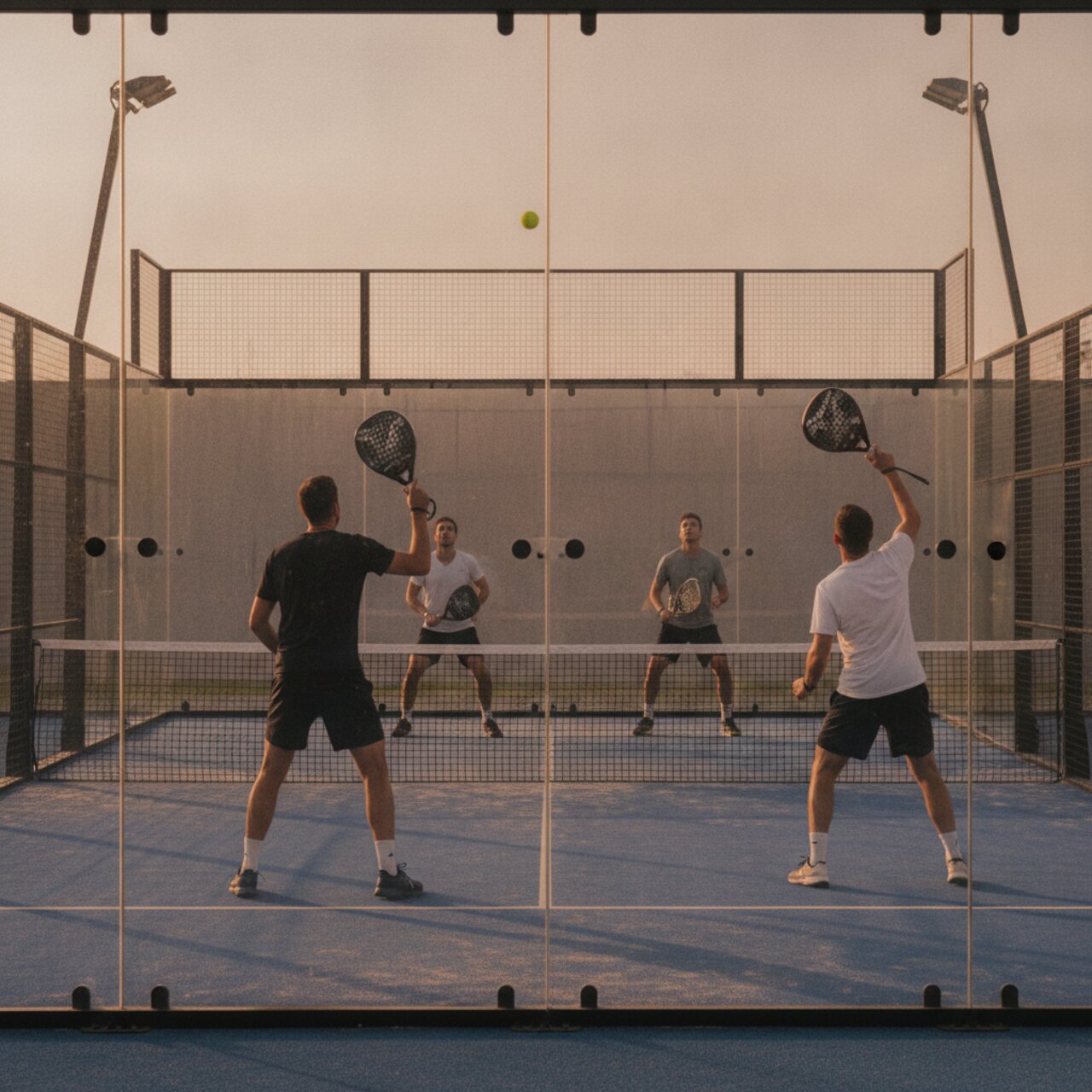
Every club has one. The player who lobs the serve, lobs the return, lobs off the wall, lobs when they are stretched and lobs when they have a free ball at waist height. Playing against constant lobbers in padel is the most common complaint you will hear on the benches after a match, usually phrased as some version of “they didn’t hit a single proper shot and we still lost.”
They won because the lob is a great shot played by someone who has stopped apologising for it. It costs almost nothing to hit, it takes the net away from you, and it exposes the two things club players are worst at: moving backwards and choosing an overhead. Fixing those two things is most of the counter-strategy.
Why Constant Lobbers Beat Better Players
A lobber is not trying to win the point with the lob. They are trying to make you play a shot you are bad at, from a position you do not like, four or five times in a row, until one of those overheads goes into the net or floats short.
Look at what a single deep lob actually costs you. You lose your net position for two or three seconds. You have to hit a shot with your body moving backwards, which is the least stable way to strike a ball. You have to pick between three different overheads under time pressure. Your partner has to shuffle across to cover the space you left. That is a lot of chaos for a shot that took no effort to produce.
Then it happens again. And again. Around the fifth lob of a long point, most pairs make one of two mistakes: someone goes for a winner from a position that does not offer one, or both players quietly drift back to the baseline and never come forward again. The lobber does not need to raise their level. They just need you to lower yours.
There is an important distinction here that changes your plan. A genuinely defensive pair lobs when they are in trouble and it is the correct shot. A constant lobber lobs on everything, including balls that deserved a drive or a volley. The second type is more annoying but more beatable, because a large share of their lobs are hit from bad positions and land short.
Move Back Like a Player, Not Like a Crab
The single biggest upgrade against lobbers has nothing to do with tactics. Most club players backpedal, facing the net, taking small hopping steps. It is slow, it is unstable, and it caps how far back you can get before the ball passes over your head.
Turn and run instead. As soon as you read the lob, pivot on the foot nearest the side the ball is going, turn your shoulders so your chest points at the side wall, and cross-step back with your eyes on the ball over your shoulder. Two crossover steps cover the ground that six backpedal shuffles cannot.
Get behind the ball, not under it. Aim to arrive with the ball slightly in front of your hitting shoulder so you can transfer weight forward into the shot. Arriving directly underneath forces you to hit while leaning back, which is exactly how you produce the floating overhead that gets lobbed again.
Recover forward the moment you strike. The lobber’s whole plan depends on the gap between your overhead and your return to the net. If you hit a good deep bandeja and then walk back to your position, you have handed them the two free seconds they wanted. Hit, then move; the recovery step should feel like part of the shot.
Set Your Net Position Half a Metre Deeper
Standing one metre from the net is correct against pairs that drive. Against a pair that lobs on every third ball, it is a trap. That extra metre of space behind you is the whole reason their lobs land in.
Play from around two metres off the net when the lobber is preparing. You give up very little on the volley, since almost nothing gets past you at that depth anyway, and you buy a full step of reaction time on the lob. Most importantly, the balls that used to sail over your head now land where you can take them out of the air.
Read the setup rather than the ball. Lobbers telegraph badly: the racket face opens early, the knees bend more than the shot requires, and the contact point drops below the knee. When you see an open face under a low ball, start your turn before the ball is struck. Half a second of anticipation is worth more than any amount of speed.
The court has three working zones and lobbers are trying to keep you shuttling between two of them. Understanding court positioning and the three zones helps here, because the losing pattern is always the same: net, no-man’s land, net, no-man’s land, error.
Pick the Right Overhead, Every Time
Choosing an overhead against a lobber is a percentage decision, not a mood. There are four answers and each one belongs to a specific ball.
The bandeja is your default. Any lob that pushes you past the service line gets a bandeja: controlled, cut, deep to the corner, hit at maybe 60% effort. It keeps you facing forward, it lands deep enough to prevent a comfortable next lob, and it gets you back to the net. Against a lobber you may hit fifteen of these in a set, so it needs to be a shot you trust with your eyes half closed.
The víbora is for the lob that lands short, around the service line, with you still able to get above it. More pace, more sidespin, aimed at the side glass so the ball skids low. This is the shot that actually punishes a lazy lob and starts to make the lobber think twice.
The flat smash is for the gift: a short lob, sitting up, with you set and balanced under it. That is maybe one ball in eight. Playing it on any other lob is how you gift them the free points that keep them lobbing.
The escape shot is for when you are already beaten and the ball has passed you. Rather than a desperate defensive lob back, the smash por tres sends the ball off the side glass and out of the court, ending the point outright. It needs practice, but against lobbers it converts a losing position into a won point often enough to change the whole match.
The fourth option, and the least used, is to let the ball bounce. If the lob is genuinely too deep to take in the air, do not chase it into a horrible overhead. Let it come off the back glass and play a controlled wall exit, then lob back yourself and rebuild. Losing the net for one point beats losing it for the whole game because you dumped a stretched bandeja into the net.
Stop Feeding the Lob
Some of your shots produce lobs and some do not. Against a lobber this matters more than against anyone else, because their preferred ball is a soft, shoulder-height volley that gives them time to set up underneath.
Volley low and volley deep. A hard volley that lands at their feet or a low ball into the corner is very difficult to lob well. If they do lob it, it comes out short, and short lobs are the ones you punish with the víbora. The pattern is simple: the quality of their lob is set by the quality of your previous ball.
Take the ball earlier when you can. Every ball you volley out of the air instead of letting it bounce takes time away from them and cuts down the number of comfortable lobs they get to hit.
Drag them forward. A lobber standing three metres behind the baseline cannot lob a ball they are running onto from a sprint. A well-timed drop shot after two deep bandejas puts them in the front of the court, out of their comfort zone, and usually produces a floated ball you can attack.
Target the other player. If only one opponent is a compulsive lobber, play a much higher share of your balls at their partner. It is the least glamorous tactic in padel and one of the most effective, and lobbers in particular tend to poach across to rescue balls, which opens the court.
Agree Who Takes the Lob Before It Happens
Half the points lost to lobbers are lost between the two of you, not to the opponents. The cross-court lob over the middle is the classic: both players go, neither commits, and the ball bounces between you.
Set the rules before the match. The simplest workable version: the player whose forehand overhead is on that side takes the middle lob, and the partner covers the space that opens up by sliding across, not by staying put. Say it out loud during the point. “Mine” and “yours” are the two most valuable words against a lobbing pair.
The partner who is not hitting has a job. When your partner turns to chase a lob, you should be sliding towards the centre and dropping half a step back, because the next ball is far more likely to come to the space they left than at you. Pairs who move as a block against lobbers give up almost nothing down the middle.
Practice Scenarios
The lob barrage. One player at the net, two feeders at the back throwing continuous deep lobs, one every four seconds for two minutes. The rule is that every ball must be answered with a bandeja and followed by a recovery step to the net. It is a fitness drill as much as a technical one, which is the point: fatigue is what makes overheads fail against lobbers.
Mixed depth overheads. The feeder alternates unpredictably between a deep lob and a short one. Deep gets a bandeja to the corner, short gets a víbora into the side glass. Twenty balls, and count how many times you pick correctly. Most intermediate players start below 60% and the decision, not the technique, is what loses them points.
Escape practice. Have a partner deliberately lob over your head so that the ball is already past you. Work only on the turn, the chase and the por tres exit. Ten repetitions per side. Even at a low success rate, it removes the panic from the situation.
Low volley targets. Place a cone at each corner of the opponents’ service boxes. Volley twenty balls aiming for the cones, focusing on keeping the ball below net height on the other side. This is the drill that reduces the number of lobs you face in the first place. Combine it with regular agility work if backwards movement is your weak point.
Keep Score of the Right Things
The lobber wins on frustration, so measure something other than frustration. Count the number of overheads you hit into the net during a set. If that number is above three or four, the problem is shot selection, not the opponent.
Expect long points and decide in advance that you are fine with them. A twelve-shot rally where you hit six bandejas and finally get a short ball is a good point, not a tedious one. Pairs who accept this rhythm stop hunting for winners on the fourth ball, and that alone flips a lot of matches.
Tracking your matches over a season makes the pattern obvious. If you log results in Padellog, you will start to see which opponents consistently cost you points and whether your record against the lobbing pairs at your club is improving. The reason this style is so common at club level is that it works, right up until someone in the pair opposite has a bandeja they trust and the discipline to keep using it.