By Mario GonzalezGuides
Indoor vs Outdoor Padel: Pros and Cons of Each Court
Indoor vs outdoor padel changes how the ball bounces, moves, and plays. Compare conditions, cost, and tactics to pick the right court for your own game.
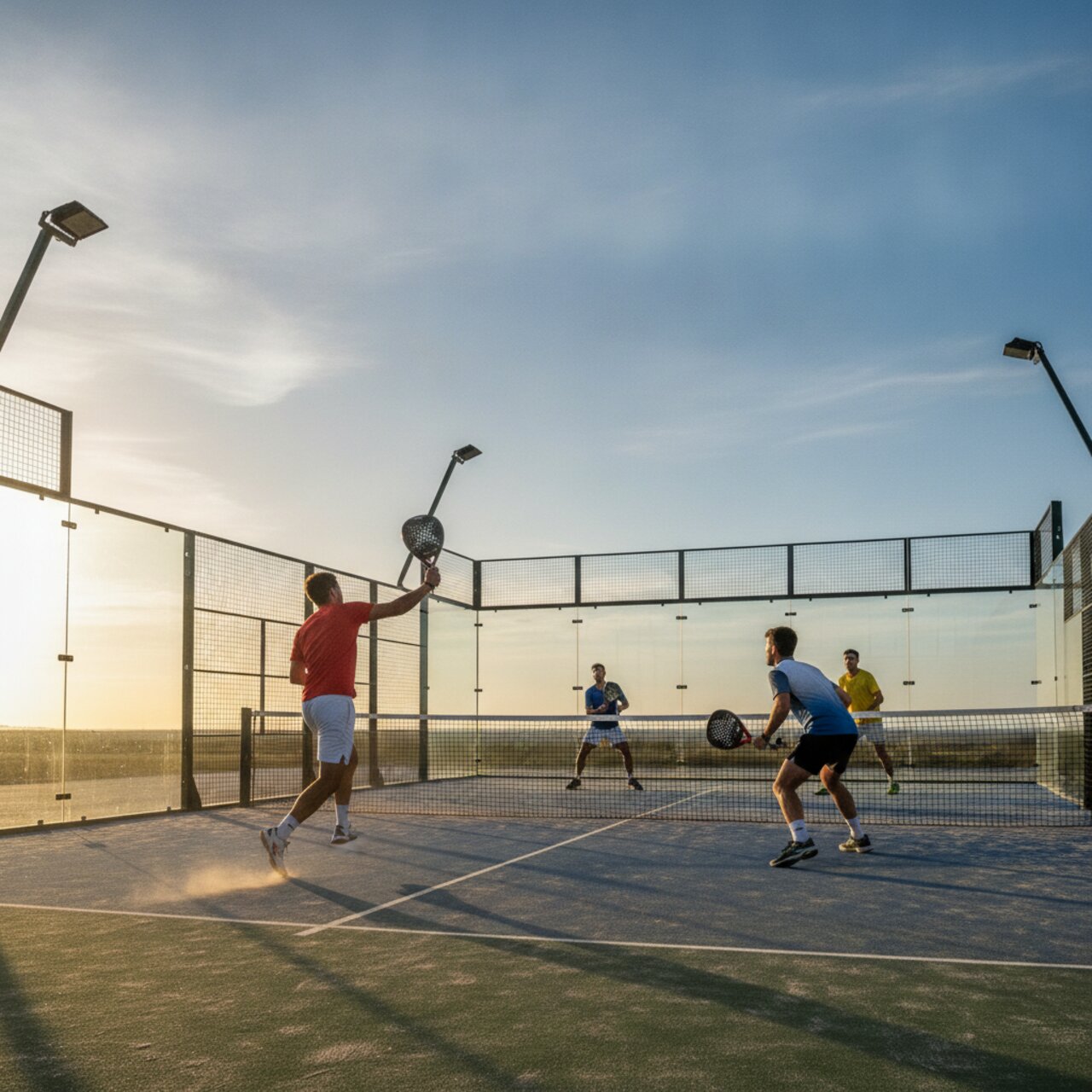
Ask two padel players where they prefer to play and you’ll usually get two firm answers. The indoor vs outdoor padel debate comes down to more than a roof: wind, sun, temperature, and even the surface underfoot all change how the ball behaves and how you have to play. Understanding those differences helps you adapt faster when you book a court in an unfamiliar venue, and it explains why your reliable bandeja suddenly floats long on a windy Saturday morning.
Both formats play by the same rules of padel on the same court dimensions. What changes is the environment around the glass, and that environment shapes everything from shot selection to how tired you feel after three sets.
What Counts as Indoor vs Outdoor Padel
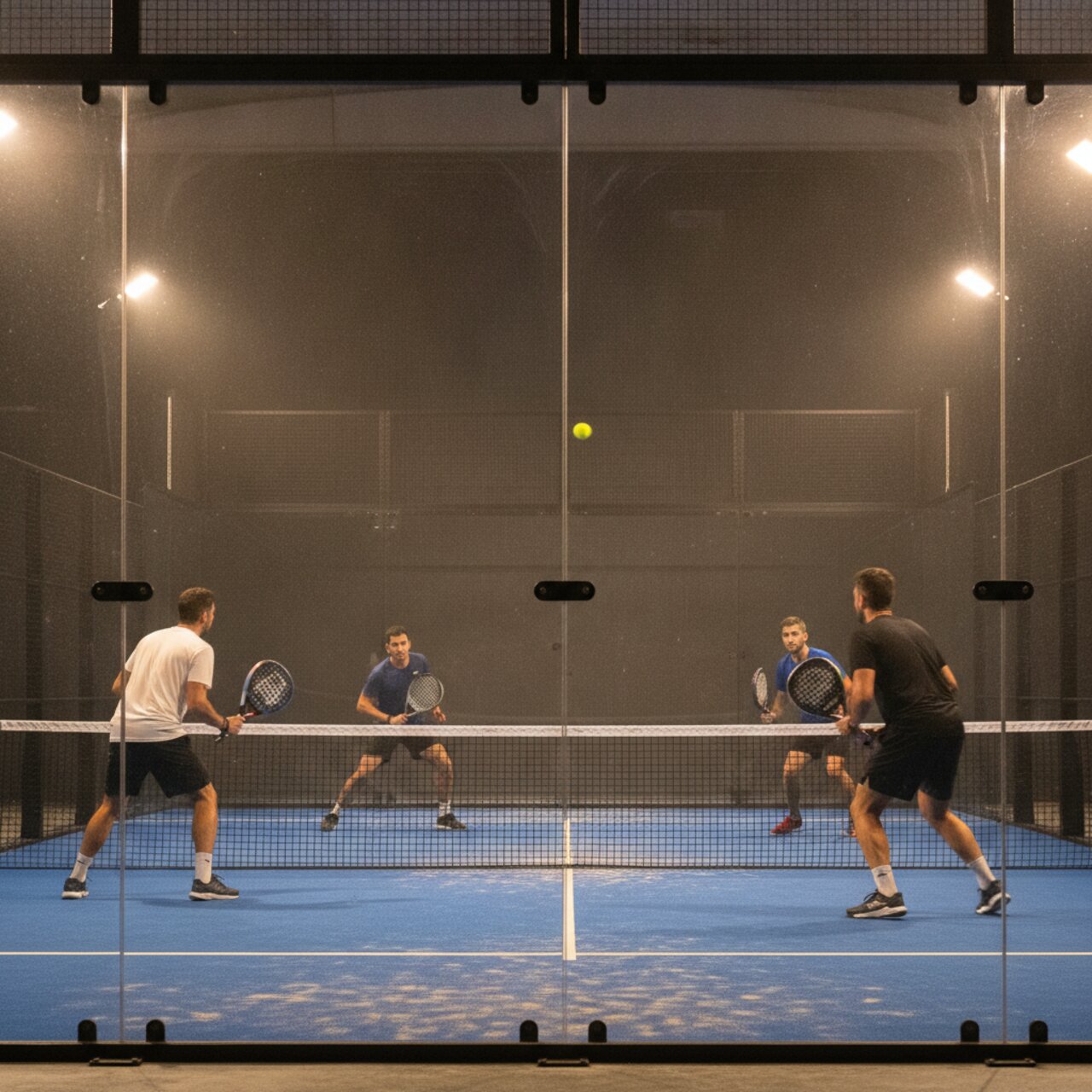
Indoor padel is played under a permanent roof, usually inside a sports hall or a purpose-built padel center. The court is sheltered from weather entirely, lit by artificial lighting, and the surface stays dry year-round.
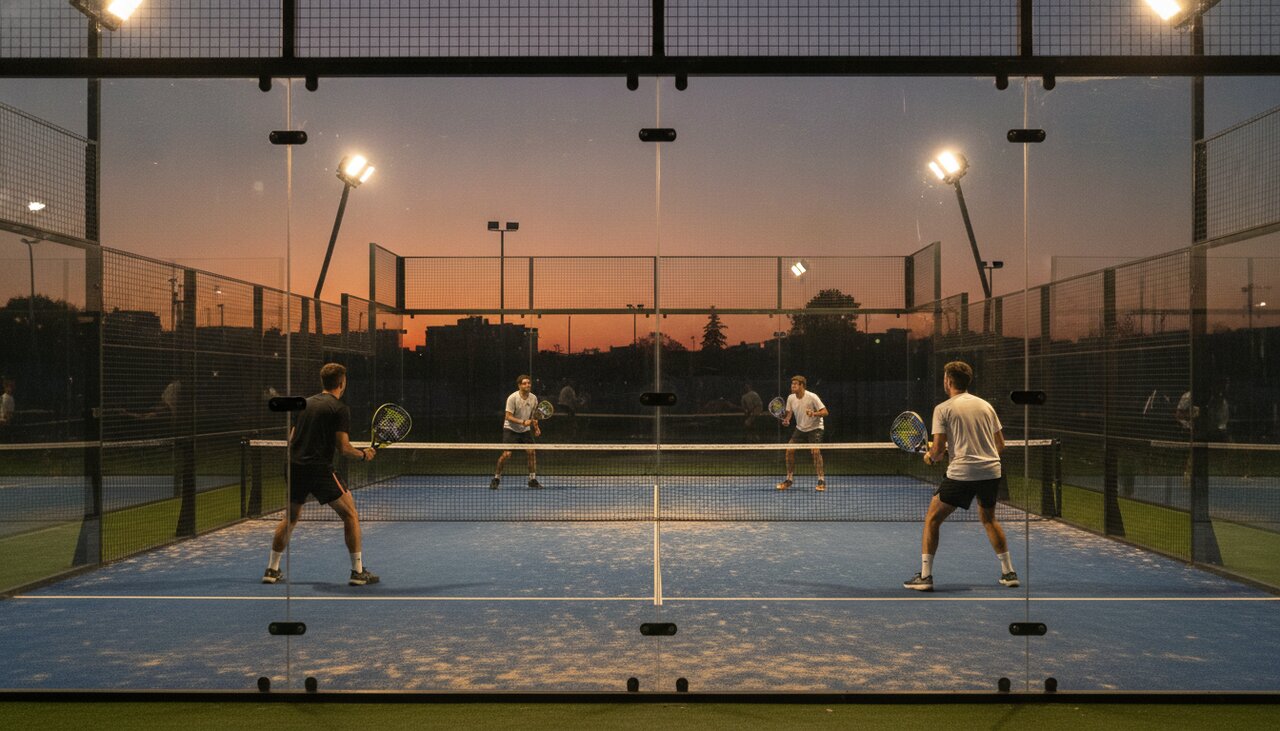
Outdoor padel sits under open sky. Some outdoor courts have a partial cover or a canopy over the net area, but they remain exposed to wind, rain, and direct sun. A third category, the covered-but-open court, has a roof yet no walls beyond the standard glass and mesh, so it blocks rain and sun while still letting wind through the sides. That middle option behaves more like an outdoor court than an indoor one on a breezy day.
Key Differences at a Glance
| Factor | Indoor | Outdoor |
|---|---|---|
| Wind | None | Affects lobs, serves, high balls |
| Sun and glare | None | Can blind you on smashes and lobs |
| Temperature | Stable, often warm | Varies with season and time of day |
| Ball speed | Consistent, slightly faster | Slower in cold, livelier in heat |
| Lighting | Even, artificial | Bright day, harder at dusk |
| Surface grip | Reliably dry | Can get damp or dusty |
| Availability | Books out fast in winter | Popular in good weather |
| Cost | Usually higher | Usually cheaper |
The Case for Indoor Padel
The biggest advantage of indoor courts is consistency. There’s no wind to push your lob over the back glass, no sun to lose the ball in on an overhead, and no rain to cancel your booking. That predictability is why almost every professional tournament on the Premier Padel circuit is played indoors: the conditions never favor one pair over the other.
For learning, indoor is hard to beat. When you’re grooving a bandeja or working on your volley, you want the same bounce every time so you can feel what a clean contact should be. Outdoor variables add noise to that feedback loop.
Indoor courts also extend your season. In northern Europe, players train through winter on heated indoor courts while outdoor facilities sit frozen. The trade-offs are real, though: indoor time usually costs more per hour, prime slots book out weeks ahead in cold months, and poorly ventilated halls can get stuffy and hot during a hard match.
Where indoor gets tricky
Not all indoor venues are equal. Low ceilings punish the lob and the víbora because a well-hit high ball clips the roof, which counts against the striker. Anything under roughly seven meters of clearance will frustrate players who rely on deep lobs. Lighting quality varies too; older halls with dim or uneven lights make fast exchanges harder to track than a bright outdoor afternoon.
The Case for Outdoor Padel
Outdoor padel is where the sport grew up. In Spain, Argentina, and Mexico, the club culture is built around open-air courts, and there’s a reason players keep coming back: fresh air, natural light, and often a lower price per session.
The elements force you to become a more complete player. Learning to read the wind, adjust your ball toss on the serve, and flatten out your lobs on a gusty day builds adaptability that indoor-only players never develop. When you then step onto a calm indoor court, everything feels easier.
Outdoor also tends to be more social and more available in good weather. Many clubs have more outdoor courts than indoor ones, so casual games are easier to book on a sunny evening.
Where outdoor gets tricky
Weather is the obvious drawback. Wind is the single biggest disruptor: a 20 km/h breeze turns a routine lob into a gamble and can push a smash long. Sun is the second problem. A low afternoon sun directly behind the back glass makes overheads genuinely dangerous, which is why eye protection and good sunglasses matter more outdoors.
Temperature swings affect the ball itself. In cold weather the ball goes slower and lower, rewarding patient, grinding play. In summer heat it flies faster and bounces higher, and you’ll also need a proper heat and hydration plan to last three sets. Damp mornings leave the surface slick, and dew on the glass can blur the ball’s rebound off the back wall.
How Conditions Change Your Tactics
The smart move is to adjust your game to the court rather than forcing your usual patterns.
On a windy outdoor court, cut down on high, floaty lobs and play flatter, more direct balls. Keep your serve toss lower and more in front of you so the wind can’t drift it. When the wind is at your back, respect it: balls carry, so aim shorter than feels natural.
Playing into a low sun, avoid getting drawn into overhead duels. Let the lob bounce and take it off the back wall instead of smashing blind into the glare. Position slightly deeper so you’re not forced to look straight up into the sun.
Indoors, exploit the consistency. This is the environment to commit fully to your bandeja and víbora, use the lob aggressively if the ceiling is high enough, and build long constructing rallies knowing the bounce won’t betray you. Note the roof height in your first two points and cap your lobs accordingly.
The ball choice matters as well. Cold or high-altitude conditions and fast indoor play call for different pressures, which we break down in our guide to indoor vs outdoor padel balls.
Which Should You Choose?
If you’re a beginner focused on building clean technique, favor indoor courts when you can. Consistent bounce accelerates learning, and you’ll spend your energy on the stroke rather than fighting the elements. Read our complete beginner’s guide alongside your first indoor sessions.
If you’re an intermediate player wanting to compete, split your time. Train technique indoors, then test it outdoors where adaptability gets rewarded. Most club leagues and amateur tournaments in warm climates are played outdoors, so you need those reps.
If you mainly play socially, choose by season and budget. Outdoor on mild evenings is cheaper and pleasant; indoor is your reliable fallback when the weather turns.
There’s no universally better court. Indoor rewards precision and consistency, outdoor rewards adaptability and reading conditions. The players who improve fastest are comfortable on both, because every venue you visit for the rest of your padel life will be one or the other, and knowing how to adjust is a skill in itself.
Track how your results shift between indoor and outdoor courts in the Padellog app, and you’ll start to see which conditions actually suit your game.