By Mario GonzalezTechnique
The Padel Forehand: Fundamentals, Fixes and Drills
The padel forehand is the shot players trust most and control least. Grip, contact point, swing path, the six most common faults and four drills to fix them.
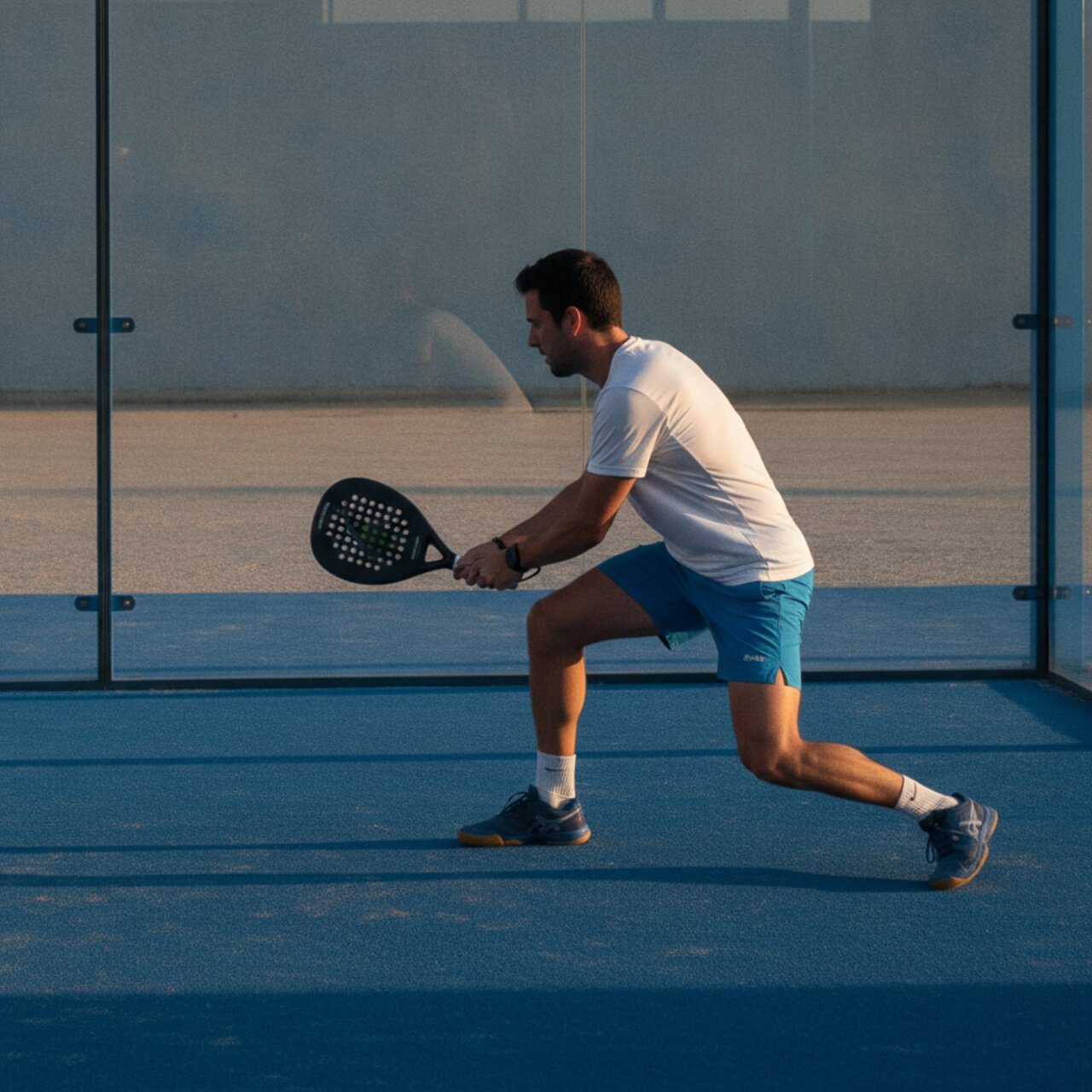
Nobody arrives at a padel court worried about their forehand. It is the side you trust, the side you reach for, the side you happily run around your backhand to use. Which is exactly why the padel forehand quietly costs most club players more points than any other shot: confidence produces a bigger swing, a bigger swing produces a faster ball, and a fast ball in a 20-metre box with glass at both ends comes straight back at you.
The shot that wins padel points is not the forehand you learned watching tennis. It is a shorter, flatter, far more disciplined stroke whose main job is to keep the rally alive at a height and depth that gives the opposition nothing. Once you accept that, most of the technical work is subtraction rather than addition.
Why the Padel Forehand Is Not a Tennis Forehand
A tennis court is 23.8 metres long. You can hit through an opponent because there is space behind them for the ball to travel into. A padel court gives you 10 metres from the net to the back glass, and behind that back glass there is nothing, so your hardest drive rebounds off the wall and lands as a comfortable ball for the player you were trying to hurt.
The consequence is direct. Pace on the forehand is only useful when the ball is above net height and you are already at the net. From the back of the court, roughly 80% of your forehands should be doing one of two jobs: putting the ball deep at the feet of the net players, or lifting it over their heads. Neither requires a fast arm.
The second structural difference is time. In tennis you get roughly a second between shots at club level. In padel, in a net exchange, you get about half of that. A long take-back that works fine from the baseline simply does not fit, and the ball arrives while your paddle is still going backwards.
Grip: Continental, Not Semi-Western
Hold the paddle in a continental grip, the same one that produces the bandeja, the volley and the serve. The simplest way to find it: put the paddle face flat against the side glass, then take hold of the handle as if shaking hands with it. The V between thumb and index finger sits on the top-left bevel for a right-hander.
Players coming from tennis usually arrive with a semi-western or eastern forehand grip, and it produces two problems immediately. The closed face makes low balls near the glass almost impossible to lift, and you cannot switch to it and back on a fast net exchange, so you end up volleying with whatever grip you happened to be holding. One grip for every shot is worth more in padel than any spin advantage.
Grip pressure matters as much as grip type. Around 4 out of 10 keeps the wrist firm through contact without locking the forearm. Squeezing produces the flat, long forehand that clips the back glass on the full.
The Padel Forehand, Step by Step
Prepare short and turn early
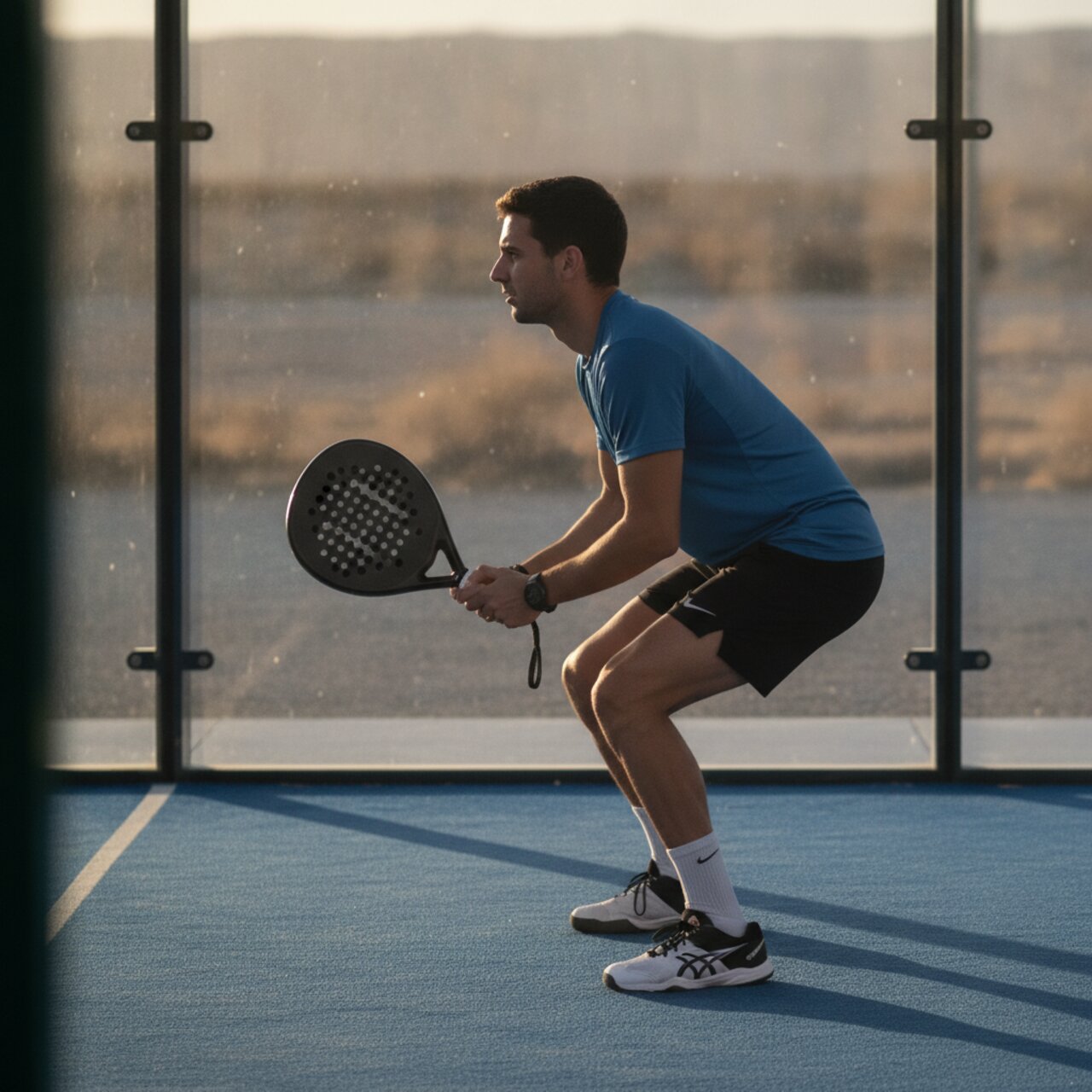
Shoulders rotate, paddle comes back to roughly hip height, and that is the whole preparation. No loop above the shoulder, no take-back behind your back foot. Think of the distance the paddle travels backward as about the width of your body, no more.
Turn as soon as you read the ball, before your feet move. Your non-hitting hand points loosely toward the incoming ball, which sets the shoulder turn and gives you a spatial reference for the contact point. Players who sprint first and turn later arrive facing the net and hit the ball with their arm alone.
Contact in front, at knee to hip height
Contact belongs in front of your leading hip. This is the single most reliable diagnostic in the whole shot: if the ball is level with your body or behind it, no amount of technical work on the swing will save the result.
Bend the knees, not the waist. Padel forehands arrive low far more often than they arrive high, and the difference between a clean strike and a shanked one on a ball dying off the glass is usually a few centimetres of knee flexion. Keep your head still and your eyes on the contact zone through the strike.
Swing low to high, push through the ball
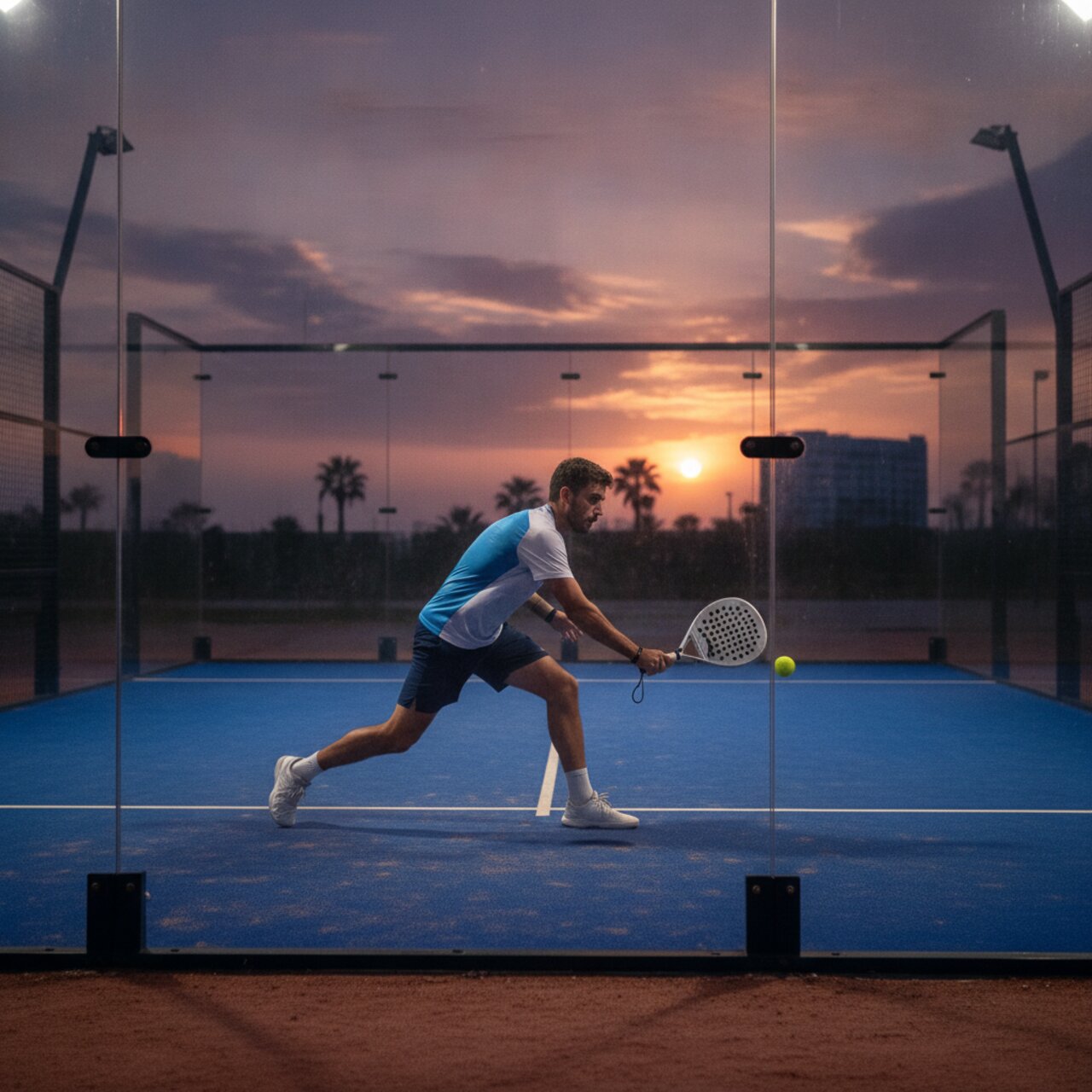
The path runs from below the ball to above it, finishing with the paddle head around shoulder height and your chest turned toward the target. Push through rather than snapping the wrist. Padel’s short strings-free surface gives you very little spin anyway, so the low-to-high path is there to control height and depth, not to generate topspin.
Aim for a metre of clearance over the net on defensive forehands and depth past the service line. That ball is dull to watch and extremely hard to attack.
The Forehand Off the Glass
Most forehand errors at club level are not swing faults, they are reading faults on a ball that has bounced off a wall. The correction is positional and it is the same every time: give yourself space.
Turn side-on and travel back with short adjusting steps, paddle up, letting the ball pass you. Strike it on its way forward off the glass, not on its way toward it. Stand a full metre off the wall to begin with, because the rebound carries further than most players expect and you can always step in. Stepping backwards once the ball is on top of you is not an option. The full mechanics of rebounds, including double-wall corners, are covered in the back wall guide.
The forehand gets one situation the backhand rarely does: the ball coming off the side glass on your outside shoulder. Here you must open your stance and let the ball travel across your body, hitting it late and low with a shorter push, usually cross-court. Trying to square up to that ball puts you in the wall.
The Forehand Volley and the Forehand Lob
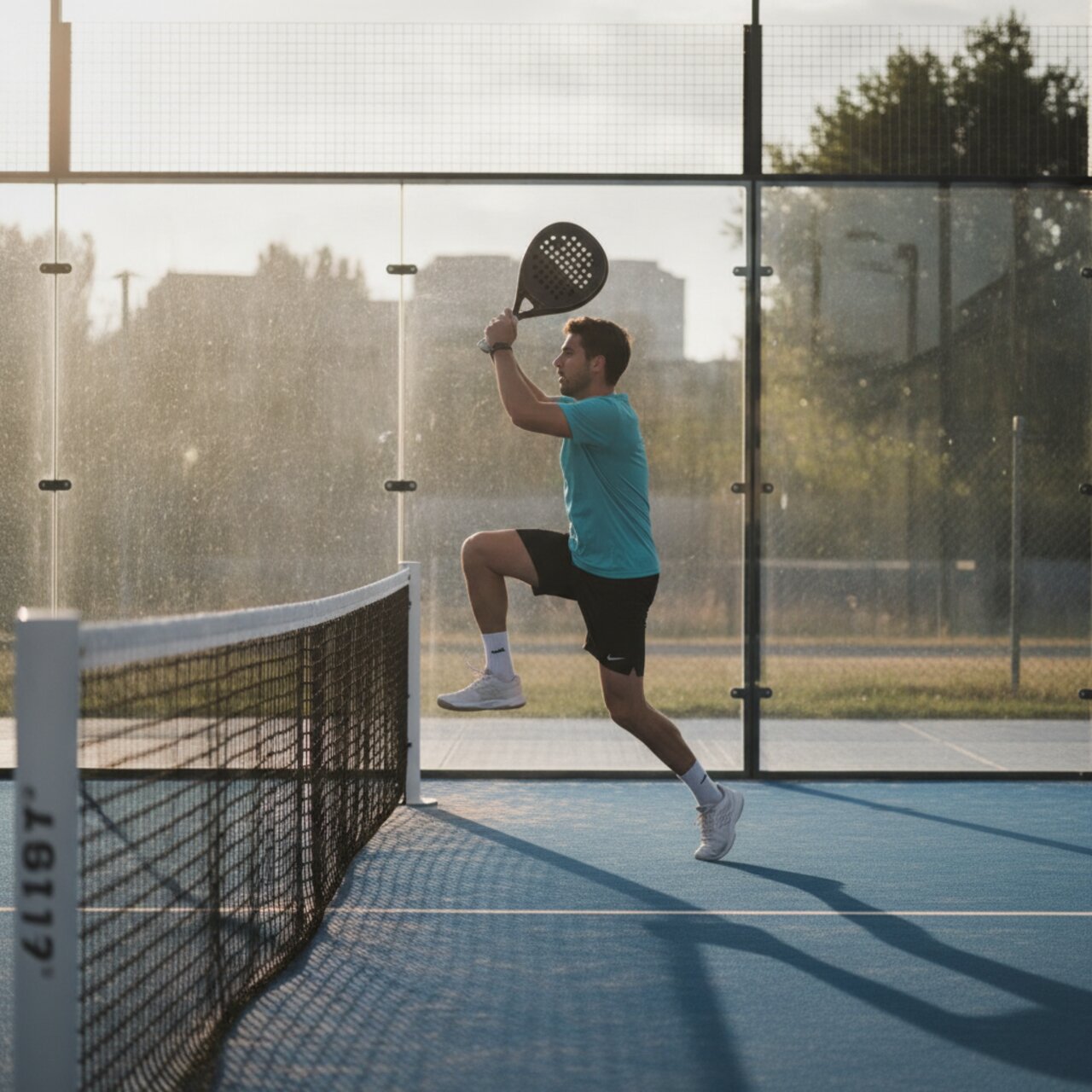
Count your shots for one match and the forehand groundstroke will not be the forehand you played most. At the net, the forehand volley is a block: paddle out in front, elbow bent, wrist firm, a punch of about 30 centimetres, ball placed deep at the feet of whoever is furthest back. The complete breakdown lives in the volley technique guide, and the only forehand-specific note is to resist the extra swing your stronger side invites you to take.
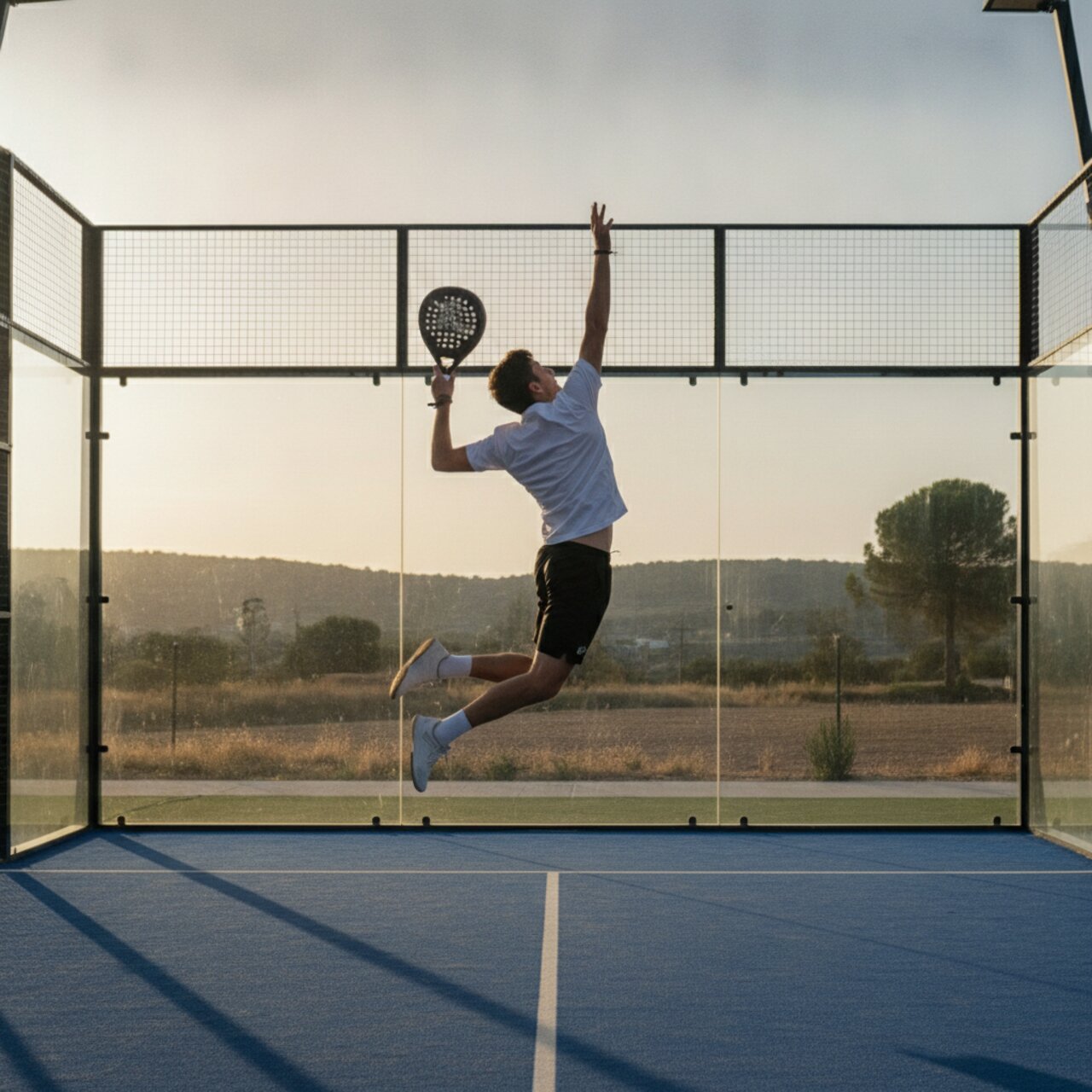
The forehand lob deserves more attention than it gets, because it is the shot that wins you the net. Same grip, same low-to-high path, just steeper and slower, with the paddle face slightly open and the finish high above the shoulder. Target the corner behind the player on the opposite diagonal and aim for a landing spot inside the last metre. The lob technique guide covers the height and depth targets in detail.
If your forehand side is solid and your other side is the one being hunted, the companion piece on improving your padel backhand covers the same ground for the shot opponents actually aim at.
Common Padel Forehand Mistakes and How to Fix Them
The full tennis take-back. The paddle goes above shoulder height behind you, and the ball arrives before you are ready. Fix it by drawing a mental line at hip height behind you and never crossing it in preparation.
Hitting winners from the back of the court. A hard flat forehand from your own baseline gives the net players a volley at chest height, or it rebounds off the glass and hands them the point. From behind the service line, lob or play deep at their feet. Save the drive for balls you take above net level.
Contact behind the hip. Almost always a footwork symptom rather than a swing fault. Ask where you arrived rather than what your arm did, and get there half a second earlier.
Running around the backhand to hit forehands. Every ball you take this way opens the entire other half of the court, and good pairs will spot it inside two games. Play the shot the ball asks for.
Standing square to the net. Without the shoulder turn the arm does all the work, and the arm alone produces no depth. The non-hitting hand pointing at the ball fixes it almost automatically.
Pegging yourself to the back glass. The most repeated wall fault. Start a metre in front of it and let the ball come to you.
Drills That Fix the Forehand
Ten shadow swings before every match. Turn, short take-back to hip height, low base, push through to a high finish. Two minutes, no ball. Preparation is a habit, not a skill, and habits respond to repetition rather than explanation.
Cross-court depth counting. Rally cross-court on the forehand diagonal and count how many out of twenty land past the service line. Under fourteen and you are either decelerating at contact or hitting while moving backwards. Repeat until you clear fourteen twice in a row.
The cone metre. Have a partner drive balls hard into the back glass on your forehand side. Place a cone or your bag one metre out from the wall and force yourself to set up in front of it on every ball. Ten balls, rest, ten more. The cone teaches the spacing better than any cue.
Lob and follow. From the back of the court, lob every ball to the opposite corner and step forward two metres afterwards. Twenty repetitions. It trains the forehand lob and the habit of advancing behind it at the same time, which is the point of the shot.
Training on your own works too. The wall routines in the guide to padel drills you can do alone will accumulate forehand repetitions without anyone on the other side.
Building the Shot Into Your Game
Work on it in the order the match uses it. The volley first, because you play the most of them and they are closest to the net where points end. The lob second, because it is the shot that moves your pair from defence to attack. The glass exit third, because that is where the unforced errors cluster. The flat drive last, and only for balls you take above net height.
Pair the technique with sound court position from the three court zones guide, and if any of the shot names here are unfamiliar, the padel glossary collects them in one place. Then track a few matches and count your forehand errors specifically, separating the ones from the back of the court from the ones at the net. Most players discover their forehand is not losing points because it is weak, but because it is being asked to do a job the court will not allow.