By Mario GonzalezStrategy
How to Play Against Defensive Players in Padel: Breaking Down the Wall
How to play against defensive players in padel: hold the net, stay patient, vary your pace, and break down the wall to force the errors that win points.

Learning how to play against defensive players in padel tests a different part of your game than facing power hitters. Defensive opponents don’t beat you with winners. They beat you with patience, retrieving everything, lobbing constantly, and waiting for you to over-hit. The frustration builds point after point until you start forcing shots that aren’t there.
The wall is what coaches call this style: a pair that absorbs your attacks, resets the point with high lobs, and trusts that you’ll eventually make the mistake. Breaking down the wall requires the opposite of brute force. You need disciplined net control, smart shot selection, and the patience to construct points until a genuine opening appears.
Why Defensive Players Are So Hard to Beat
Defensive players win through attrition. They play deep from the back of the court, read your shots early, and use the back glass to turn your attacks into easy returns. Their entire game is built on one bet: that you’ll get impatient before they get tired.
Their main weapon is the lob. A good defensive pair throws up deep, accurate lobs that push you off the net and reset the rally to neutral. Every time you think you’ve won the point, the ball floats back over your head and you’re starting again. This is mentally exhausting, and it’s designed to be.
The second weapon is consistency. Defensive players rarely miss. They take pace off the ball, keep everything in the court, and let your unforced errors do the scoring. Against a pair like this, the player who forces errors wins, and your job is to make sure that’s you rather than them.
Net Control Is Non-Negotiable
You cannot beat defensive players from the back of the court. The single most important principle is taking the net and holding it. When you control the net, you dictate the height and pace of every exchange. When you’re stuck at the baseline, you’re playing their game.
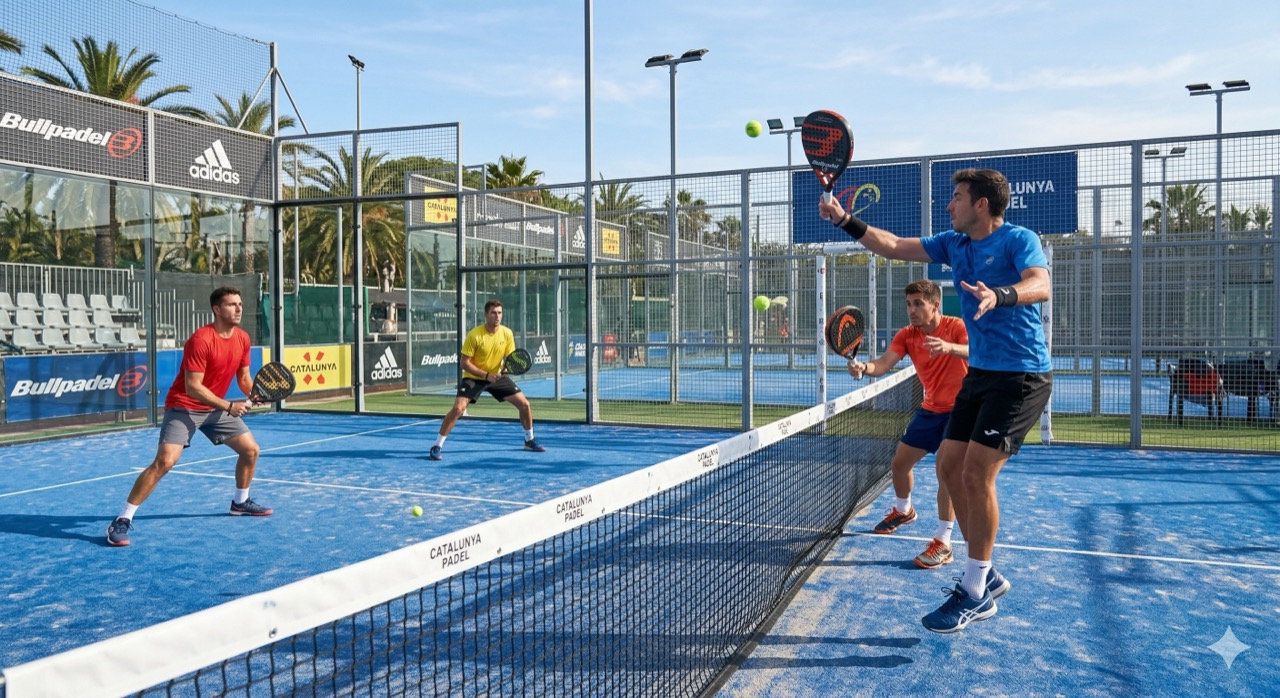
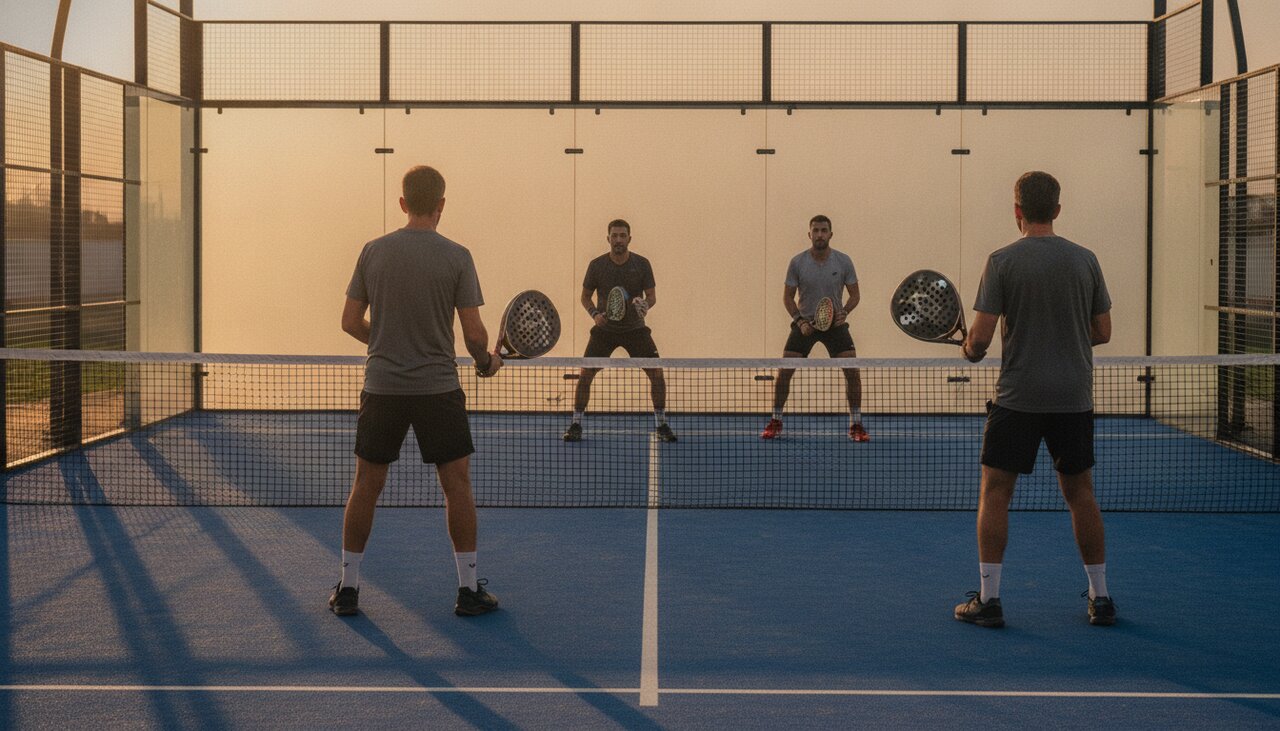
Get to the net early and get there together with your partner. A split net position lets defensive players exploit the gap with lobs and angles. Move up as a unit, hold a position about 1 meter from the net, and stay there until you’re genuinely forced back.
The hard part is staying at the net through the lob barrage. Most players retreat too easily. When a defensive lob comes, resist the urge to let it bounce and drop back. Instead, take it out of the air whenever the height allows, using a bandeja to keep the point under control without surrendering your position. The bandeja is your anchor: it lets you answer lobs while staying forward.
When you get a lob that sits up shorter, punish it. The víbora adds spin and pace to push defensive players deeper and pin them against the back glass. The goal isn’t always an outright winner. It’s keeping them uncomfortable and deep so they can’t reset cleanly.
Patience and Point Construction
The biggest mistake against defensive players is trying to end points too early. They want you to go for a low-percentage winner on the third shot so they can convert your error into a free point. Don’t take the bait.
Think of each point as a sequence, not a single shot. Your first few shots from the net should be about position and pressure, not winners. Move the ball, keep them deep, and wait for the ball that sits above net height in the middle of the court. That’s your green light. Until then, the percentage play is the smart play.
Vary your depth and pace to break their rhythm. Defensive players love predictable, repeating exchanges because they can groove their returns. Mix a hard, flat volley with a soft, low one. Follow a deep bandeja with a shorter angle. The constant change forces them to adjust their footwork and timing, which is where their consistency starts to crack.
A useful number to keep in mind: you might need to hit five, six, or seven controlled shots to earn one short ball. Accept that. Players who expect to win points in three shots against defensive opponents are the ones who end up frustrated and erratic.
The Drop Shot: Dragging the Wall Forward
Defensive players are most comfortable rooted at the back of the court. The fastest way to make them uncomfortable is to bring them forward where they don’t want to be. The drop shot is your tool for this.
A well-disguised drop shot, played when they’re deep behind the baseline, forces a sprint to the net. Defensive players are usually weaker volleyers because they spend so little time forward. Once you’ve pulled them up, the next ball is often a floating defensive volley you can attack into the open court.
Use the drop shot as a pattern, not a one-off. Pin them deep with two or three heavy shots, then change the picture with a soft drop into the corner. The contrast between deep pressure and a sudden short ball is what makes it effective. Hit it too often and they’ll start cheating forward, but mixed in correctly it pulls their whole defensive structure apart.
Open the Court and Target the Weaker Player
Against a defensive pair, geometry matters. Hitting straight back at players who are set and waiting just feeds their strength. Instead, move them. Hit to the open court, use angles to drag one player wide, and create the gaps that the back-court game tries to deny you.
A reliable pattern is to play one ball deep crosscourt to stretch them, then the next into the space they vacated. You’re not looking for a single magic winner. You’re opening the court one shot at a time until the defensive shape collapses and someone has to scramble.
Identify the weaker player early and apply steady pressure to that side. Most defensive pairs have one player who covers more and one who’s more comfortable retrieving. Make the comfortable retriever hit the uncomfortable shots: low volleys, balls into the body, and shots that force a decision under time pressure.
Winning the Lob Battle
Since the lob is the defensive player’s main reset tool, neutralizing it is half the battle. Read the lob early. Watch your opponent’s racket face and contact point. A defensive lob usually comes off an open face with an upward swing, and the earlier you recognize it, the more time you have to position underneath the ball.
When the lob is deep, the controlled bandeja keeps you in the point and on the offensive. When it’s short or floats up, step in and attack with a smash or víbora. Your decision tree is simple: deep lob equals bandeja and hold position, short lob equals attack and finish. Good footwork makes this work, so move back early with crossover steps rather than backpedaling.
If their lobs are consistently pushing you off the net, your net position is probably too aggressive. Holding 1 to 1.5 meters from the net, rather than crowding it, gives you the half-second you need to track lobs and still volley short balls. Solid positioning beats reaction speed almost every time, which is why understanding the three court zones helps you balance net pressure against lob coverage.
Common Match Situations
You’re at the net and they throw up a deep lob to your backhand corner. The instinct is to let it bounce and drop back to defend. Resist it. Move back early, take it as a bandeja, aim crosscourt and deep, and recover your net position. You’ve answered their reset without giving up the ground you fought to win.
They’re parked at the back, content to rally all day. This is your cue to change the picture with a drop shot. Disguise it like a normal volley, then float it soft into the corner. The moment one player commits forward, the pair’s structure is broken and the next ball is yours to attack.
You’ve hit three good shots and the point is still going. Frustration creeps in and you want to flatten the next ball for a winner. This is the exact moment defensive players are waiting for. Stay with the plan, hit another high-percentage shot, and trust that the short ball is coming. The discipline to play one more controlled shot is what separates players who beat the wall from players who beat themselves.
Drills to Practice Against the Wall
Set up a patience drill: play points where you and your partner must hit at least five shots before going for a winner. This trains the discipline to construct points instead of forcing them. Count out loud if it helps. The habit of waiting for the right ball transfers directly to matches.
Run a lob-and-recover drill. Have a partner feed you continuous deep lobs while you stay at the net, answering each with a bandeja and recovering your position. Do 15 to 20 in a row. The goal is to make holding the net through lobs feel automatic rather than something you survive.
Practice the drop shot under pressure. Rally from the net while a partner defends deep, and on a signal, play a disguised drop into the corner. Then immediately attack the floating reply. This links the two shots into one pattern: bring them forward, then finish into the space.
The Mindset to Break the Wall
Beating defensive players is as much mental as tactical. They’re trying to bore you into mistakes, so your job is to stay calm and treat patience as a weapon rather than a chore. Every long rally you win on your terms chips away at their belief that they can outlast you.
Don’t measure success by winners. Measure it by net position held, points constructed, and short balls earned. If you’re consistently dragging them forward, pinning them deep, and forcing the errors, you’re winning the match even when the rallies feel long. Many of the same principles apply when you flip the matchup and face power hitters, which is why studying how to play against aggressive players rounds out your tactical toolkit.
The wall only looks unbreakable until you stop trying to smash through it and start dismantling it one disciplined shot at a time. Hold the net, vary your pace, bring them forward when they least expect it, and let their patience run out before yours does. For more on building these tactical habits, work through intermediate padel tactics and drill them until they hold up under match pressure.