By Mario GonzalezFitness
Playing Padel in the Heat: Nutrition and Hydration That Keeps You Sharp
A practical guide to playing padel in the heat: what to eat, how to hydrate, and how to pace a match so you stay sharp when the court turns into an oven.
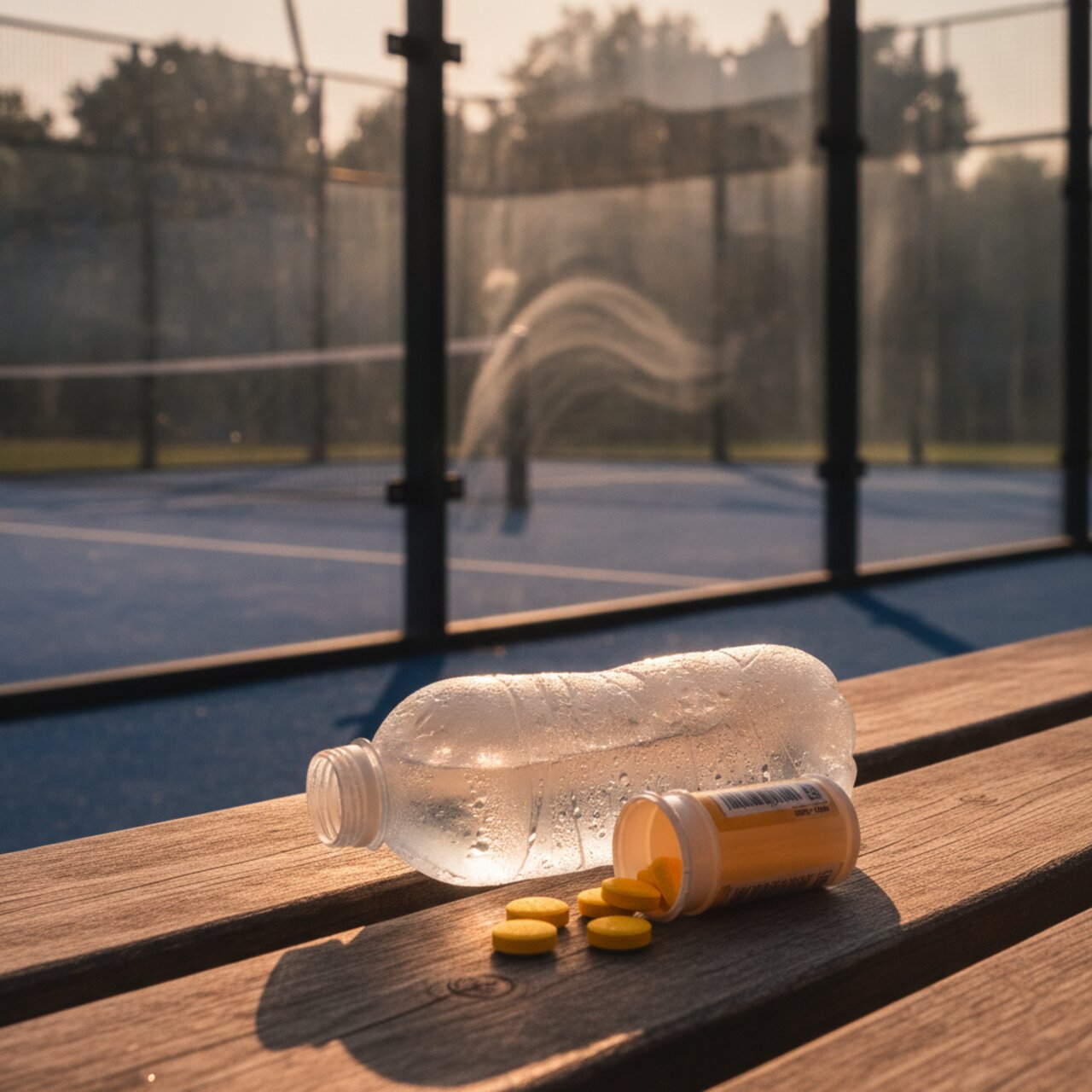
A glass-walled court in July traps heat like a greenhouse. The surface radiates it back up at you, the walls block airflow, and an hour of padel that feels comfortable in spring can leave you cramping and foggy in midsummer. Playing padel in the heat is less about toughing it out and more about fueling and hydrating so your body keeps doing what you ask of it.
Most players get this backwards. They start drinking when they feel thirsty, eat whatever was lying around before they left the house, and then wonder why their legs go heavy in the third set. The fixes are simple, but they need to happen before you step on court, not during the changeover when it’s already too late.
Why Heat Wrecks Your Padel Game
When you play in high temperatures, your body diverts blood to the skin to shed heat through sweating. That’s blood that would otherwise be feeding your working muscles. The result: your heart rate climbs faster, your perceived effort jumps, and shots that normally feel automatic start requiring conscious effort.
Sweat rates during hard padel in hot conditions can hit 1 to 1.5 liters per hour, and in very hot, humid clubs even higher. You lose sodium with that sweat, sometimes a gram or more per liter. Lose enough fluid and sodium without replacing it, and two things happen: your blood volume drops (so your heart works harder for the same output) and your muscles become more prone to cramping.
The mental side matters just as much. Dehydration of even 2% of body weight measurably slows reaction time and decision-making. In padel, where reading the doubles positioning and choosing the right shot happens in a fraction of a second, that slowdown shows up as late preparation and poor shot selection long before your legs give out.
Hydration Before You Play
Walking onto a hot court already short on fluids is the most common mistake, and the hardest to recover from mid-match. Start the day of a hot match well hydrated rather than trying to catch up in the warm-up.
Drink around 500 ml of water in the two hours before you play, then another 150 to 250 ml about 15 minutes before you step on. Your urine should be pale straw colored, not dark, and not completely clear (clear can mean you’ve overdone plain water and diluted your sodium).
If you’re playing in real heat for more than an hour, plain water alone won’t cut it. Add electrolytes, particularly sodium, to one of your bottles. This isn’t about expensive products; a sports drink, an electrolyte tablet, or even water with a pinch of salt and some juice does the job. For the full breakdown of quantities and timing, the hydration guide for padel players goes deeper than I will here.
What to Eat Before a Hot Match
Heat suppresses appetite, which tempts people to skip the pre-match meal. Don’t. You still need fuel, you just need it to sit lighter.
Eat a carbohydrate-focused meal two to three hours before playing: rice, pasta, oats, or bread with a moderate amount of protein and not much fat. Fat and heavy protein slow digestion, and a full, sluggish stomach in 35-degree heat is miserable. If you only have an hour, drop to something small and quick like a banana, a slice of toast with honey, or a handful of dates.
Salt your pre-match meal a little more than usual on hot days. You’re going to sweat a lot of sodium out, and starting with your stores topped up reduces cramp risk later. The advice in what to eat before a padel match applies year-round, but in the heat the timing matters more because anything heavy will sit uncomfortably.
During the Match: Drinking and Cooling
Don’t wait until you feel thirsty. By the time thirst kicks in during hot play, you’re already behind. Sip on every changeover, aiming for 150 to 250 ml every 15 to 20 minutes depending on how hard you’re sweating.
Keep two bottles if you can: one plain water for drinking and rinsing your mouth, one with electrolytes. Alternate between them. If a match runs long and you only brought plain water, you’ll feel the difference in the third set as your sodium dilutes and cramps creep in.
Cooling is the underrated half of this. A few things that genuinely help:
- Pour cold water over your wrists and the back of your neck on changeovers; these areas cool blood close to the surface fast.
- Drape a wet towel over your shoulders while seated.
- Get into shade between games rather than standing in the sun.
A frozen bottle that melts over the match gives you cold water late, exactly when you need it most. Small thing, big payoff.
Recognizing When to Stop
Heat illness is not something to play through. Learn the warning signs, because the early ones are easy to dismiss as just being tired.
Watch for cramping that won’t settle, a headache, nausea, dizziness, or skin that’s gone clammy or, worse, stopped sweating despite the heat. Feeling chilled or getting goosebumps in hot conditions is a red flag that your body’s cooling system is failing. If any of these show up, stop. Get into shade, drink electrolyte fluid, cool your skin, and don’t restart that day.
There’s no padel match worth heat stroke. A retired set is recoverable; a hospital visit is a much longer break from the court.
Caffeine, Alcohol and the Night Before
Two drinks deserve a mention because both affect how you cope with heat. A coffee before a match is fine for most players and can sharpen focus, but in serious heat go easy; large doses raise your core temperature slightly and can leave you needing the bathroom mid-match. One normal cup is not the enemy. A pre-match espresso pot is.
Alcohol the night before a hot match is the bigger problem. It dehydrates you and disrupts sleep, so you arrive on court already down a step before the first point. If you have a hot tournament on Sunday, the Saturday night beers cost you more than you think. A glass of water for every drink and an early finish goes a long way.
What you do the evening before matters as much as match-day morning. Eat a normal carbohydrate meal, drink steadily through the evening rather than chugging a liter at bedtime, and salt your food a touch. Waking up already topped up beats any amount of frantic drinking in the warm-up.
Recovery After Playing in the Heat
What you do in the 30 to 60 minutes after a hot match shapes how you’ll feel tomorrow, and whether you can play again this weekend.
Replace fluids based on how much you lost. A rough method: weigh yourself before and after a few matches to learn your sweat rate, then drink around 1.5 times the weight you dropped over the following hours. Include sodium, because plain water on its own will just send you to the bathroom without properly rehydrating you.
Get carbohydrates and protein in within that first hour to refill muscle glycogen and start repair. The principles in post-match nutrition and recovery foods hold in any weather, but after heat the rehydration piece carries more weight. If you’re playing multiple matches across a hot weekend, treat recovery between matches as seriously as the matches themselves; the player who refuels properly between rounds is the one still moving well on Sunday afternoon.
Building Heat Tolerance
Your body adapts to heat if you let it. Players who train through early summer handle August far better than those who hide indoors and then jump into a heatwave tournament.
Heat acclimatization takes roughly 10 to 14 days of regular exposure. Over that window your body learns to sweat earlier and more efficiently, hold onto sodium better, and maintain blood volume under heat stress. If you know a hot tournament is coming, don’t avoid the heat entirely in the lead-up; play some shorter sessions in warm conditions so the real event isn’t a shock to your system.
That said, respect your limits while adapting. Shorten sessions, play in the cooler parts of the day when you can, and build exposure gradually rather than testing yourself with a three-hour session on the first 38-degree day.
Your Hot-Weather Checklist
Playing padel in the heat comes down to preparation more than willpower. Arrive hydrated, eat light and salted, drink on every changeover with electrolytes in the mix, cool your skin actively, and stop the moment heat illness signs appear. Then refuel and rehydrate properly afterward so the next match isn’t compromised.
Get these habits right and summer padel stops being something to survive. Pair smart fueling with a solid fitness base and you’ll be the pair still hitting clean bandejas in the third set while everyone else is wilting.