By Mario GonzalezFitness
Post-Match Nutrition for Padel: Recovery Foods, Protein, and Timing
A practical post-match nutrition guide for padel players. Learn what to eat, how much protein and carbs you need, and the timing that speeds recovery.
What you eat in the two hours after stepping off the court decides how fresh you feel at your next session. Post-match nutrition is the part of training most amateur padel players ignore, and it costs them. You played three sets, your legs are heavy, your shirt is soaked, and your muscles have just burned through their stored fuel. Skip the recovery window and you carry that fatigue into Wednesday’s game. Get it right and you bounce back in a day instead of three.
This guide covers the three things that matter: protein to repair muscle, carbohydrates to refill energy stores, and the timing that makes both work. No supplements required, no complicated meal prep, just food you can actually find on the way home from the club.
Why Padel Drains You More Than You Think
A competitive padel match runs 60 to 90 minutes of stop-start movement. You are not jogging steadily like a runner. You sprint to the net, brake hard, lunge for a low volley, push off the back glass, and repeat that pattern hundreds of times. That repeated acceleration and deceleration tears tiny fibres in your leg muscles and empties your glycogen, the carbohydrate your body stores in muscle and liver for quick energy.
By the end of a long match you have depleted glycogen, micro-damaged muscle, and lost fluid and sodium through sweat. Recovery means reversing all three. Pre-match fuel sets you up for the game, and if you want to dial that in, the companion piece on what to eat before a padel match covers it. Post-match nutrition is what repairs the damage afterwards.
The Recovery Window: Timing Your First Meal
Your muscles are most receptive to nutrients in the period right after exercise. Blood flow to the muscles is still elevated and the enzymes that rebuild glycogen are working at full speed. This is sometimes called the anabolic window, and while the old idea that it slams shut after 30 minutes was overstated, the principle holds: sooner is better.
Aim to get protein and carbohydrate into your system within 60 to 90 minutes of your last point. If you played a hard match and have another within 24 hours, treat that window as non-negotiable and eat as close to 30 minutes after as you can. If your next match is three or four days away, you have more room, but eating well that same evening still pays off.
A common mistake is showering, driving home, chatting, and finally eating two and a half hours later. By then you have wasted the most efficient recovery hour of your day. If a full meal is not practical right away, have something small in your bag for the moment you walk off court, then eat properly within a couple of hours.
Protein: How Much and What Kind
Protein supplies the amino acids that repair the muscle fibres you damaged during the match. For recovery after a hard session, aim for 20 to 40 grams of protein in your first meal, scaled to your body size. A 70 kg player does well with around 25 to 30 grams; a heavier or more muscular player benefits from the upper end.
What that looks like in real food:
- A chicken breast (around 150 g) gives roughly 35 g of protein
- Three whole eggs provide about 18 g
- A 170 g pot of Greek yoghurt holds around 17 g
- A tin of tuna delivers about 25 g
- A glass of milk plus a banana gets you a quick 8 to 10 g when nothing else is handy
You do not need a protein shake. Shakes are convenient when you cannot eat solid food immediately, but a chicken and rice bowl or an omelette does the same job and keeps you fuller. Vegetarians can hit the target with eggs, dairy, lentils, tofu, or a combination, just expect to eat a slightly larger portion since plant proteins are less concentrated.
Carbohydrates: Refilling the Tank
Carbohydrate is the half of recovery most padel players forget. After a long match your glycogen stores are low, and protein alone will not refill them. If you train again soon without replenishing carbs, your legs feel flat and your reactions slow.
For recovery, aim for roughly 1 gram of carbohydrate per kilogram of body weight in your post-match meal. A 75 kg player wants around 75 g, which is about a cup and a half of cooked rice, a large baked potato, or two slices of toast with a banana. Pairing carbs with your protein matters because the two together rebuild glycogen faster than carbs eaten alone.
Whole-food carbs like rice, potato, oats, pasta, and fruit are ideal for the main meal. Faster sugars from fruit or a sports drink are useful in the first few minutes when you need something immediate and your stomach is still settling.
Real Meals That Work
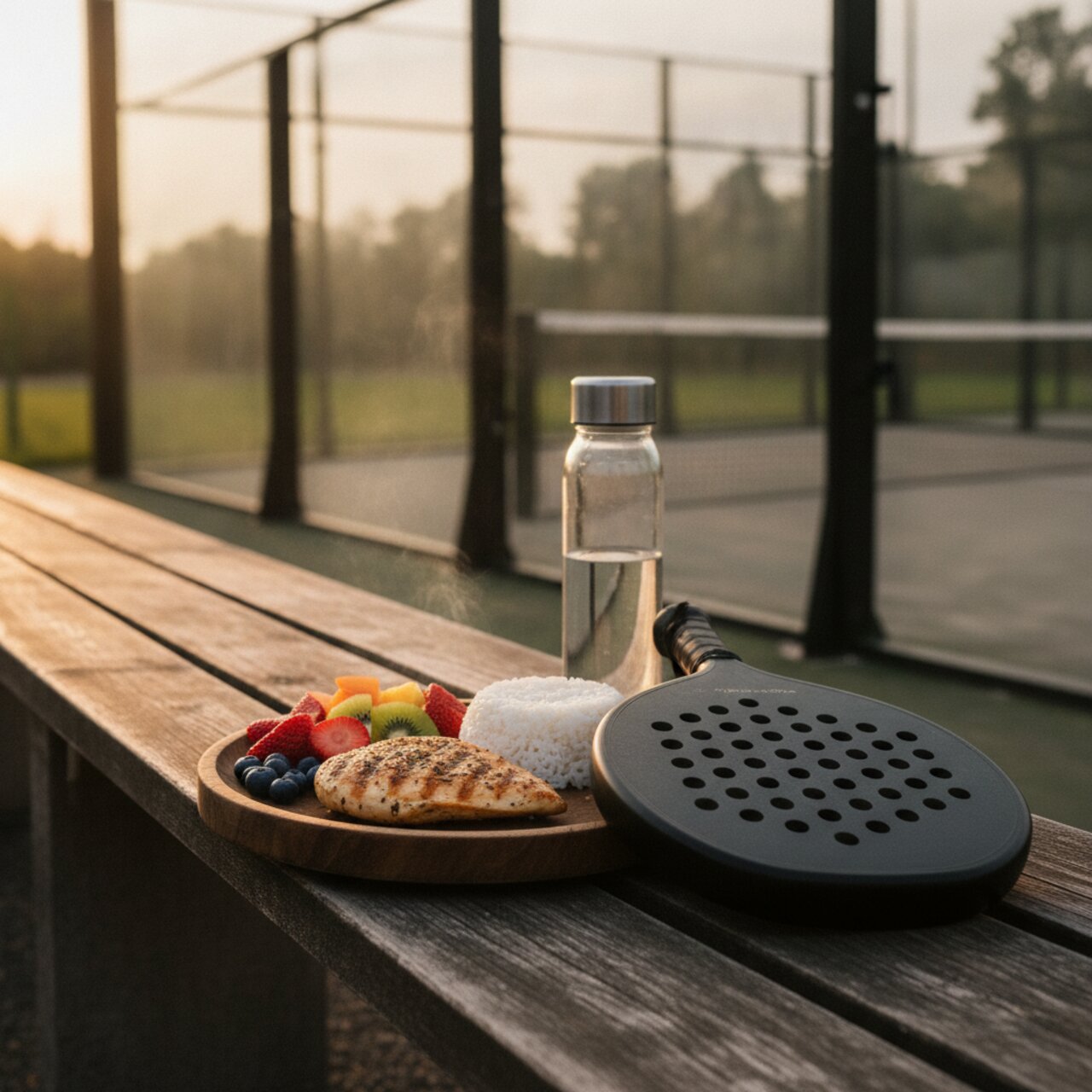
Forget perfection. The best recovery meal is the one you will actually eat. These combinations hit protein and carbs together and travel well:
- Grilled chicken with rice and roasted vegetables
- A tuna and pasta salad with olive oil
- Three-egg omelette with toast and a piece of fruit
- Greek yoghurt with oats, honey, and berries
- A turkey and avocado wrap with a banana on the side
- Lentil stew with bread for a plant-based option
If you finish late at night and a heavy meal feels wrong, a bowl of Greek yoghurt with fruit and oats or a glass of milk with a sandwich still delivers the protein and carbs your muscles need before sleep. Eating something beats eating nothing, every time.
Rehydration: The Step Most Players Rush
Food is only part of recovery. During a 90-minute match in warm conditions you can lose one to two litres of sweat, along with sodium that plain water alone will not replace. Weigh yourself before and after a match a few times and you will see the drop; most of it is fluid.
Drink steadily over the hours after playing rather than downing a litre in one go, which mostly ends up flushed out. A simple check is urine colour: pale straw means you are on track, dark yellow means keep drinking. Adding a pinch of salt to a meal or choosing an electrolyte drink helps you hold onto the fluid you take in. The full breakdown lives in the hydration guide for padel players, which is worth reading alongside this one.
Alcohol and the Post-Match Beer
The after-match drink is part of padel culture, and one beer will not ruin your recovery. But alcohol works against everything in this guide. It interferes with muscle repair, slows glycogen replenishment, and acts as a diuretic that deepens the dehydration you are trying to fix.
If you have another match in the next day or two, eat and rehydrate first, then have your drink. Putting food and water in before alcohol blunts the worst of its effects. If your next game is days away, the cost is smaller, but the order still matters: recovery first, social drink second.
What to Expect
Dialling in your post-match nutrition will not make you sore-free overnight, but you will notice the difference within a couple of weeks. Less next-day stiffness, more energy at your following session, and a body that handles two or three matches a week without breaking down. Players who train hard but eat carelessly tend to plateau and pick up niggles; the ones who recover well keep improving because they can train consistently.
Treat the meal after your match as part of the session, not an afterthought. Combine it with smart recovery between matches and a stretching routine for padel, and you give your body the full set of tools it needs to come back stronger.
Next Steps
Pack a recovery snack in your padel bag tonight so you have something to eat the moment you walk off court. Plan one go-to meal with protein and carbs that you can make in ten minutes. Then read up on building stamina and endurance for padel to make sure the engine you are recovering is getting stronger too.
Tracking how you feel after matches helps you spot what works. Log your sessions in Padellog and you will start to see the link between how you recover and how you play.