By Mario Gonzalez
The rulo in padel: how to roll the ball into the fence and leave opponents stranded
Learn the padel rulo step by step. The topspin overhead to the fence that pros use to win points with control and spin instead of raw power.
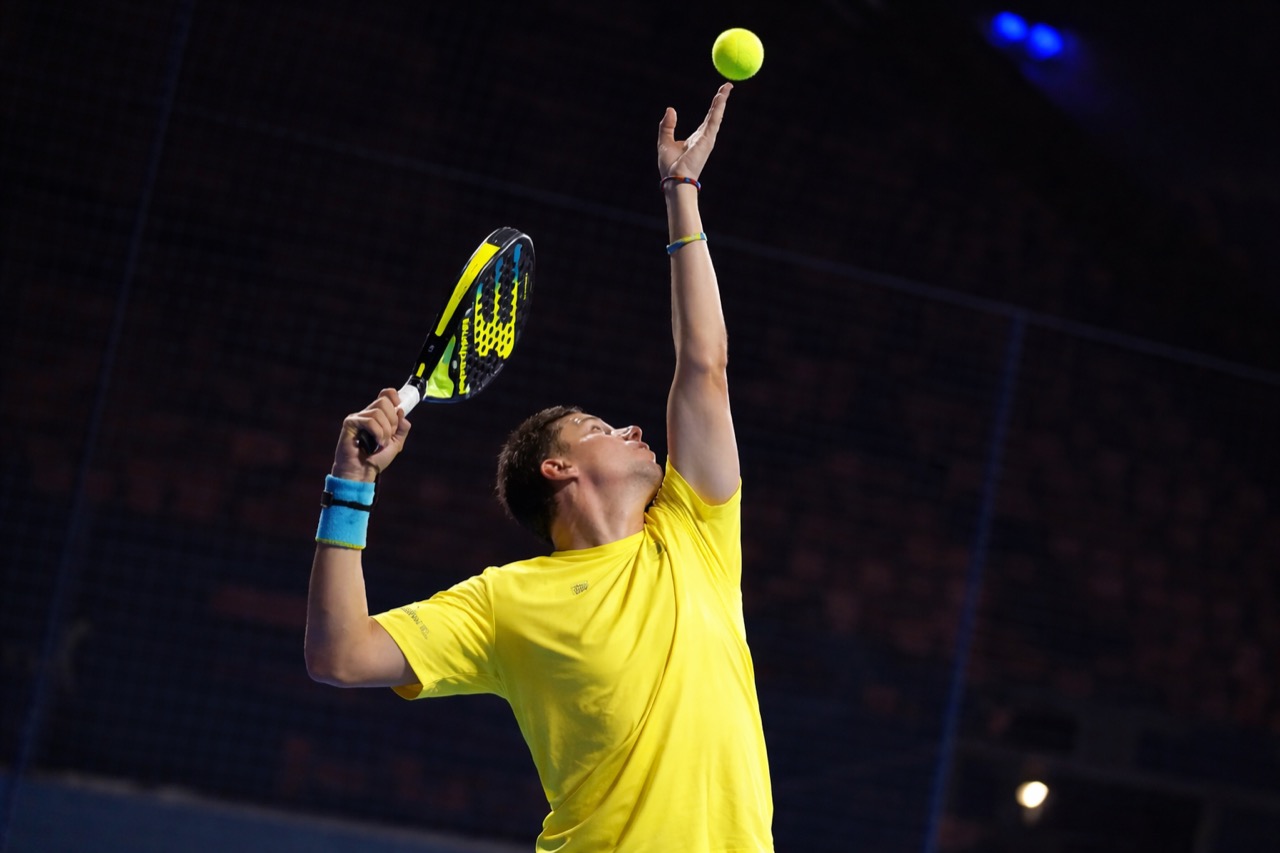
The rulo: the overhead that hits the fence and doesn’t come back
There’s a shot in padel that looks like sorcery when done right. The ball rises, spins, bounces, and dives straight into the side fence. Your opponent watches it go and can’t do a thing. That’s the rulo.
It’s not the most powerful shot. It’s not the flashiest (okay, maybe a little). But it’s one of the most effective overhead options because it combines two things that rarely go together: control and aggression. And here’s the thing - you don’t need to be a beast to pull it off. You need technique, timing, and the sense to know when to unleash it.
What is the rulo?
The rulo is a topspin overhead aimed at the side fence or wire mesh. The name comes from the Spanish “rular” - to roll. Because that’s exactly what you do: you roll the ball with the racket face, giving it top-to-bottom spin that makes it kick sideways into the fence after bouncing.
It’s an overhead shot, meaning you hit it above your head, like a bandeja or a smash. But unlike a flat smash that’s all about brute force, the rulo is about placement and spin. The ball bounces and dives into the fence, coming off in an awkward, unpredictable way for the opponent.
Stupa (Franco Stupaczuk) is probably the best rulo player on the professional circuit. His rulo to the fence is a nightmare for anyone standing on the other side.
When to use it
The rulo isn’t an every-ball shot. It works best in specific situations:
- When you get a comfortable lob that gives you time to set up properly
- From the left side (for right-handers) - the natural angle of the rulo goes cross-court toward the fence on the opponent’s right side
- When opponents are deep and can’t rush forward to cut the ball off before it reaches the fence
- To mix up your overhead game - if you only hit bandejas and flat smashes, opponents adapt. The rulo breaks the pattern
- When you don’t have the angle for a x3 smash but you can target the side fence
Don’t use it when you’re too far from the net, when the lob comes in awkwardly, or when the opponent is tight to the net (a bandeja or a passing shot works better there).
How to execute it step by step
1. Setup
Turn your shoulders. This is step one and it’s the most important thing. You need to be sideways to the net, with your non-hitting shoulder pointing toward your target.
Position yourself underneath the ball, not behind it. The rulo is executed with the ball above you, slightly in front. The racket comes up with a high elbow, arm relaxed.
Use a continental grip (the same one you use for the bandeja). If that’s not clear, think of it like gripping a hammer.
2. The stroke
Here’s where the magic happens. You don’t hit the ball - you brush it. The movement goes from back to front and from low to high at contact, rolling the ball with the racket face.
Picture trying to pass the racket over the top of the ball, like stroking it. Your wrist snaps quickly at the moment of impact, generating the topspin that makes the ball drop and then kick sideways.
Aim cross-court, looking for the ball to bounce in the opponent’s court and head toward the side fence. Don’t add power. The spin does the work. If you swing hard, you lose control of the spin and the ball goes long or doesn’t get the right effect.
3. After the shot
Follow through completely. The racket finishes on the opposite side from where it started, having “rolled” the ball. Don’t brake your arm mid-swing.
And as always in padel when you’re at the net - hold your position. Don’t drift backward. If the rulo lands well, your opponent will return a weak, uncomfortable ball. You need to be right there to finish it with a clean volley.
Common mistakes
| Mistake | What happens | Fix |
|---|---|---|
| Hitting too hard | Ball goes long or loses spin | Less power, more wrist |
| Not turning shoulders | You lose angle and the shot comes out flat | Turn sideways before hitting |
| Hitting behind your body | Ball goes up instead of down | Get underneath the ball |
| Stiff wrist | No topspin generated | Relax your wrist and let it snap |
| Always going down the line | Opponent reads it easily | Alternate cross-court and down the line |
| Stopping the follow-through | Lose spin and direction | Complete the full swing |
Advantages ✅
- The ball rebounds off the fence unpredictably
- Doesn’t require much power - it’s a technical shot
- Generates weak returns you can finish at the net
- Breaks up your overhead pattern (bandeja-smash gets predictable)
- Works from positions where a x3 smash isn’t possible
- Safer than a flat smash because the spin adds margin for error
Risks ⚠️
- Without enough spin, it becomes a comfortable ball
- The down-the-line rulo is risky if it doesn’t land perfectly
- Requires a decent lob - doesn’t work off awkward balls
- If the opponent reads the direction, they can anticipate and move up
- Takes practice to control the amount of spin consistently
Recommended videos
- How to Use THE RULO Properly - Tips and Technique - The Padel School
- Teach the Rulo in Padel: When, Why & How to Use It - The Coach Station
- How To Play An Overhead To The Fence - Padel Basics - Padelable
- How to know when to hit rulo, gancho or vibora? - Tasty Play Hard
- IMPROVE YOUR PADDLE TENNIS ROLL WITH THESE EXERCISES - AP-PADEL
Pro tip
Track your matches on padellog and see how many points your overhead game actually closes.