By Mario GonzalezStrategy
Using the Glass Walls Strategically in Padel: When to Let the Ball Bounce
Using the glass walls in padel turns defense into time. Learn when to let the ball come off the back and side glass, and when to take it in the air instead.
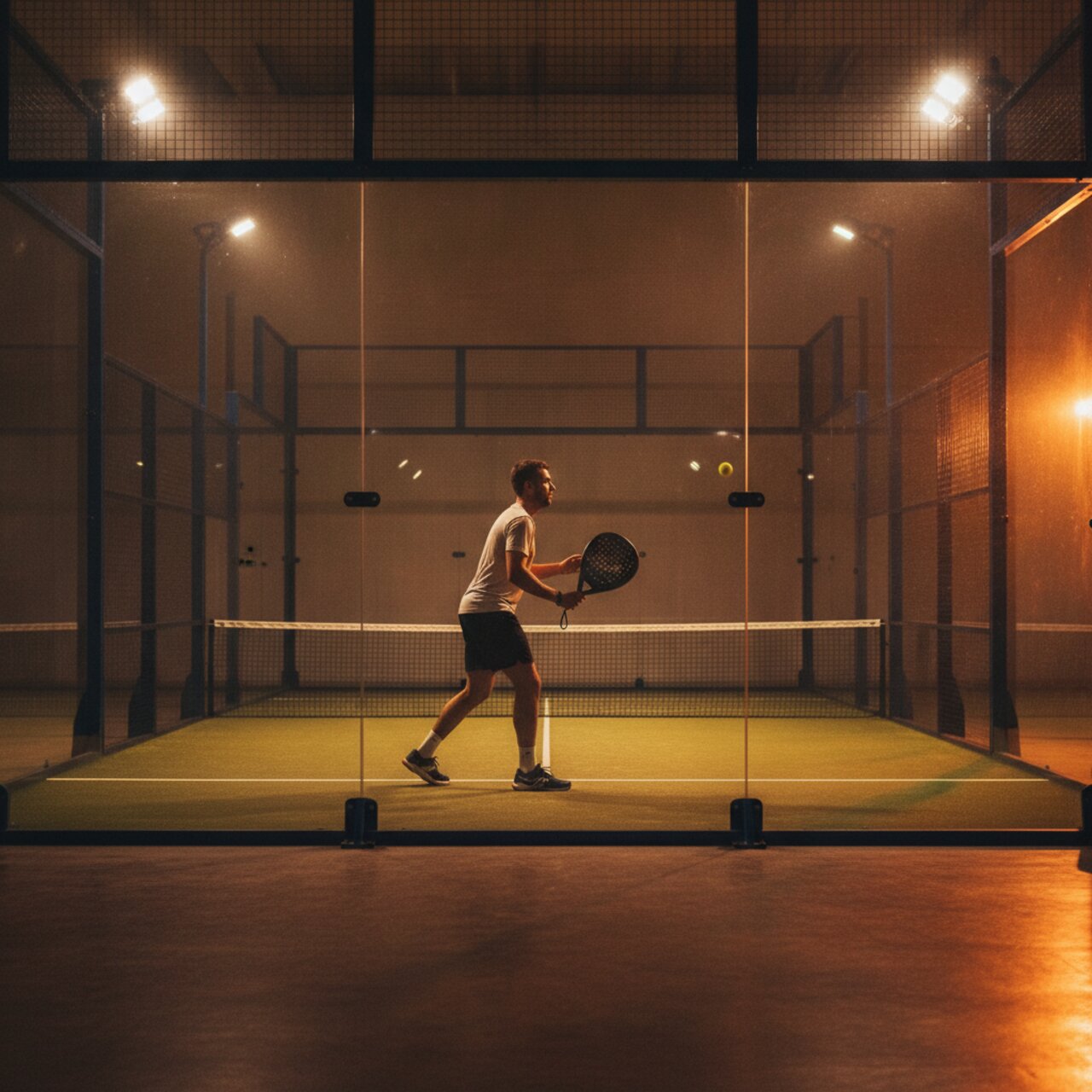
The single biggest difference between a tennis player who just picked up a racket and a real padel player is what they do when the ball goes past them. The tennis player lunges and swats at it before it reaches the back fence. The padel player lets it go, waits, and plays it off the glass. Using the glass walls in padel is not an emergency skill you reach for when you are beaten — it is a core part of how you buy time, reset the point, and turn defense into attack.
Most intermediate players know the walls exist. Far fewer use them on purpose. This is the mental shift that separates a 2.5 from a 3.5: the walls stop being a threat and become a tool you deploy deliberately.
Why the Glass Walls Change Everything
In tennis, a ball that passes you is gone. In padel, the back wall and side glass keep the ball in play, which means the court is effectively larger than the lines suggest. A ball you cannot reach at the service line is a ball you can often reach comfortably after it rebounds two meters off the glass.
That extra time is the whole point. When an opponent smashes or drives a ball deep, taking it early forces a rushed, low-percentage reply. Letting it pass, tracking it, and playing it as it drops off the back glass gives you a full extra second to set your feet, read the height, and choose a proper shot. A rushed defensive block becomes a controlled defensive lob that pushes your opponents back off the net.
The catch is that the glass rewards trust and punishes panic. Players who freeze the first time a ball sails over their head never develop this instinct. The fix is to treat the wall as your fourth teammate — always there, always predictable, waiting to hand the ball back to you.
The Core Decision: Air or Glass?
Every deep ball forces one question before anything else: do I take this in the air, or do I let it come off the glass? Get this decision right and the technique almost takes care of itself. Get it wrong and even perfect mechanics produce a weak reply.
Take it in the air when
You should volley or cut the ball out of the air when you are still holding a net position and taking it early keeps your opponents pinned back. If you are at the net and a lob is short, punching it away before it drops is far stronger than retreating to play it off the back glass and surrendering the net. The same applies when the ball is drifting toward a corner — intercepting early stops it from setting up an awkward double rebound in the angle.
Reading whether a lob is “yours” to take in the air is a positioning skill as much as a technical one. If you are unsure where you should be standing when these balls come, the three court zones framework is the clearest way to think about it.
Let it come off the glass when
Let the ball pass and use the wall when the ball is deep, dropping fast, and above shoulder height — the classic situation where taking it in the air means a cramped, defensive swat. Let it go when you have been pushed off the net and need time to recover court position. And always let it come off the glass when the ball has enough pace that the rebound will bring it back into a comfortable strike zone around waist height.
The rule of thumb: if taking the ball early forces bad contact and a weak shot, let the glass give you a better one. Patience off the back wall is almost never punished. Impatience in the air very often is.
Reading the Back Wall Rebound
Judging the rebound is the skill that makes everything else possible, and it comes down to three variables: pace, height, and spin.
A fast, flat ball rebounds far off the glass — sometimes two or three meters. You need to open up space, let it travel, and follow it out toward the middle of the court so you meet it as it drops. Crowd this ball and it jams you against your own body. A slow, high ball barely comes off the wall at all; it drops almost vertically down the face of the glass, which means you have to move in close and be ready to dig it out low near the base of the wall.
Spin is the variable that catches people out. Heavy topspin — from a smash aimed at the back glass or an aggressive drive — kicks the ball up and outward off the wall, higher and faster than you expect. Slice does the opposite, dying quickly and staying low. When in doubt, give yourself more room rather than less. It is always easier to step in toward a ball than to back-pedal away from one that has jumped at you.
The practical habit that ties this together is simple: turn your body and track the ball with your eyes all the way into the glass. Players who lose the ball behind them are guessing at the rebound. Players who watch it hit the wall know exactly where it is going.
Using the Side Glass, Not Just the Back
Most coaching talk about the walls focuses on the back glass, but the side glass is where points are quietly won and lost. Balls that angle into the corner produce a double rebound — side glass first, then back glass, or the reverse — and this is the toughest ball in padel to read.
The key is footwork before contact. As a ball drifts toward the corner, move to a position where you can play it as it emerges from the angle, not where it first bounces. Standing where the ball currently is means it will spin away from you off the second wall. Standing where it is going means you meet it cleanly. This is the exact scenario covered in depth in the guide to playing from the corners, and it is worth drilling until it feels automatic.
Side glass also opens up an attacking option most players ignore: the back wall boast, or contrapared. When you are deep and defending, deliberately playing the ball into your own side or back glass at an angle can loop it back over the net and drop it short, buying you time to recover while forcing your opponents to move forward. It looks desperate and is anything but — it is a controlled reset that good players use on purpose.
Turning Defense Into Attack Off the Glass
The reason the glass matters strategically is that it lets you change the tempo of a point without hitting a spectacular shot. A ball you play calmly off the back wall can go three places, and each one has a purpose.
A deep defensive lob off the glass sends your opponents back to their own baseline and hands you time to reclaim the net. A controlled drive down the middle off the rebound splits the opposing pair and probes for a gap. And a soft, low wall shot — the salida de pared played flat and away — keeps the ball in play and forces one more shot from opponents who expected to win the point outright.
None of these require power. They require the composure to let the ball come to you and the court awareness to know which reply hurts your opponents most. That decision is the same one at the heart of knowing when to attack and when to defend: the glass is what gives you the time to make it well.
Common Mistakes and How to Fix Them
Taking every ball in the air out of habit. Tennis converts do this instinctively. The fix is a deliberate rule for the first few sessions: if a ball is above your shoulder and behind the service line, let it hit the glass. Force the habit until trusting the wall feels normal.
Standing too close to the back wall. Crowding the glass jams your swing and leaves no room to extend through the ball. Give yourself a full arm’s length plus racket. If the rebound surprises you by dying short, it is easy to step in; you cannot swing well with the wall against your back.
Losing sight of the ball. Players who face forward and wait blind for the rebound are guessing. Turn your shoulders, watch the ball into the wall, and move as it comes off. This single habit fixes most bad wall shots on its own.
Panicking on the double rebound. The corner ball feels impossible because players try to hit it at the first bounce. Slow down, let both rebounds happen, and meet the ball as it settles. The corner gives you more time than it appears to.
Hitting the glass ball too hard. A ball off the back wall sits up invitingly, and the temptation is to crush it. Deep, controlled placement wins far more points than power from a defensive position. Reset first, attack later.
Drills to Build Glass-Wall Confidence
Feed and rebound. Have a partner feed balls of varying pace over your head from the net. Your only job is to let each one pass, track it, and play a controlled deep lob back off the glass. Start slow, build pace, and focus purely on judging the rebound — no winners, just clean resets.
Corner recovery. Feed balls angled into each back corner and practice moving to where the ball emerges from the double rebound rather than where it first lands. Ten balls per corner, both sides, focusing on footwork and reading the second wall.
Air-or-glass calls. Have your partner mix short lobs (take in the air) with deep ones (let off the glass) at random. Call your decision out loud as the ball leaves their racket. Training the decision under pressure is what makes it automatic in a match.
Learning the individual shots — the wall shot, the back wall boast, and the defensive lob — gives you the tools. Learning when to reach for each one is what using the glass walls strategically actually means. Track your defensive points over a few matches and you will notice the pattern: the players who trust the glass lose fewer of them.
Ready to see whether your wall play is holding up under real match pressure? Log your matches with Padellog and watch how your results shift as you stop swatting deep balls out of the air and start letting the glass do the work. For any terms in this guide you want to nail down, the padel glossary has you covered.